S3 versioning cuts recovery time, not just storage costs
Learn how S3 versioning preserves every object modification while lifecycle policies move data after 30 days to control storage growth.
AWS S3 Annotations support 1,000 mutable items per object, yet most teams lack the query tools to find them without heavy SQL.
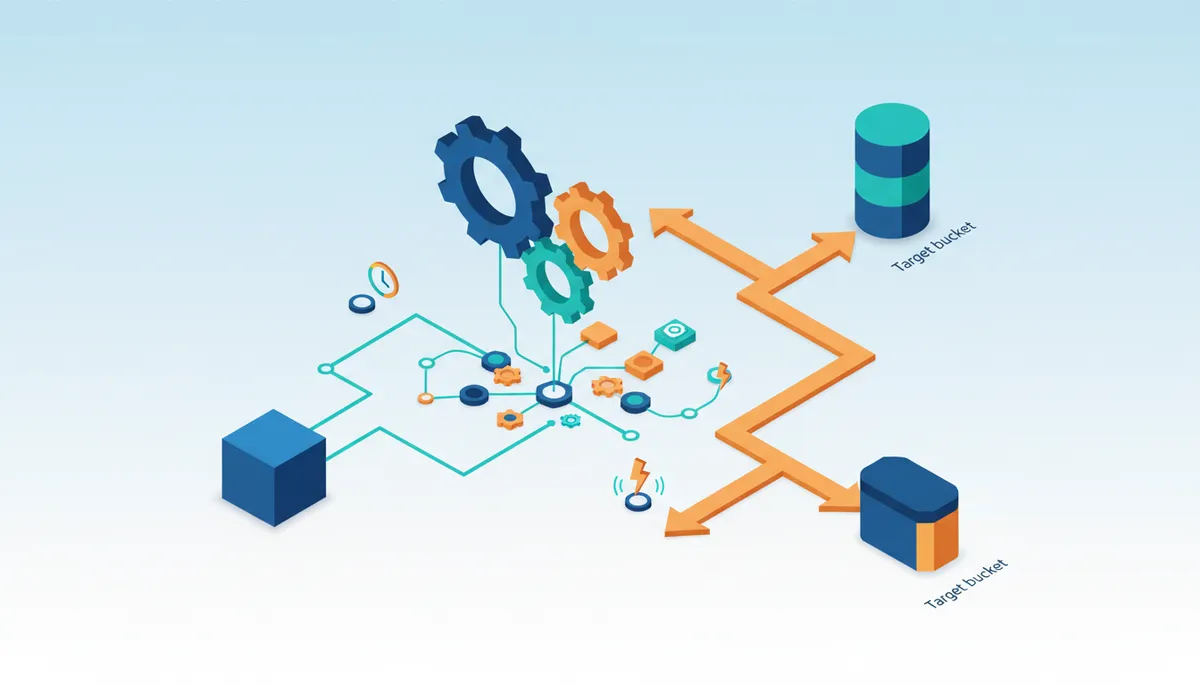
S3 replication copies most objects within seconds, but batch modes handle billions better. Learn when live events fail compliance windows.
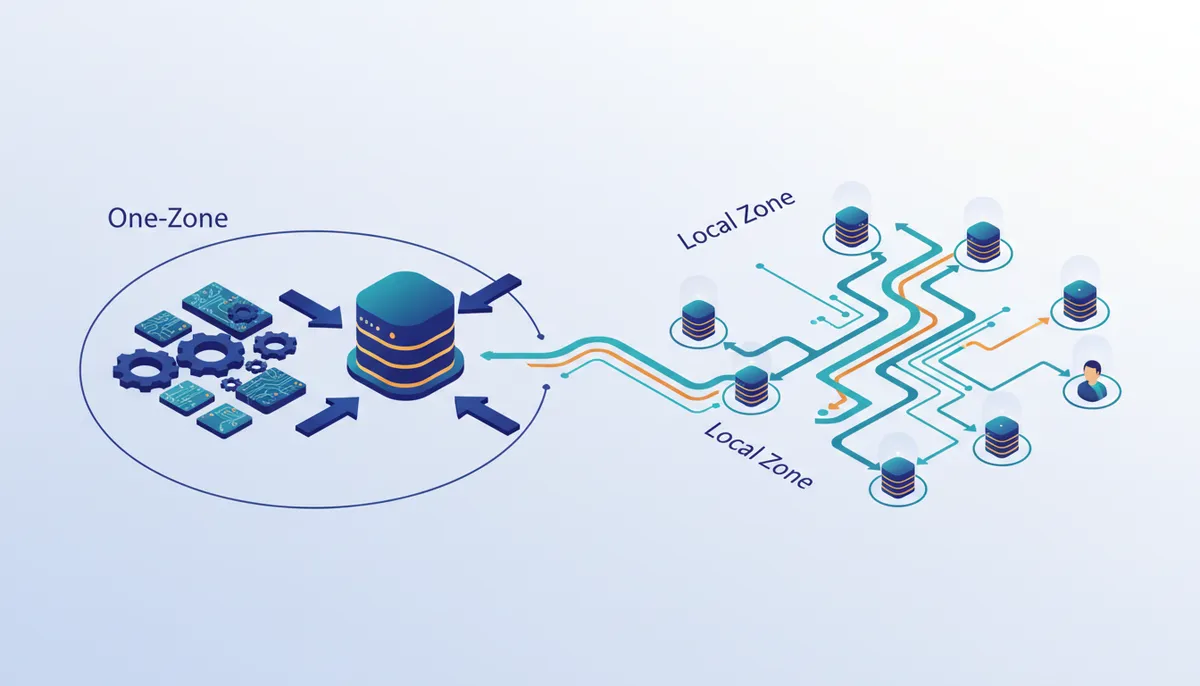
S3 Directory Buckets anchor data to a single Availability Zone, eliminating cross-border replication risks for strict residency mandates.
Learn how randomized prefixes prevent hotspots when handling 150 million requests per second on massive object storage systems.
Learn how scaleout repositories separate performance from capacity tiers to handle growth without migrating data or disrupting active workflows.
Claimed savings below AWS S3 costs drive urgent scrutiny into European object storage economics.
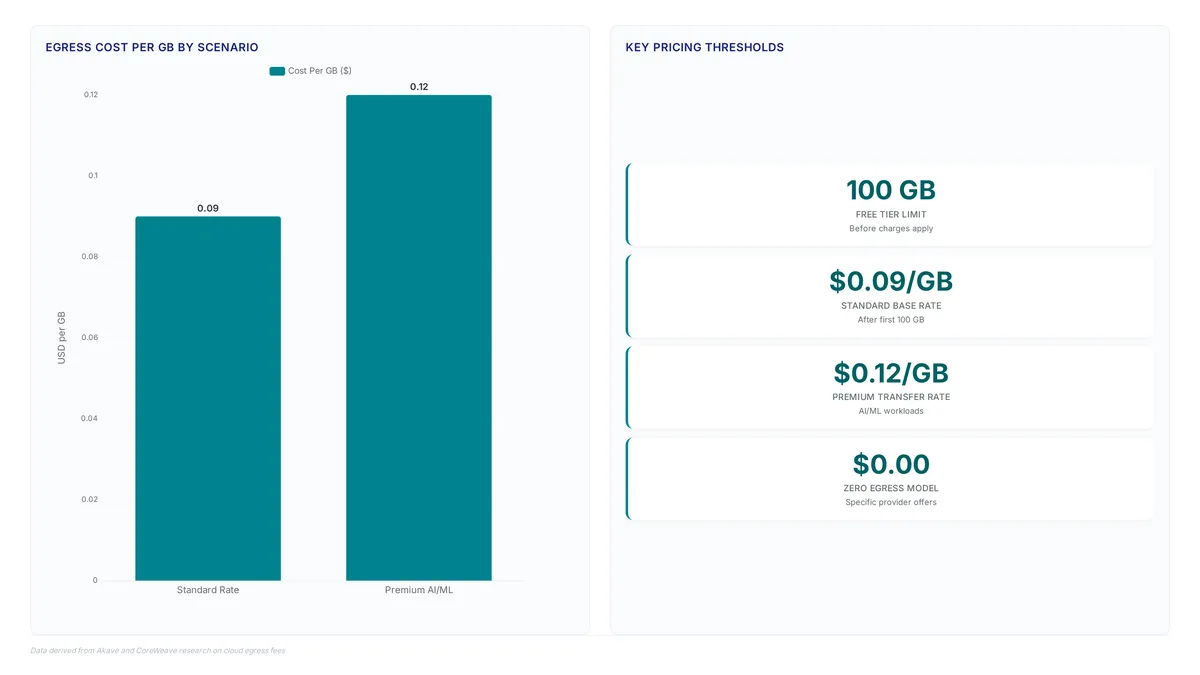
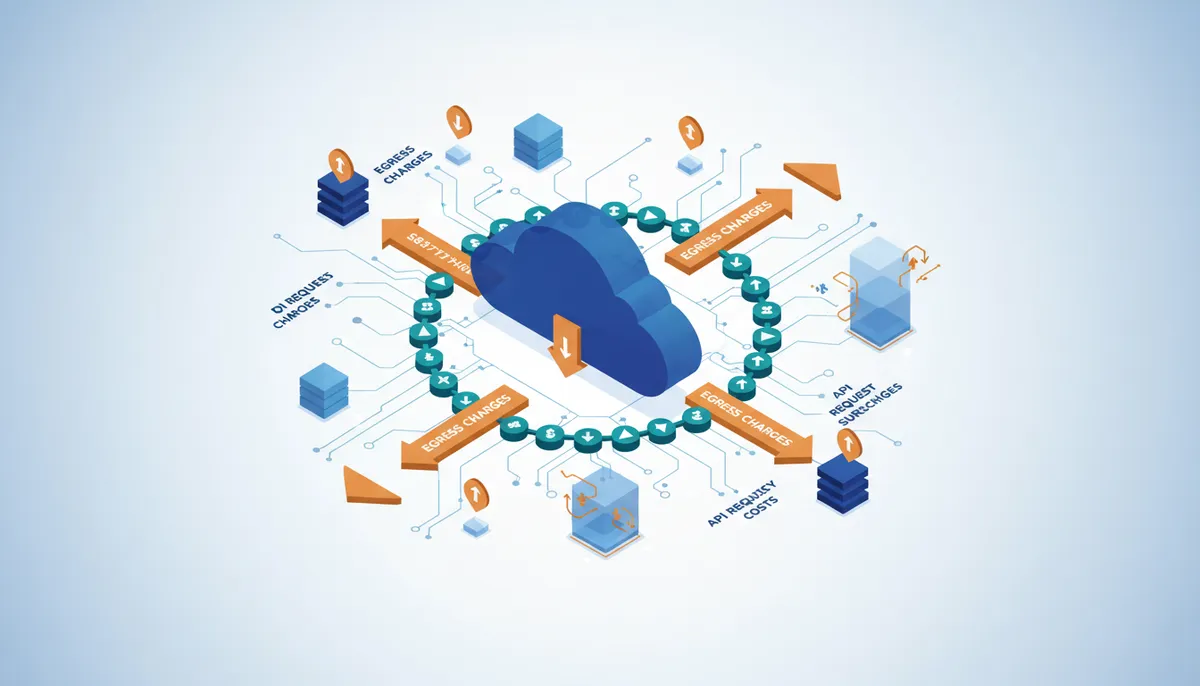
Egress fees hit $0.12 per GB, often exceeding base storage costs. Learn how hidden charges distort cloud budgets and where real savings hide.
AWS Backup's new low-cost warm tier cuts expenses by 30%. Rabata.io engineers explain how to optimize retention without sacrificing access speed.
Stop GPU dead periods where hydration overhead exceeds training time. Rabata.io delivers S3-compatible storage that keeps GPUs saturated without local staging.
Amazon S3 Annotations support 1,000 entries per object, eliminating synchronization lag by integrating directly with Iceberg tables for instant SQL analysis.
A single genome creates 120GB of data. Learn to build sovereign AI infrastructure that keeps sensitive files local and compliant.
Mountpoint for Amazon S3 CSI driver v2 cuts large-scale financial simulation job times by up to 2x according to AWS data.
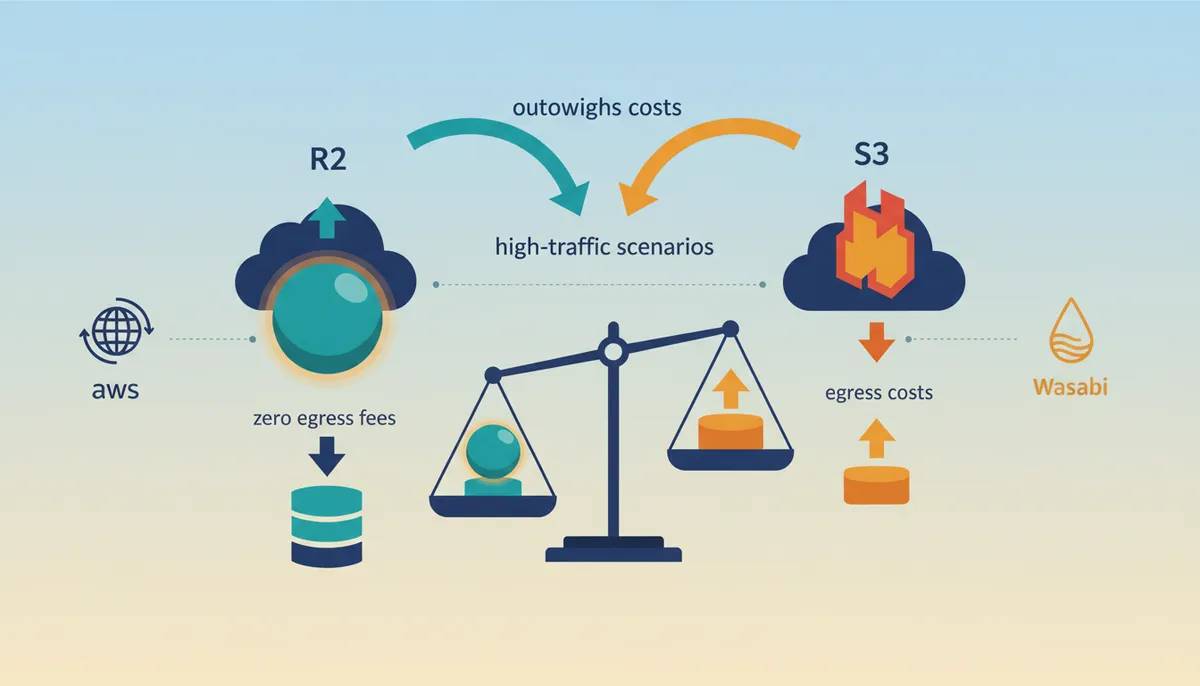
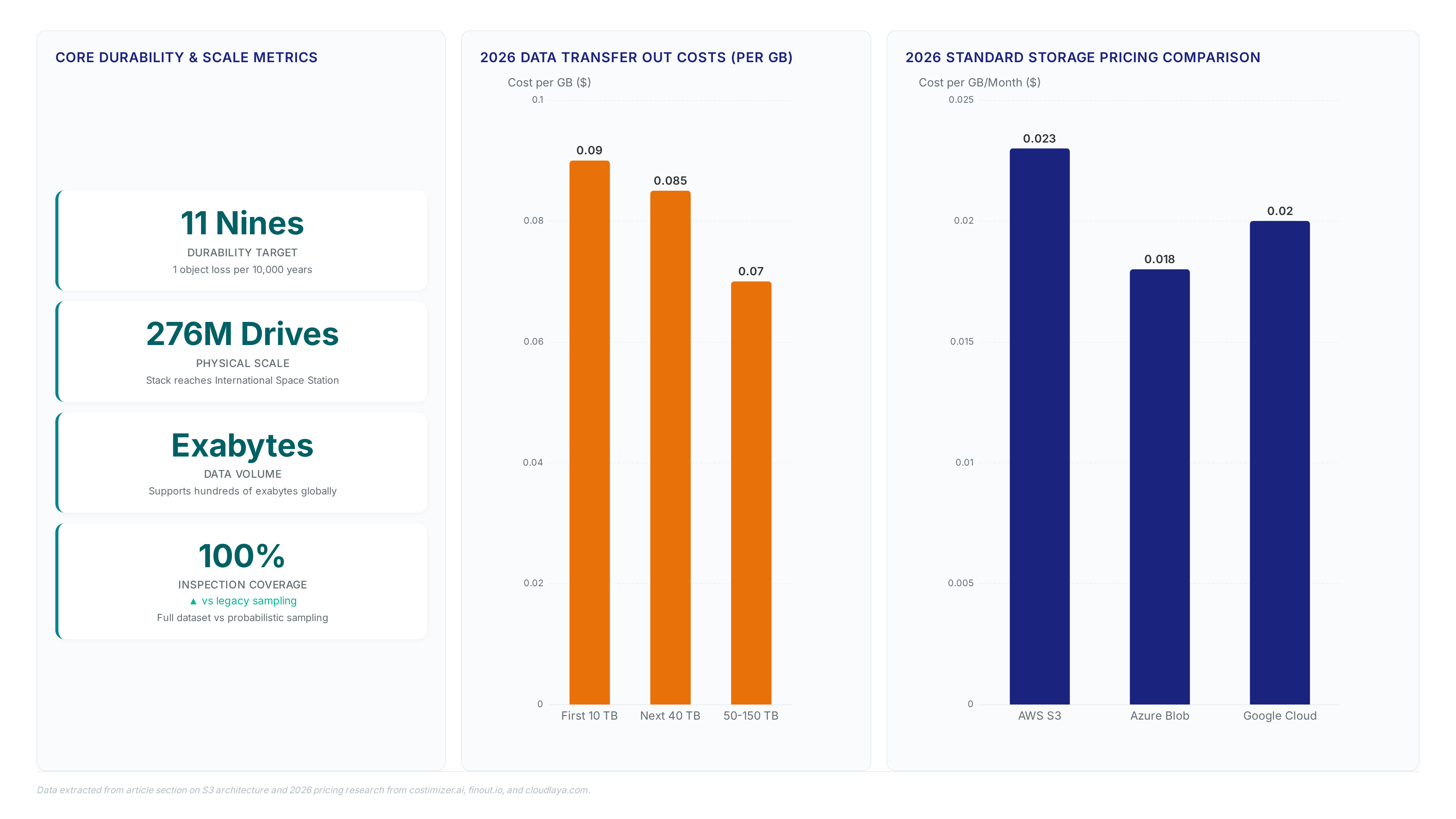
Egress fees cost 4, 6× more than storage on AWS, Azure, and GCP. This isn't an accident; it's a deliberate pricing asymmetry designed to penalize data...
S3 targets 99.999999999% durability, yet human error deletes data instantly. Discover why independent backups are essential for true protection.
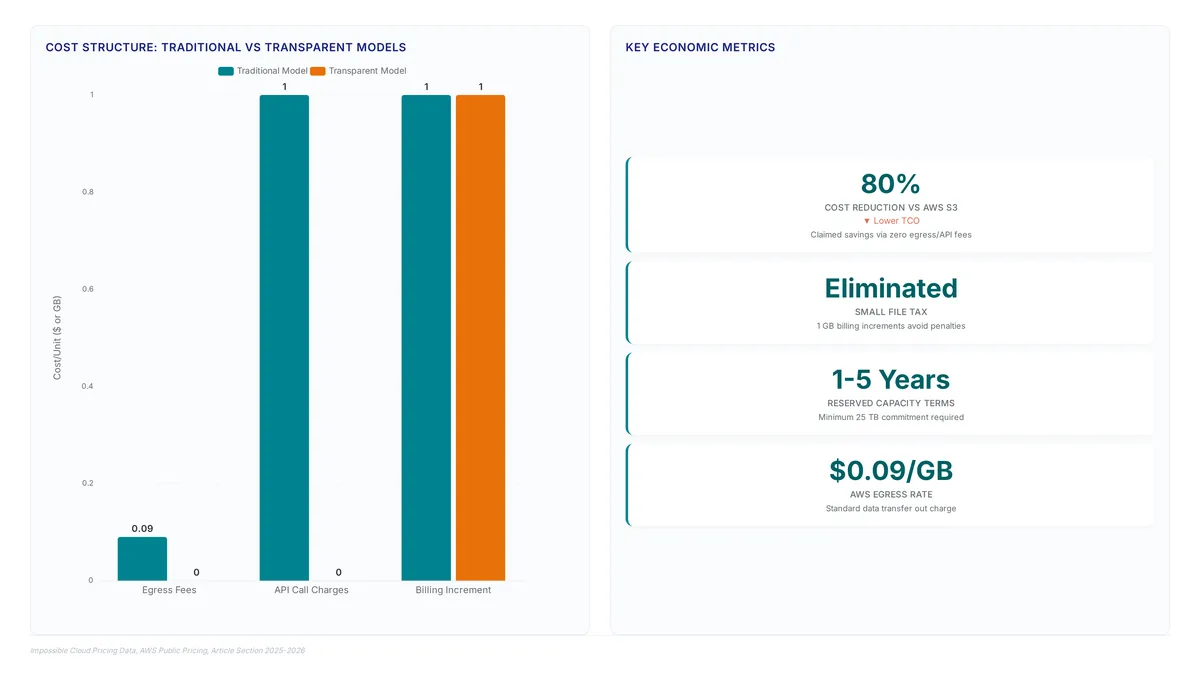
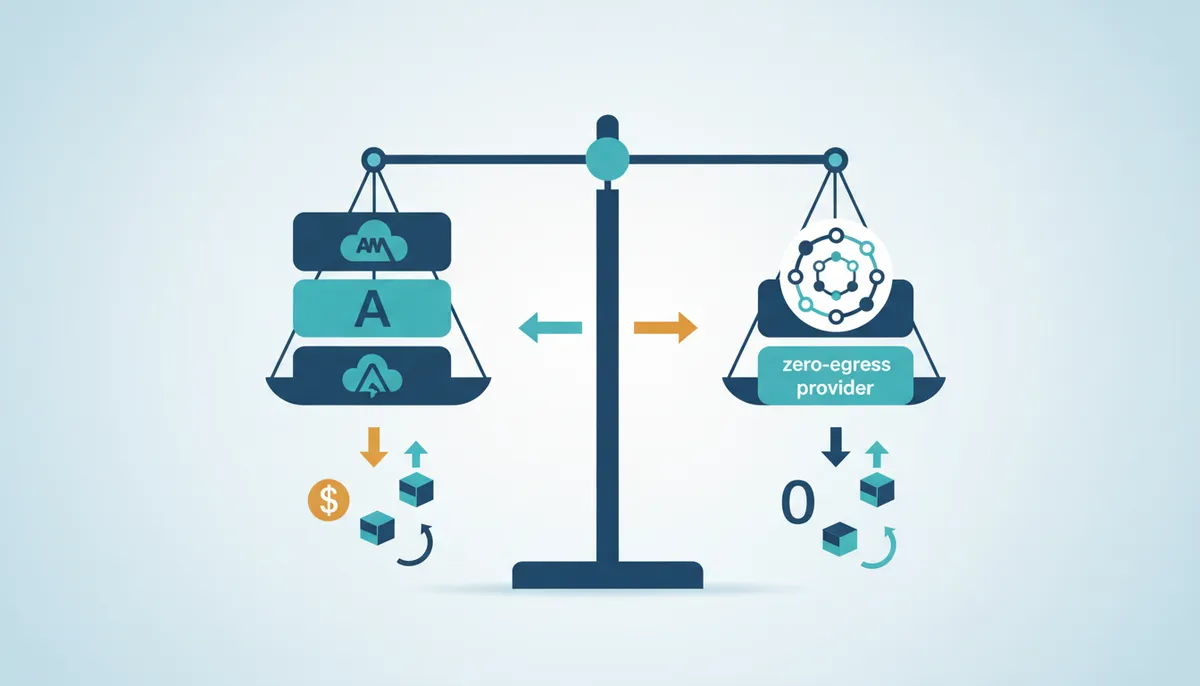
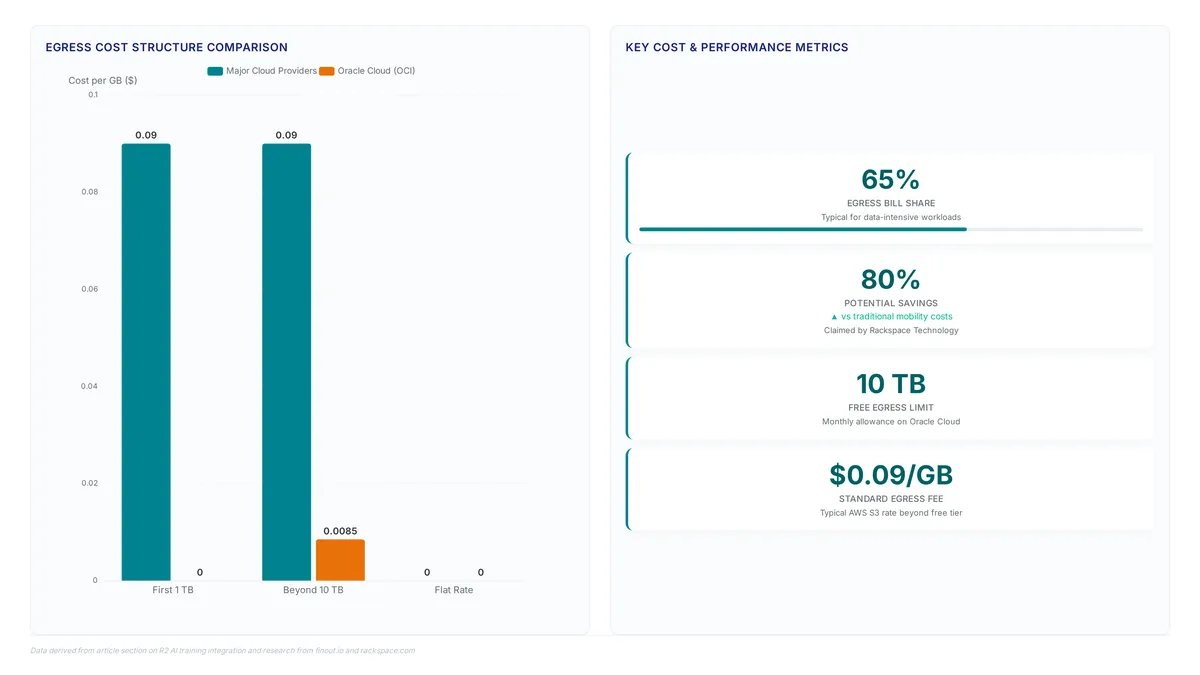
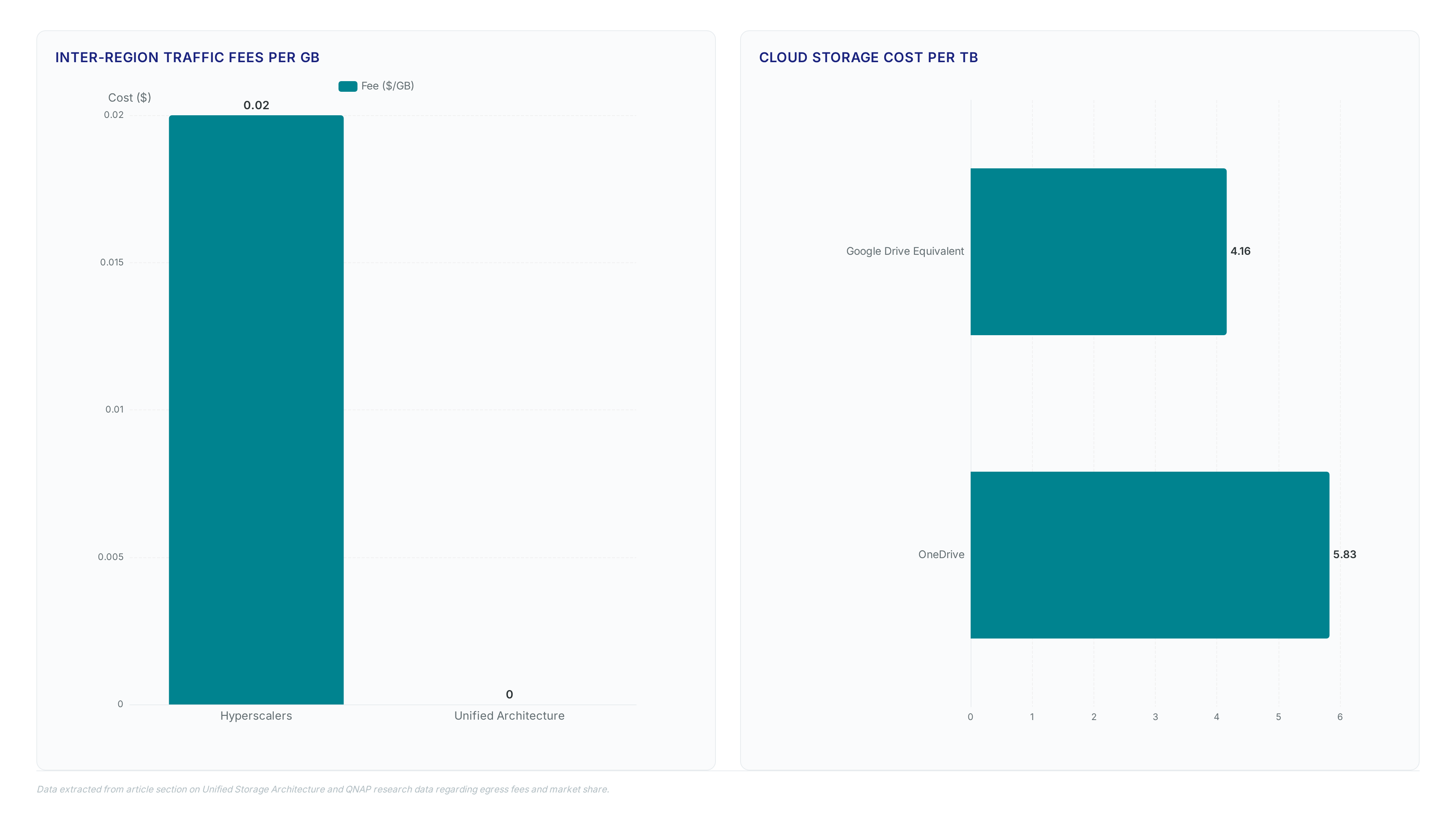
Hyperscale platforms charge $0.09 per GB for egress, turning data moves into liabilities. Rabata.io eliminates these fees with transparent S3 storage.
Achieving 99.999999999% durability requires more than algorithms; it demands active governance to prevent logic errors and accidental deletion.
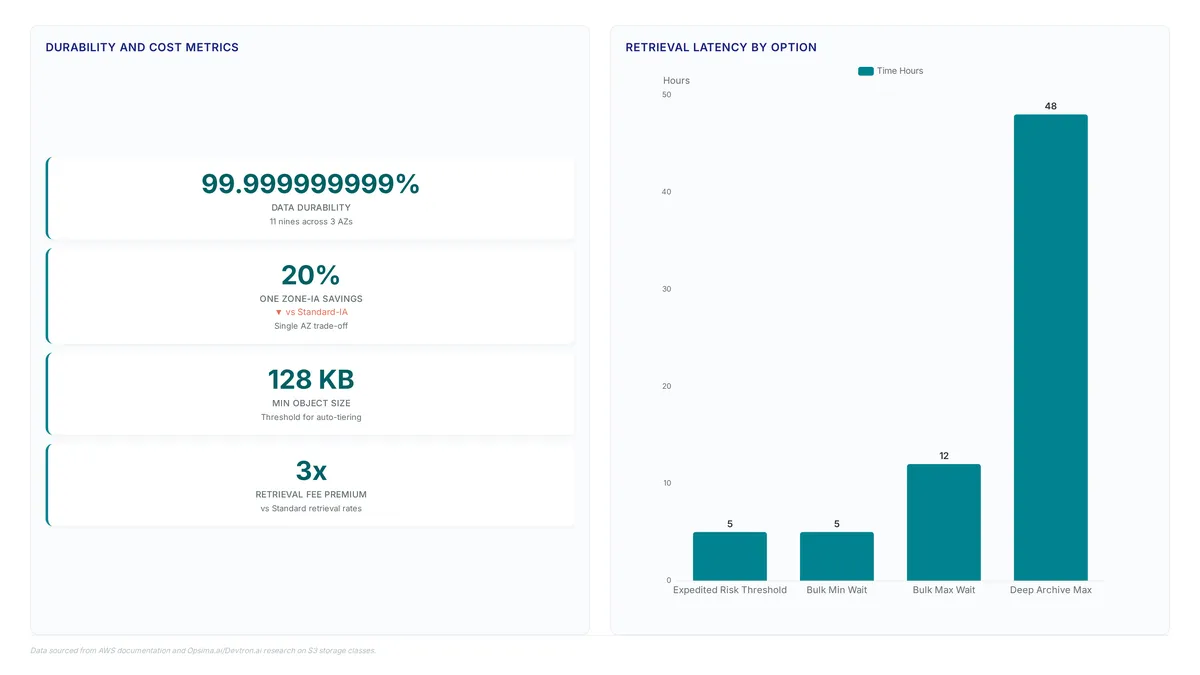
Analyze AWS S3 Glacier's 11-nines durability and retrieval windows to enforce cost discipline without sacrificing compliance or data integrity.
Engineering GDPR-compliant data architectures typically demands 200, 400 hours of dedicated work, a massive drain on growth-stage SaaS resources.
The EU GDPR entered into force on 25 May 2018. That date set the floor, not the ceiling, for storage compliance.
Eleven nines durability limits annual loss to one object per 10,000 years. See how active checksums prevent silent corruption better than tape.
Raw capacity means nothing if bucket policies are porous. Learn why the 50 TB object limit demands smarter storage architecture for AI.
Request fees per 1,000 operations often exceed storage rates. Learn why manual math fails on API volumes and how to fix bill spikes.
A 23x cost gap exists between S3 storage class tiers. Learn how request operations and transfer fees erode budgets beyond simple per-GB charges.
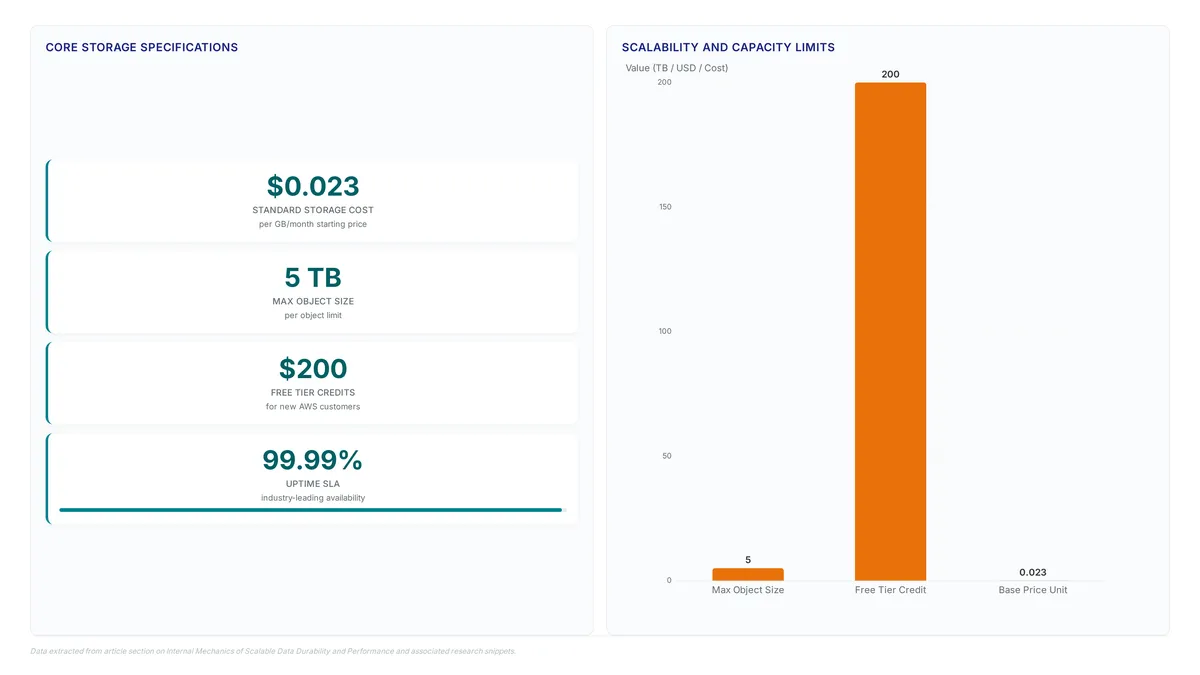
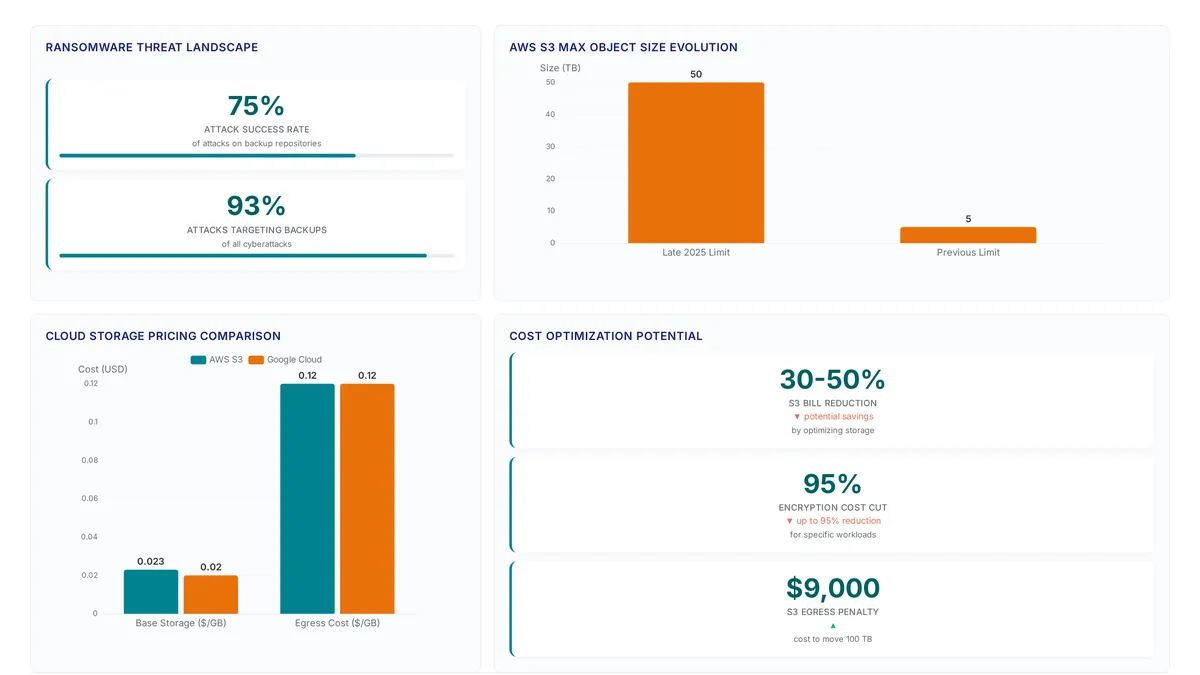
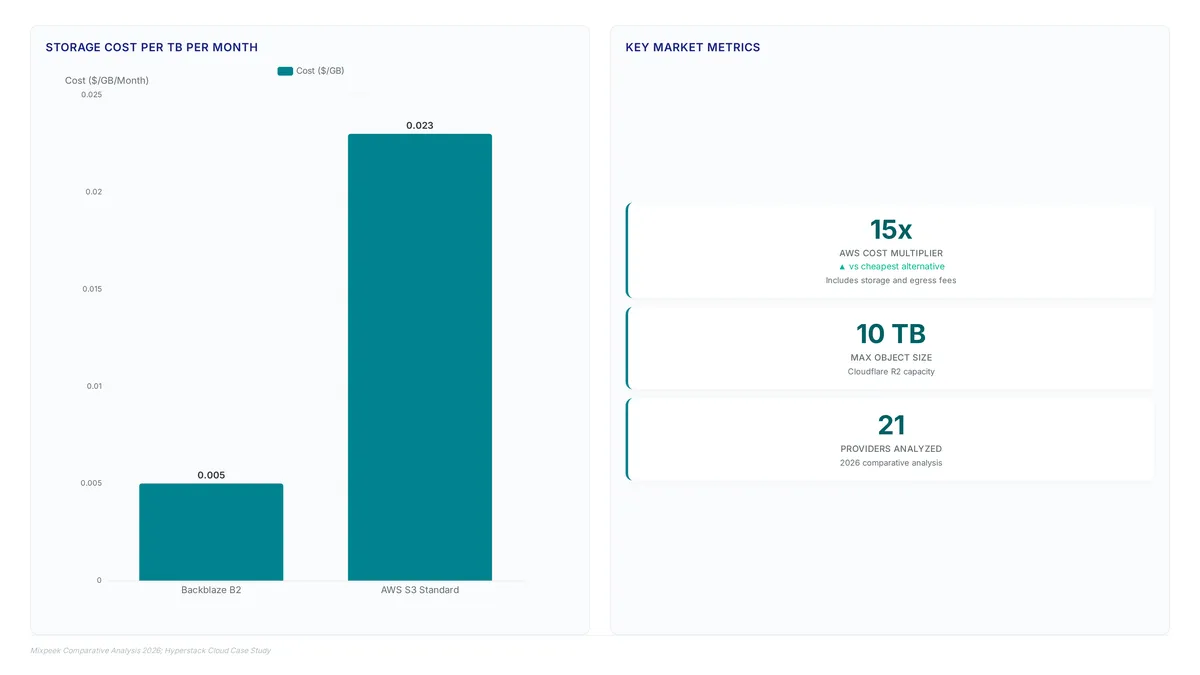
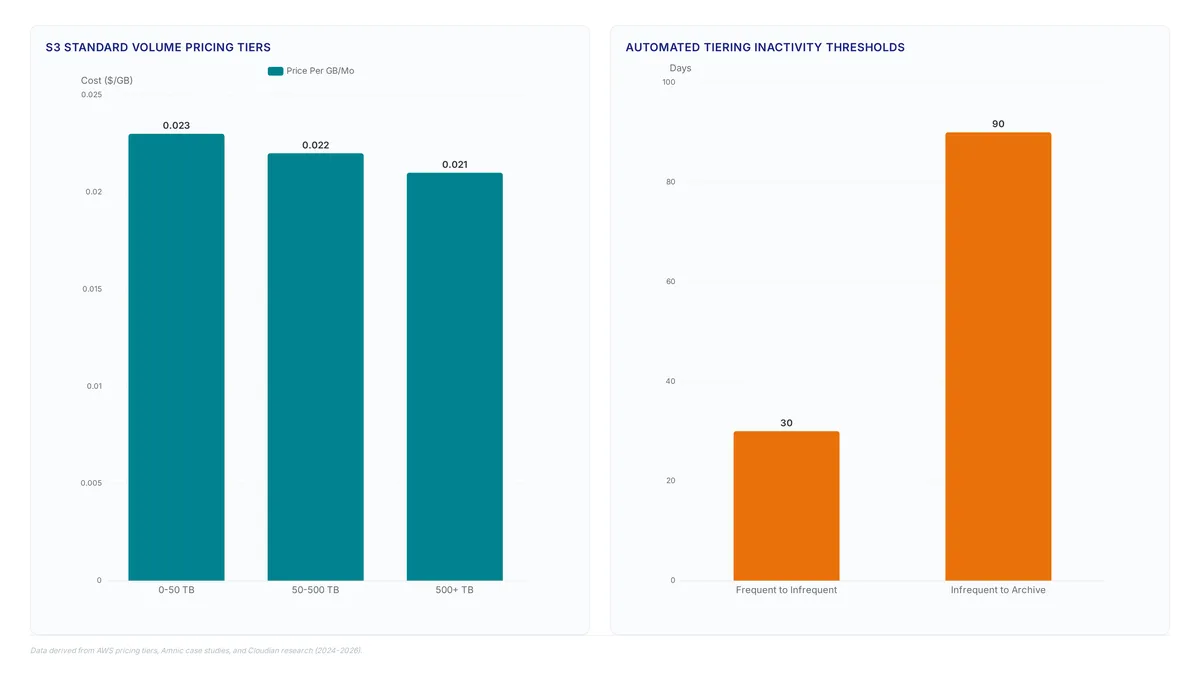
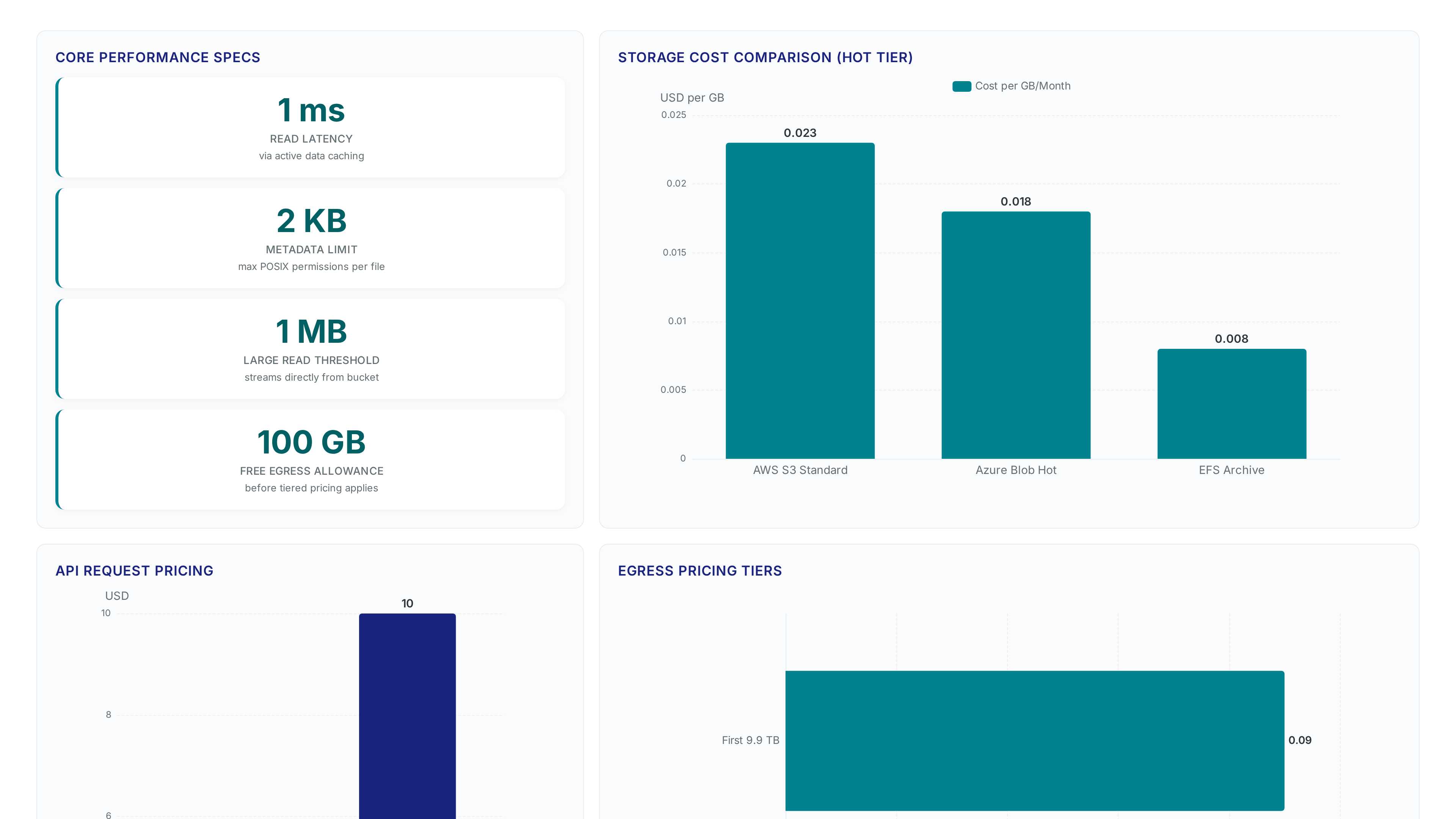
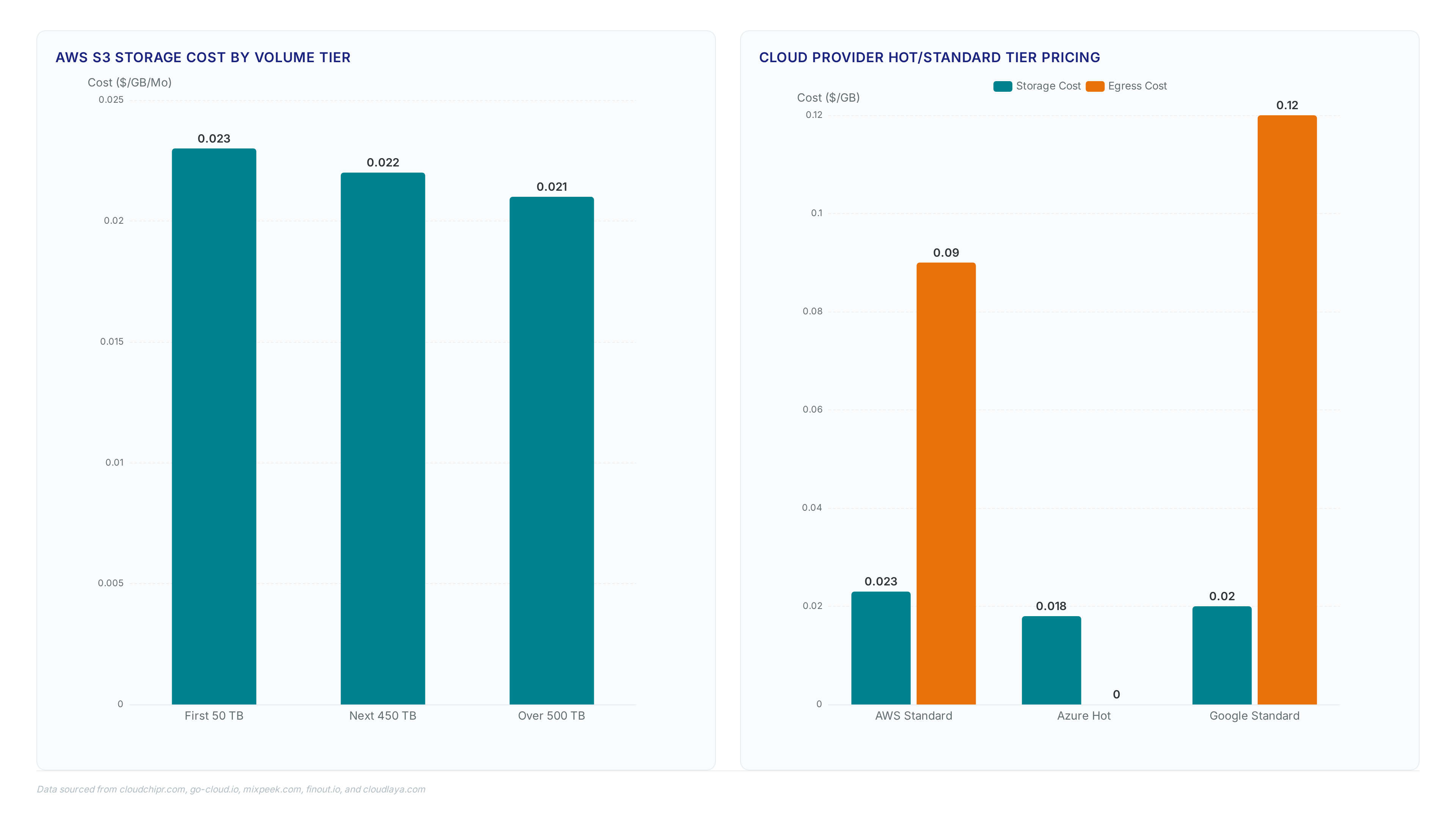
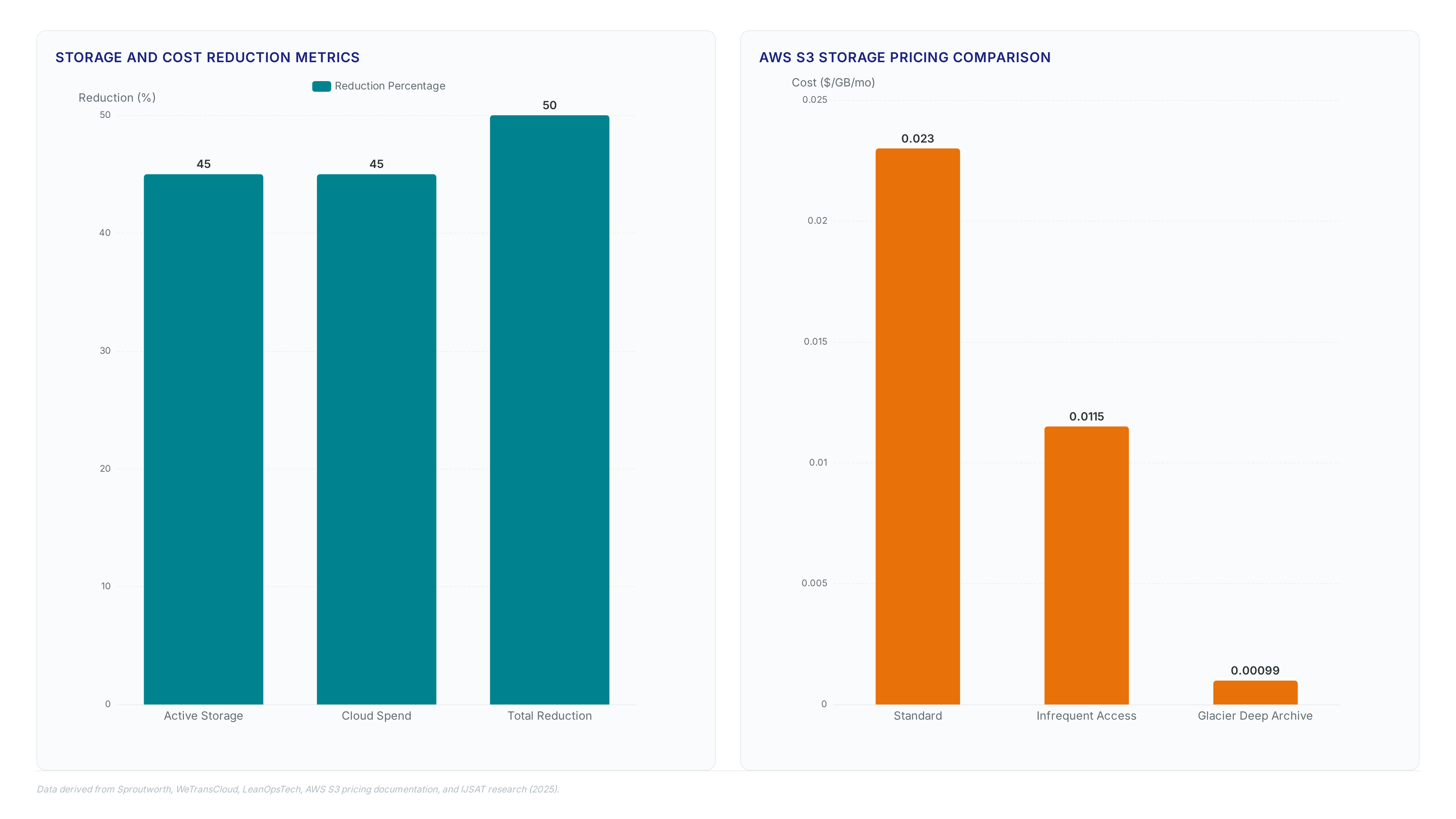
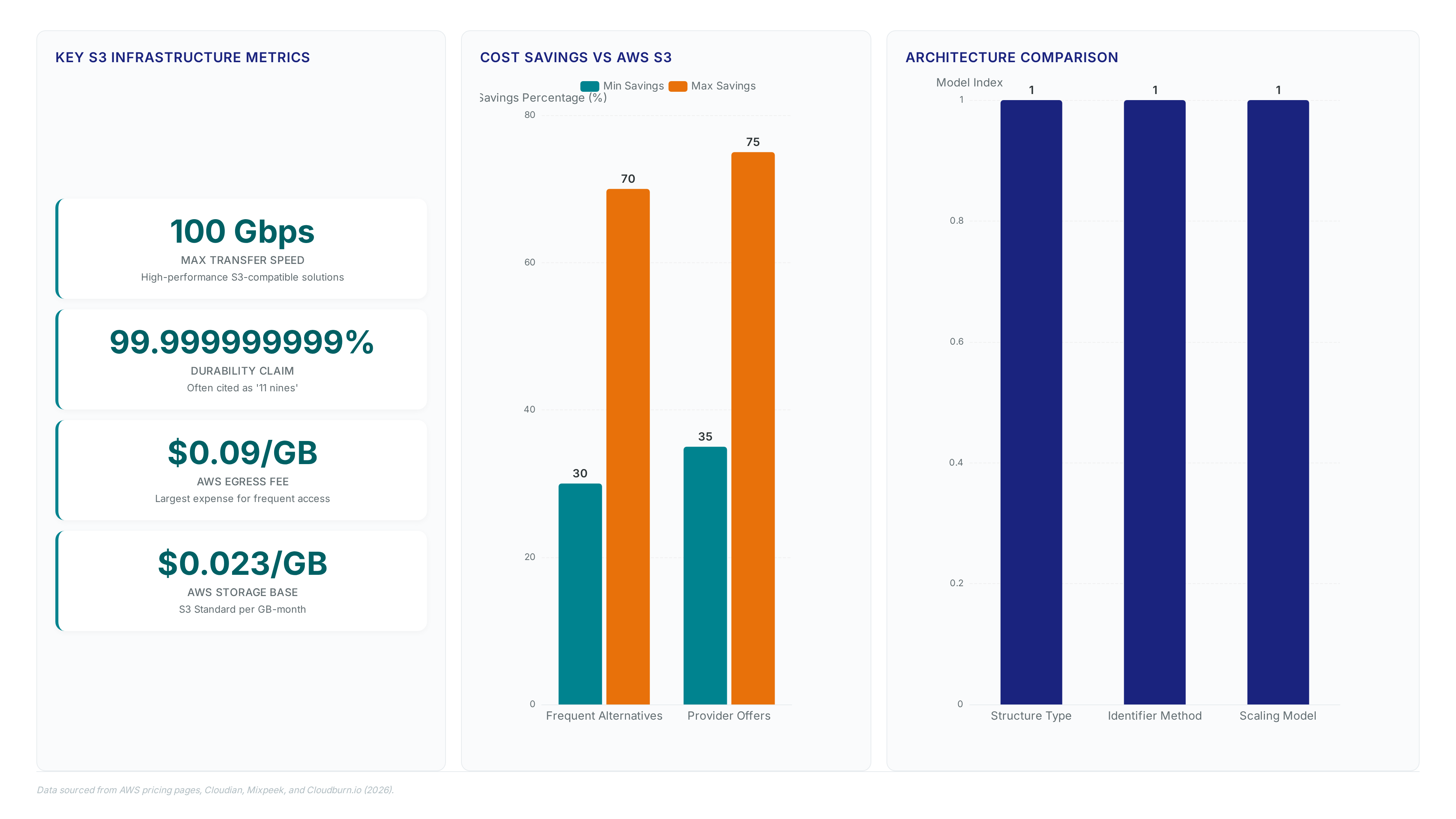
Amazon S3 Standard costs $0.023 per GB in us-east-1, yet this base rate masks the true expense drivers.
S3 replication lags 15 minutes during bursts, leaving data exposed. Learn why durability isn't backup and how to build verified restore paths.
Google charges $0.12 per GB for egress, inflating budgets. Discover how zero-fee models eliminate this hidden tax on your data portability.
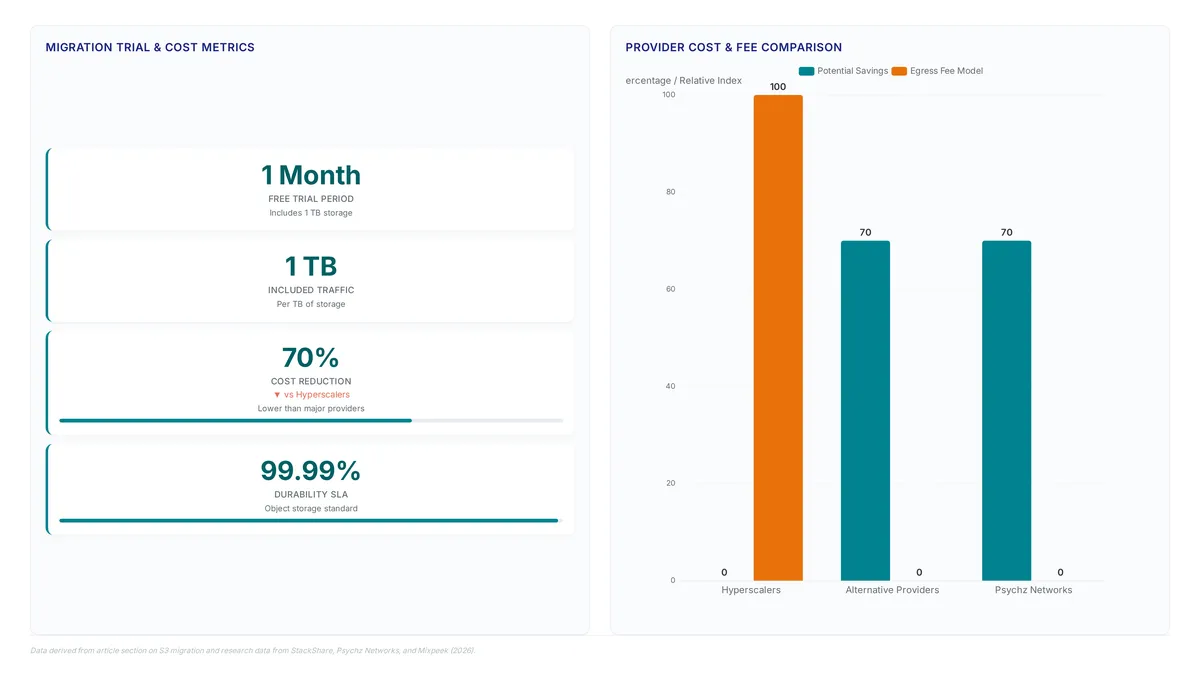
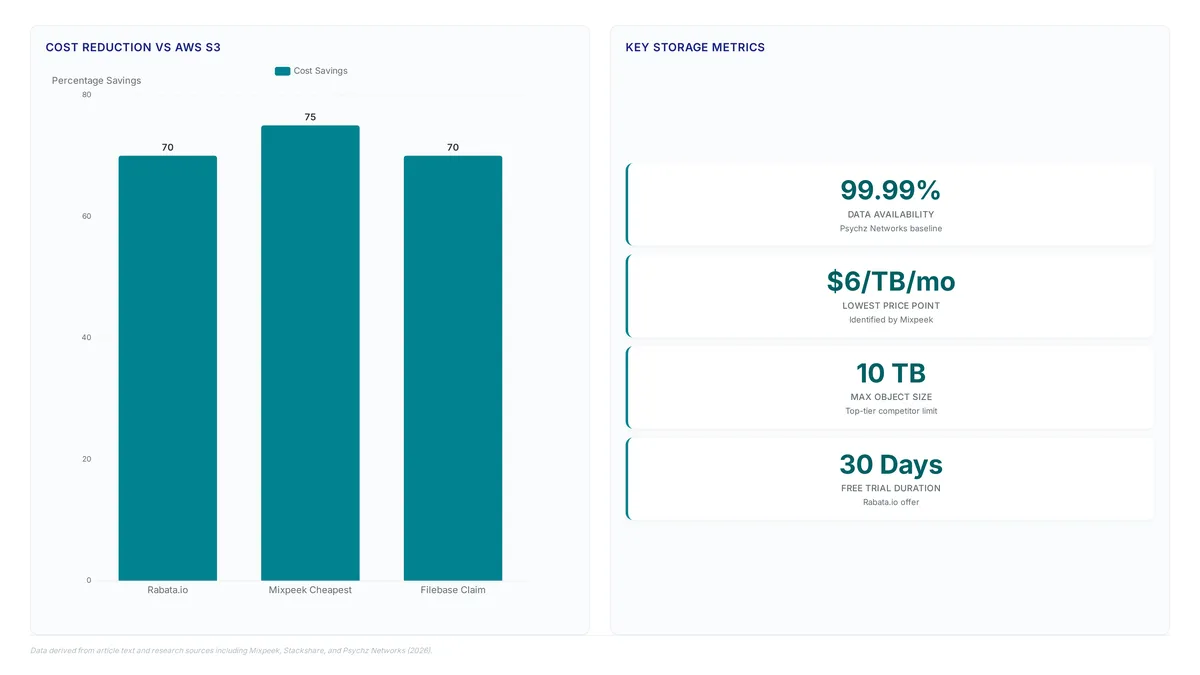
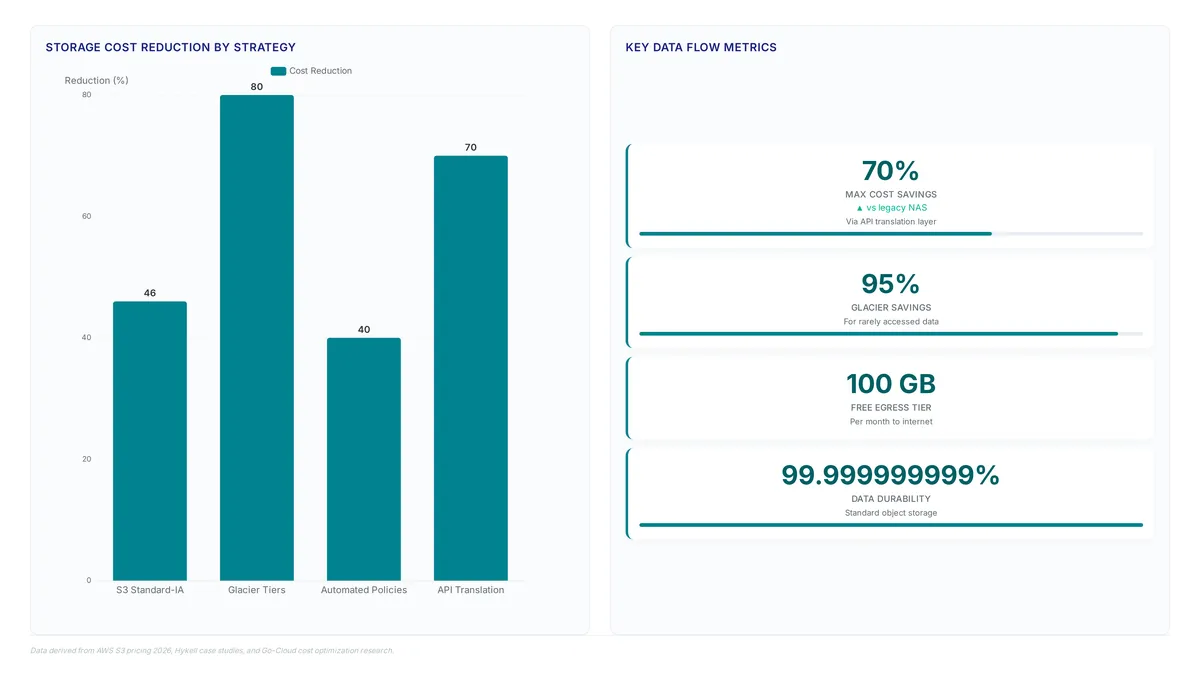
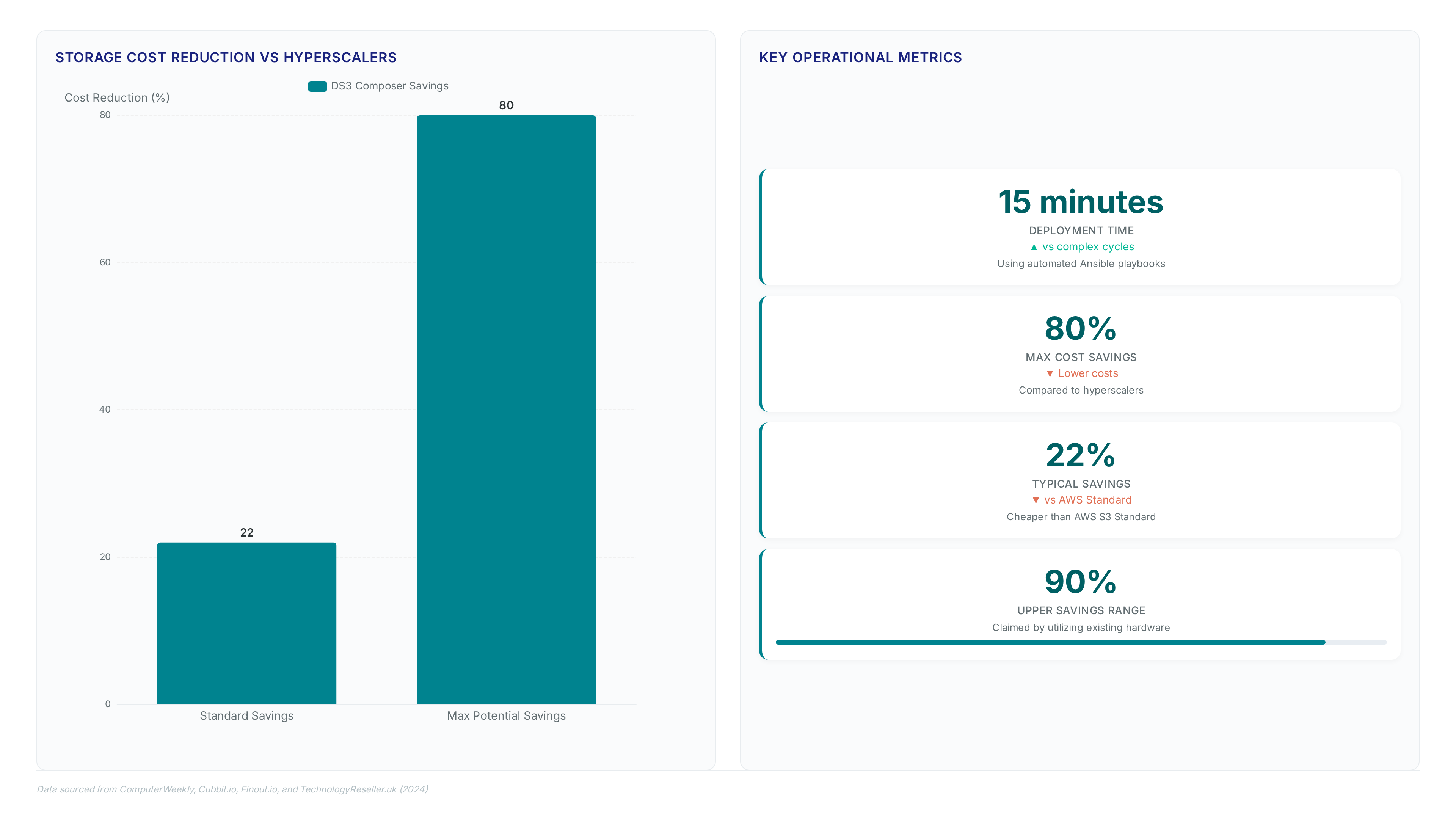
Discover how AWS S3 alternatives reduce enterprise storage costs by 70%. Eliminate unpredictable egress fees with Rabata.io's zero-egress platform.
Learn how S3 objects reach 5TB while navigating flat architecture. Discover strategies to manage storage classes and reduce retrieval latency effectively.
Flat storage architectures scale well, but default configs create debt. Learn how automated governance and IntelligentTiering reduce human error in...
Cloud.gov S3 plans like basicpublic expose data instantly. Learn why sandbox variants delete storage and how Rabata.io enforces strict governance policies.
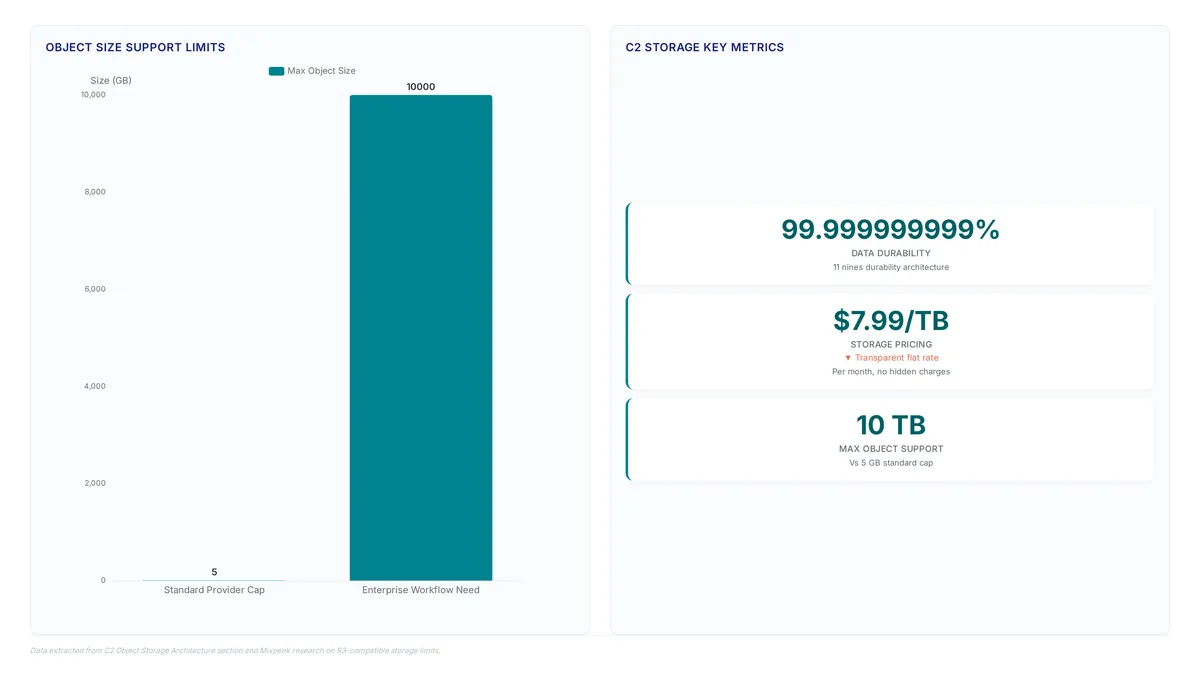
Synology offers object storage at $7.99 per TB with free retrieval, eliminating hidden API fees for large-scale archives and data lakes.
Unify fragmented storage ecosystems by mapping distinct bucket terms into a single object standard, eliminating the technical debt of bespoke integrations.
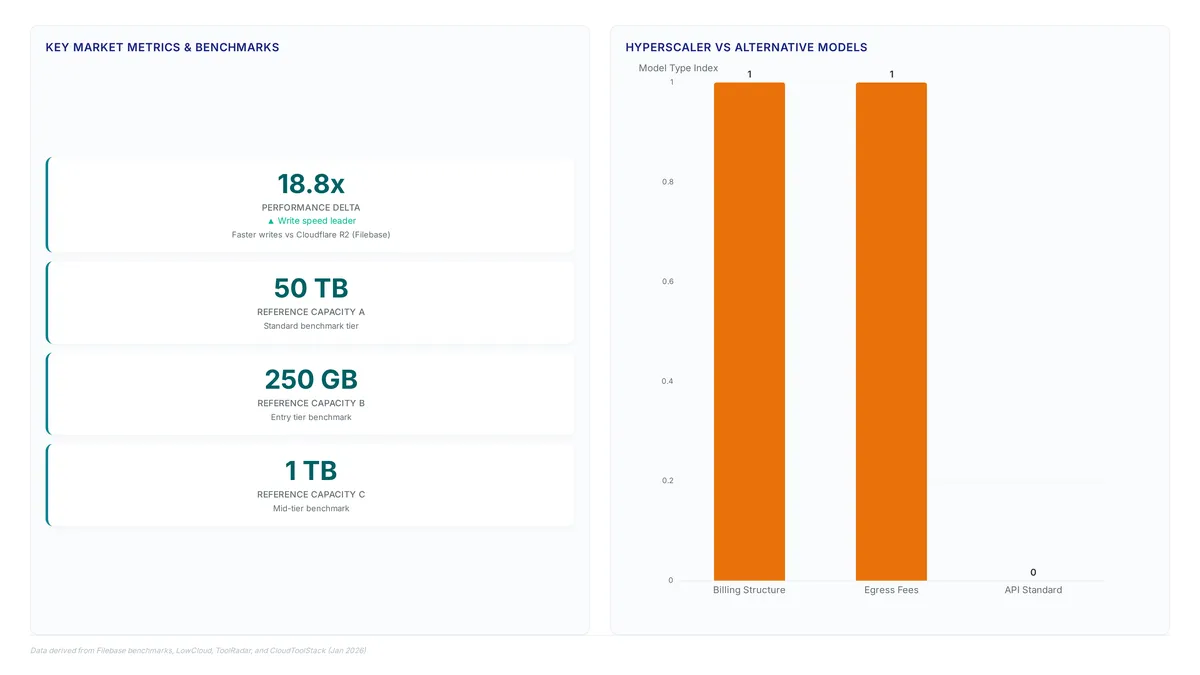
Discover how Rabata.io delivers 2.3x faster mixed workloads than AWS S3 while cutting storage costs by 70% for AI and media teams.
Object storage stores data as objects instead of files or blocks, creating a flat structure for unstructured data...
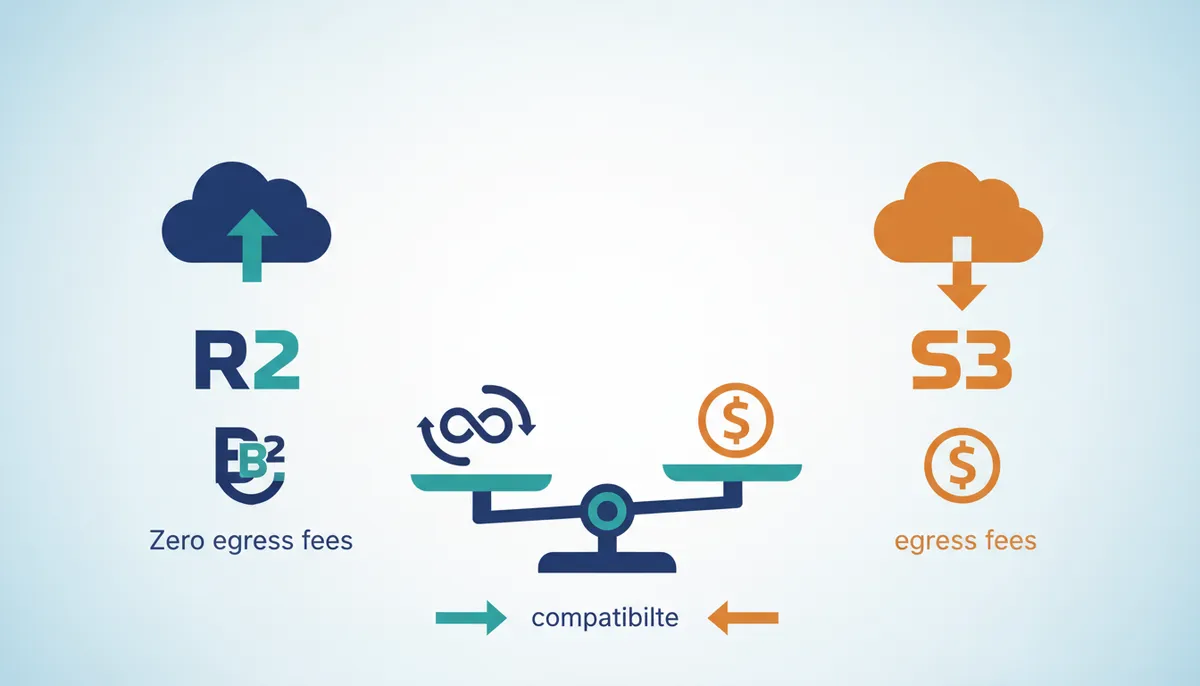
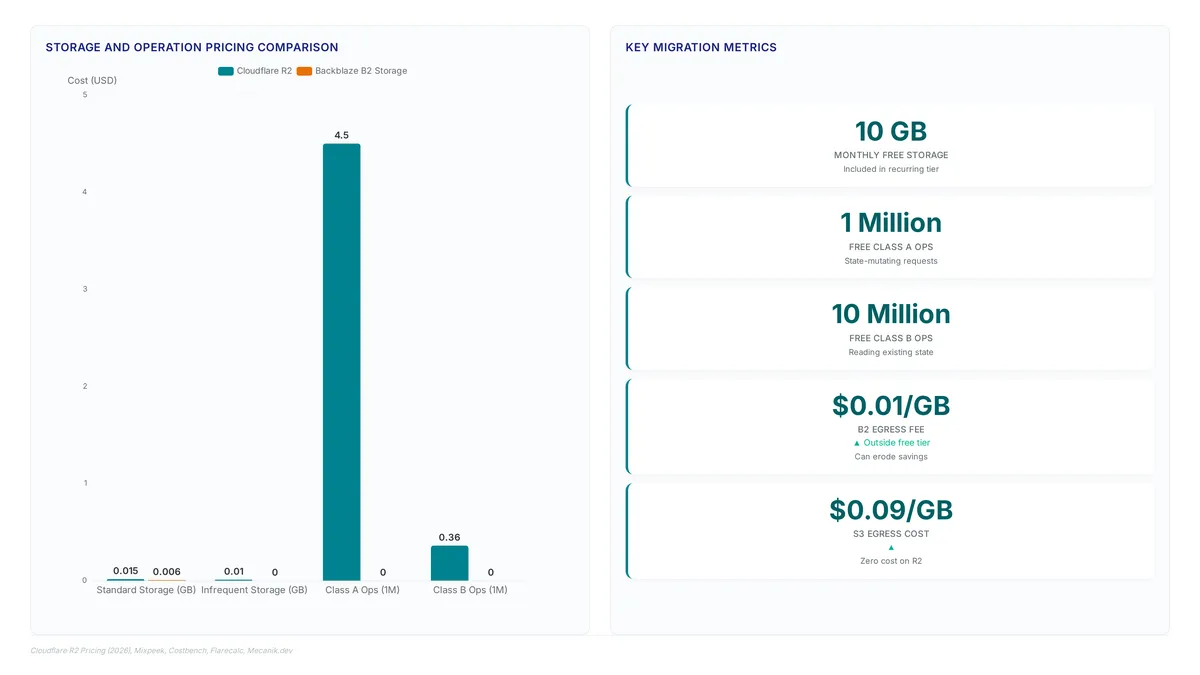
Cloudflare R2 pricing sets the mid-range benchmark for base storage costs per GB monthly. This isn't just a price cut; it's a structural shift.
Learn how scoped tokens restrict operations to specific buckets, replacing legacy keys to limit exposure during Cloudflare authentication workflows.
Discover S3-compatible storage delivering 2.3x higher performance than AWS while eliminating hidden egress fees for heavy data workflows.
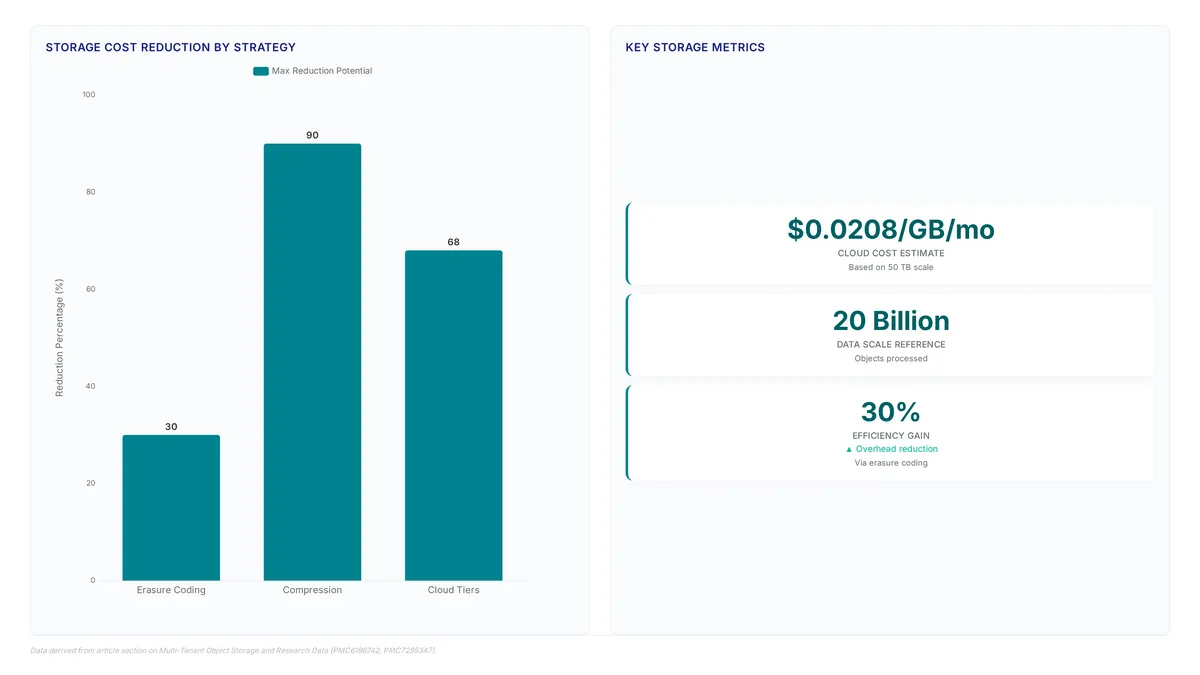
Run Amazon S3 workloads outside AWS without rewriting code. Learn how erasure coding ensures durability while scaling unstructured data to petabytes.
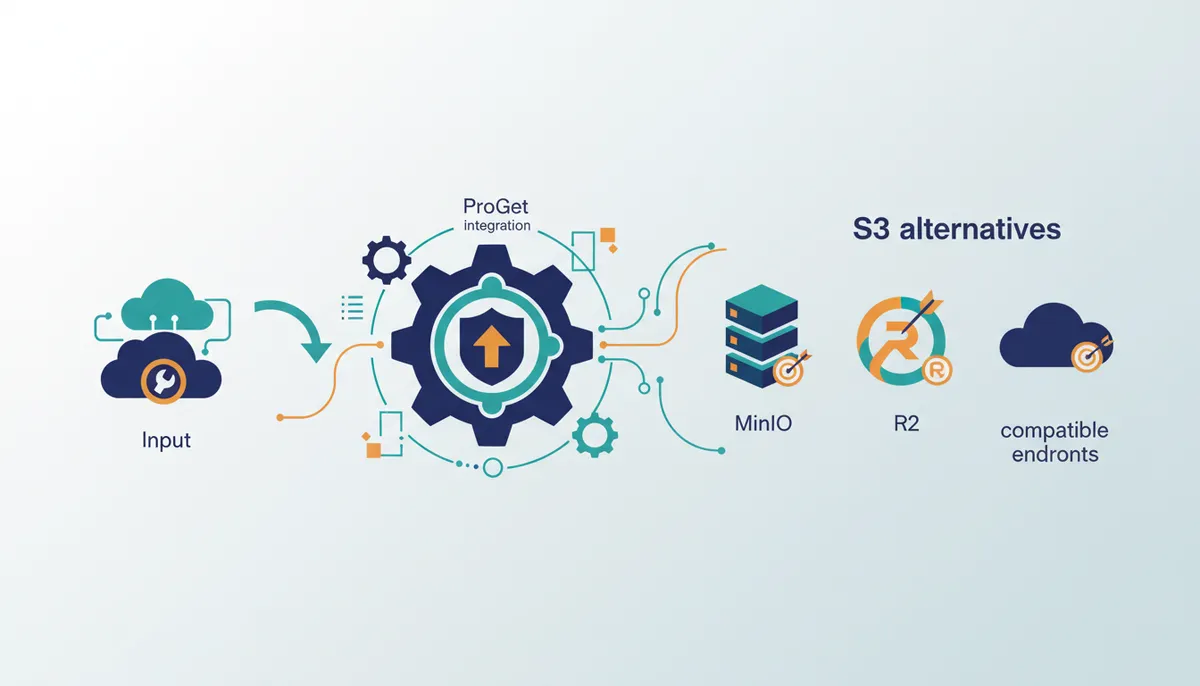
Explore S3 alternatives like Ceph and MinIO for self-hosted storage. Learn why managed solutions offer better value than unpredictable hardware costs.
Cut storage costs by 70% with S3 compatible systems. Learn how decoupling the API reduces latency for AI workloads without code changes.
Cut data transfer expenses by 70% using S3 compatible storage. Learn how erasure coding ensures durability while avoiding proprietary vendor lock-in fees.
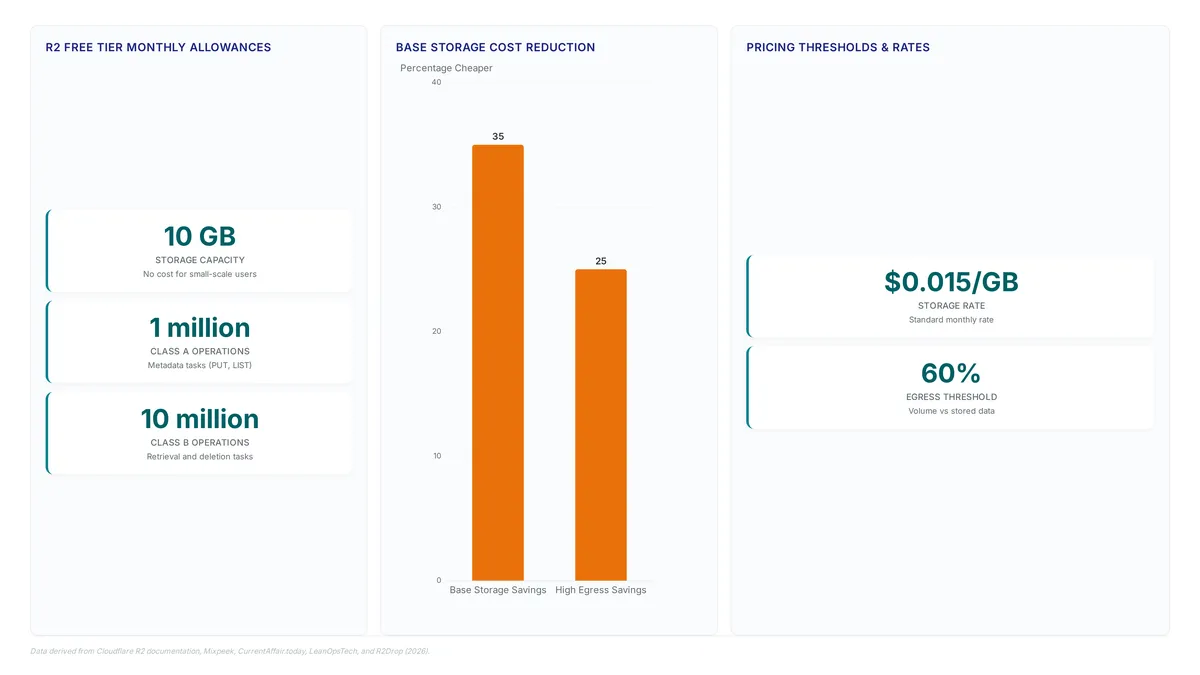
Cloudflare R2 storage costs $0.015 per GB monthly, yet hidden API charges often exceed base fees.
Sevalla cuts cloud spend by up to 88% while eliminating egress fees entirely. A direct response to financial bleeding from hidden transfer costs.
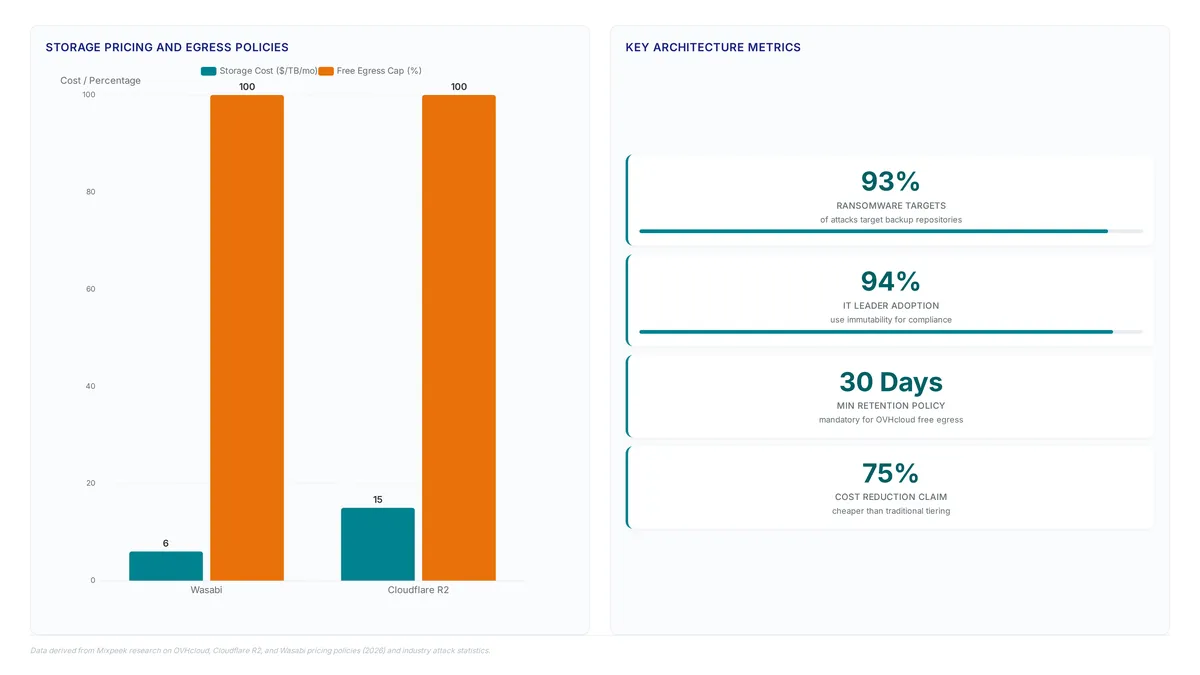
OVHcloud removes egress fees by 2026. Teams can now use a $200 credit to test S3-compatible tiers without hidden transit taxes on data.
OVHcloud delivers 11 nines data durability across three geographical zones without charging for API calls or traffic.
Verified benchmarks show 2.3x faster speeds than legacy systems. Discover how Rabata.io delivers high-performance, S3-compatible storage without vendor lock-in.
Object storage systems now support scaling to 100 petabytes within a single hybrid namespace.
Learn how object storage supports individual files up to five terabytes, enabling limitless scale for modern AI data foundations without capacity planning.
Storing 1 TB costs $5.72 on Rabata versus $24.63 on hyperscalers. Discover how flat-rate pricing eliminates egress traps for AI workloads.
Stop looking at the per-gigabyte sticker price. In 2026, that number is a decoy. The real bill arrives later, buried in egress fees and API request...
Port 9000 serves as the default access point for the server and its embedded web-based object browser.
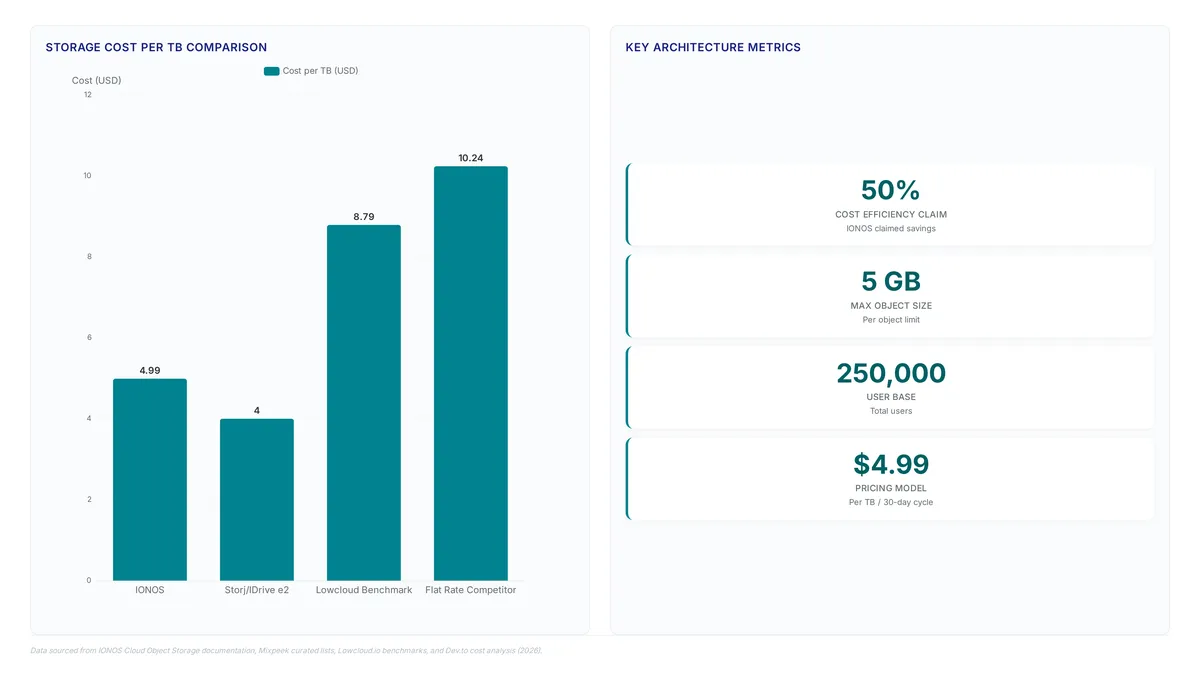
Storing 350 TB costs just $1,747 with IONOS CLOUD. Competitors charge up to $8,138 for the same capacity. That gap defines the modern storage market.
Switch to Frankfurt-based object storage to reduce expenditures by up to 90% and eliminate opaque egress charges from hyperscalers.
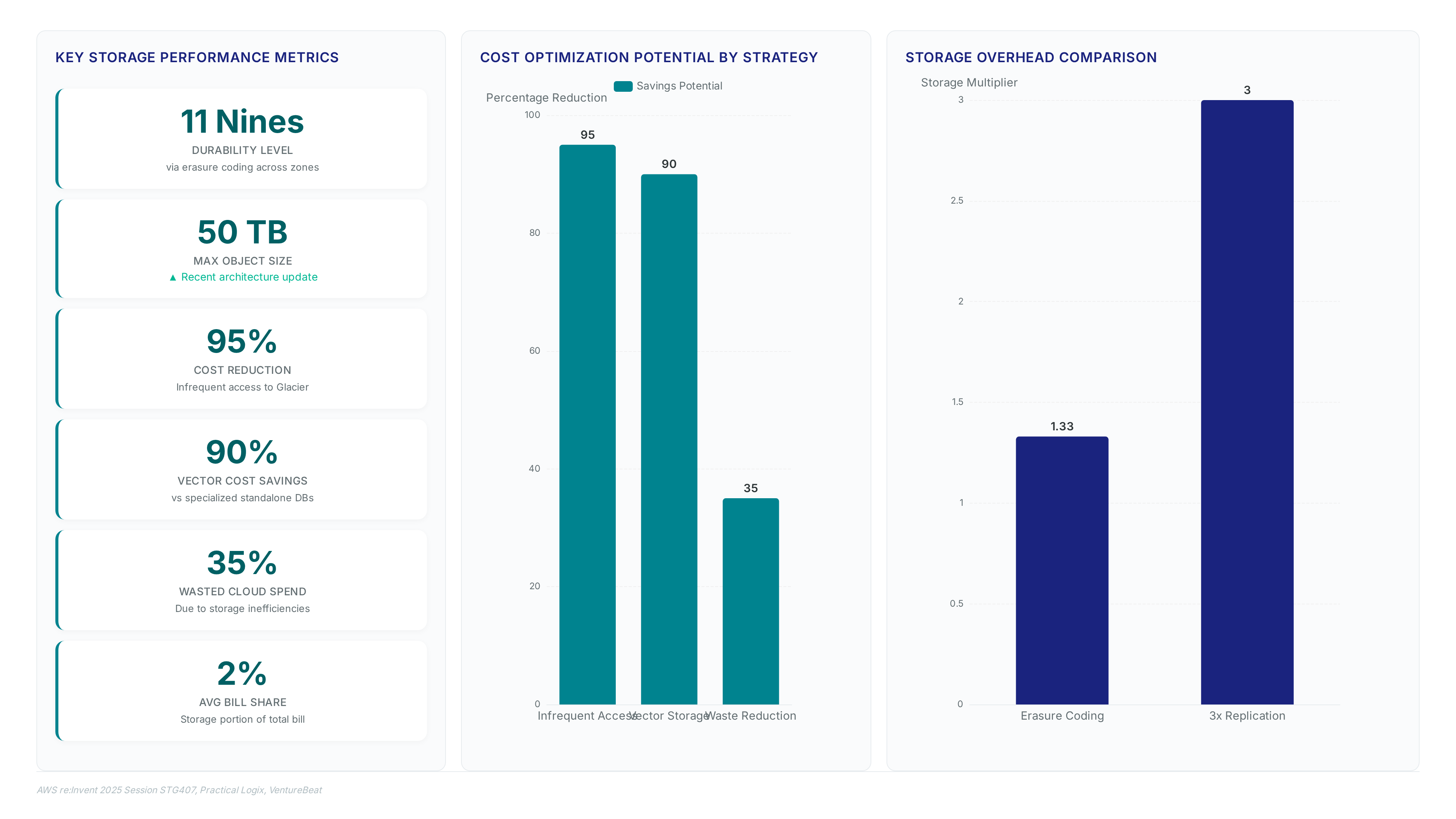
Discover how erasure coding delivers 11 nines of durability while slashing costs compared to legacy replication methods for enterprise data.
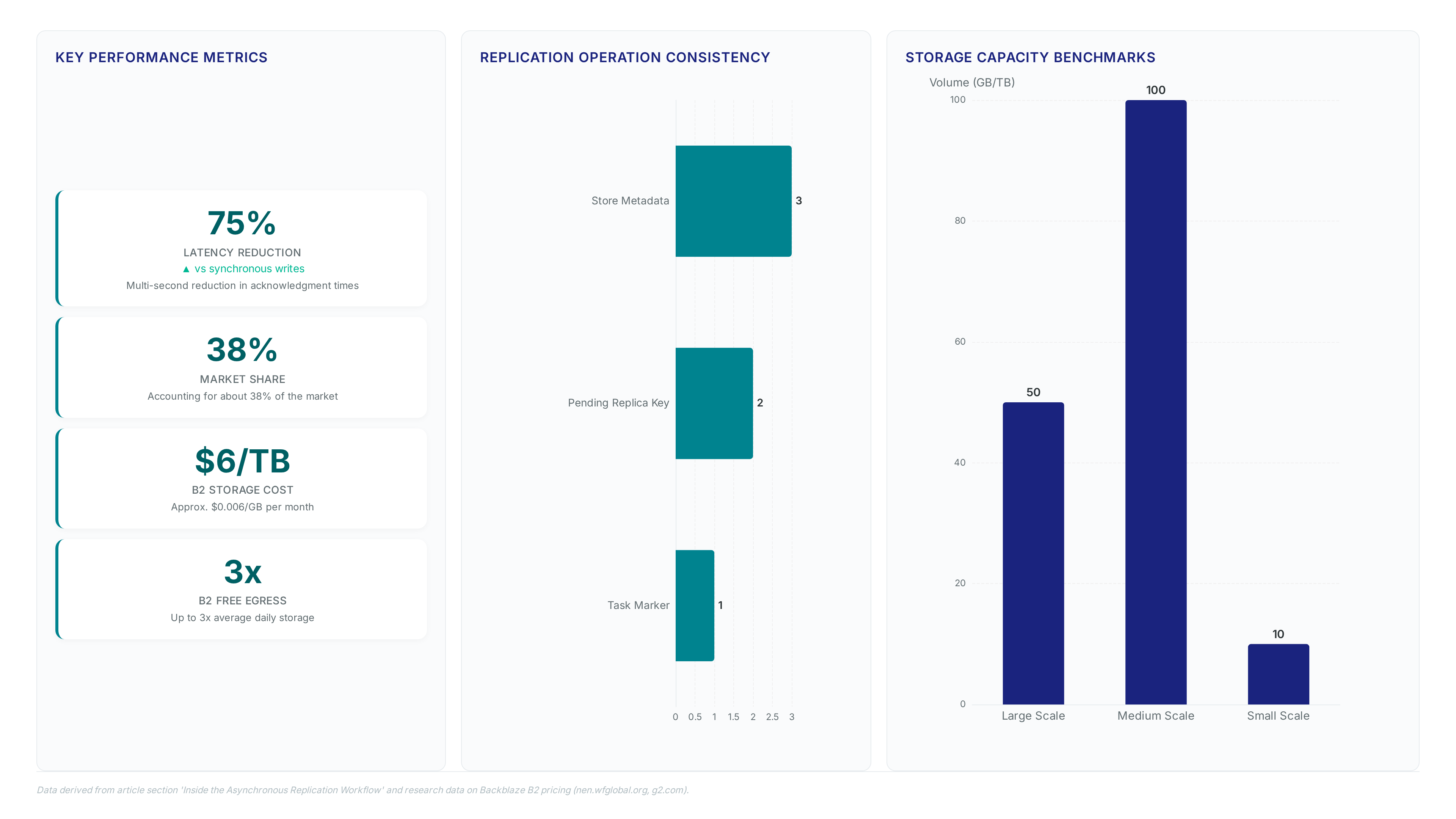
Market rates for object storage have collapsed. The going rate now sits at $0.006 per GB monthly, a figure that renders legacy enterprise expectations...
Object storage now manages an immense number of objects globally according to Wikipedia data.
Movebot migrates data across 30+ platforms, handling up to 270TB per day while fixing naming conflicts automatically before transfer.
Legacy arrays choke on exabyte-scale workloads. Discover why 10 TB/s throughput is now essential for modern AI training pipelines.
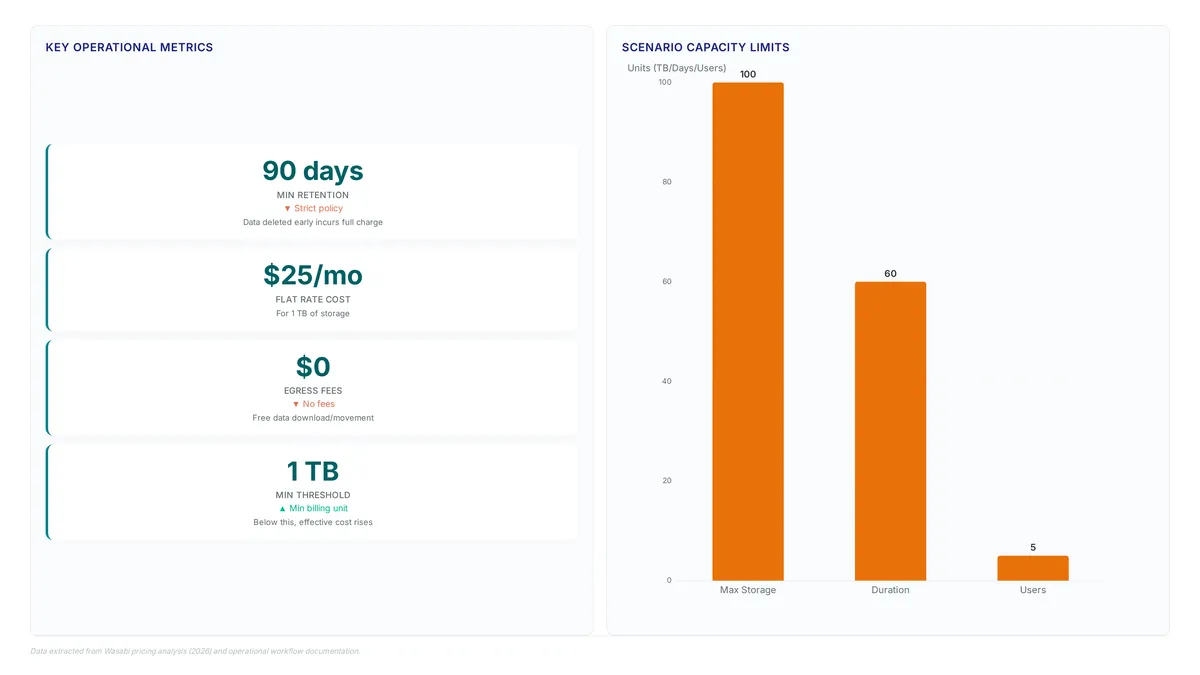
Analyze how 90-day retention policies impact hot storage budgets and why flat-rate models often fail transient data workflows.
Azure Blob Hot lists at $0.018 per GB, but retrieval fees often drive the real bill. Learn how architecture choices impact total cloud costs.
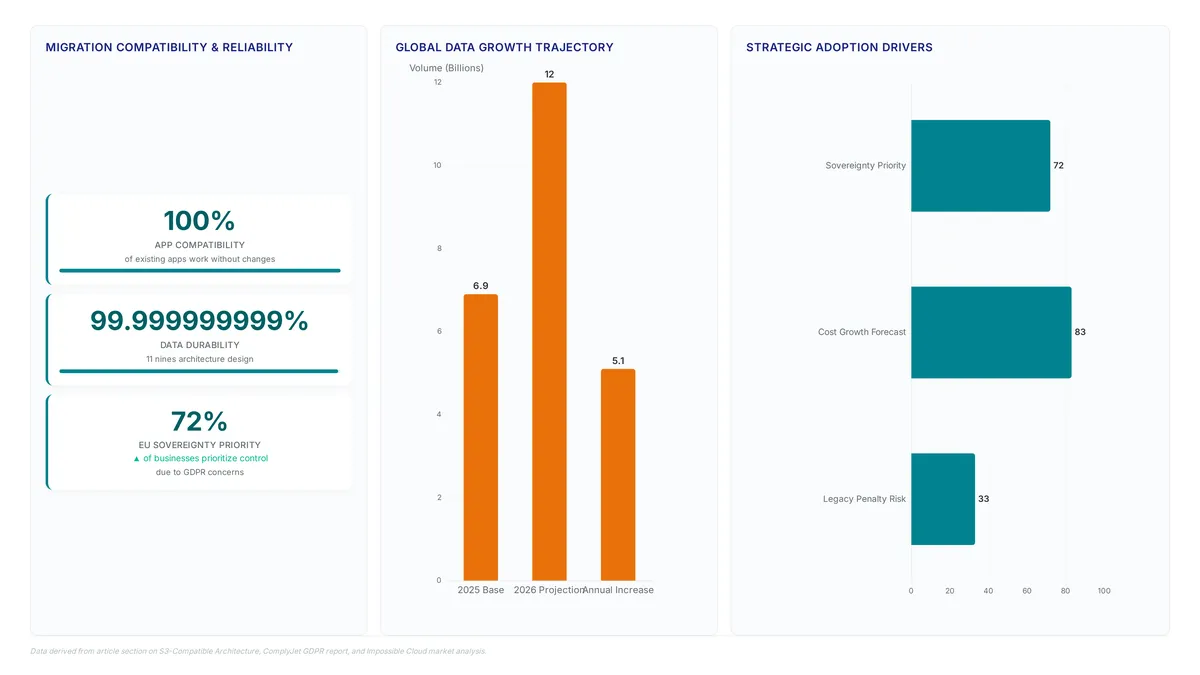
Global data creation has surged from two zettabytes to over one hundred and eighty-one zettabytes.
Neon Postgres announced three beta features on July 15, 2026, enabling a unified deployment model.
By 2027, S3 compatibility becomes mandatory. Discover how Rabata.io delivers GDPR-compliant storage with EU data centers for strict regulatory needs.
Learn how PutObject ensures atomic uploads where success means the full 63-character object is stored, preventing partial data corruption.
Discover how Cloudflare R2 delivers 20x faster response times than S3 at the 95th percentile while eliminating egress fees for global data.
Cloudflare R2 hit 171.58 ms latency, yet AWS S3 remains six times quicker. See why consistent benchmark settings matter for real performance.
DigitalOcean Spaces enforces a strict 1,500 requests per second limit per IP. Learn how to architect around this ceiling for stable AI workloads.
LobeHub demands six specific environment variables to unlock S3-compatible storage. Get the S3ENDPOINT wrong, and file uploads fail instantly.
Analyze how zero-egress models shift storage economics. Learn why 21 providers were evaluated for true S3 API parity and cost efficiency.
Fix broken integrations by routing traffic through the /storage/v1/s3 path. Isolate your protocol layer from the physical storage backend today.
Surface-level feature lists fail during migration. Discover why architectural mechanics matter more than theoretical flexibility for your data.
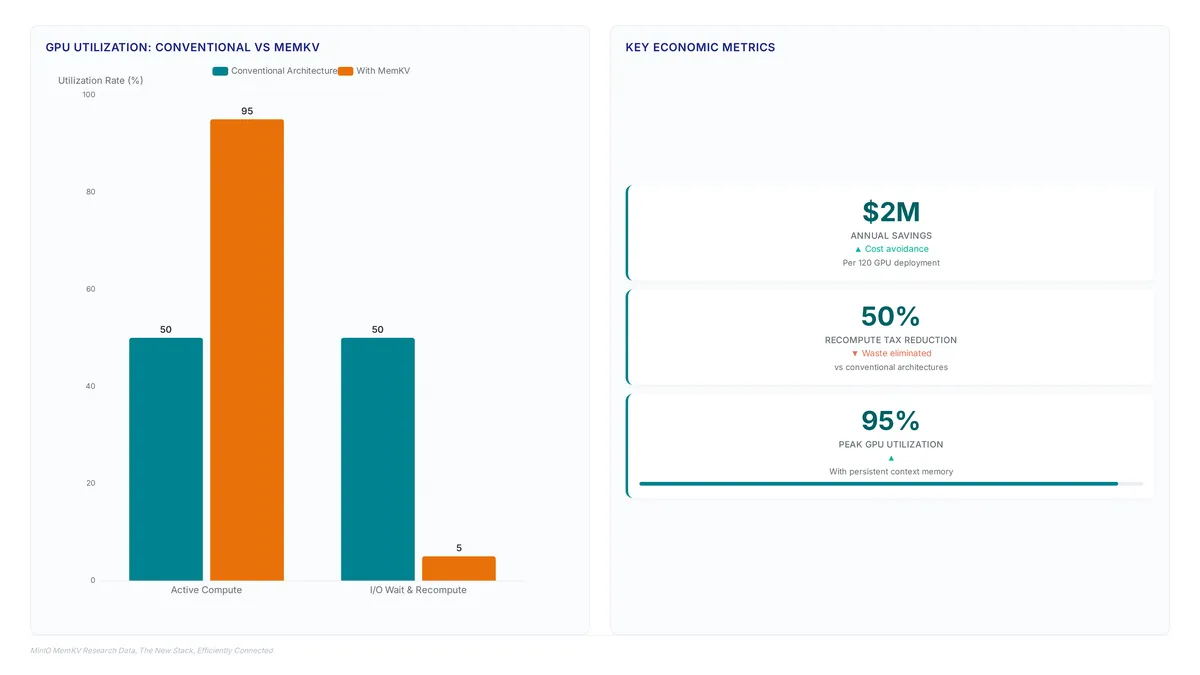
MinIO MemKV targets sub-10ms latency to slash AI inference delays. Learn how zerocopy architecture eliminates recompute tax in GPU clusters.
No specific storage limits or throughput figures exist for Amazon S3 buckets, only qualitative claims of industry leadership per AWS documentation.
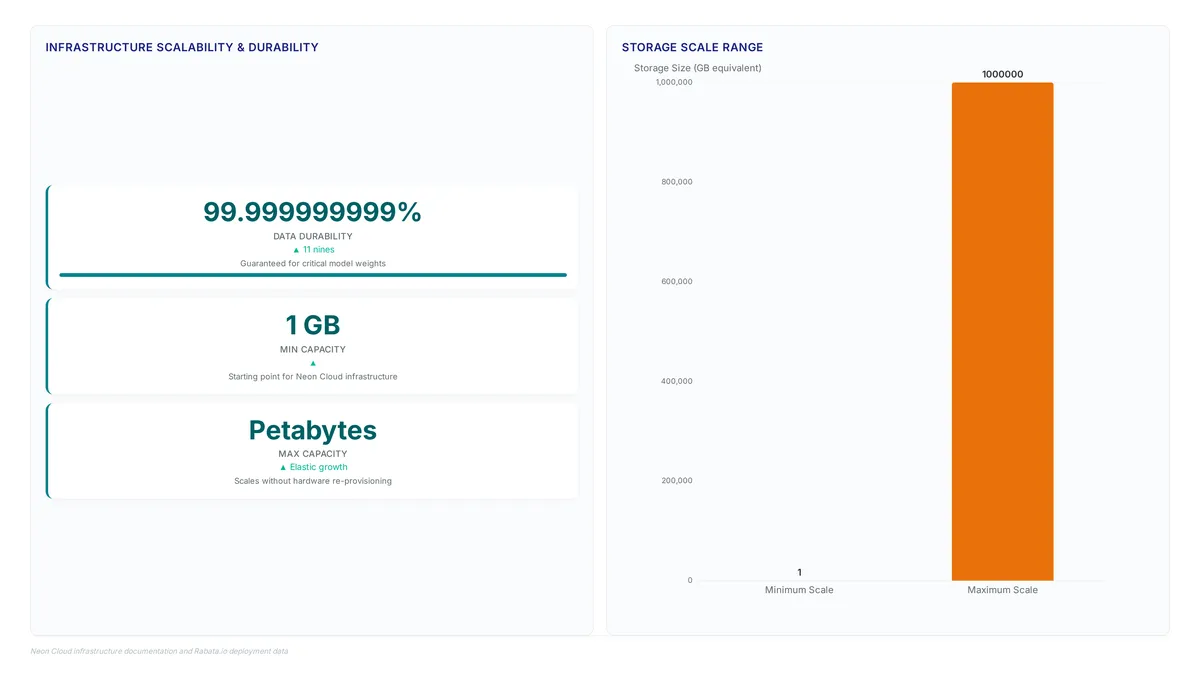
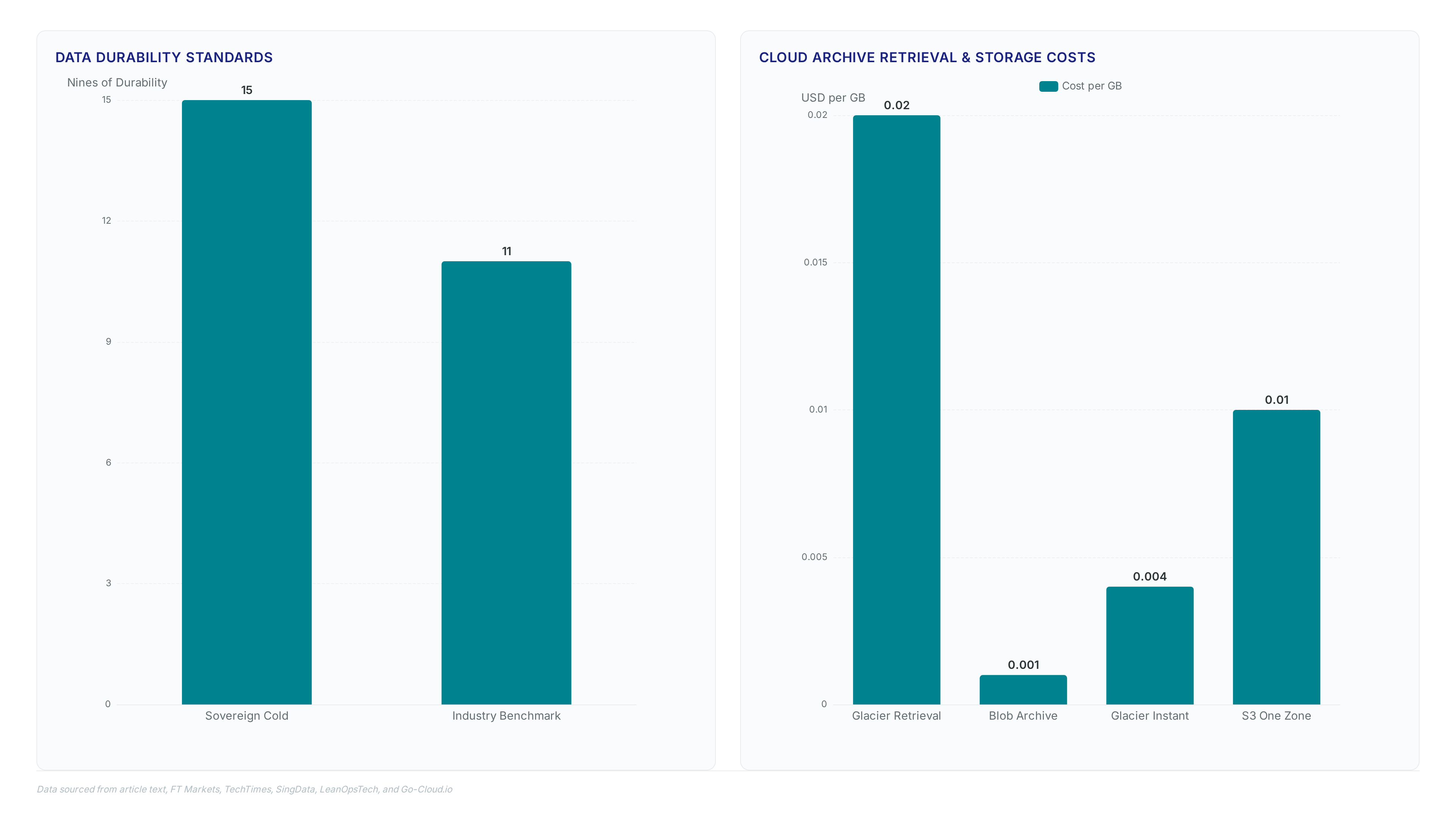
Amazon S3 delivers 99.999999999% durability for objects stored within its infrastructure. This isn't magic; it is the result of aggressive data...
Amazon S3 now allows 50 TB objects. See how flat metadata structures eliminate directory depth risks for massive data workloads.
Discover how object storage delivers "11 nines" durability for massive AI training sets while scaling to billions of data points efficiently.
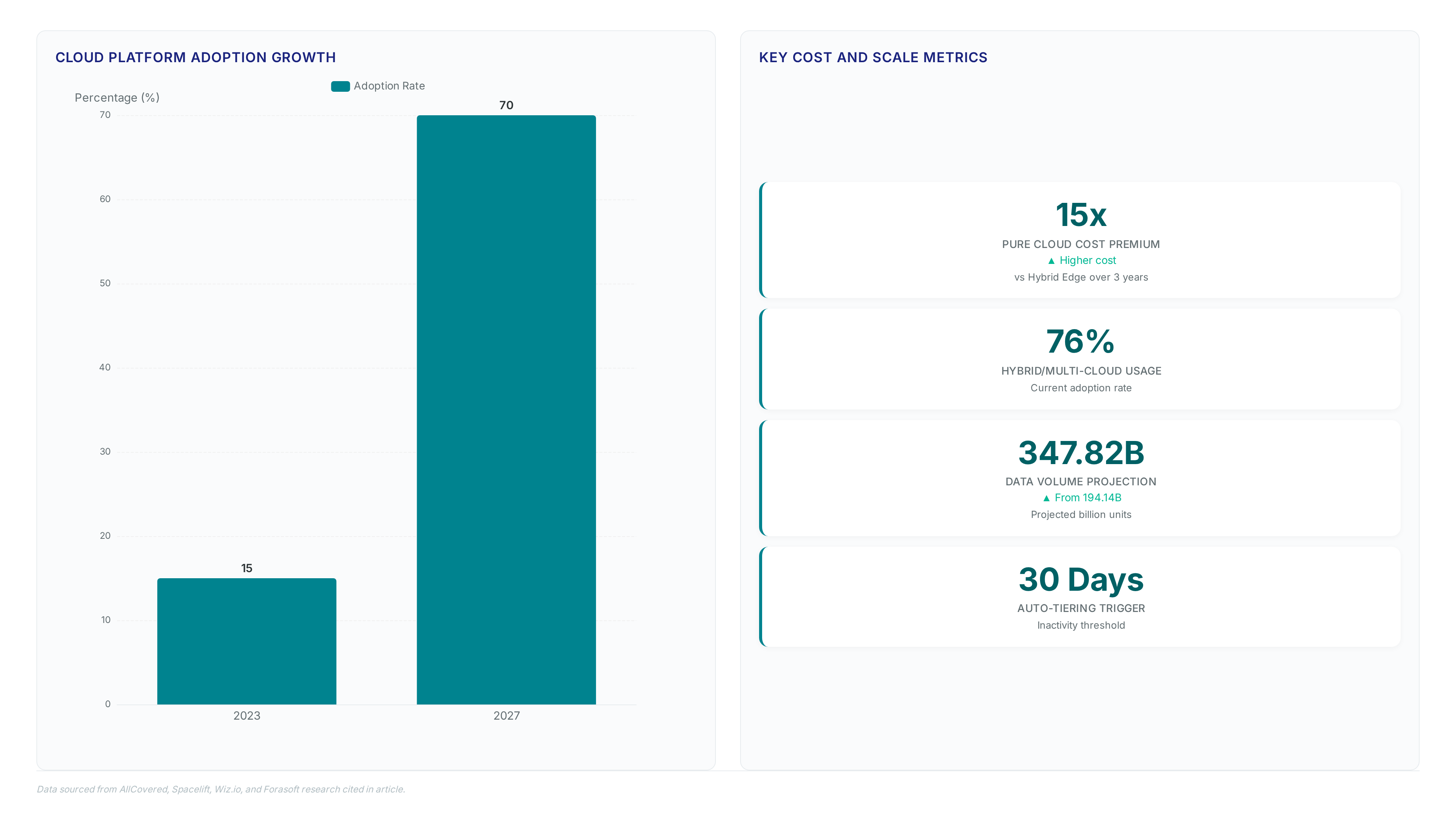
Cloud data volume will exceed 200 zettabytes by 2027. Survival demands zero-knowledge encryption.
S3 versioning triggers a 15-minute propagation window where CDNs serve stale 404 errors. Learn how HeadObject checks amplify timing gaps.
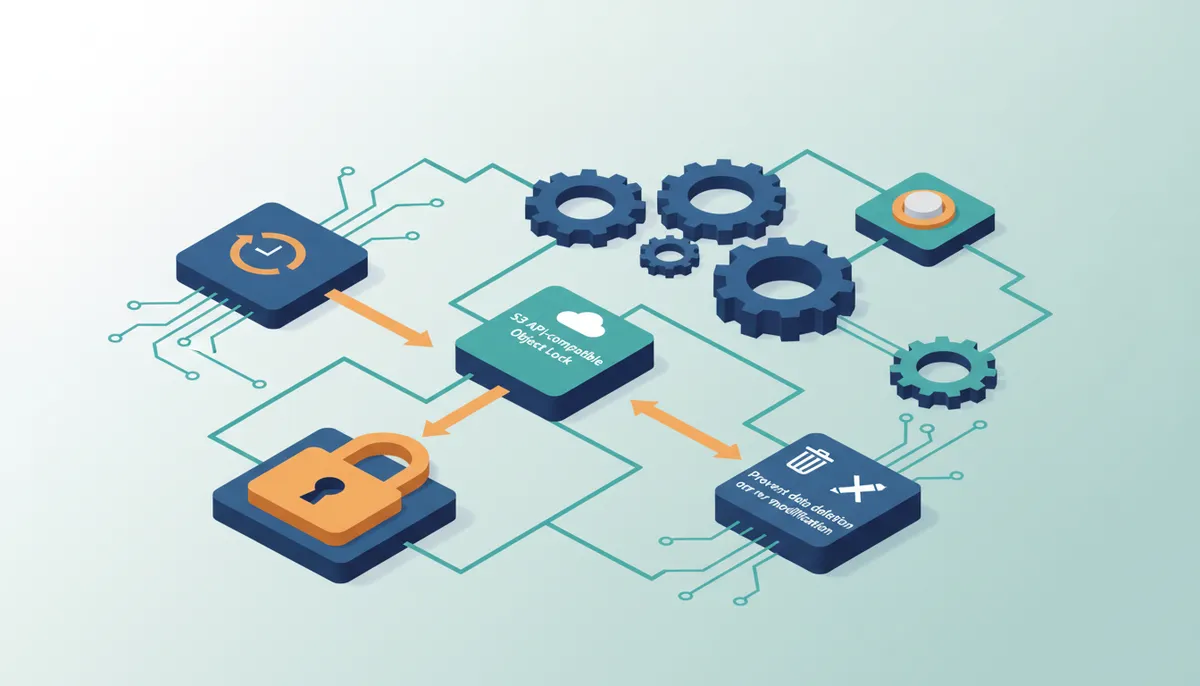
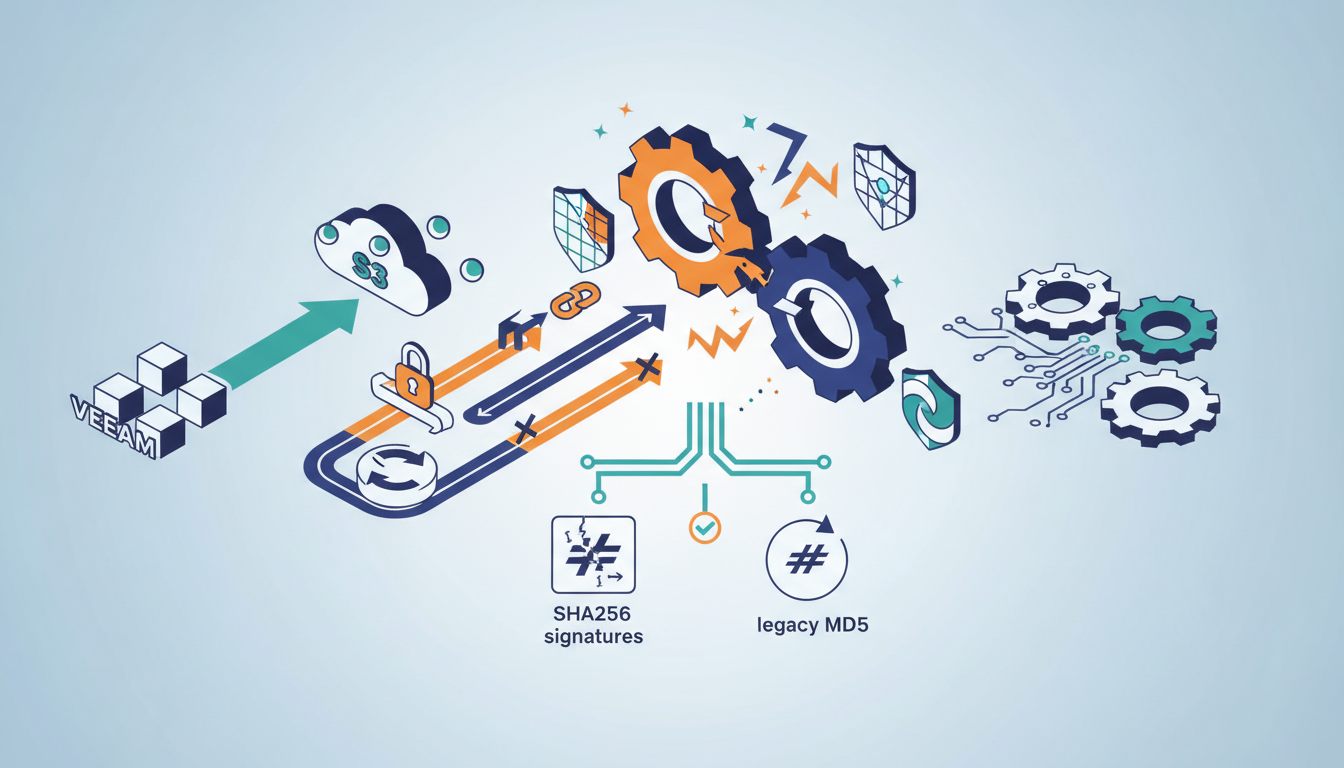
Veeam requires SHA256 signatures; legacy arrays often need MD5 fallbacks. Learn why enabling default retention with Object Lock causes immediate failures.
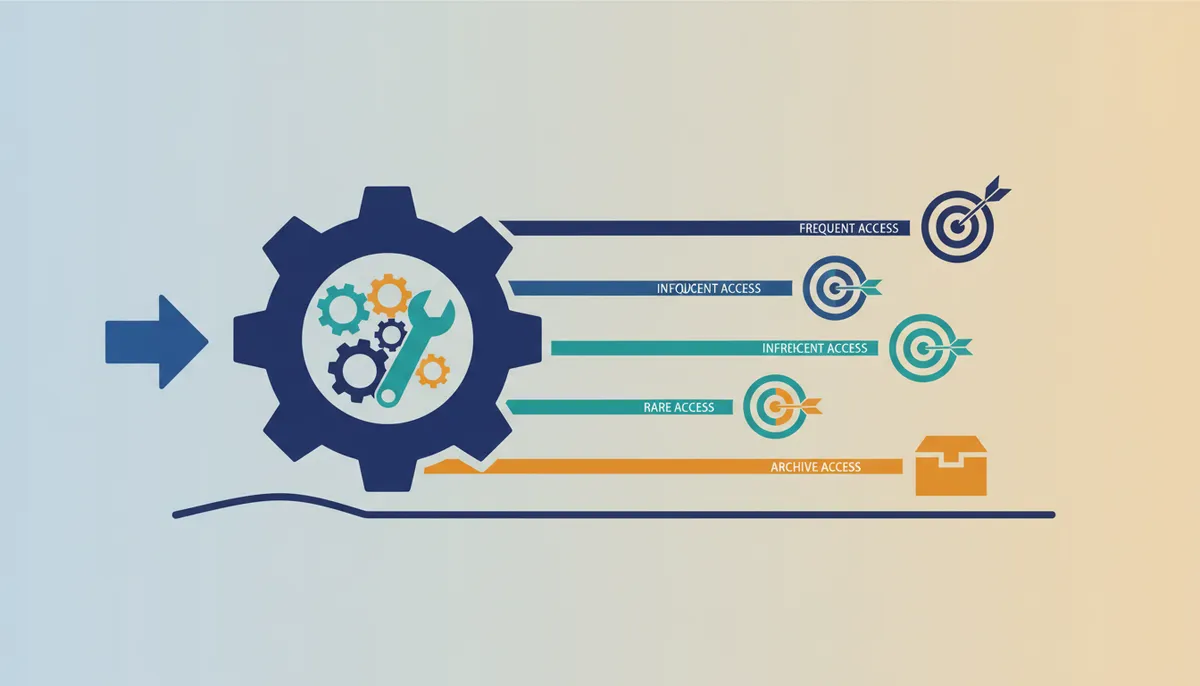
Stop manual data dumping. Use intelligent lifecycle mechanisms to shift unstructured data between performance tiers automatically for better cost control.
Achieve up to 14 nines of data durability with a unified architecture that eliminates silos and accelerates modern AI training cycles.
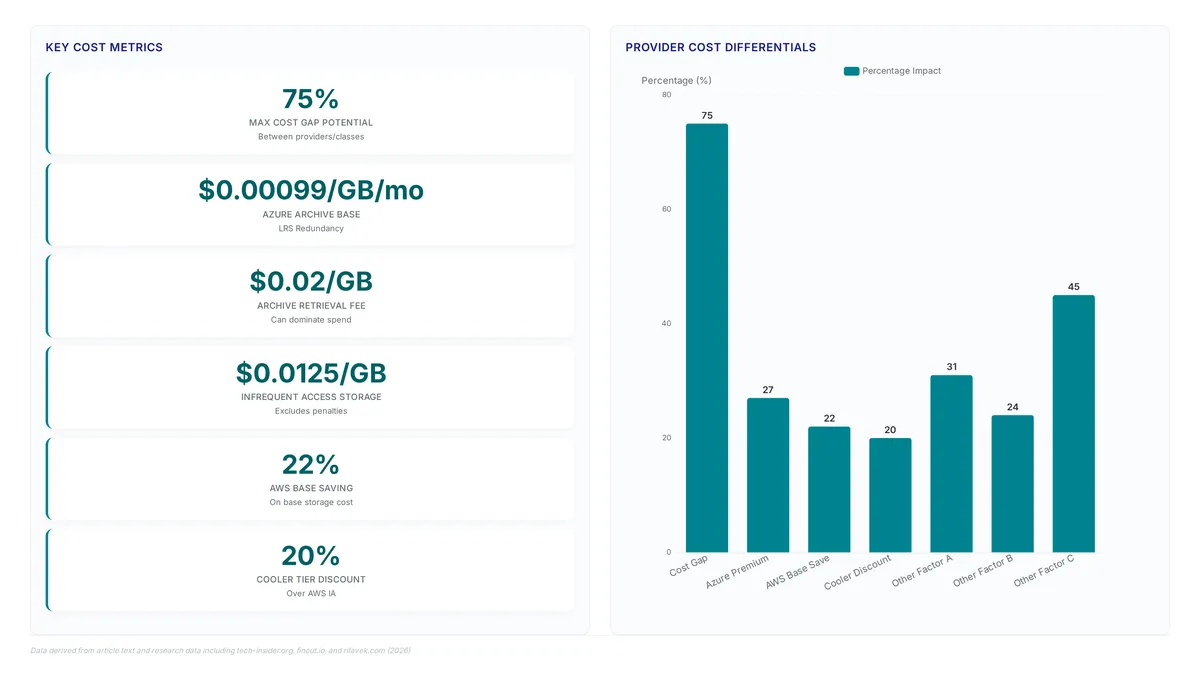
Archive tiers cost $0.00099/GB/month, making S3-compatible immutable storage 18x cheaper than standard hot storage for enterprise data.
Hit the 50 Storage Lens groups limit? Learn to use object age filtering and tag rules to isolate transition candidates without hitting the cap.
Object storage bills rarely match spreadsheets. Learn how retrieval fees and tiering impact your total cost beyond raw capacity numbers.
S3 pricing varies 23× between tiers. Learn how minimum duration charges and retrieval fees impact total cost for trillions of objects.
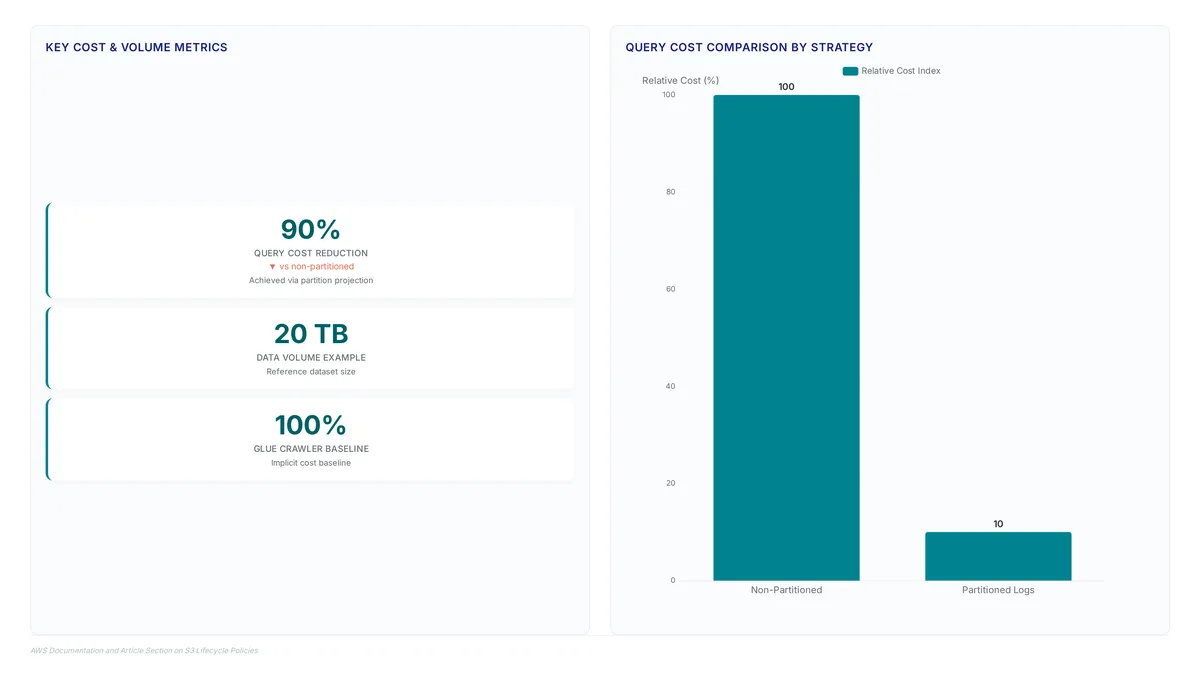
Raw S3 logs arrive with a 2 to 4 hour delay, breaking real-time monitoring. Learn to structure queries that satisfy SOX rules without high costs.
Testing seven solutions reveals that self-hosted S3 storage offers developers full control over data access and stability.
Achieve 70% cost savings versus AWS S3 using always-hot object storage architectures that remove retrieval penalties and vendor lock-in risks.
S3-compatible object storage lets applications use the same commands as AWS to slash migration timelines.
Learn how a single 4U chassis stores 1.5PB using S3-compatible tech. Secure REST endpoints and manage signatures for BackBlaze or Wasabi safely.
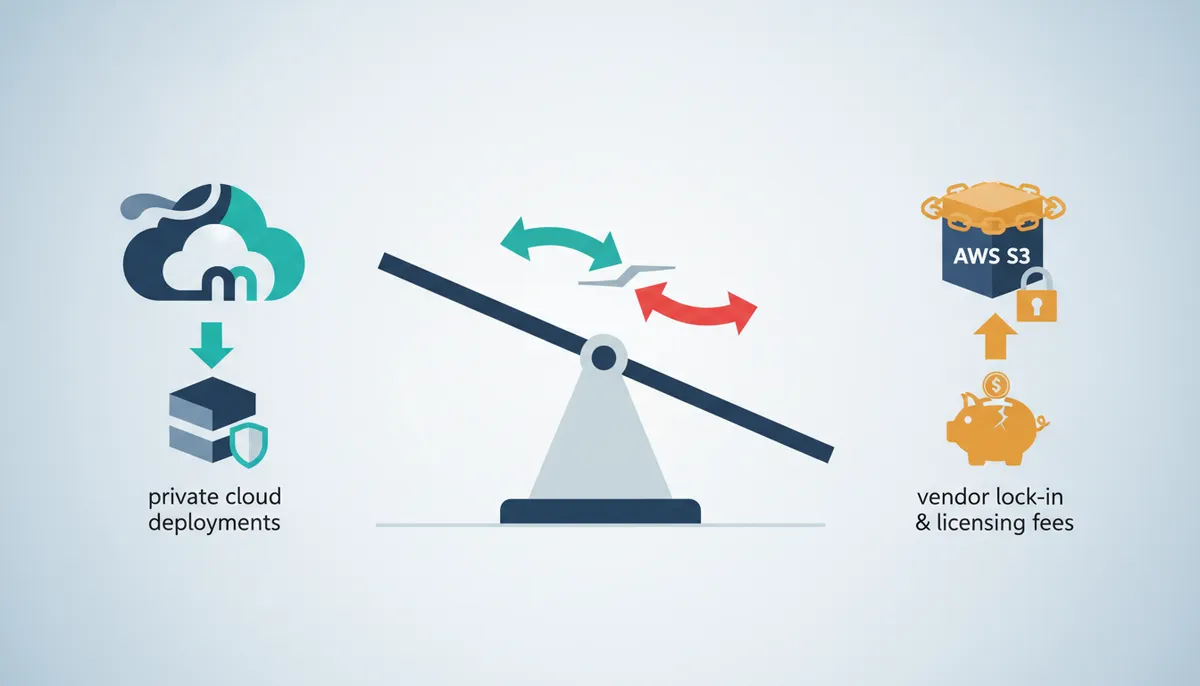
Resolve Kubernetes data bottlenecks with exabyte scalability. This analysis details how S3-compatible patterns eliminate latency in private cloud deployments.
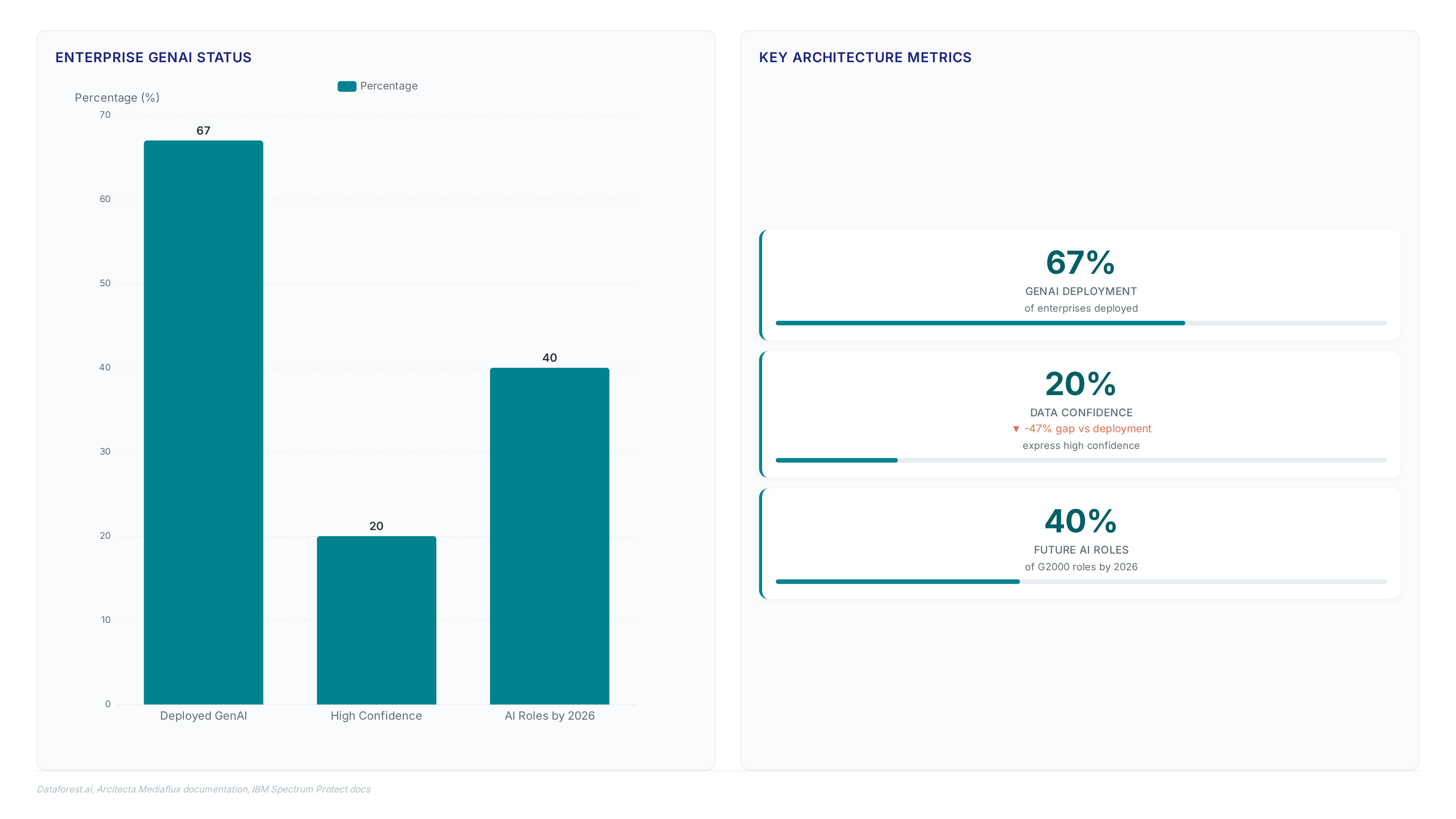
Over 80% of enterprise unstructured data now relies on S3-compatible interfaces. Learn how zero egress fees alter total cost of ownership.
Cut Kubernetes total cost of ownership by 60% with S3-compatible private storage. Achieve 8 TiB/s throughput while avoiding public cloud egress penalties.
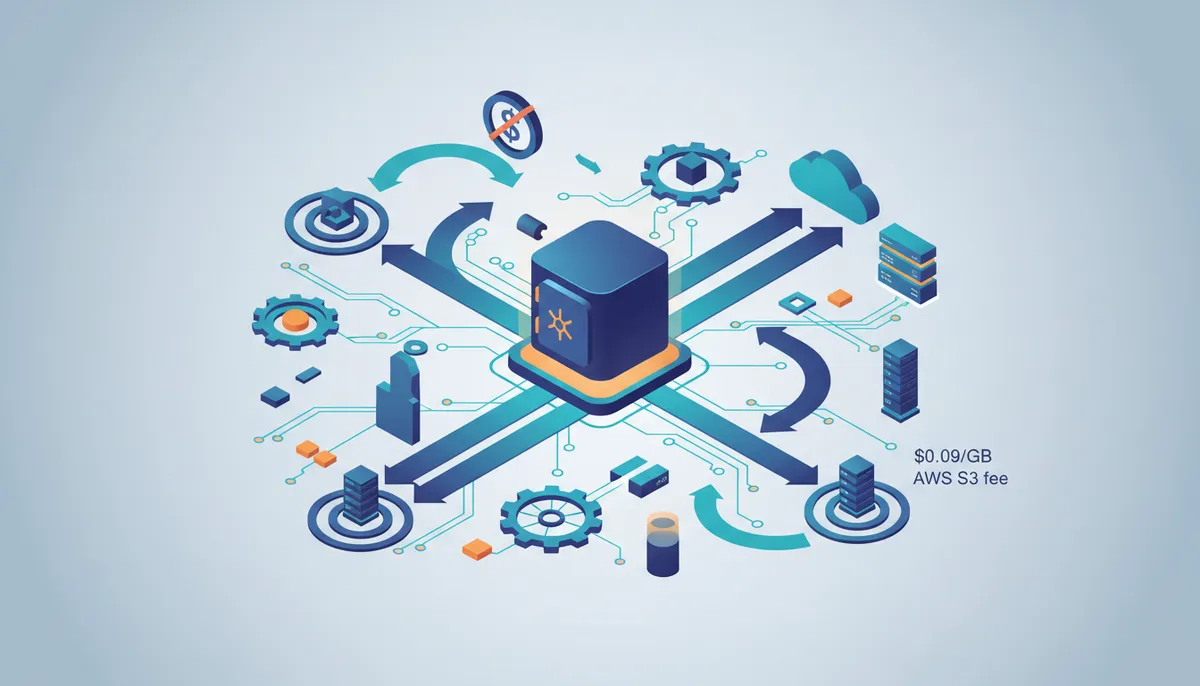
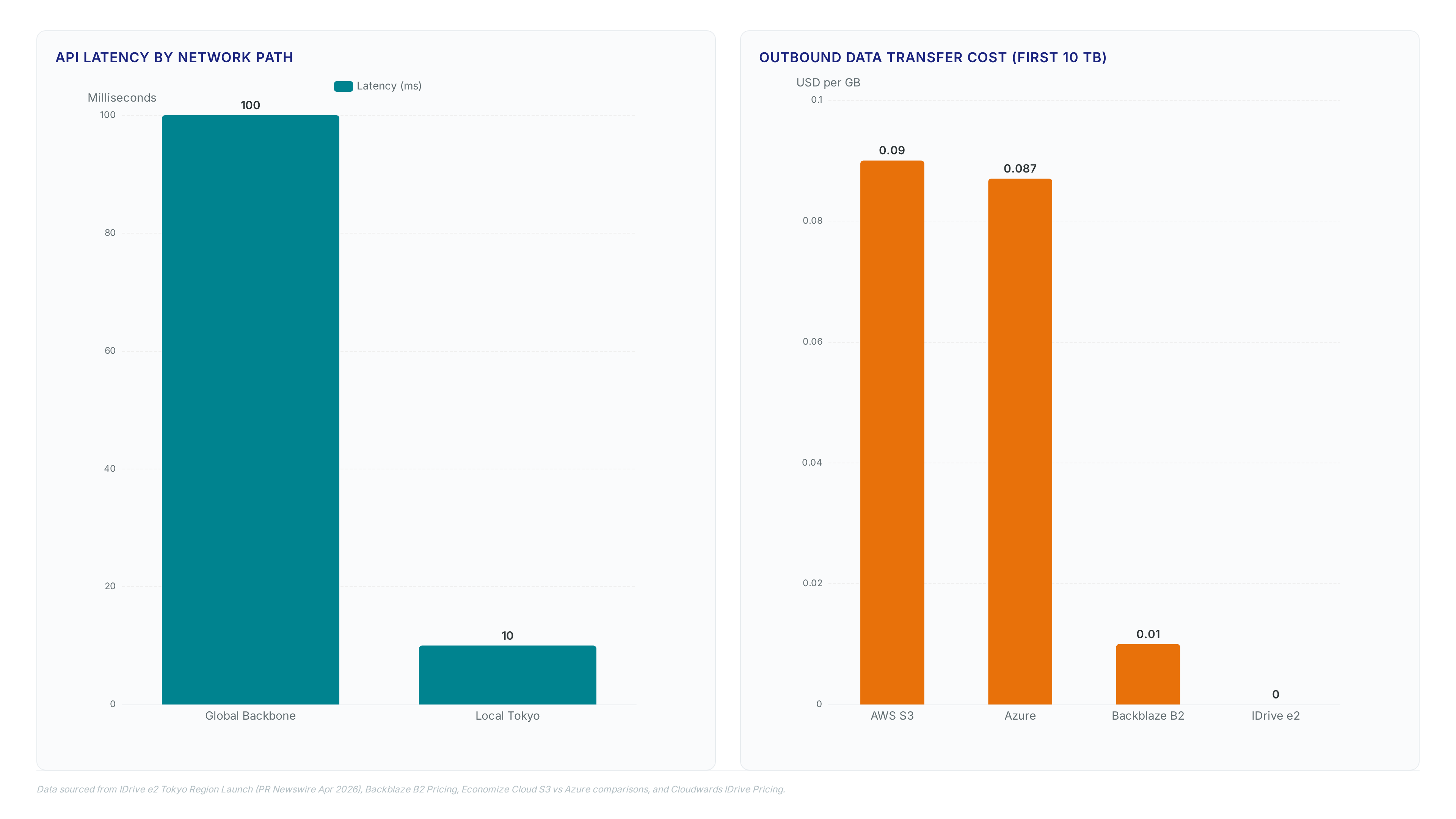
AWS S3 egress charges hit $0.09/GB, inflating total costs. Discover how S3-compatible storage eliminates these fees while maintaining full API compatibility.
Learn why Snowflake external stages fail with custom ports and how 21 providers handle S3-compatible APIs without breaking analytics SLAs.
Cut research storage costs by 80% using S3-compatible architectures that unify data sources without rewriting legacy applications or code.
Blimp by Züs Network delivers 99.99% data uptime alongside zero recovery objectives to redefine reliability standards.
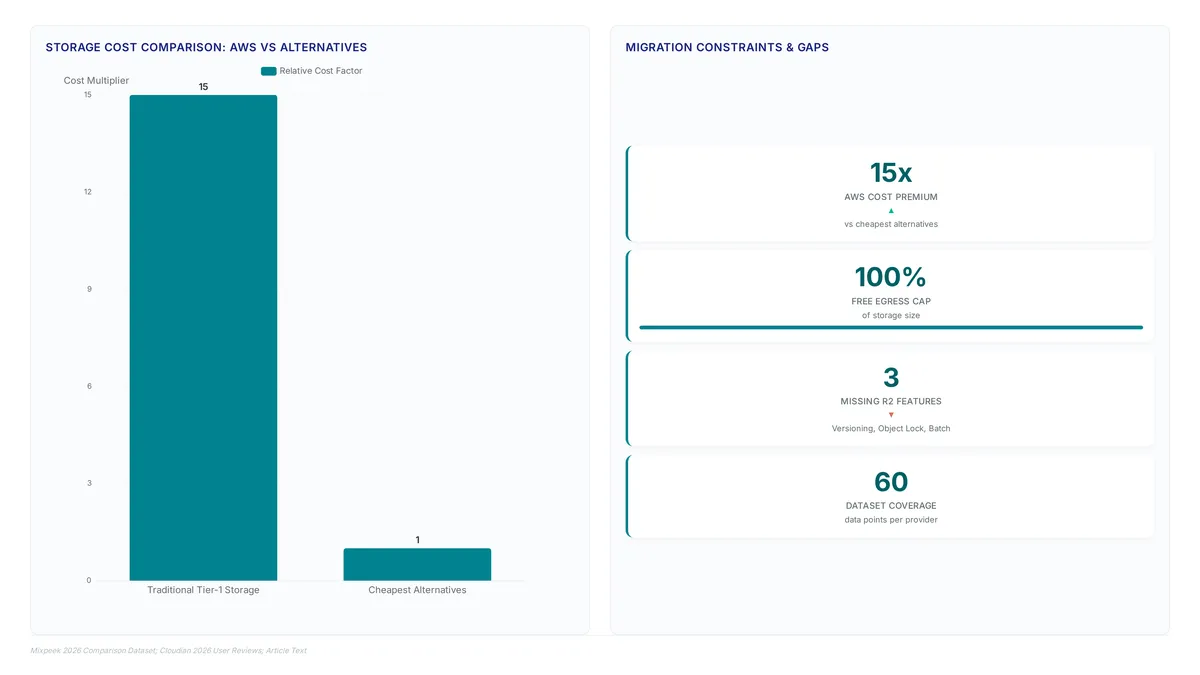
AWS S3 costs 15 times more than cheaper alternatives for identical AI workloads according to Mixpeek data.
AWS S3 Standard charges a flat monthly fee per TB, yet storage classes within the same ecosystem diverge by 23x according to go-cloud.io data.
Telnyx challenges legacy pricing with zero egress fees, forcing a reevaluation of cloud costs where data retention often spirals out of control.
Misconfigured tiers cause failures despite 99.999999999% durability. Learn why S3 Glacier retrieval differs from Standard and how to align tiers.
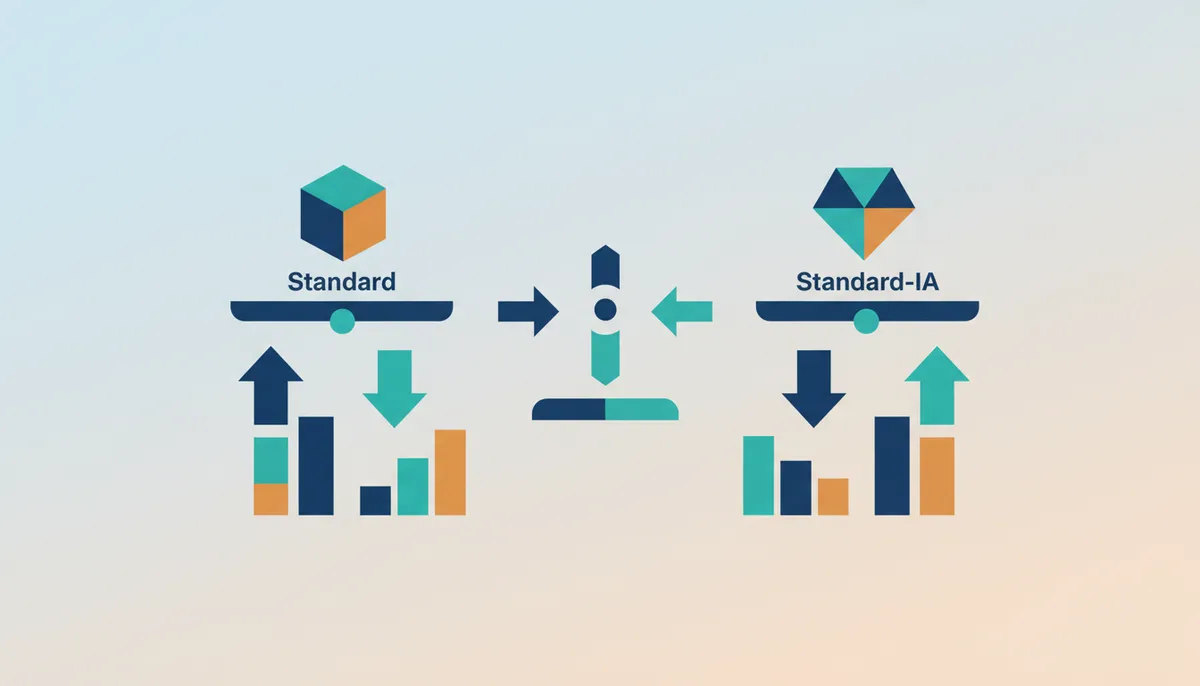
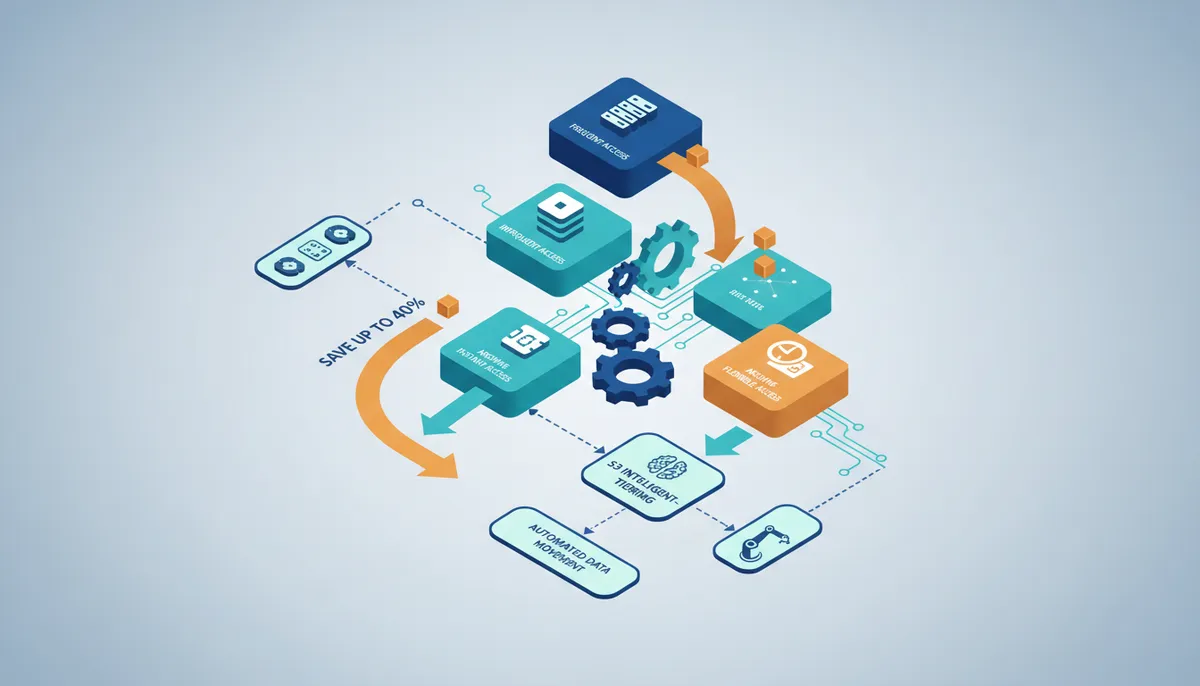
Learn how S3 IntelligentTiering moves objects between Standard-IA and Glacier Instant Retrieval to cut costs without sacrificing access speed.
Discover how modern S3 architecture supports individual files up to 50 TB, eliminating sharding complexity for large-scale AI and seismic datasets.
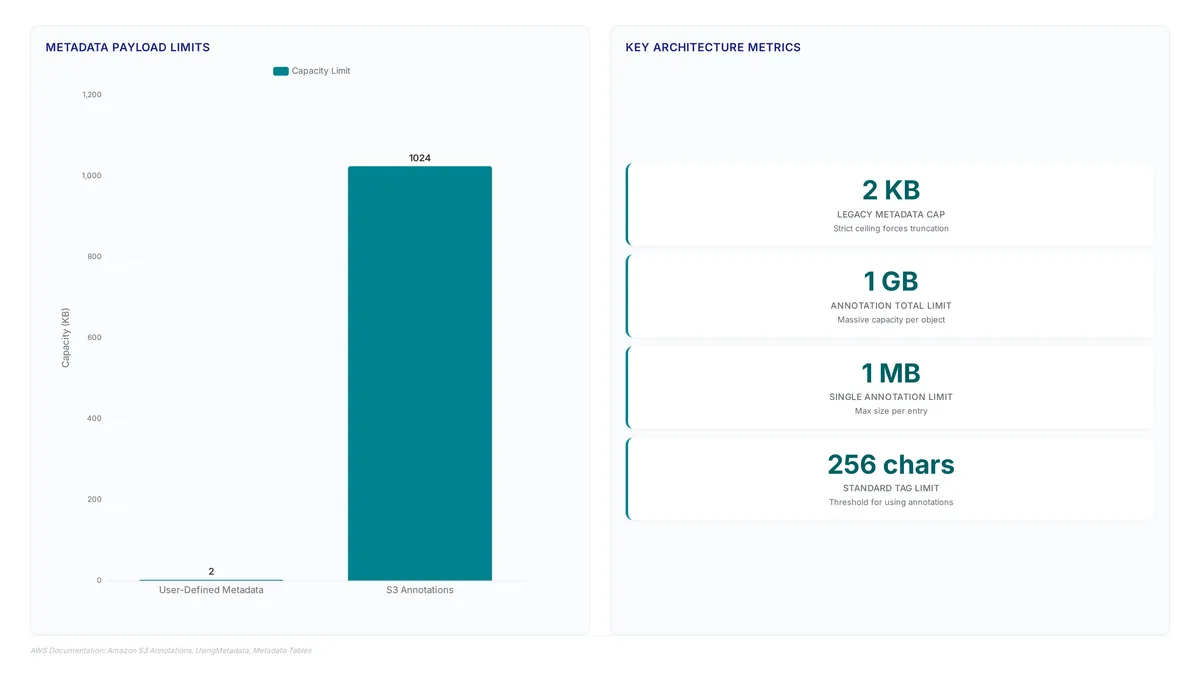
Attach up to 1000 annotations per object to create a mutable context layer, eliminating costly re-uploads during iterative AI model training.
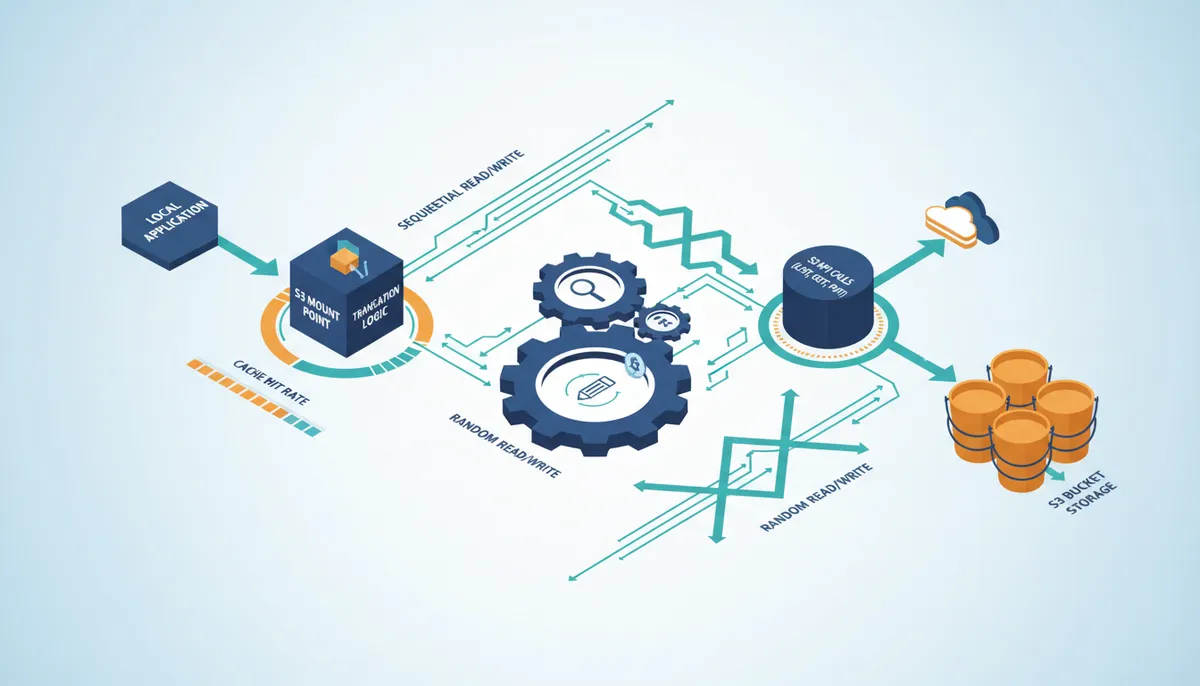
Amazon S3 Files caches actively used data to deliver low-latency access without promising specific speed percentages.
Amazon S3 Files launched across 34 regions, ending the compromise between object and file storage for high-performance AI workloads.
Egress fees can eliminate 60-80% of storage costs. Discover how always-hot architecture prevents vendor lock-in and surprise bills.
Cut storage costs by 70% with S3 compatible clouds. Eliminate egress fees while maintaining full API compatibility for seamless hybrid deployments.
Cut storage costs by 15x and eliminate egress fees with AlwaysHot architecture designed for predictable enterprise budgets and zero latency.
Backblaze B2 lists standard rates at $6.95 per TB, but AI teams must calculate high-throughput premiums against free egress limits.
Stop trusting brochures. With 189 commits, OSBenchmark exposes raw API latency and multipart download timing that generic tools hide.
With over a vast number of objects stored as of March 2026, Amazon S3 dominates the environment, yet on-premise S3 storage offers a necessary escape...
Compare 5 providers offering S3-compatible storage. See how Sliplane's €5 flat rate eliminates egress fees for 250 GB of data.
Standard cloud storage lists at a modest monthly rate per TB, a baseline that dictates modern AI infrastructure economics.
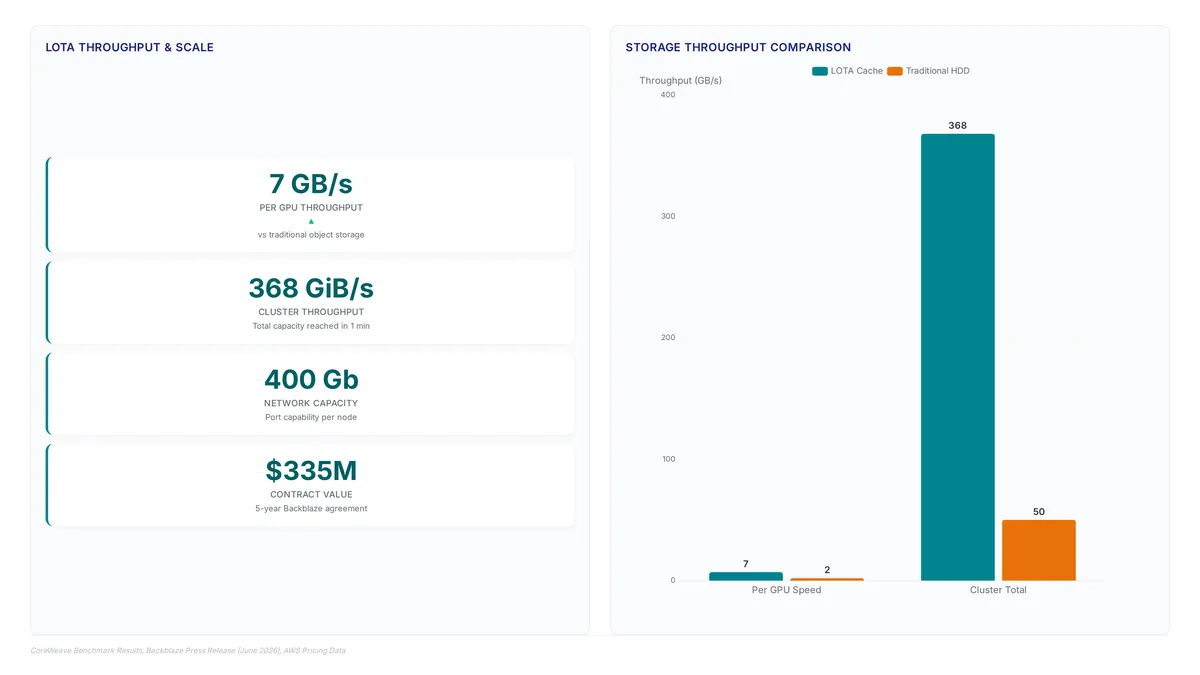
Discover why S3-compatible storage now drives exabyte-scale ML pipelines, enabling 7 GB/s throughput to keep GPUs fully saturated.
See how decentralized object storage hits 400 ms optimistic finality, proving new architectures can outrun legacy file systems on speed.
Avoid Azure's 180-day retention trap. Learn how object storage repositories optimize backup tiers and cut total cost of ownership.
Veeam Backup for Microsoft 365 isolates metadata in a PersistentCache database on a PostgreSQL instance, separating it from bulk S3 data.
Cut AI training data costs by 90% using immutable object storage with eleven 9s durability to protect datasets from corruption.
Avoid egress penalties that destroy budgets during model retraining. Learn how erasure coding impacts latency for 2026 AI workloads.
Object storage solutions cut US data center power consumption by 22 percent according to recent efficiency data.
QNAP Labs tests show QuObjects hitting 2990 MB/s read speeds, dwarfing cloud equivalents. Stop paying for bandwidth you already own.
MEGA S4 claims 99.999999999% annual durability while positioning its price point 90% below major cloud competitors.
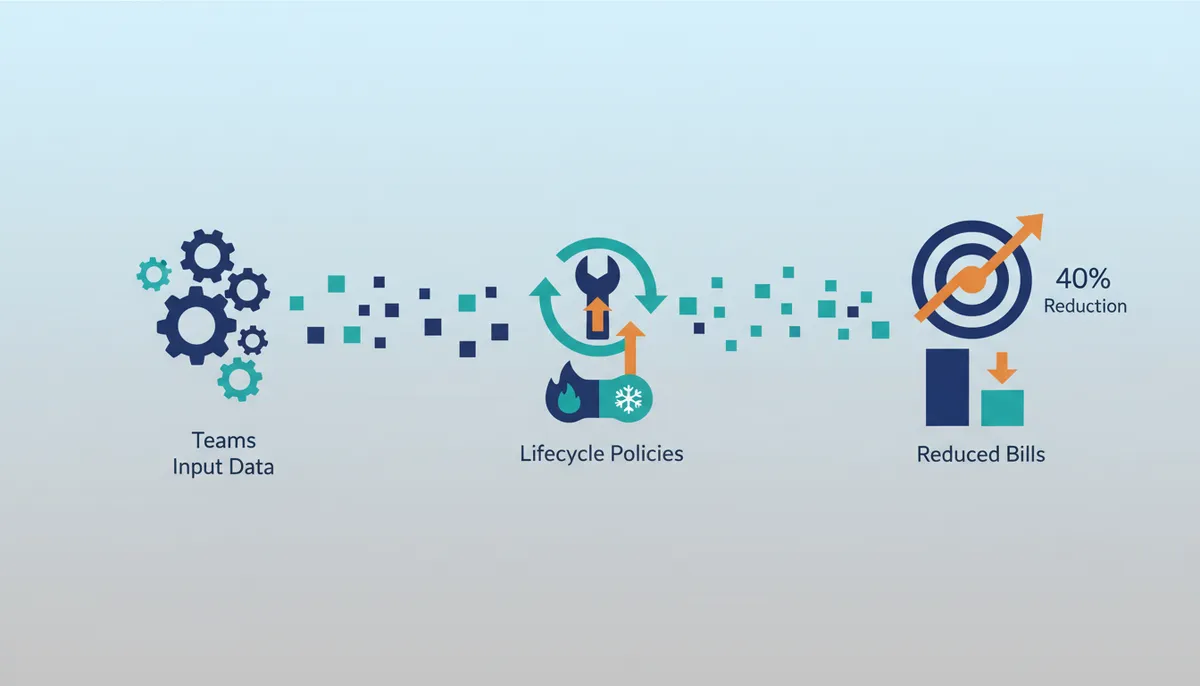
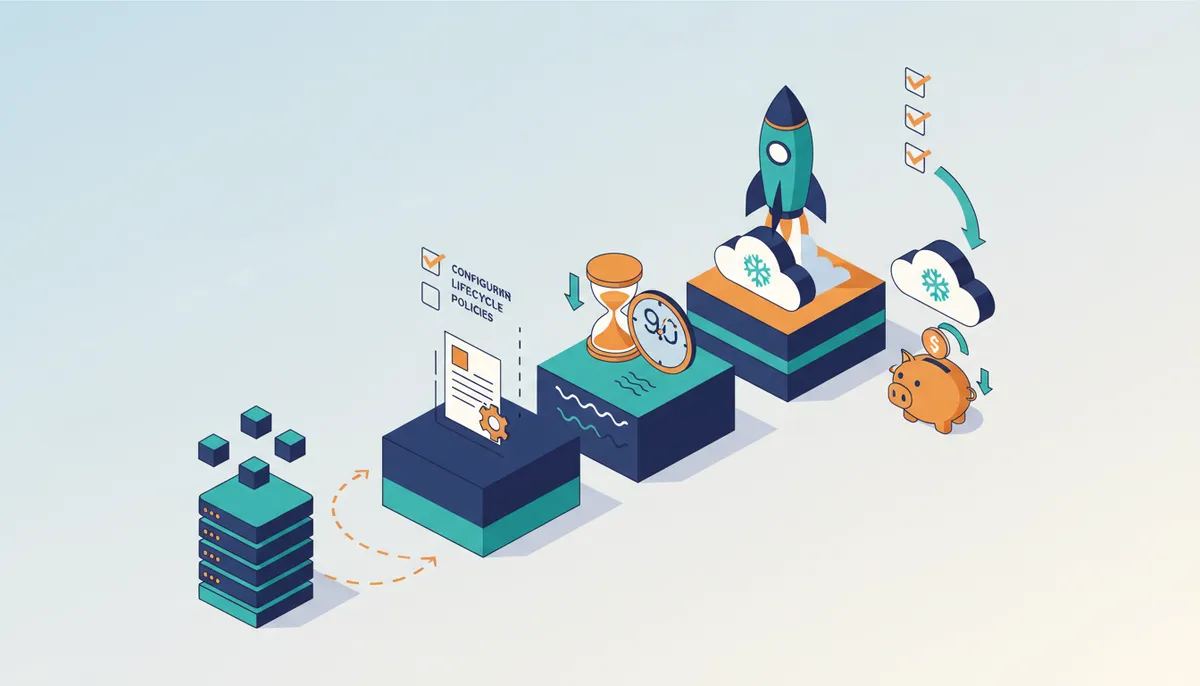
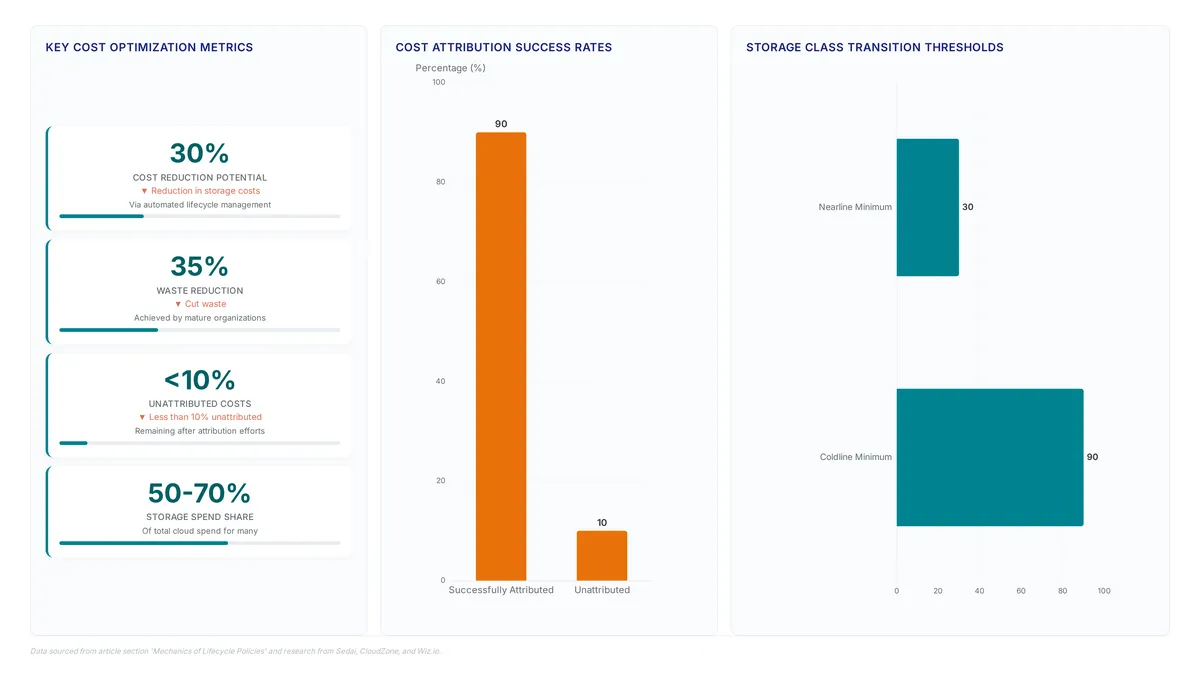
Amazon S3 Lifecycle Management slashes costs by automating data movement after 30, 60, or 180 days based on access patterns.
Stop ransomware by tagging infected recovery points in February 2025. Automate quarantine with EventBridge to block restores before damage spreads.
Blind transitions trigger a $0.03 fee per 1,000 requests. Learn why metadata overhead on small objects erodes savings before they materialize.
Egress fees often exceed storage costs, breaking budgets for data-heavy workflows. Learn how EU sovereignty mandates and zero-fee architectures fix this.
Moving 10 TB out of S3 costs $913 in egress fees alone. See how to calculate real storage costs and migrate without breaking CI/CD pipelines.
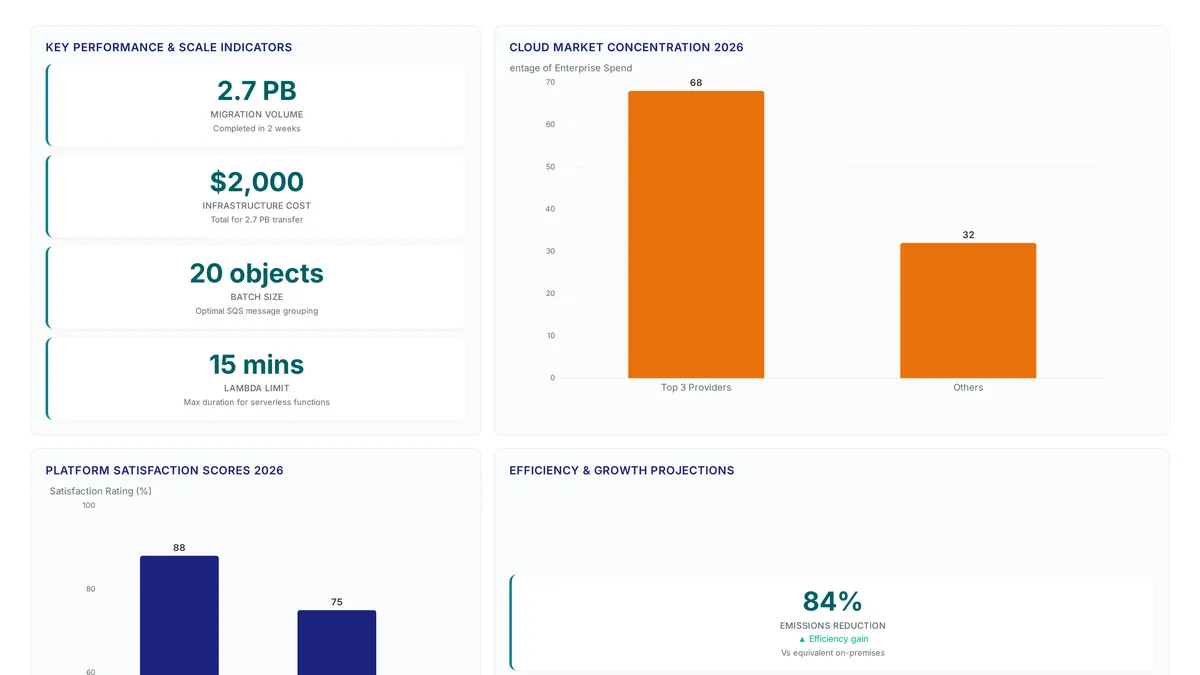
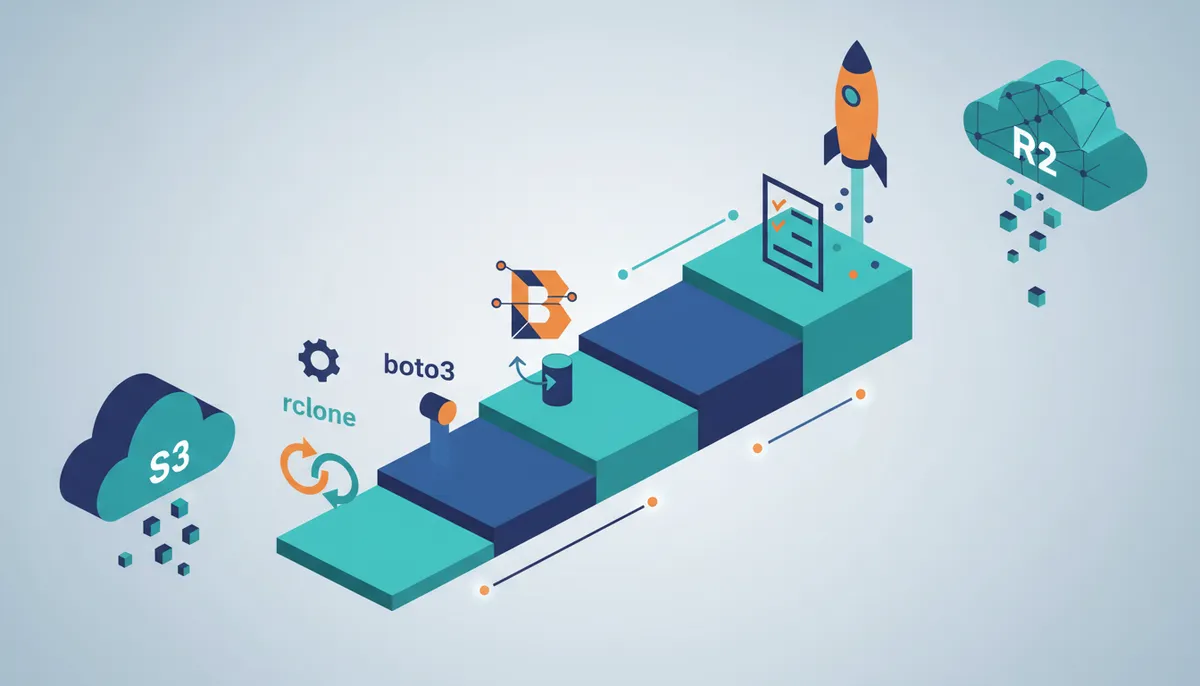
Learn how a distributed rclone pipeline moved 2.7 petabytes from IBM Cloud to S3 in just two weeks using SQS and EC2 Auto Scaling.
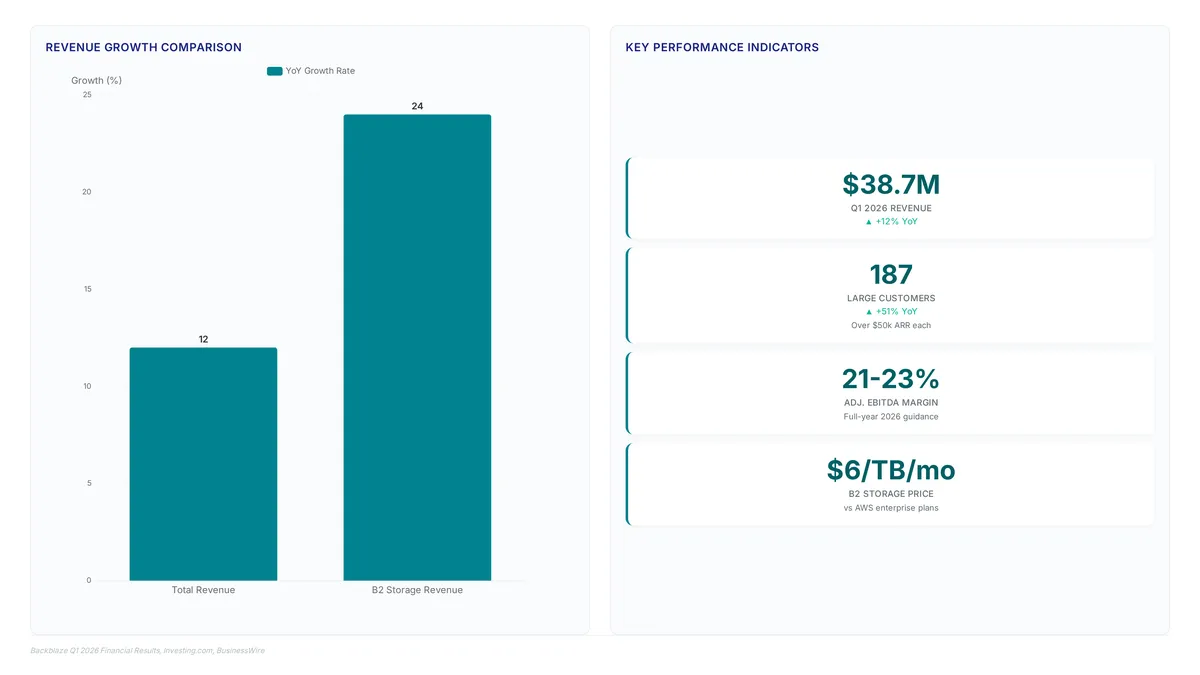
Backblaze Q1 2026 revenue proves storage demand outpaces supply. Discover why conventional object storage crumbles under AI pressure.
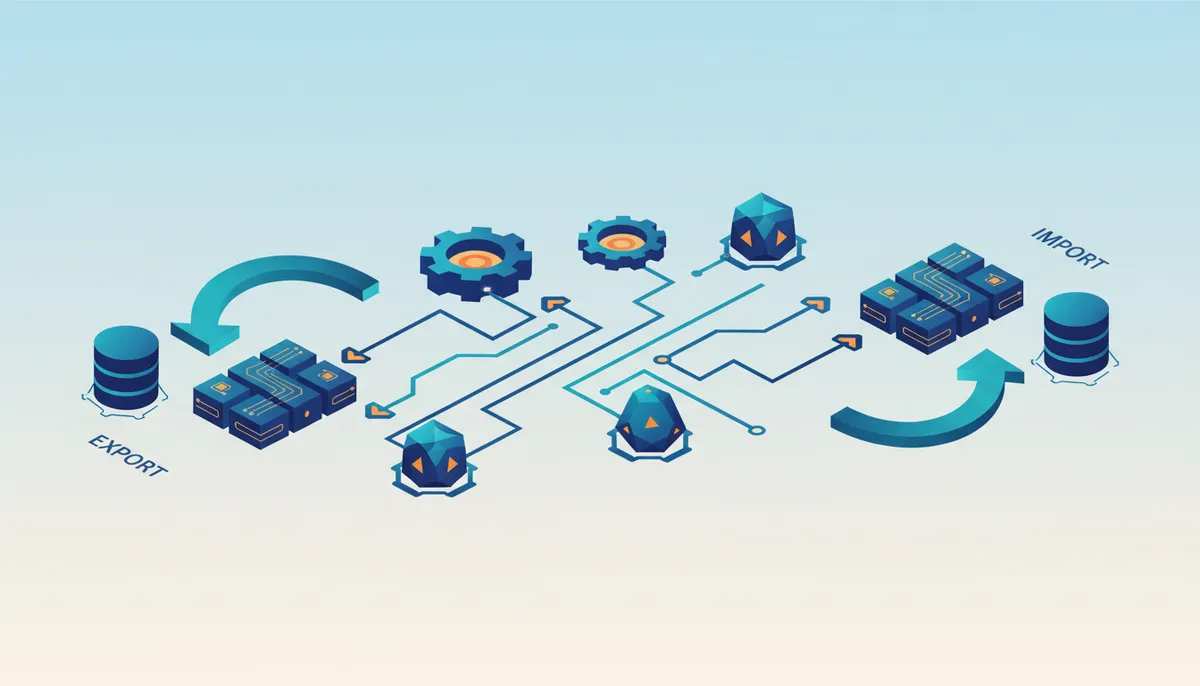
Convex defaults trap data in ephemeral containers. Learn the required 2-step snapshot export and import sequence to safely switch to S3.
Content addressed storage kills S3 data drift by swapping mutable keys for immutable content identifiers.
Reduce payload size by filtering specific keys instead of returning the complete resource tree. Learn syntax to cut network overhead.
Wasabi's valuation hit billions in 2022, proving demand for fee-free storage models is real.
Skip the common 82-day delay when moving data to AWS by choosing managed hybrid storage models over simple lift-and-shift tactics.
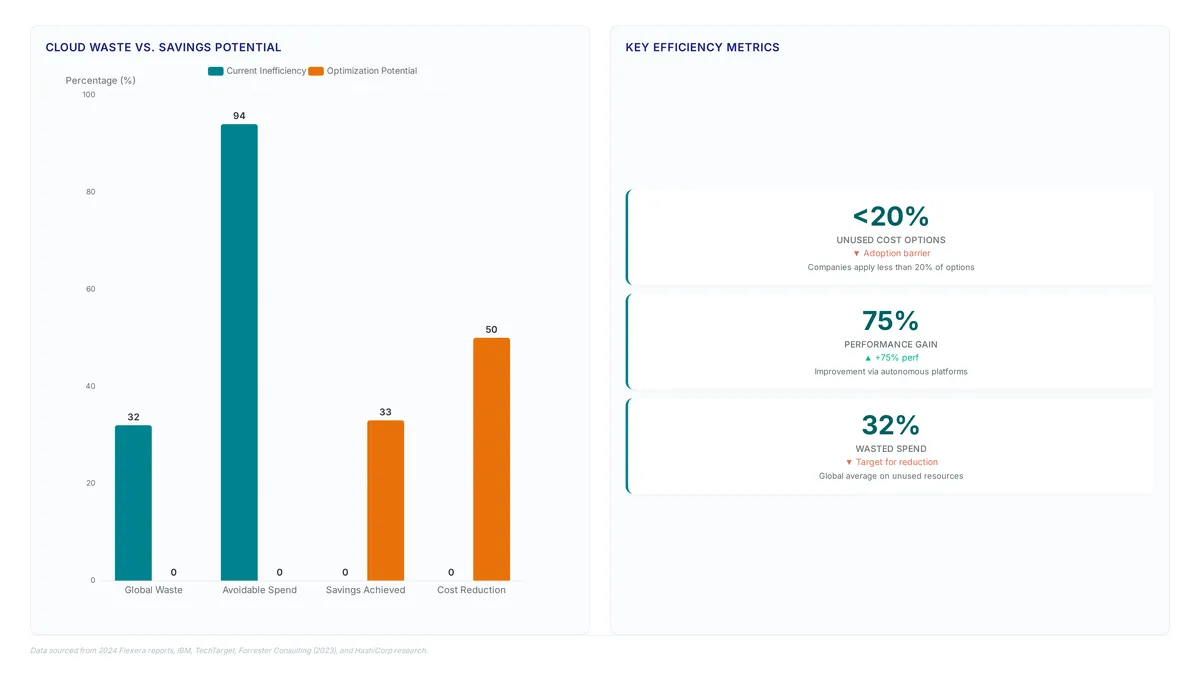
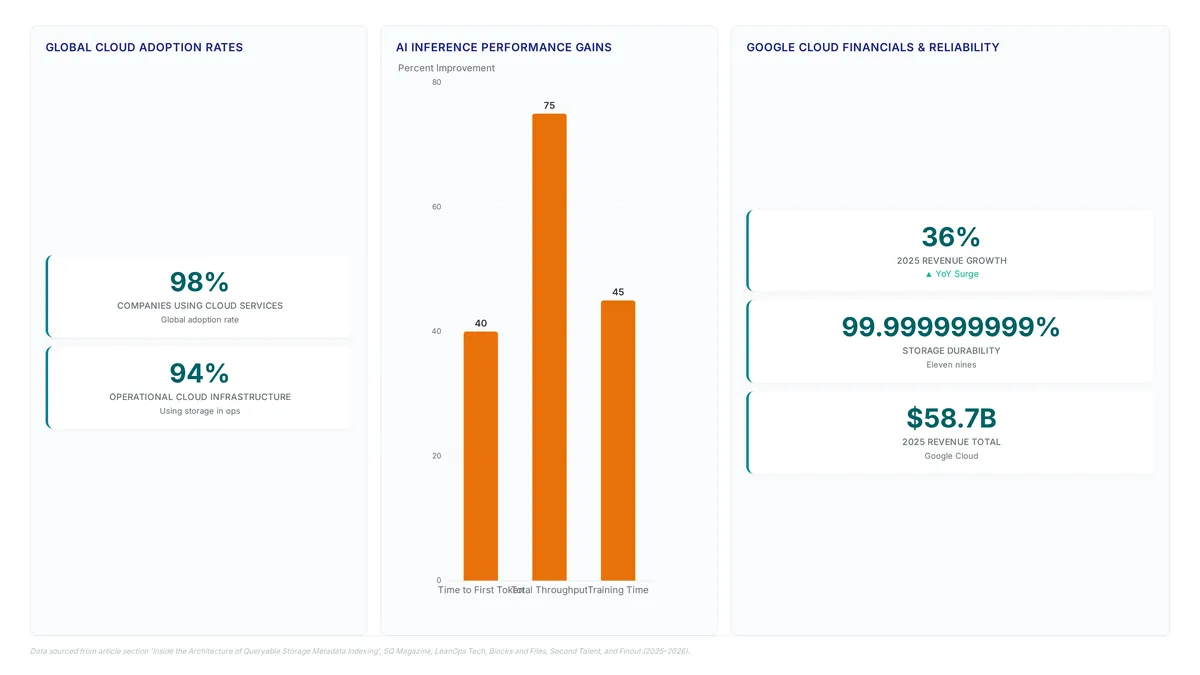
IBM reports organizations waste significant cloud spending. Discover how autonomous scaling cuts costs by 50% while boosting app performance by 75%.
Map CDN77's 3 cluster locations and learn how zero transfer fees between storage and CDN cut costs for high-volume workflows.
Migrating from Amazon S3 eliminates egress fees that often dominate cloud budgets. The business case for shifting object storage providers hinges on...
Amazon S3 stores a vast number of objects as of 2025, a statistic that proves scale often masks the brutality of modern cloud pricing mechanics.
Idle GPUs waste 70% of compute capacity when storage cannot feed data fast enough. Discover how unified access patterns resolve these bottlenecks.
Stop AI projects from stalling due to data entanglement. Learn how flat namespaces solve logistics for massive volumes without legacy costs.
Handle files up to five terabytes without server strain. Rabata.io delivers S3-compatible object storage built for massive, unstructured data.
Twenty-one S3-compatible providers now compete in a fragmented 2026 market, proving Amazon S3 is no longer the sole option for cloud storage.
Cloudflare R2 hit 171.58 ms latency, proving S3 compatible storage varies. Discover why API gaps break automation and inflate enterprise costs.
Deploy RustFS with a practical Docker quick start. This guide details how memory-safe code eliminates runtime errors in high-throughput data lakes.
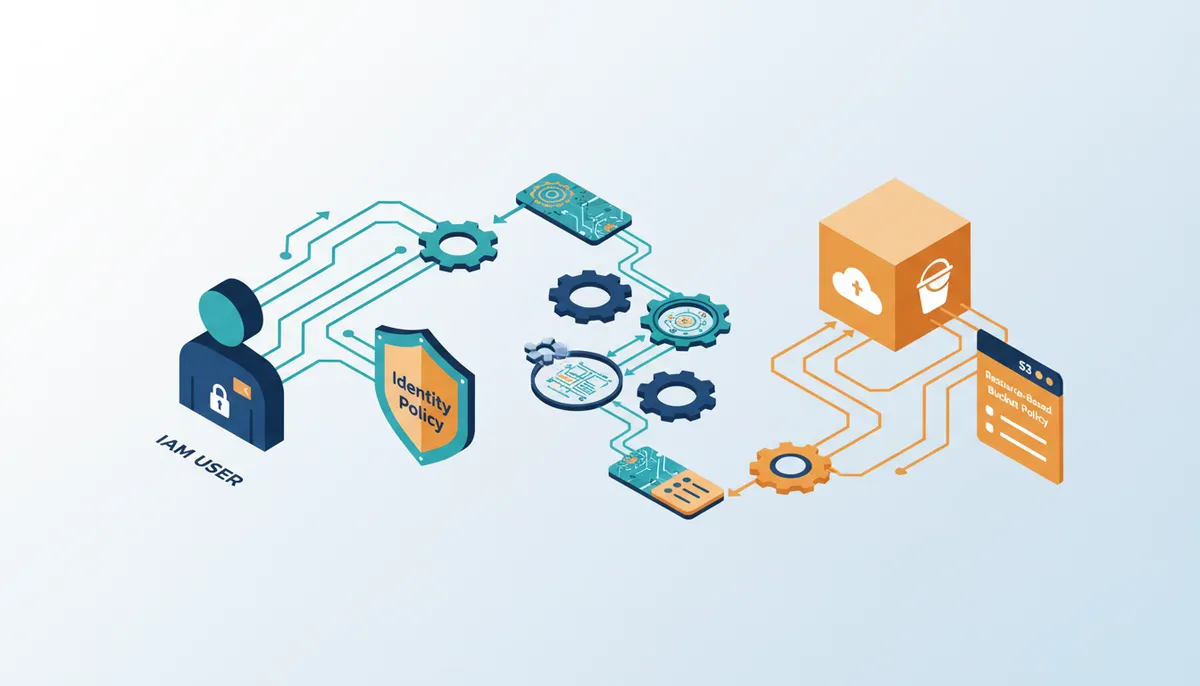
Most S3 failures stem from missing bucket ARNs for ListBucket. Learn why you need two distinct resource formats to fix AccessDenied errors.
Stop burning CPU cycles on redundant file tasks. Learn how the cachefirst pattern eliminates latency by fetching storage before compute-heavy generation.
Amazon S3 handles individual files up to five terabytes. Moving that much static data demands more than a simple storage bucket; it requires a...
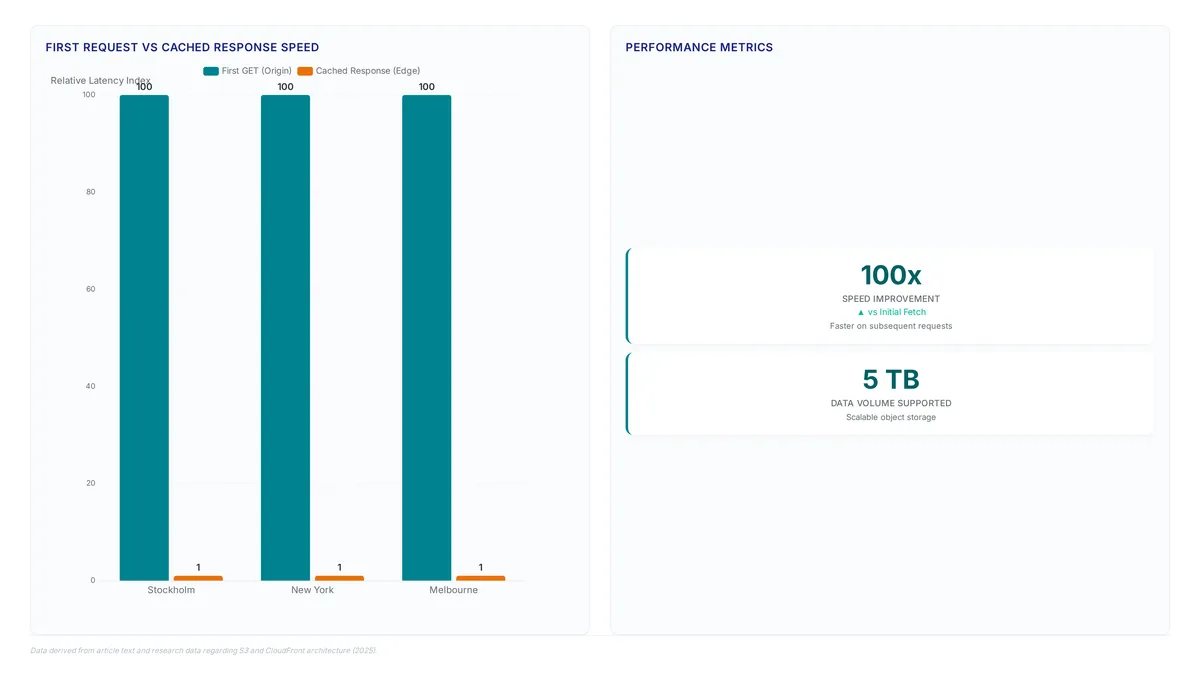
Stop GitHub Pages choking on large files. Learn how S3 buckets and CloudFront create stable delivery for global static assets.
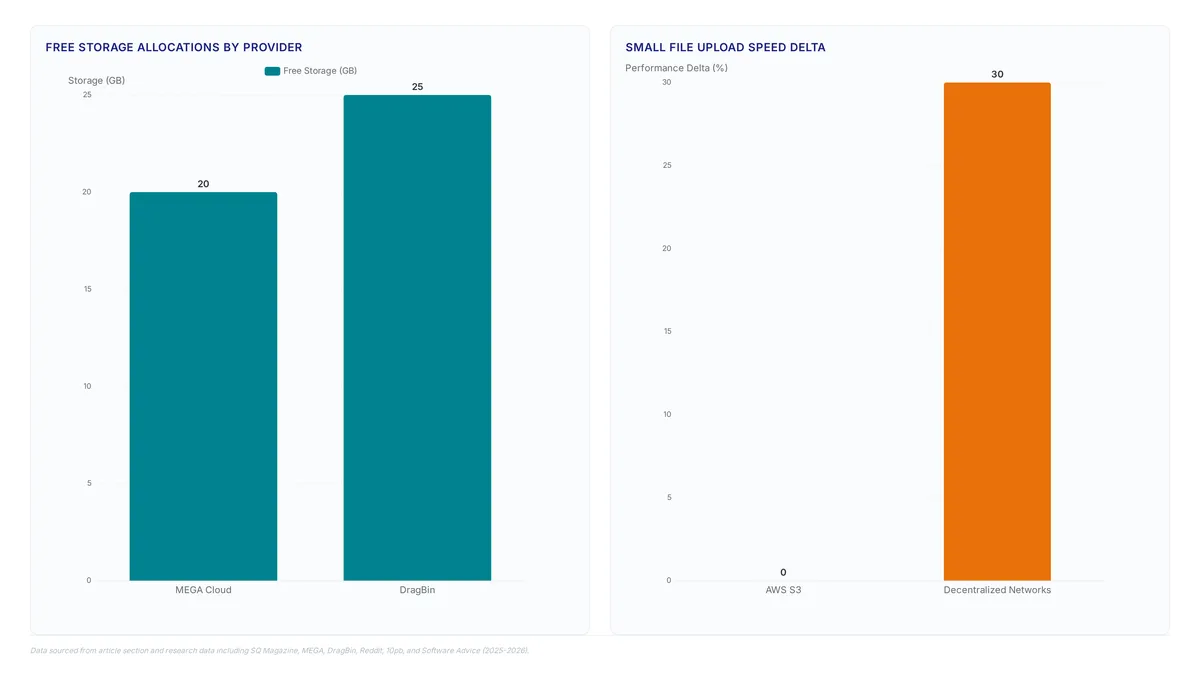
MEGA Cloud hands out 20 GB of free space, the largest entry-level capacity for privacy-focused users.
Avoid bill shock by mastering the 3 pillars of Amazon S3 pricing: storage, requests, and data transfers that drive unexpected costs.
AIStore treats remote data as primary storage, scaling linearly across nodes without performance loss for heavy AI workloads.
OVHcloud's OpenIO shift delivers 1,360 MB/s read speeds by replacing static hashing with AI-driven data placement for modern workloads.
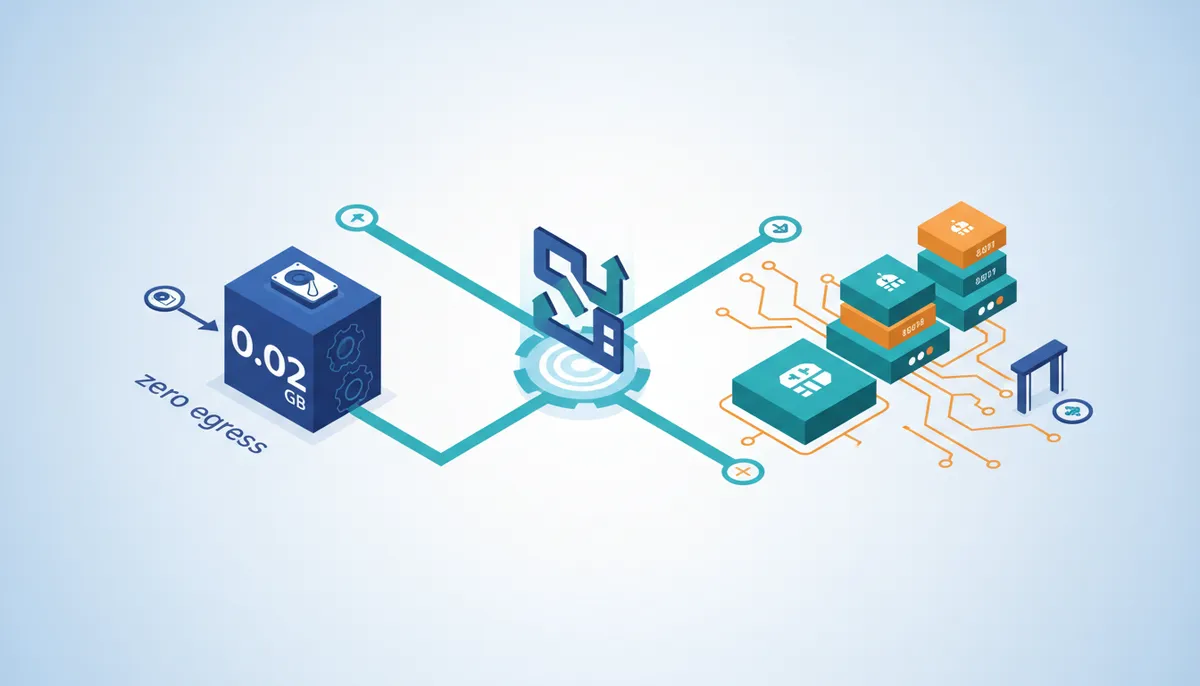
Zero egress fee storage eliminates the monthly penalty that traditional providers charge for data retrieval.
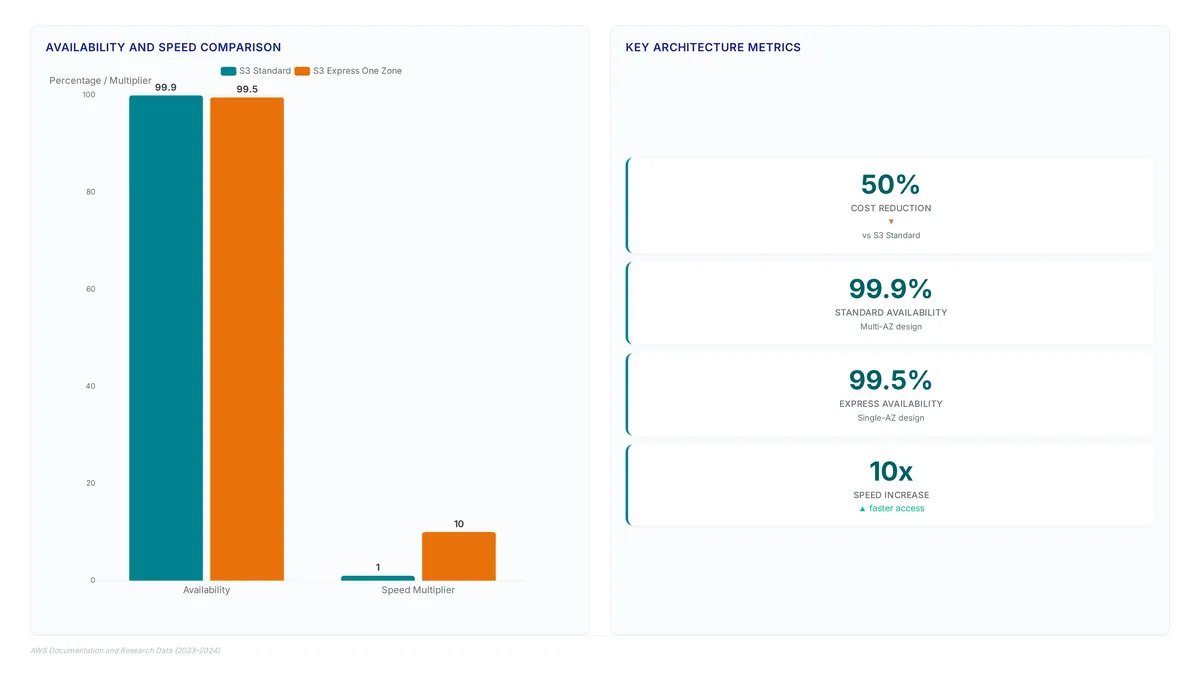
All S3 tiers offer 11 nines durability, but SingleAZ classes drop availability to 99.5%. Learn why redundancy models matter for your data.
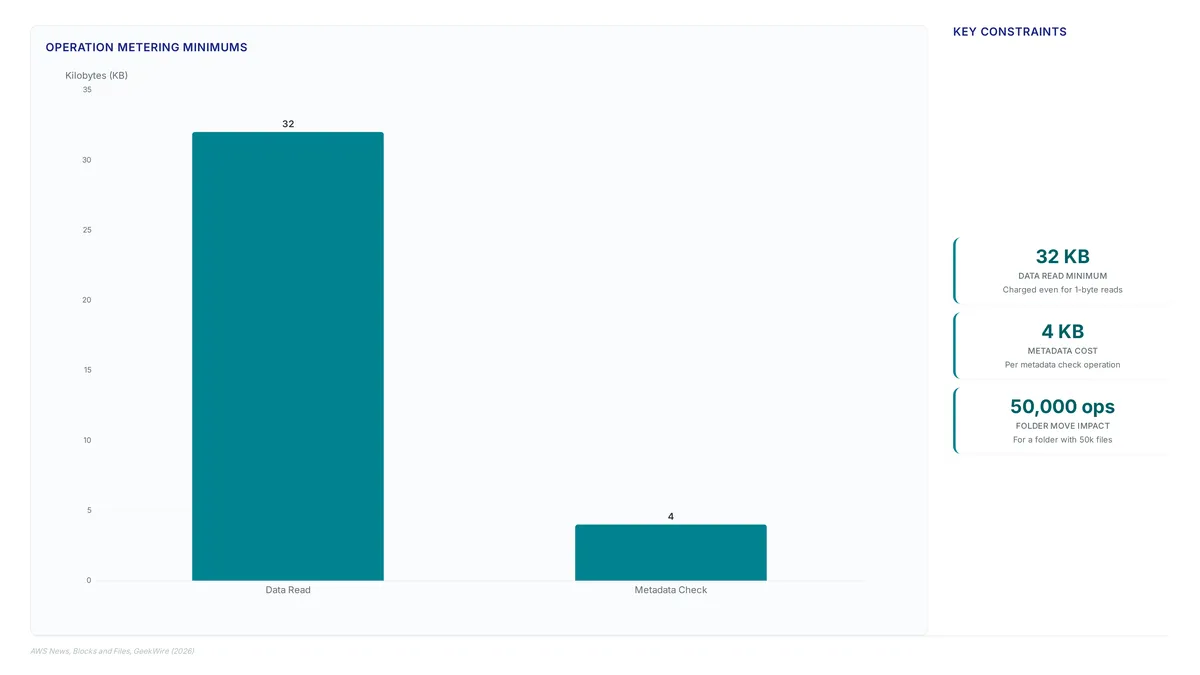
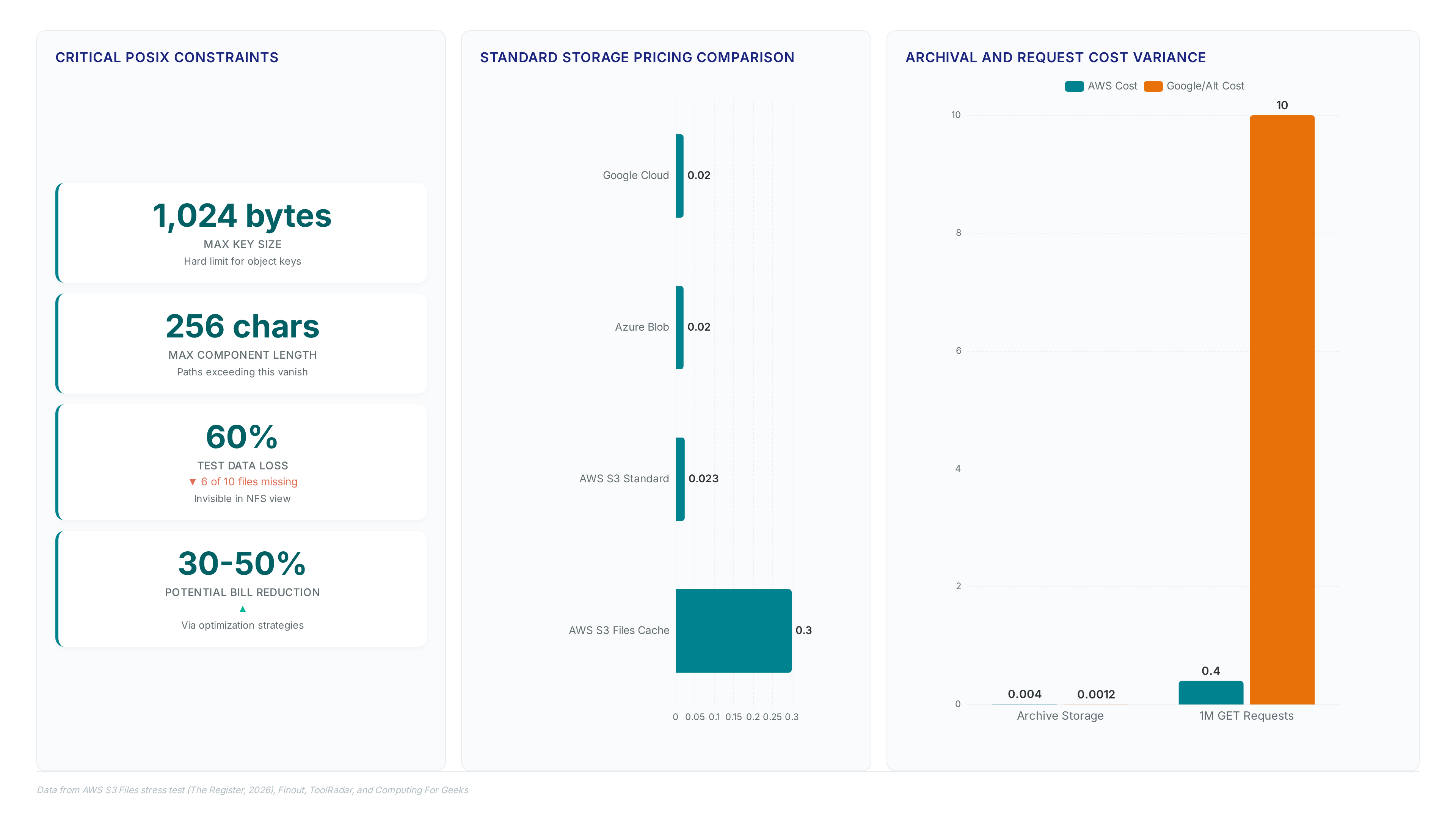
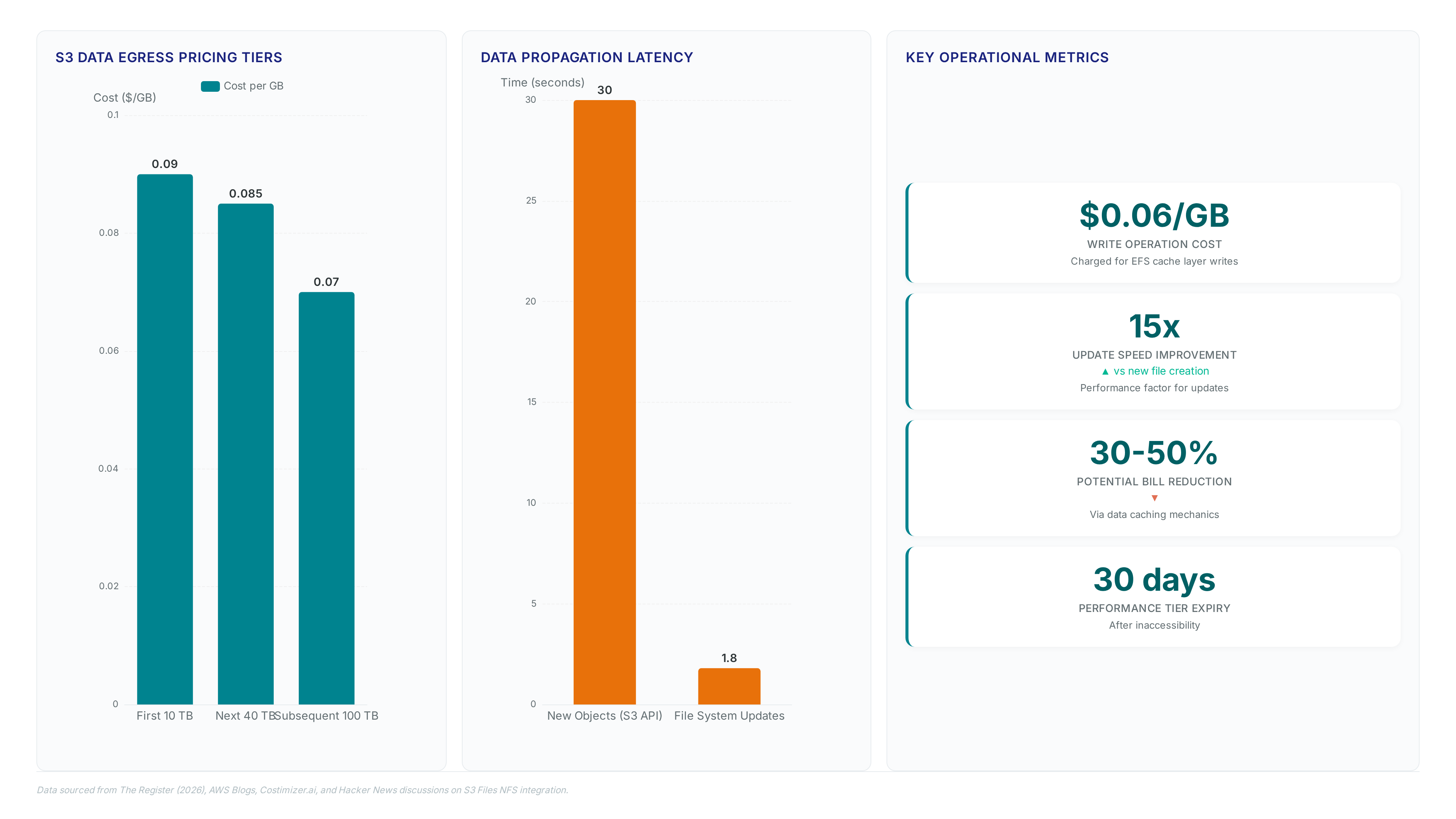
AWS S3 Files launches with NFS 4.2 support, replacing legacy FUSE tools. Note the 32 KB minimum charge per read operation before deploying.
Eliminate GPU idle time by serving data faster than standard object stores. Learn how zonal colocation prevents costly compute waste during training.
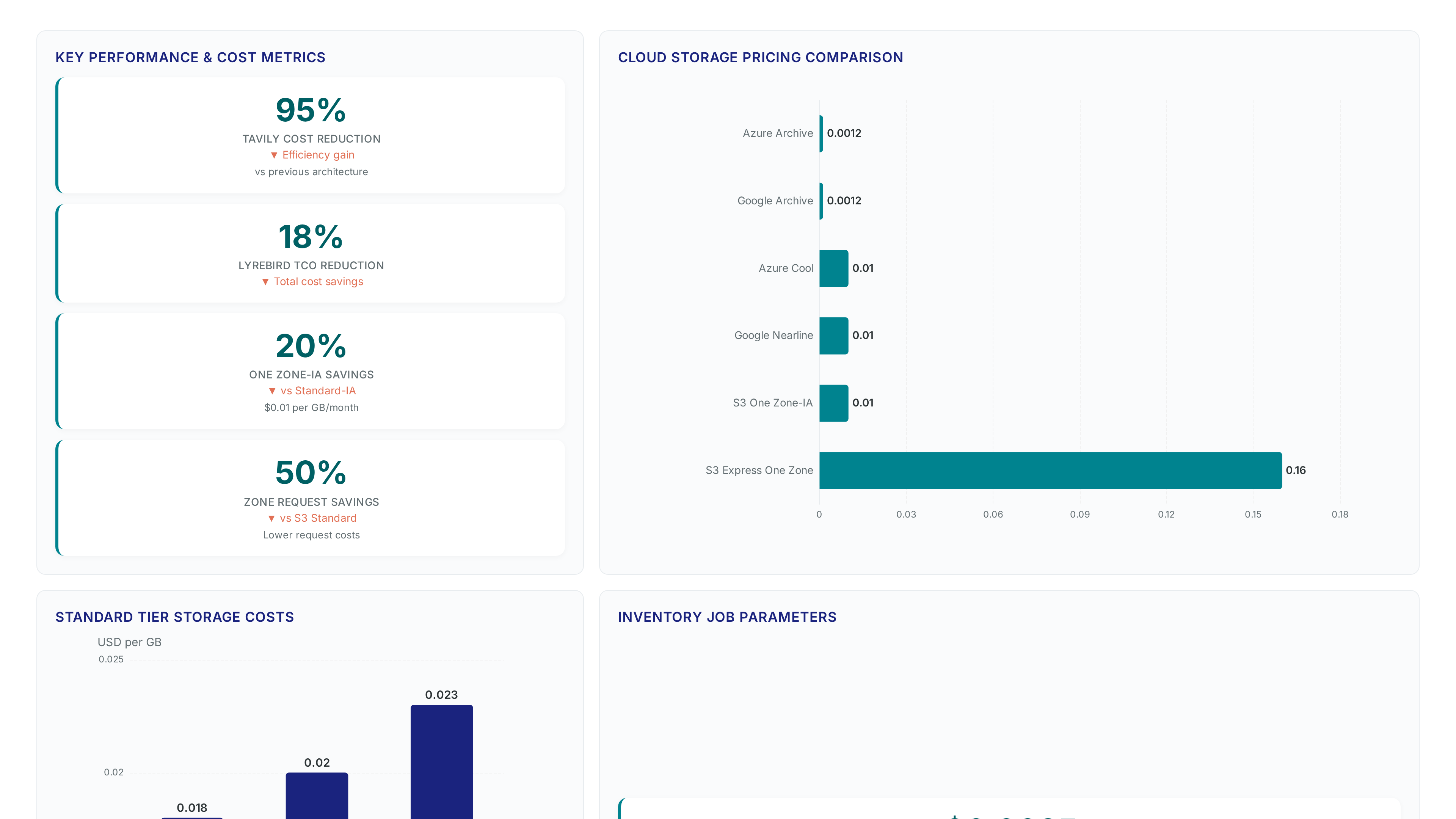
Automate transitions to One Zone-IA to save 20% on storage. Learn how to delete logs after 366 days using precise S3 lifecycle rules.
Elastic's frozen tier cuts storage costs by 90% while enabling direct queries on S3 Glacier without manual rehydration delays.
Stop the $13,800 bleed in AI budgets. Rabata.io offers zero-egress S3 storage, cutting cloud transfer charges while securing data provenance.
Stop guessing at capacity. Learn to analyze billions of prefixes with S3 Storage Lens exports to find real latency bottlenecks.
Cloudflare R2 removes egress fees entirely, offering $0 outbound transfers. This shifts budget forecasting for media-heavy apps away from opaque network...
Deploy S3-compatible object storage to save 70% on cloud bills compared to AWS S3, featuring true API compatibility and no egress fees.
Learn why April 2024 S3 changes trigger Parquet memory leaks in Postgres and how to tune foreign wrappers for stable object storage queries.
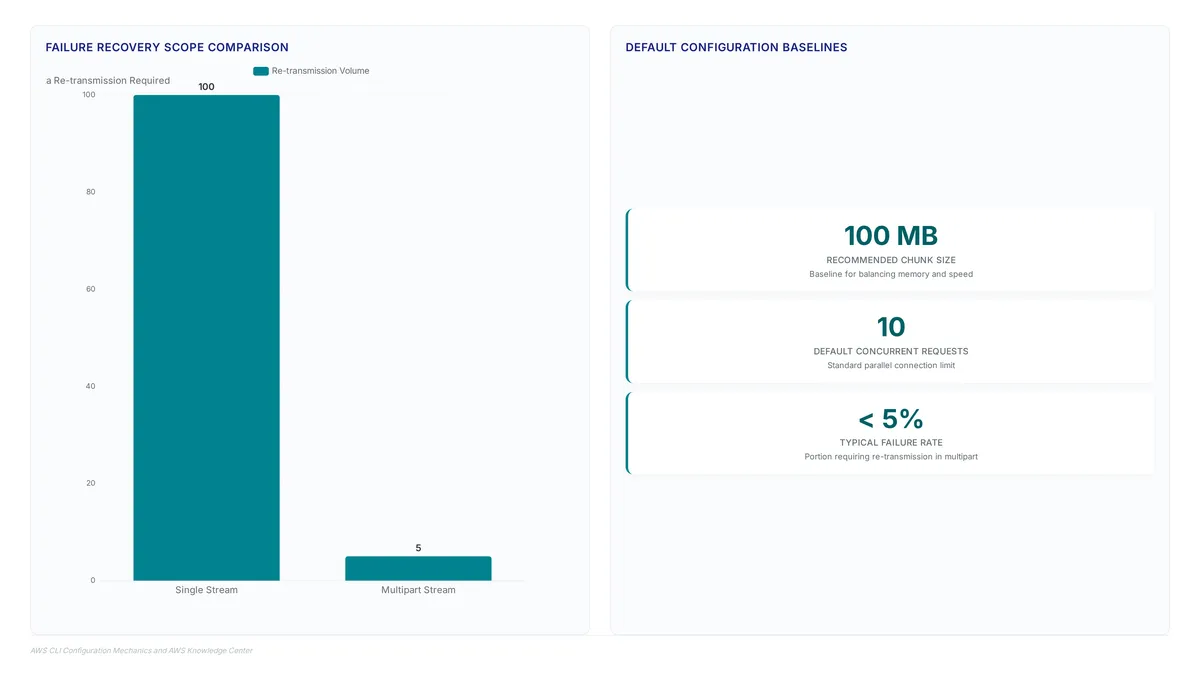
Stop single-stream bottlenecks. Split large files into parts and tune concurrency to maximize bandwidth for faster AWS CLI uploads.
Fix Cloudflare R2 endpoint errors causing inaccessible files. Learn how Class A operations trigger unexpected charges despite zero egress claims.
Skip EC2 agents for cross-account S3 transfers. Learn the exact IAM role steps to avoid the throttling limits that halt manual CLI scripts.
Discover why moving 1 TB of data can cost $900 in transfer fees alone, making zero-egress architectures essential for modern cloud budgets.
Learn how S3 buckets deliver 99.999999999% durability while avoiding the hidden costs of misconfigured containers and small file overhead.
S3 billing spans six dimensions, creating a 23x price gap. Learn why storage class selection alone rarely stops bill shock in production.
Cut object storage costs by 70% versus AWS S3. Eliminate hidden egress fees and migrate your data lake with true S3 API compatibility today.
Objects uploaded on Day 0 become the current version until a policy deletes them or they shift storage classes.
Discover why cloud providers charge $0.09 per gigabyte for egress and how this asymmetry inflates migration bills despite free ingress offers.
With object limits now at 50 TB, traditional partitioning is obsolete. Learn how to adapt storage classes and bucket types for massive datasets.
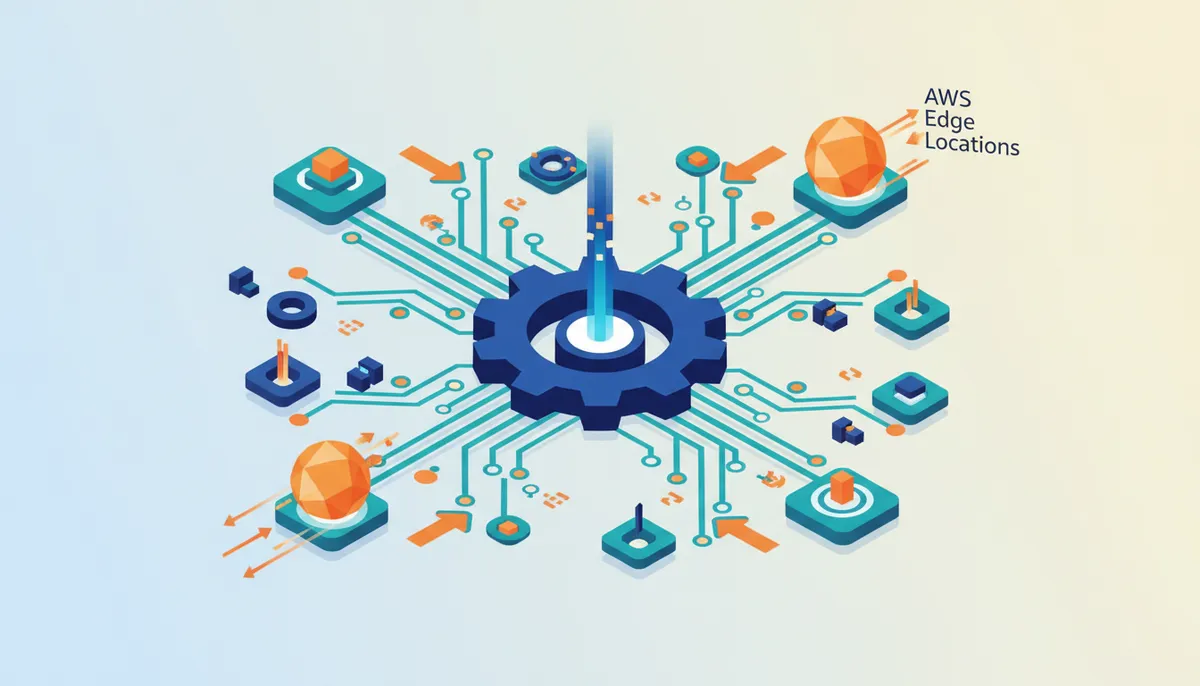
Learn how S3 Transfer Acceleration uses CloudFront edge locations to deliver up to 300% faster uploads for cross-continent data transfers.
Compare Cloudflare R2 and AWS S3 costs where Class A operations drive high-frequency write workflows. Learn why zero egress changes total ownership.
Test S3-compatible storage with mixed workloads to reveal true latency. Learn how version 4 tools expose bottlenecks single metrics miss entirely.
Discover how S3-compatible storage delivers 11 nines of durability while enabling entry pricing as low as a few dollars per month.
Combining multipart upload with transfer acceleration cuts large file transfer time by 61 percent.
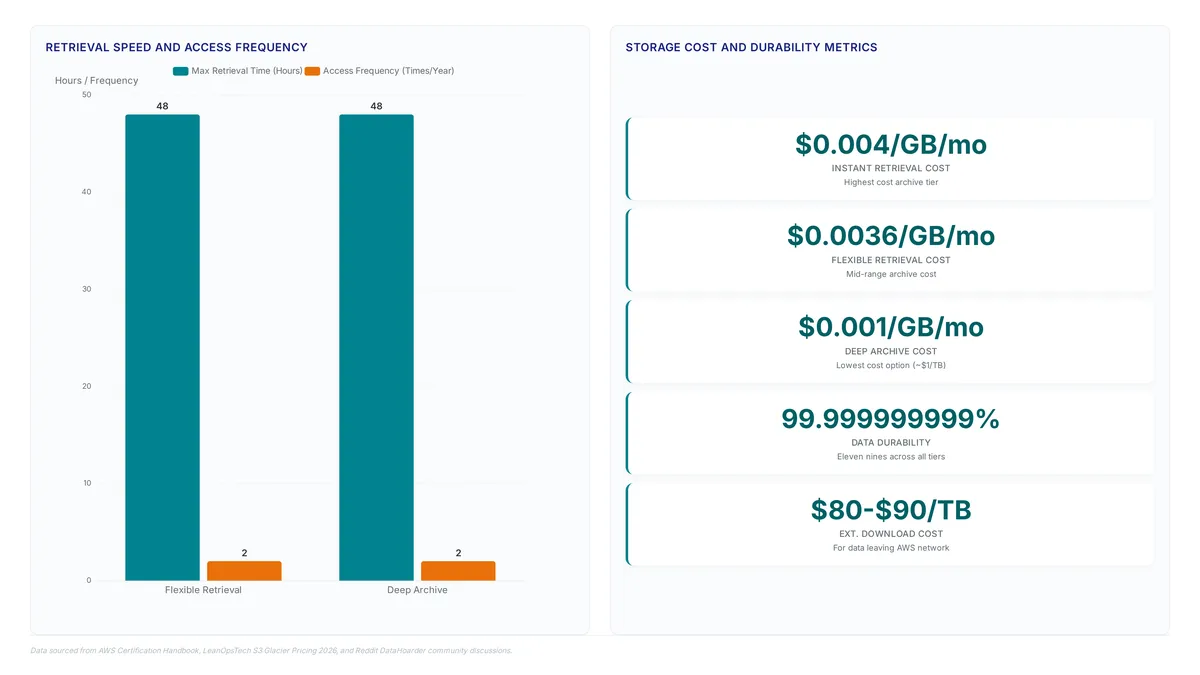
Glacier retrieval spans milliseconds to 12 hours. Learn how Deep Archive's $0.00099/GB pricing fits long-term retention strategies.
Move petabytes safely by mapping S3 Object Lock to retention policies and using parallel transfers for zero downtime during your cloud migration.
Amazon S3 currently stores a vast number of objects, yet its dominance no longer guarantees optimal value.
Cut storage expenditures by 70% while maintaining full application interoperability with true S3 API compatibility for enterprise data.
Scality's 150-year claim lacks verification, but DNA storage offers zero power usage at rest for true cold archive survivability.
Supabase Storage hits 80,000 unit limits fast. Learn how HNSW indexing and Iceberg buckets optimize vector search and analytics before scaling.
GDPR mandates data retrieval on short notice. Learn why legacy magnetic tapes fail Article 32 compliance and how S3 storage ensures instant access.
Discover why S3 CSI fails on writes for Kubernetes workloads like Airflow and Jenkins. Learn about static provisioning limits, non-root UID/GID config, and on-p
Fastly Object Storage eliminates egress fees, solving the issue where users pay as much for transfer as storage to unlock data-heavy innovation.
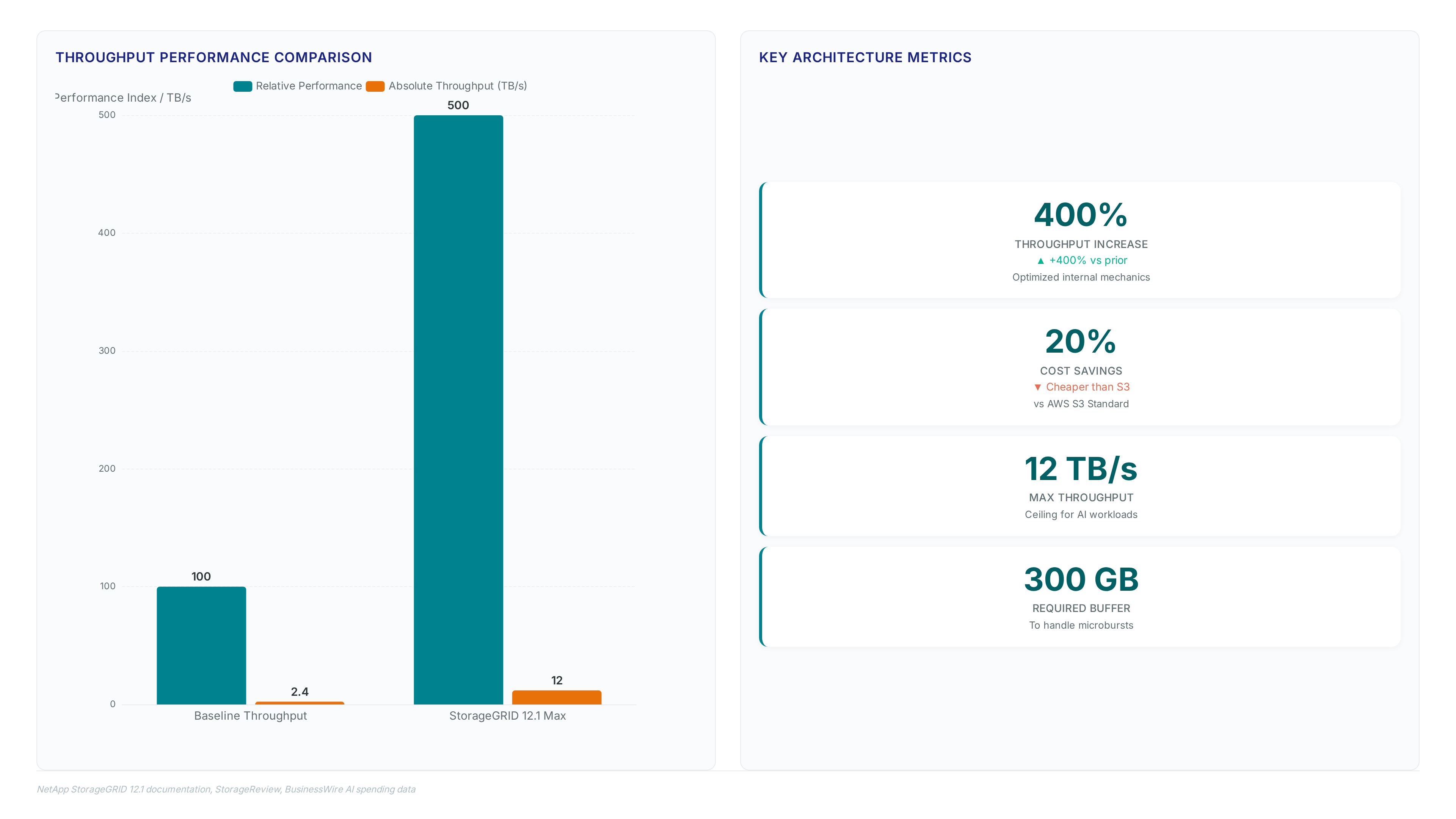
StorageGRID 12.1 delivers a 400% throughput boost, turning object storage into an active engine for your generative AI factories.
Early cloud strategies treated regions as checkboxes, creating a sovereignty gap. Learn how decoupling storage enforces legal authority by design in 2026.
Global sovereign cloud spending will hit billions in 2026 as regulators force data localization.
Store 2 TB of photos for under $15 monthly using S3-compatible providers. Learn migration tactics that bypass standard AWS rates without code changes.
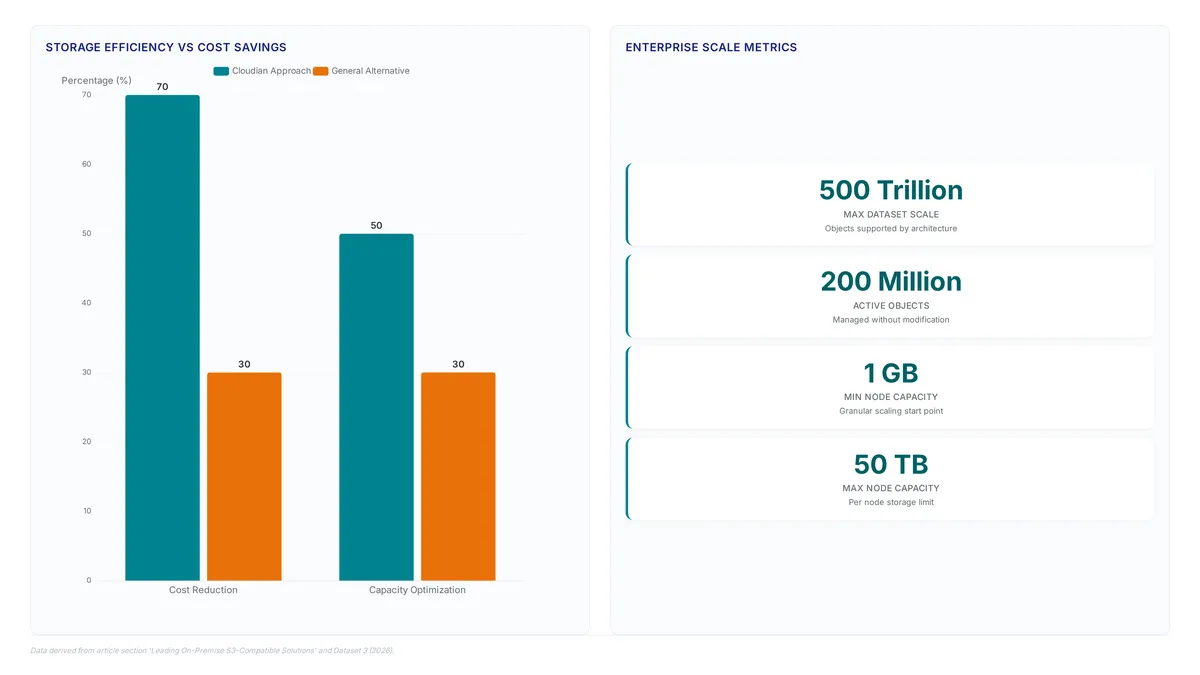
Explore how 500 trillion objects define modern scale and why Rabata.io offers a faster, S3-compatible alternative for enterprise data.
Discover how rigid 5 GB upload limits and $0.12/GB egress fees inflate cloud bills. Learn to audit storage services and cut costs by 70%.
Moving 100TB of data triggers massive egress fees. Learn how egress-free storage eliminates these penalties and unlocks true multicloud flexibility.
Learn how geofencing on a country level blocks cross-border flows while S3 Object Lock satisfies NIS2 ransomware recovery standards effectively.
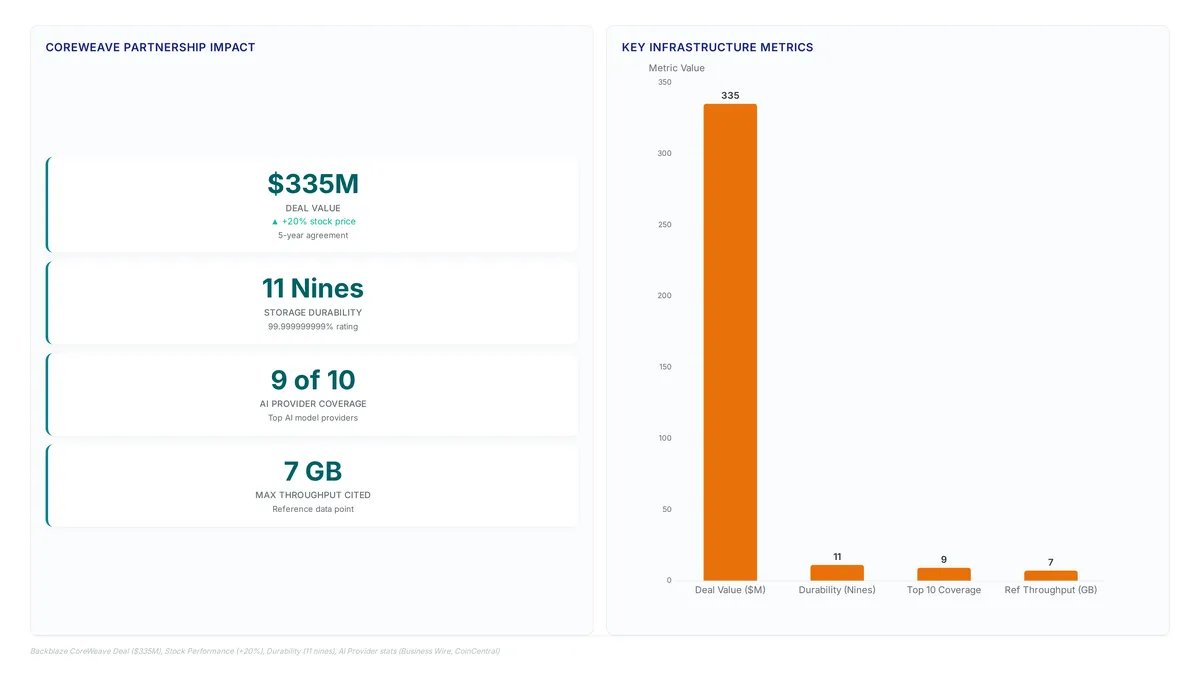
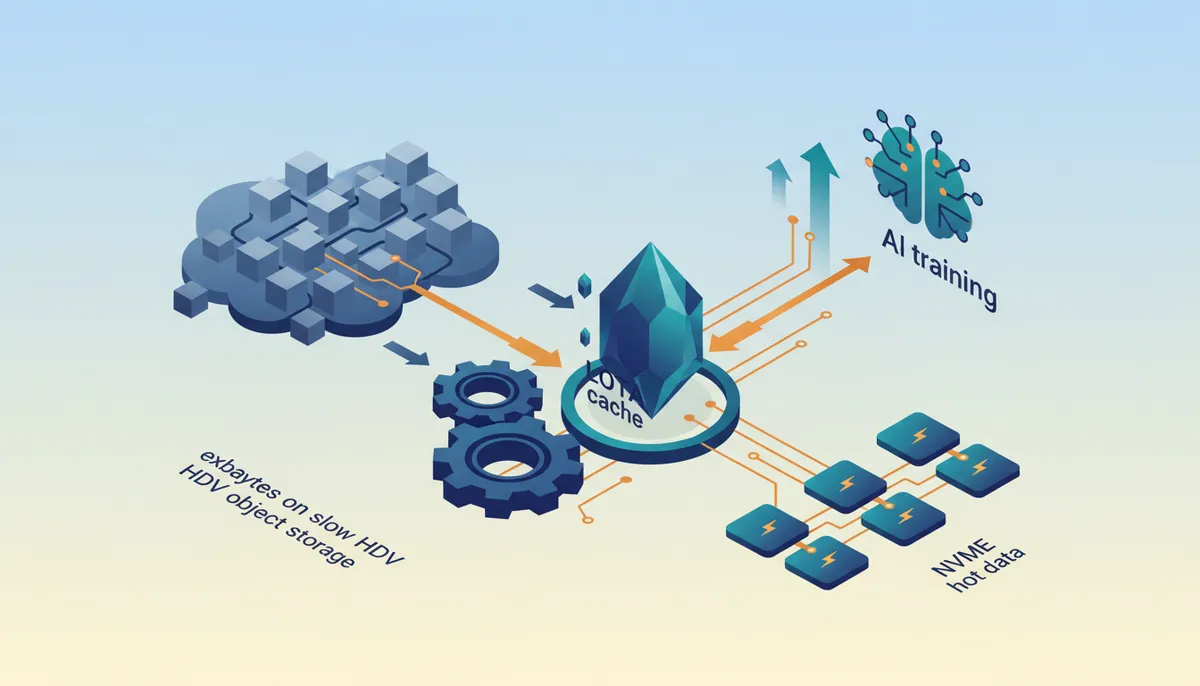
CoreWeave achieves 7 GB/s per GPU by pairing Backblaze HDD capacity with smart caching, proving flash isn't always needed for AI scale.
Stop risking total data loss. Learn why the APPKEY file matters and how to execute a full Coolify backup and restore in just 12 minutes.
Manual management cannot fix structural inefficiencies. Learn how automating lifecycle policies prevents paying premium rates for dormant data assets.
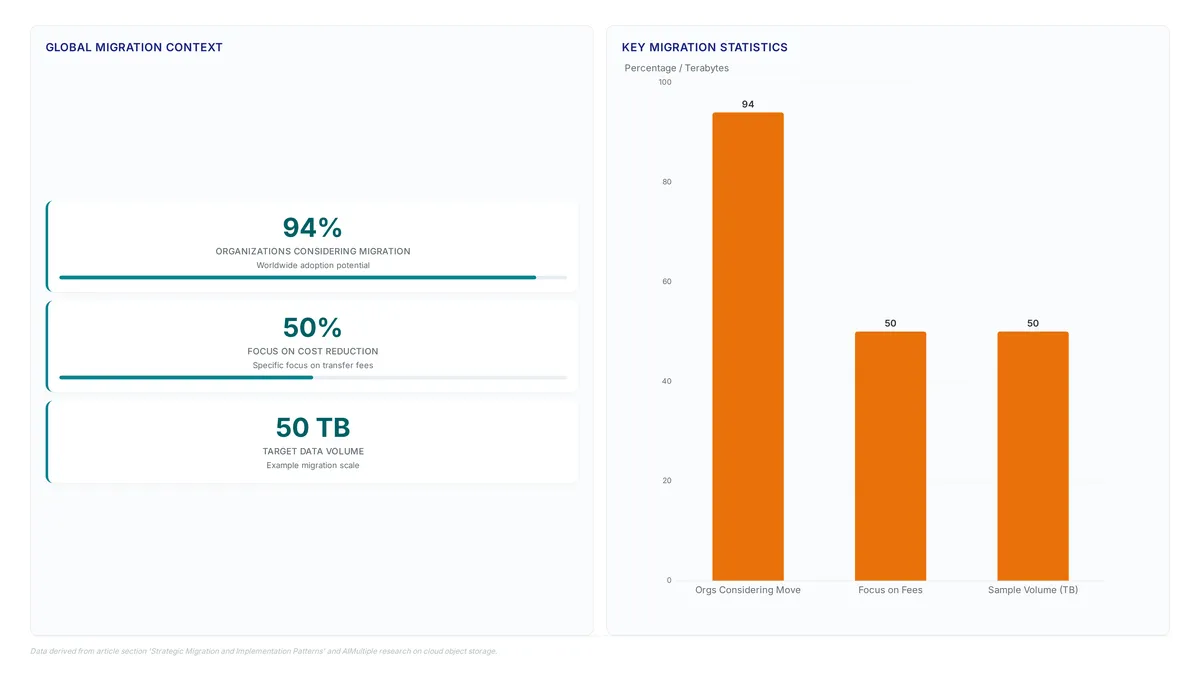
Stop forcing CLI scripts on petabyte moves. Learn why 54% of firms choose physical Snowball devices when bandwidth fails during cloud migration.
Cut cloud costs by 70% with S3-compatible storage. Simplify from eight complex tiers to just two while maintaining full API compatibility.
Cutting data egress fees to $0 is possible with specific S3-compatible alternatives, according to Cloudflare R2 pricing data.
Amazon S3 manages 400 trillion objects daily. Learn how S3-compatible architecture handles this scale without vendor lock-in or hidden latency.
Request fees and egress often dwarf the $0.023 base rate. See why operational intensity drives your S3 bill more than static capacity does.
Rising cloud costs and unpredictable billing are driving enterprises away from Amazon S3 toward flexible alternatives.
S3 compatibility is a spectrum, not a binary switch. Learn why API edge cases break tooling and how flat-rate models contrast with tiered pricing.
Managed S3-compatible providers can price storage as low as $0.006/GB per month, undercutting standard hyperscaler rates. Compare cost, licensing, and GDPR trad
Discover why teams migrate to S3-compatible storage to cut expenses by 40-80% and eliminate unpredictable egress bills today.
Cut storage costs with zero egress fees across 335 data centers. S3-compatible object storage eliminates per-GB retrieval traps for modern apps.
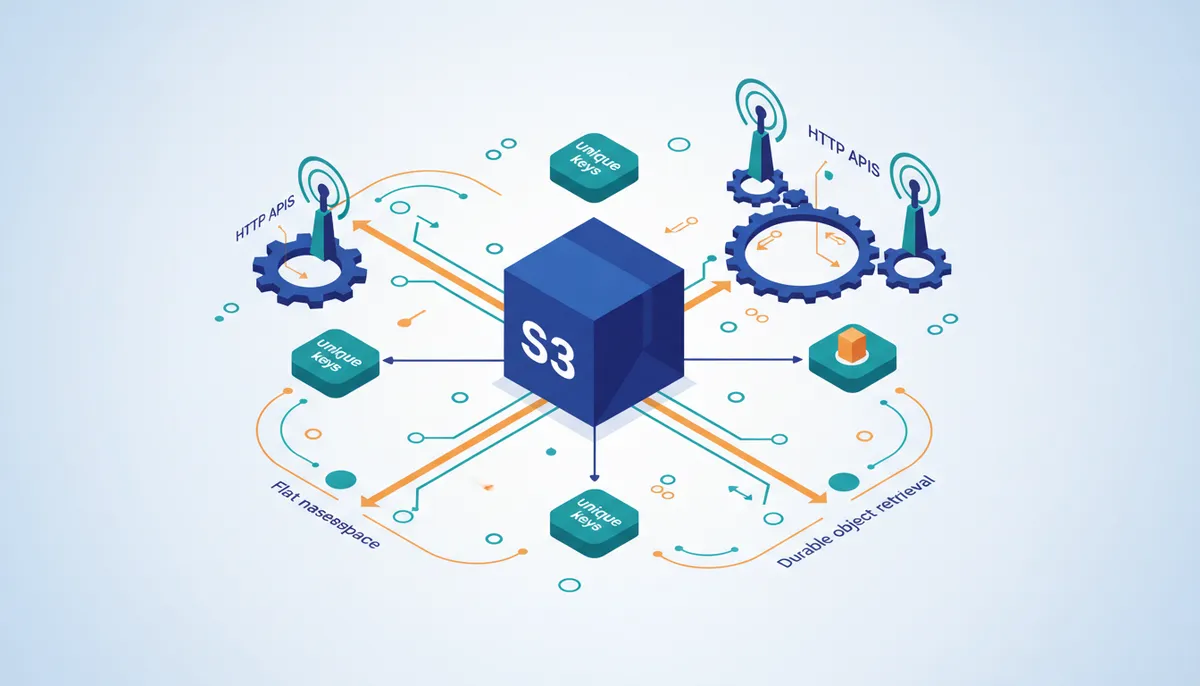
Learn why flat buckets replace nested folders to cut management overhead and optimize data retrieval for unstructured cloud workloads.
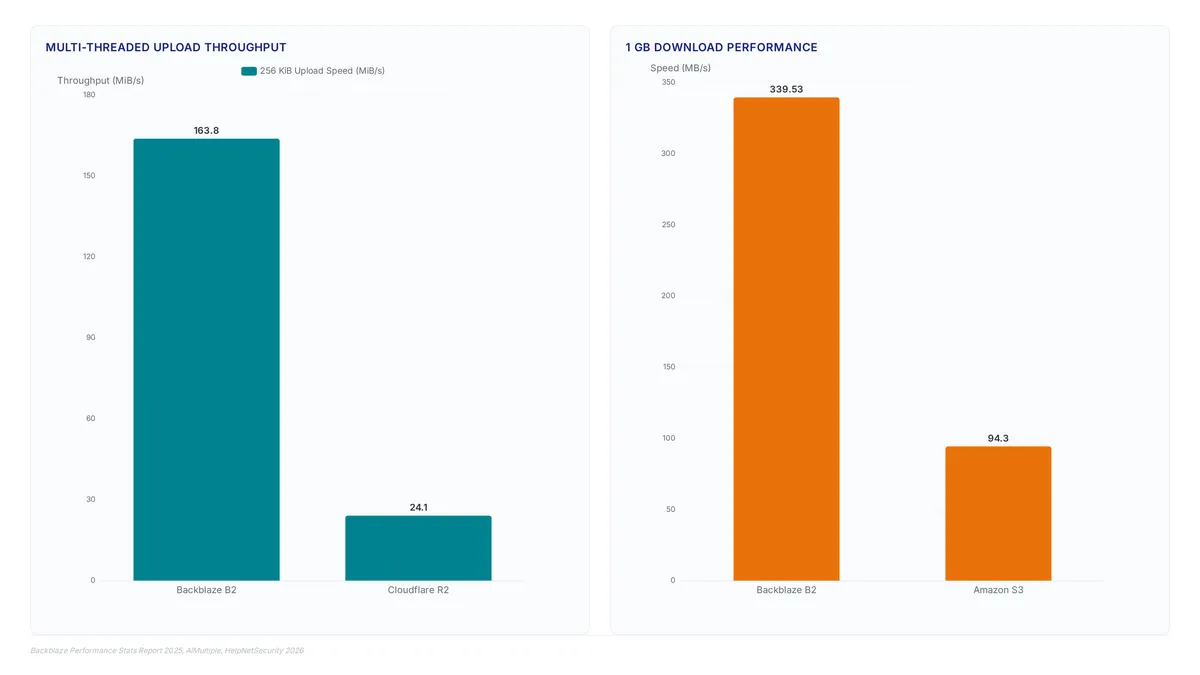
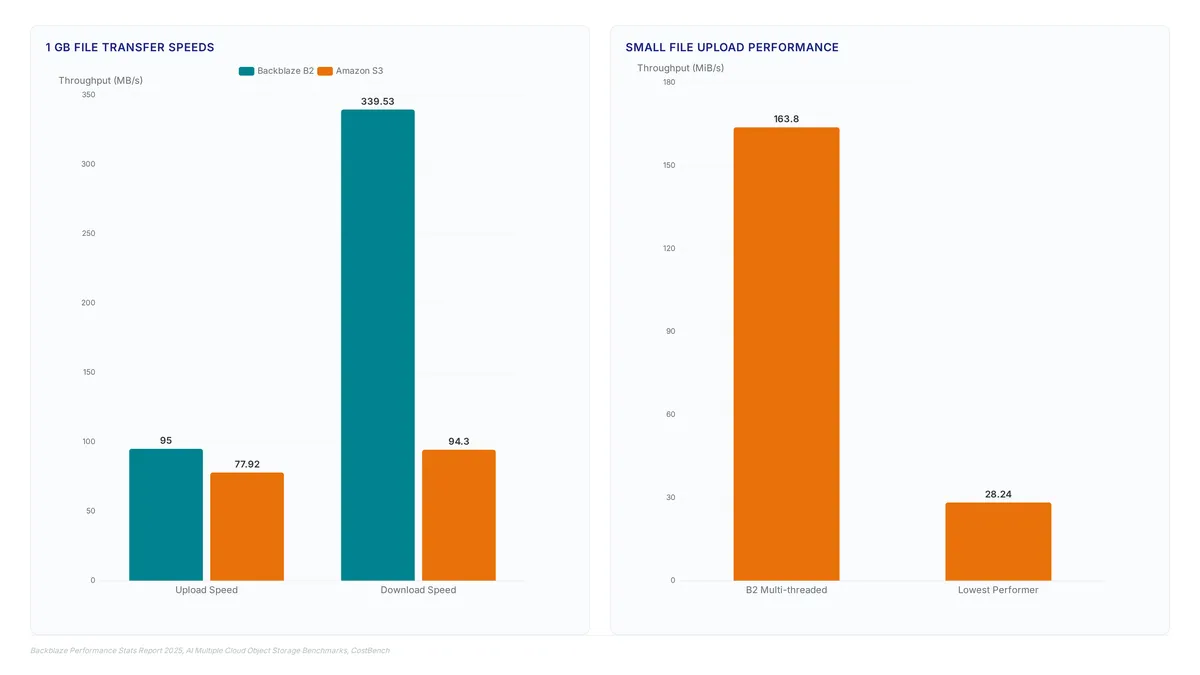
S3 latency traps stall pipelines. Benchmarks show 163.80 MiB/s vs 24.10 MiB/s gaps. Discover how Rabata delivers verified speed.
The Amazon S3 API enforces a hard 5 terabyte ceiling on single objects, proving its 2006 architecture remains rigidly set by strict limits today.
Over 80% of enterprise data stays idle. Learn how to query unstructured files as Iceberg tables without moving petabytes of storage.
With over 2 Zettabytes under management, firms reject total cloud migration. Discover how hybrid governance solves egress costs without moving data.
Nearly half of healthcare AI budgets disappear into opaque fees. Discover how separating dark data from active capacity stops the financial bleed.
Learn how intelligent tiering delivers 7 GB/s per GPU, moving hot data to NVMe while keeping cold logs on cheaper HDDs to cut costs.
HDD tiers now underpin exabyte-scale AI where flash costs fail. See how a 5-year contract validates this economic model for massive datasets.
MSP360 Backup 8.6 closes critical immutability gaps by extending Object Lock to SQL Server and Legacy Backup formats.
See how this trivendor stack delivers millisecond AI access while cutting energy costs for petabyte archives. Real infrastructure insights inside.
The EU imports over 80% of key digital tools. True sovereignty means controlling the code stack, not just where bits sit physically.
Immutability costs pennies, yet most enterprises fail. Learn why a two-tiered architecture with isolated recovery is vital for ransomware survival.
Unstructured data tiering only cuts your storage bill with access-driven classification, immutable cold copies, and tested restores. A platform engineer's playb
Query metadata to find 429 errors before they stall AI training. Turn passive inventory into active cost control with precise access data.
Raw 4.9x speed gains drain budgets via management fees. Discover how architectural efficiency delivers 9x improvements without inflating cloud costs.
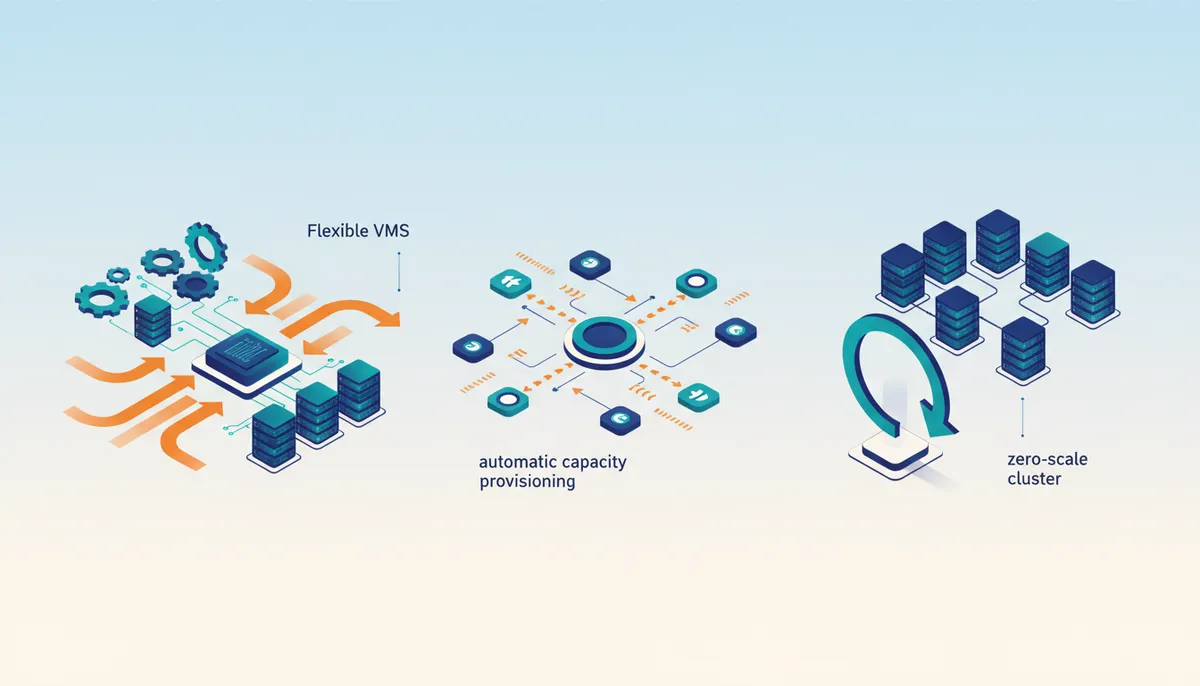
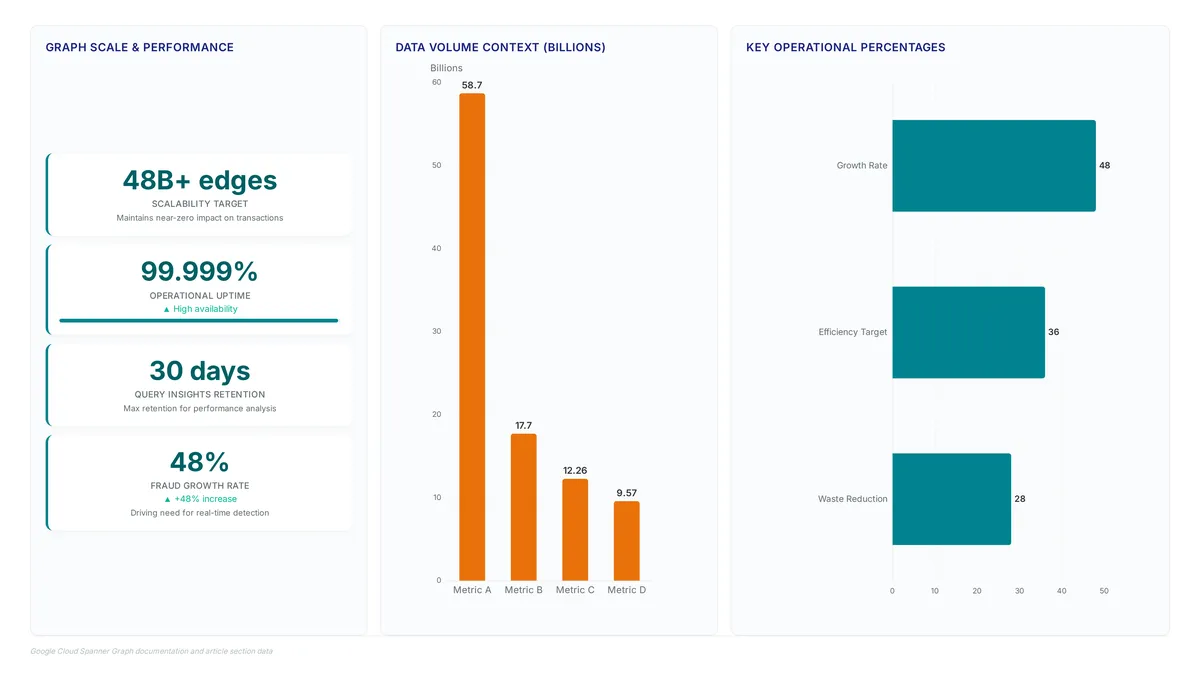
Spanner Graph processes billion-edge graphs without complex ETL, eliminating the hidden storage costs of moving connected data for analysis.
Discover how native C++ compilation delivers up to 4.9x faster Spark performance by eliminating garbage collection pauses and JVM overhead.
Google Cloud generated billions in 2025, yet sequential read patterns still cripple query performance on this infrastructure.
GCS MCP adoption surged 20x, yet zero-infrastructure models hide security gaps. Learn why remote and local architectures demand different observability...
Cut SAS Grid expenses by shifting cold data to archives at a fraction of a cent per GB/month while maintaining submillisecond access for active jobs.
Most AI pilots fail due to fragmented storage. Learn why unified access beats raw compute for scaling beyond the pilot phase.
Discover how Cloud Storage FUSE latency impacts TPU inference and why a dedicated gateway beats direct mounting for low-latency model access.
Google Cloud revenue jumped significantly to billions in late 2025, proving AI infrastructure drives the market.
Scality launched ADI on 12 May 2026 to manage data tiers. This analysis explores why human oversight remains vital for safe AI storage.
Reddit avoids directories because S3 handles 1M+ data lakes. Learn why flat namespaces beat rigid file systems for massive scale.
After 50+ server restores, I know disk imaging saves days. Clonezilla reads only used blocks, creating smaller images than dd for faster recovery.
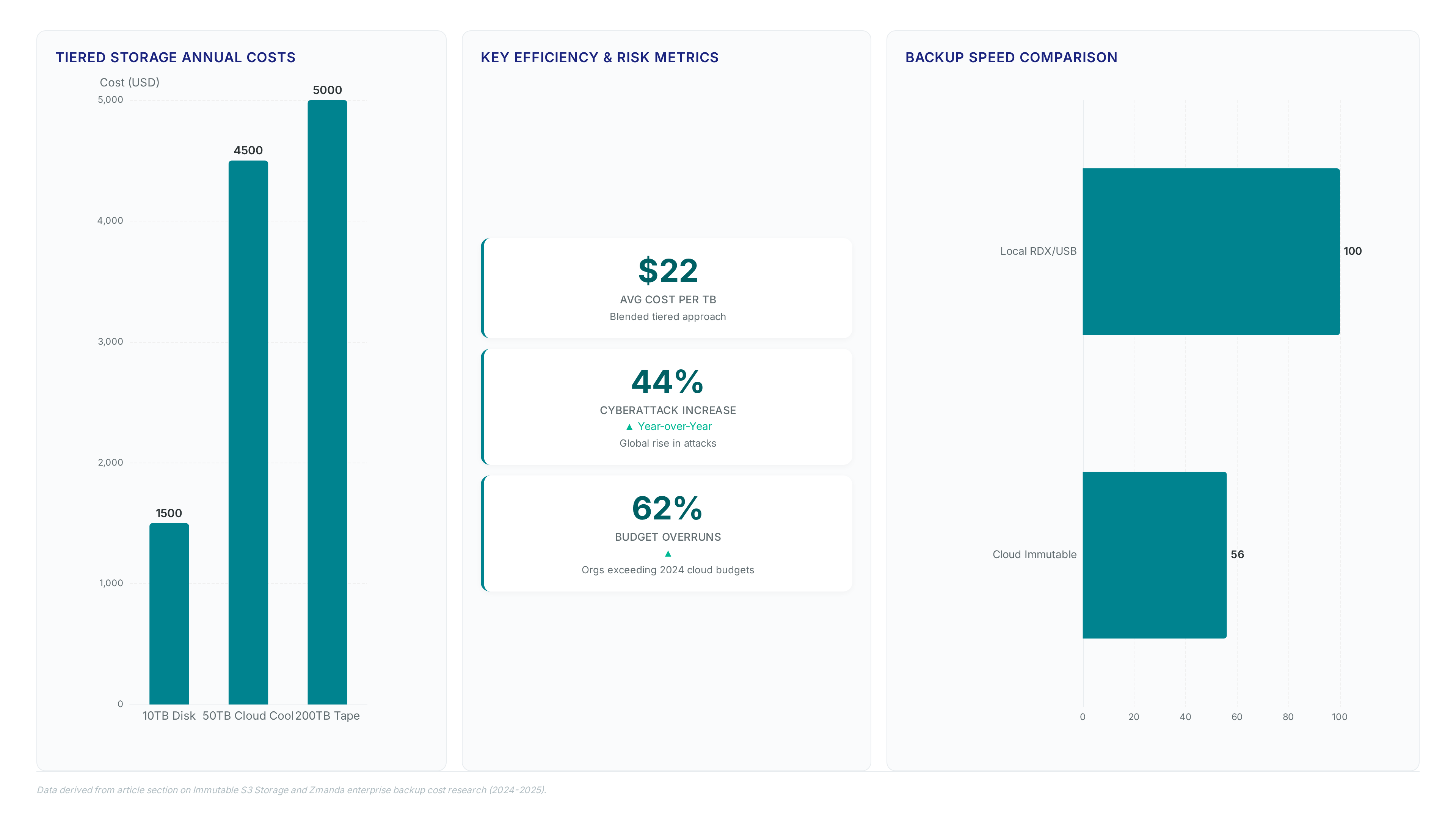
Stop wasting margins on fragmented tools. Native S3 integration cuts administrative overhead and targets the 62% of orgs exceeding budgets due to hidden fees.
See how Manchester scanned 3.5 billion files to find cold data, avoiding a costly hardware refresh by moving archives to tape.
Cut AI inference time by routing traffic through our new Tokyo endpoint. We support 1 exabyte of data with local S3 compatibility.
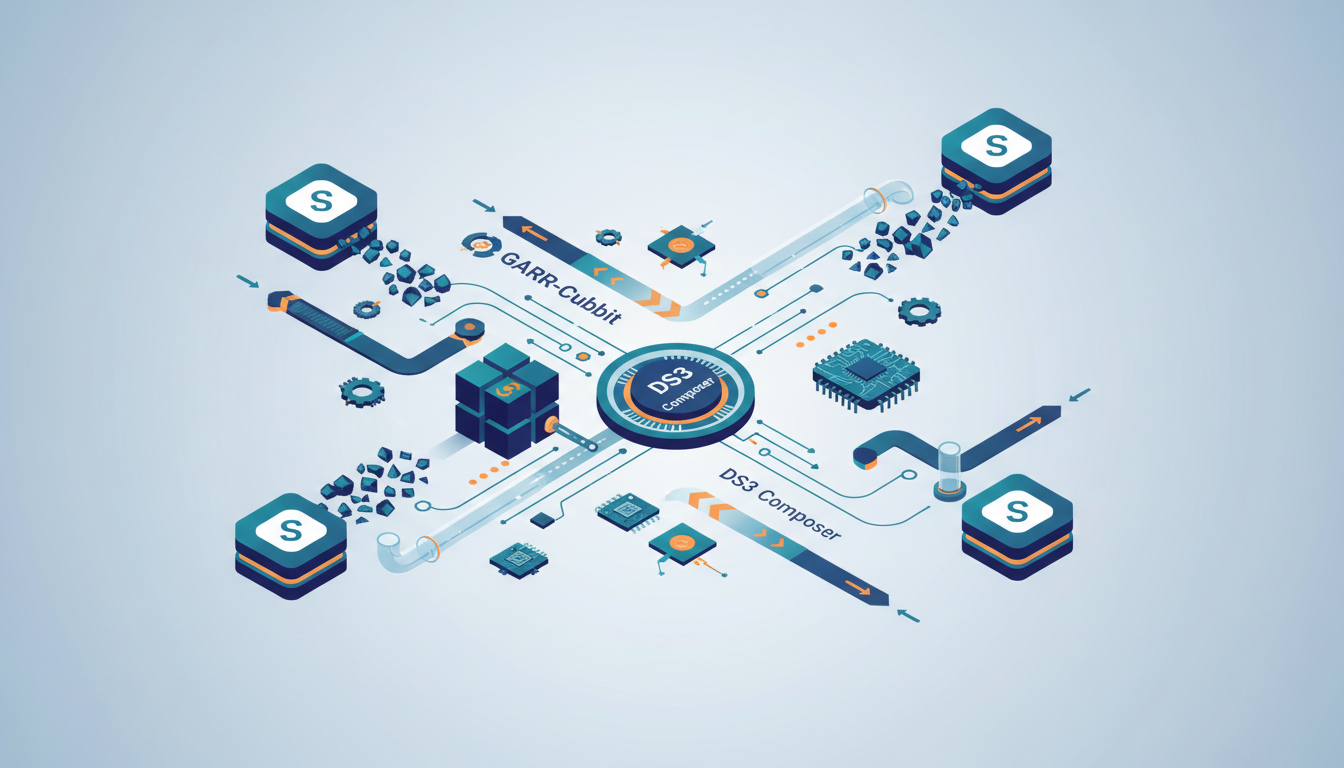
GARR launched Europe's first federated storage with 1 PB capacity, proving research institutions can secure data without hyperscale vendor lock-in.
Skip intermediate layers for 3x faster queries. Alex shares how direct Apache Iceberg access removes warehouse latency without moving data.
Stop risking single points of failure. Laravel Backup v2.0 enables parallel uploads to S3 and Google Drive, securing your data across multiple clouds instantly.
EDpCloud 6.3 adds native Snowball Edge support, eliminating manual staging for massive datasets while reducing CPU load during high-latency transfers.
With 300% workload growth since 2022, generic file systems stall AI. Learn how persistent volumes prevent your infrastructure from becoming the bottleneck.
Stop paying the lift-and-shift tax. Unified storage lets 70% of enterprises train AI models directly on production data without costly rewrites.
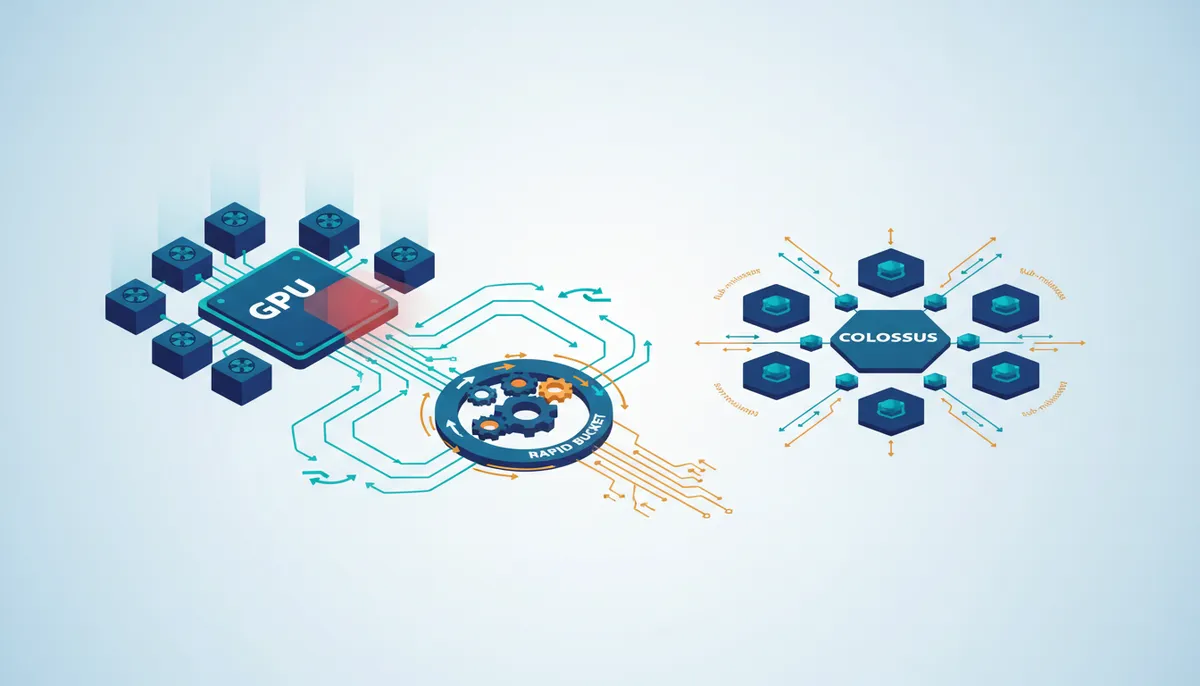
Google's new Rapid Bucket cuts GPU blocked time by 50% with 15 TB/s bandwidth, solving the latency crisis in modern AI training workflows.
Native versioning fails when 65% of breaches stem from misconfiguration. Learn why AI teams need air-gapped architectures for true durability.
Stop paying $0.30 per GB for EFS. S3 Files brings POSIX semantics to buckets, ending the need for fragile data sync pipelines.
Launched April 7, 2026, S3 Files merges object storage with NFS. Learn how to mount buckets on EKS for agentic AI without data duplication.
S3 Express now supports inventory reports at $0.16 per GB. Stop using slow List API calls and get daily CSV metadata for your directory buckets.
See how Mercedes cut egress 66% using Delta Sharing. Learn to split workloads and avoid massive transfer bills in your own architecture.
OpenDrives Edge launched April 13, 2026, to give distributed editors local 4K speed without recurring egress fees or manual shipping.
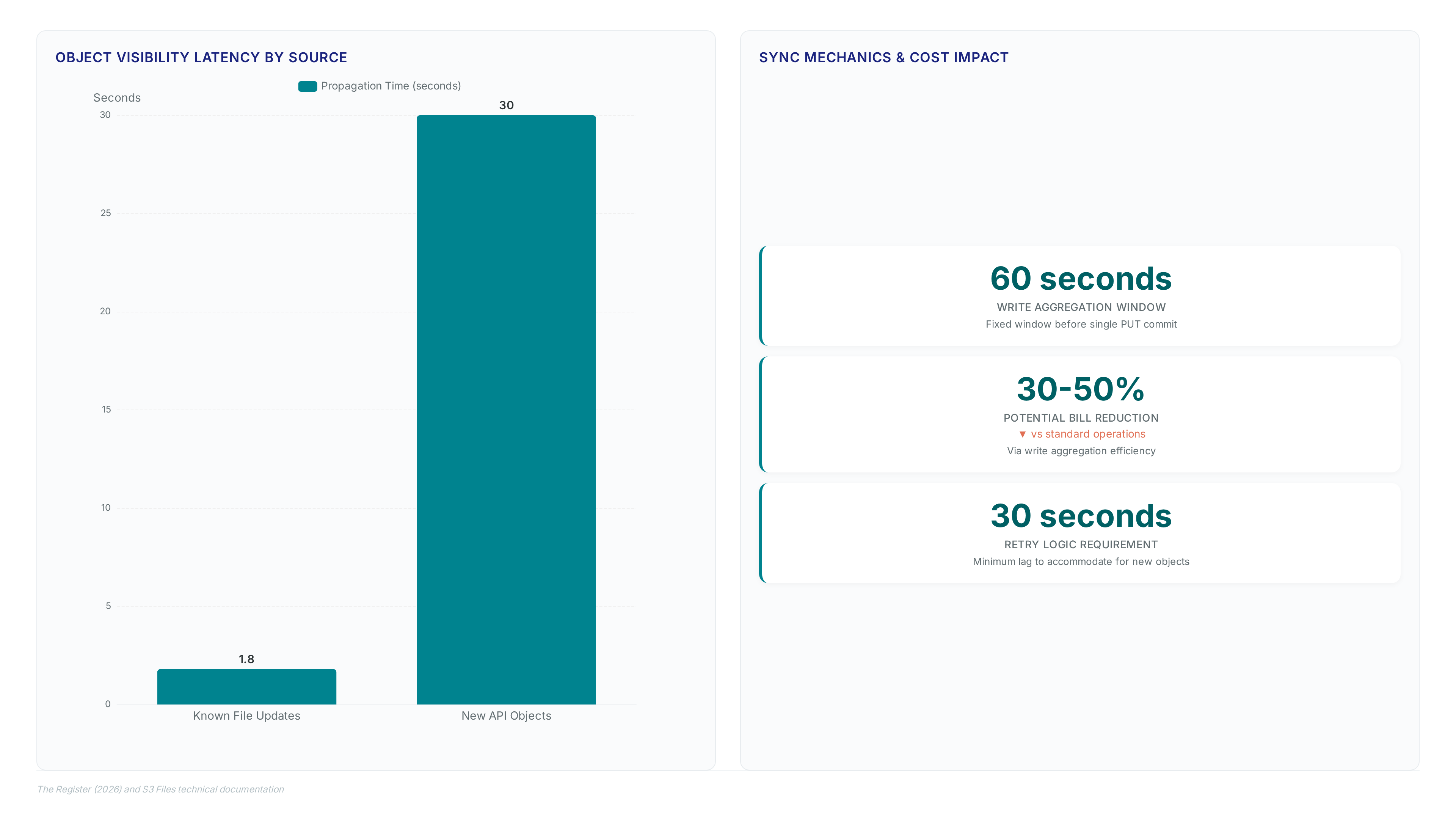
Alex tests the new S3 Files service: writes converge in under 2s, but deleted files linger for 18 seconds. Know the latency trade-offs.
We tested S3 Files on April 7, 2026. Updates hit in 1.8s, but new files still lag 30s. Here is the sync math for your ML pipelines.
AWS S3 Files now supports NFS v4.2, letting Lambda mount buckets directly. This ends the 20-year split between file flexibility and object durability.
AWS S3 Files now serve NFS v4.2 directly, letting 54% of multi-cloud users consolidate storage without duplicating data or paying gateway fees.
EBS hits 20x faster I/O than S3. Learn why block storage beats object stores for high-velocity AI training pipelines.
S3 now handles 200 million requests per second. I break down the engineering behind 500 trillion objects and why metadata optimization is critical.
Stop wasting time on copy mechanics. Learn how S3 Files let compute access 40 PB of genomic data directly, skipping fragile transfers.
Stop moving petabytes. With $37B spent on generative AI, legacy architectures are unsustainable. Shift to GreenOps and query data in place now.
Stop guessing at S3 performance. My analysis of the new minute-level data shows exactly where single-digit ms variance impacts your bill.
An AI agent wiped our DB in nine seconds. Learn the 10-step automated backup protocol that prevents $5,600 per minute losses.
Pink Elephant's three data centers deliver 15 nines of durability while slashing power costs for EU compliance without vendor lock-in.
NAND flash prices jumped 234% in 2026. I show how analytics reclaim 70% of your primary storage without costly vendor lock-in.
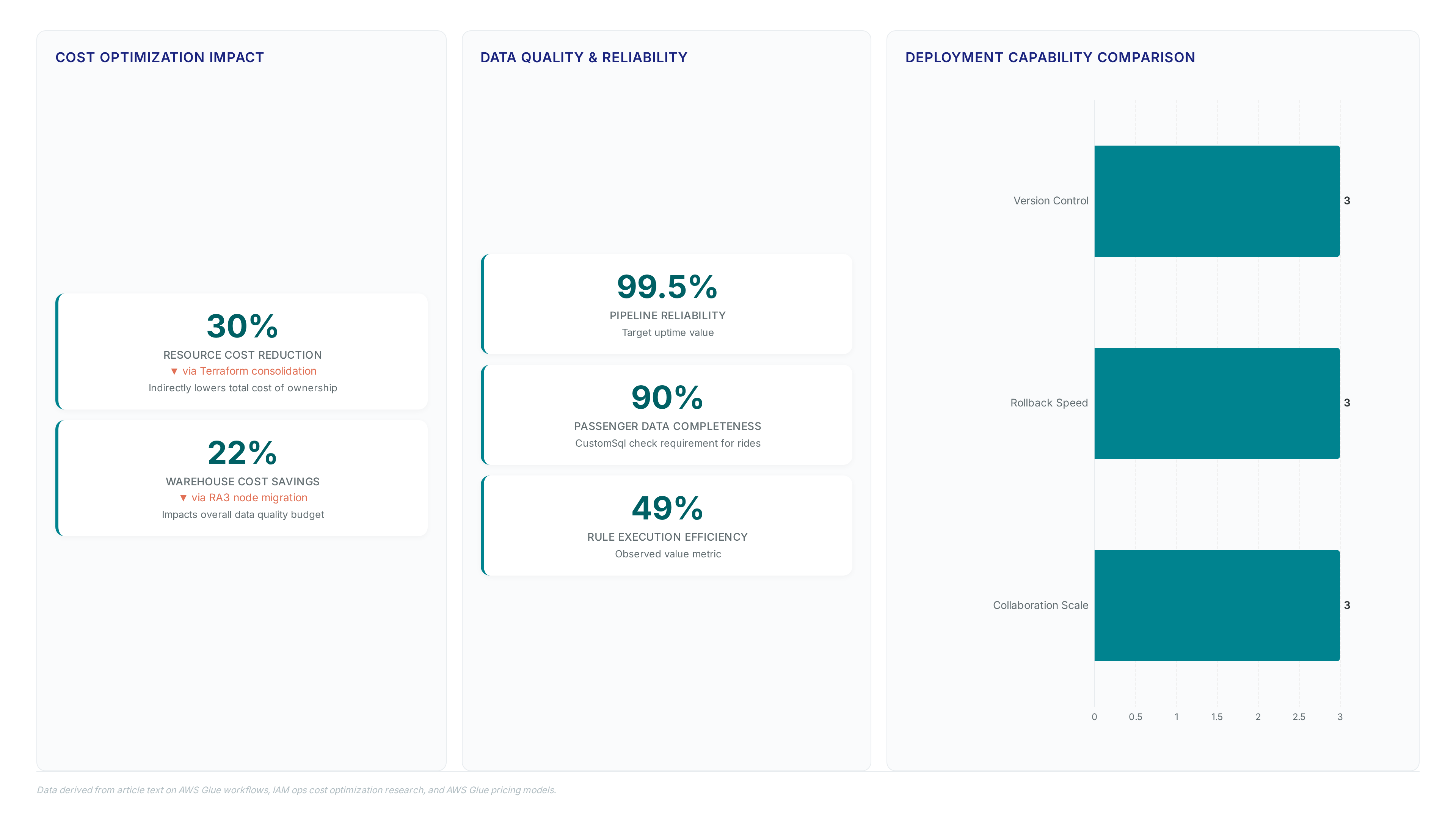
Cut resource costs 30% by codifying AWS Glue data quality checks in Terraform. Automate anomaly detection without inflating your pipeline bills.
Stop overpaying for flash. Our analysis shows intelligent tiering delivers $350,000 savings per petabyte by moving inactive data efficiently.
NAND prices jumped 234% in 2026. I show how Flash Stretch finds the 70% of cold data clogging your expensive primary arrays.
With €7.1B in GDPR fines, learn why US cloud control planes override EU data location and expose your metadata to legal reach.
NetApp AIDE cuts vector storage growth by 20x, solving the data bottleneck stalling 76% of large enterprise AI deployments today.
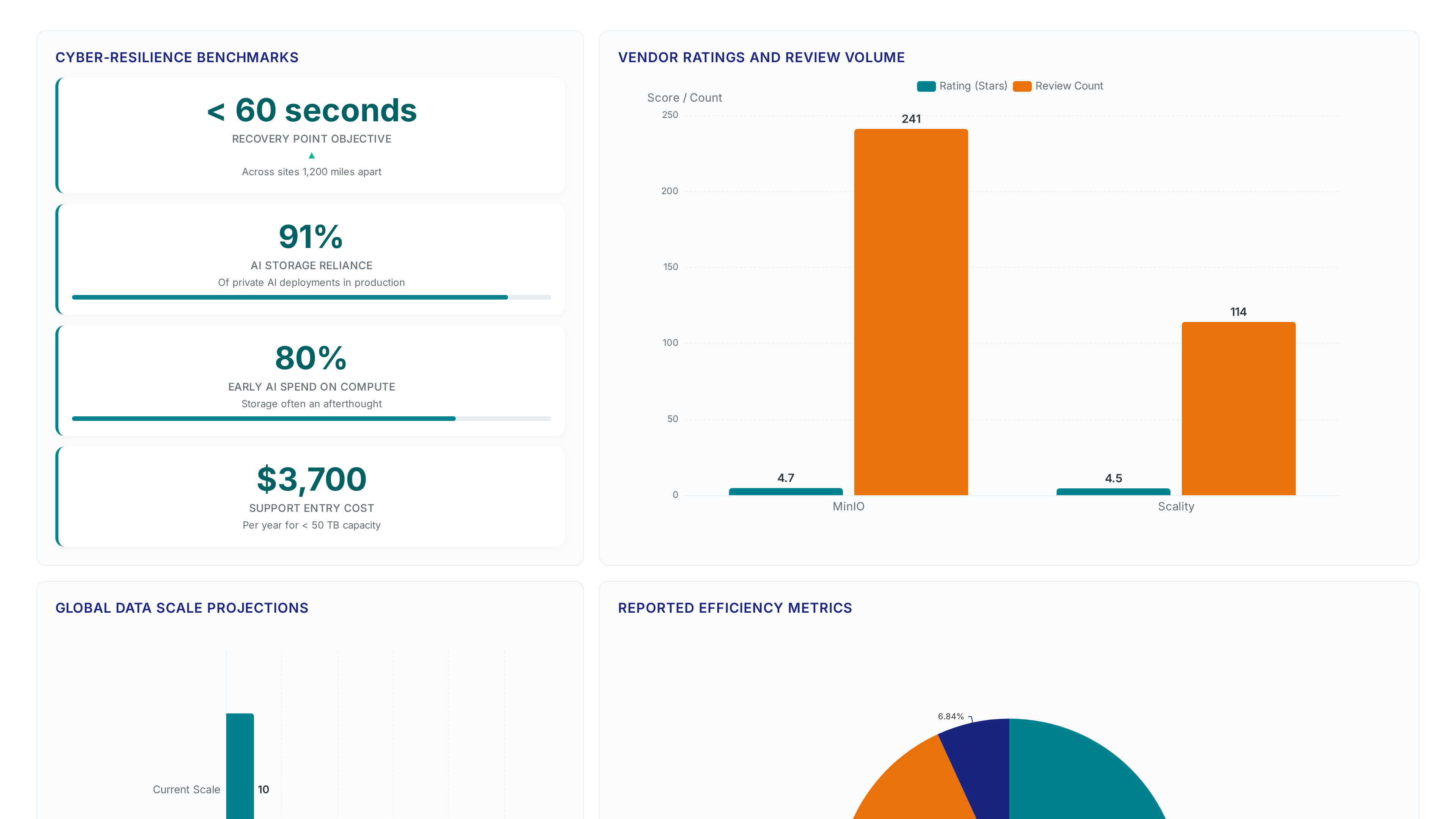
With 91% of production AI relying on object storage, latency now dictates model success. Learn why proximity matters more than raw GPU power.
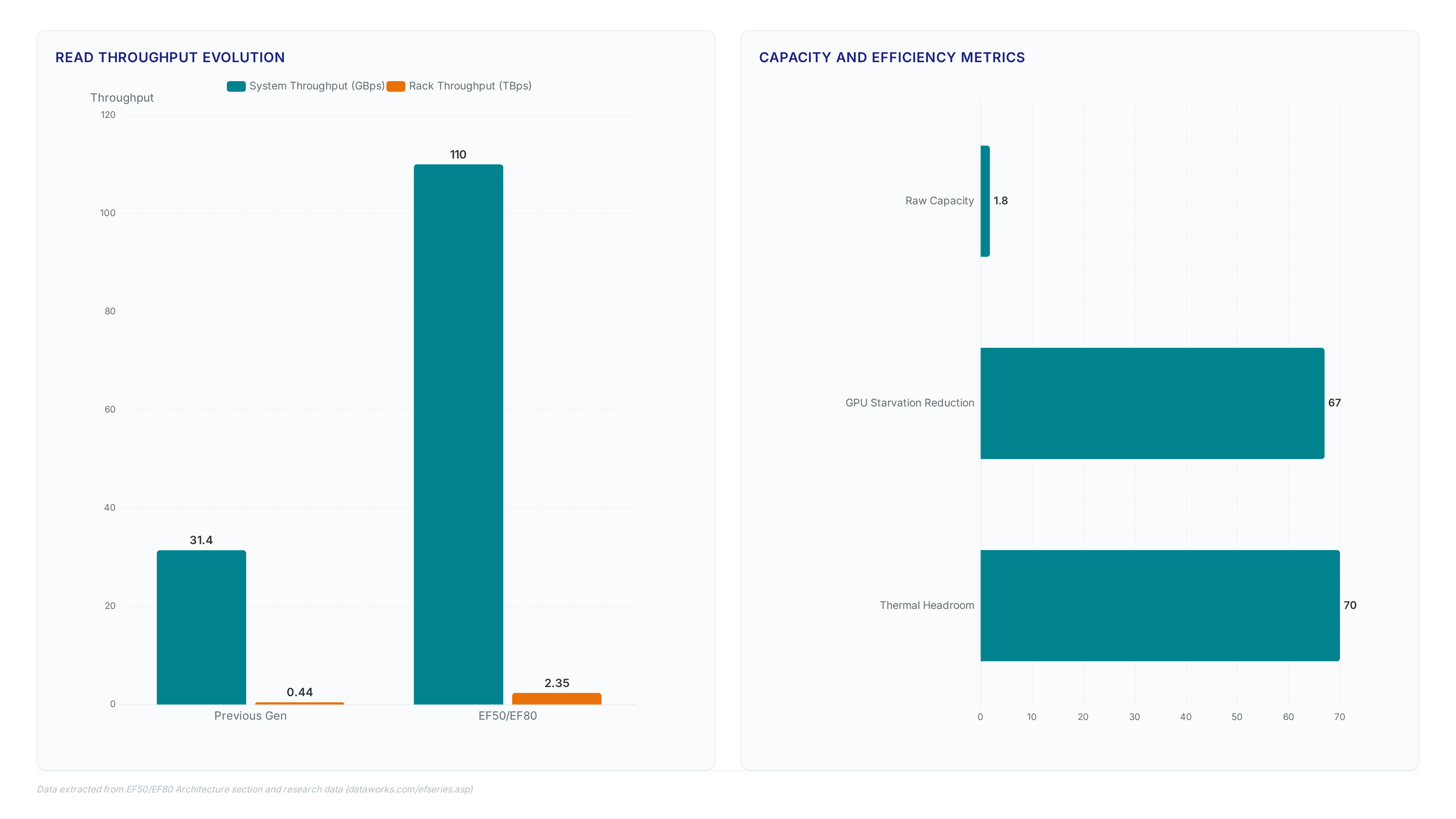
NetApp's new EF50 delivers 110 GBps read throughput to stop GPU starvation during large-scale AI model training cycles.
Hammerspace reports 2026 bookings are 14x higher as compute bottlenecks shift to data access. Learn why a trusted data plane is now mandatory.
After 18 years, S3 holds 500 trillion objects with eleven nines durability. See how simple PUT/GET primitives scaled globally without breaking apps.
AWS S3 now holds 500 trillion objects. See how strict API backward compatibility lets your 2006 code run unchanged in 2026.
AWS S3 now handles 200 million requests. I break down the architecture keeping 500 trillion objects durable after two decades.
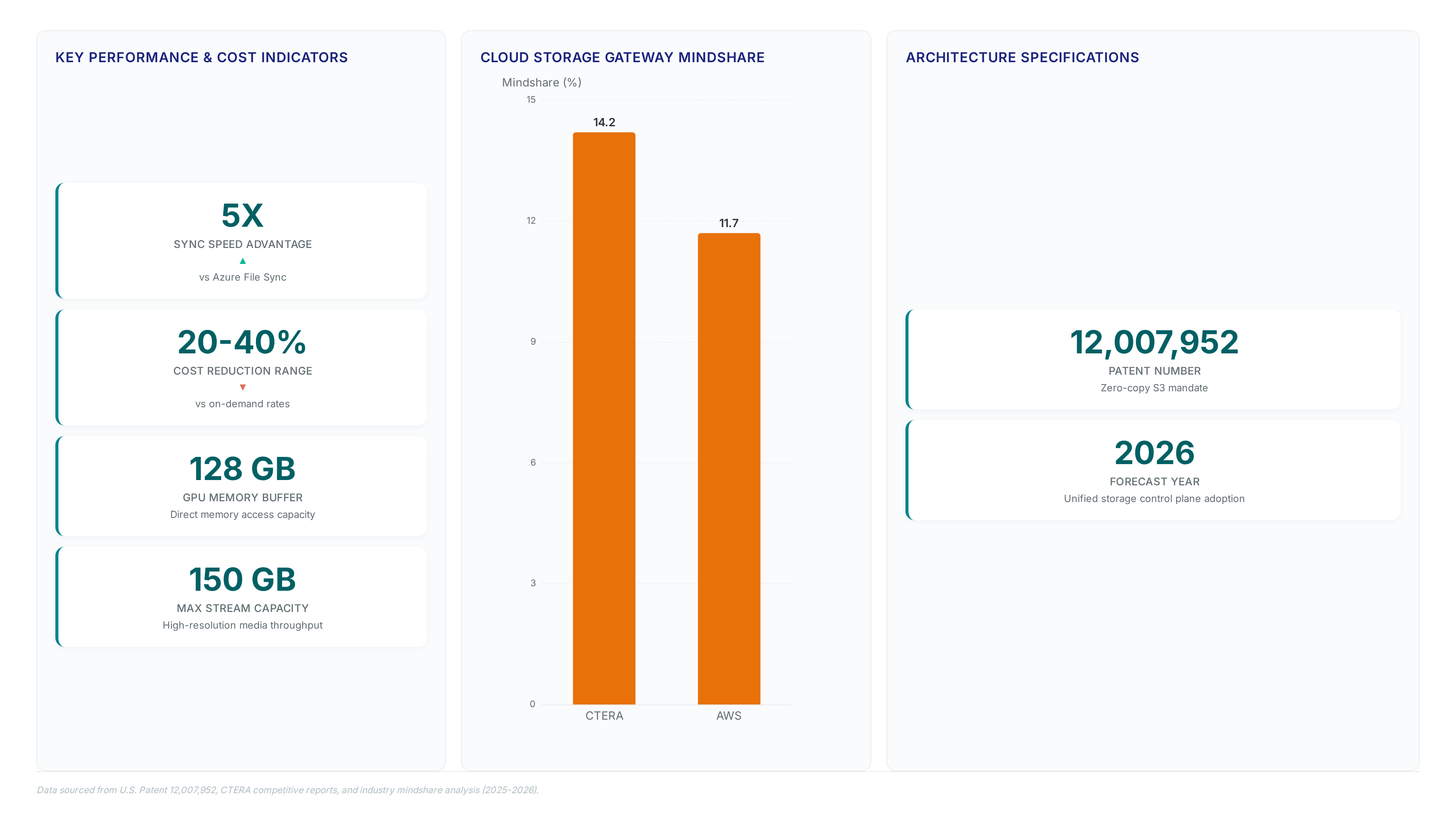
Alex breaks down how Ctera Fusion Direct enables S3 over RDMA at wire speed, eliminating the gateway latency that slows AI training.
See how Amazon S3 replaced tape libraries in 2011, eliminating manual seeks and proving cloud durability for enterprise Oracle backups.
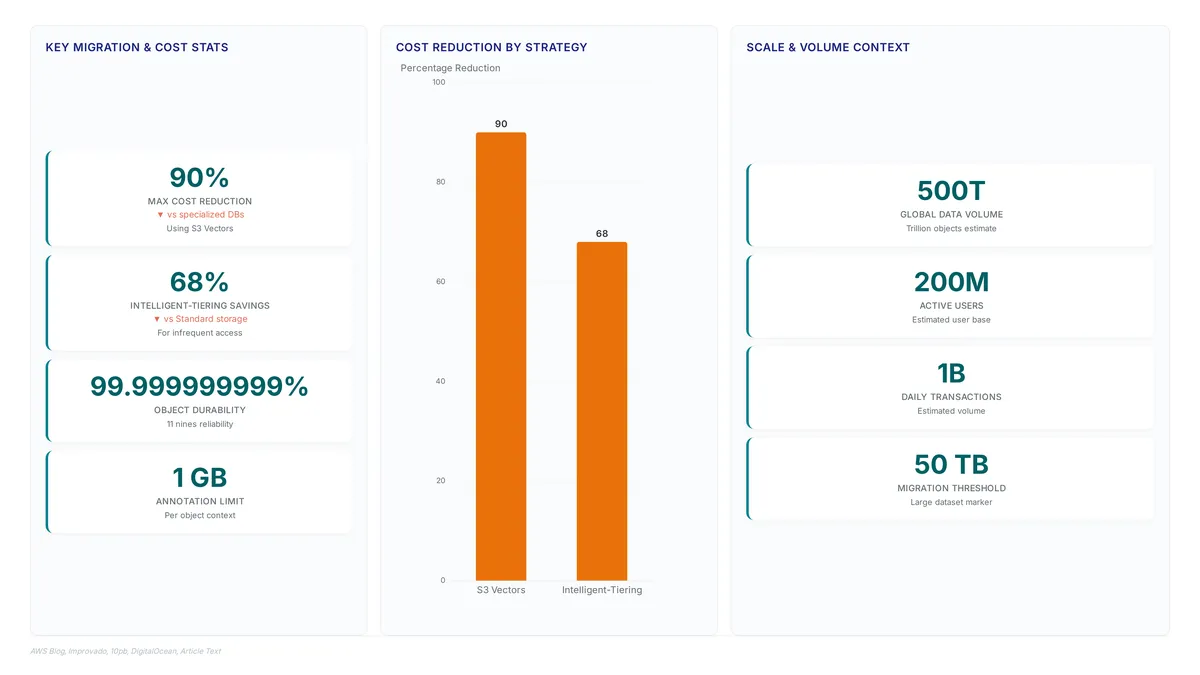
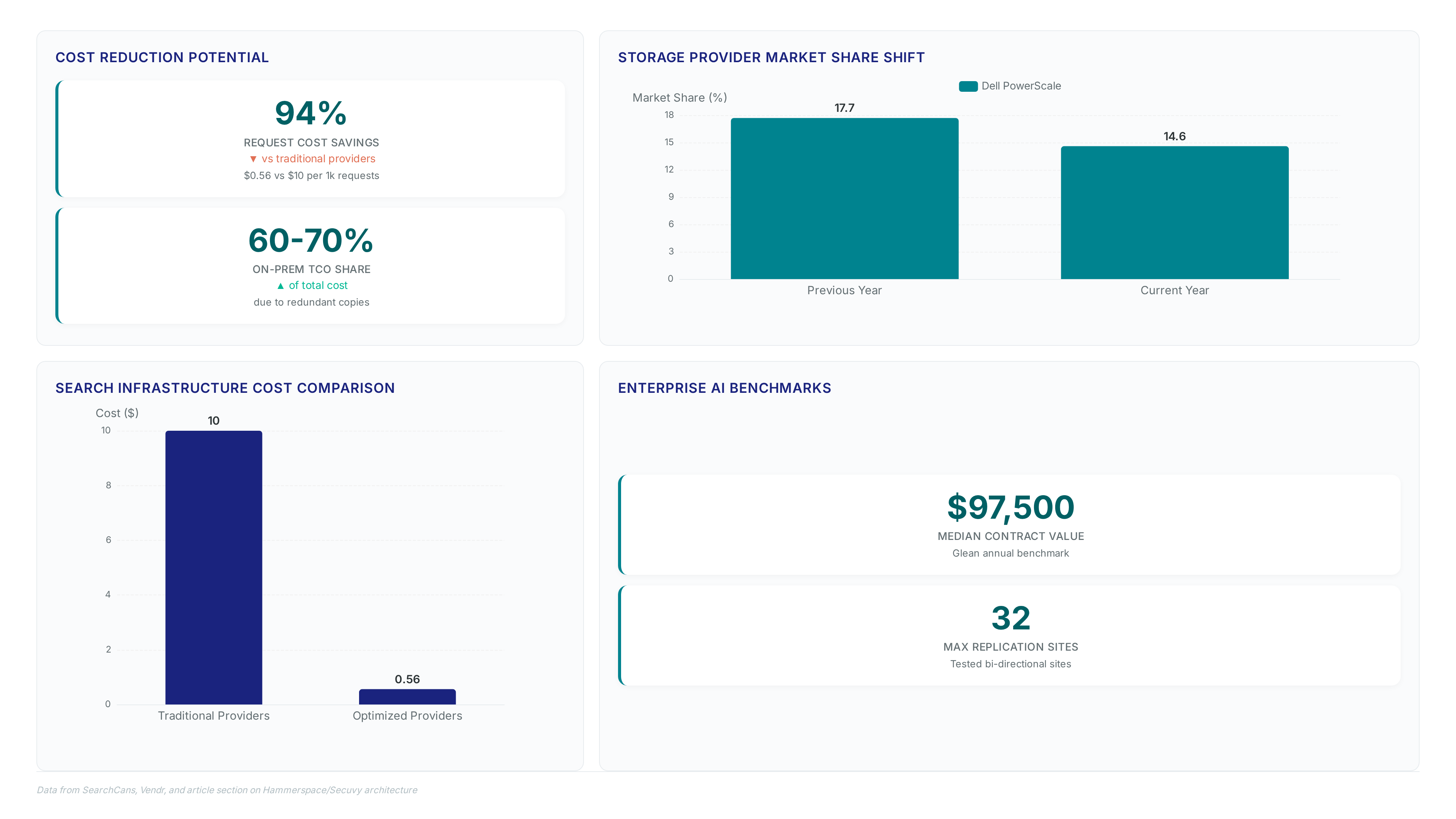
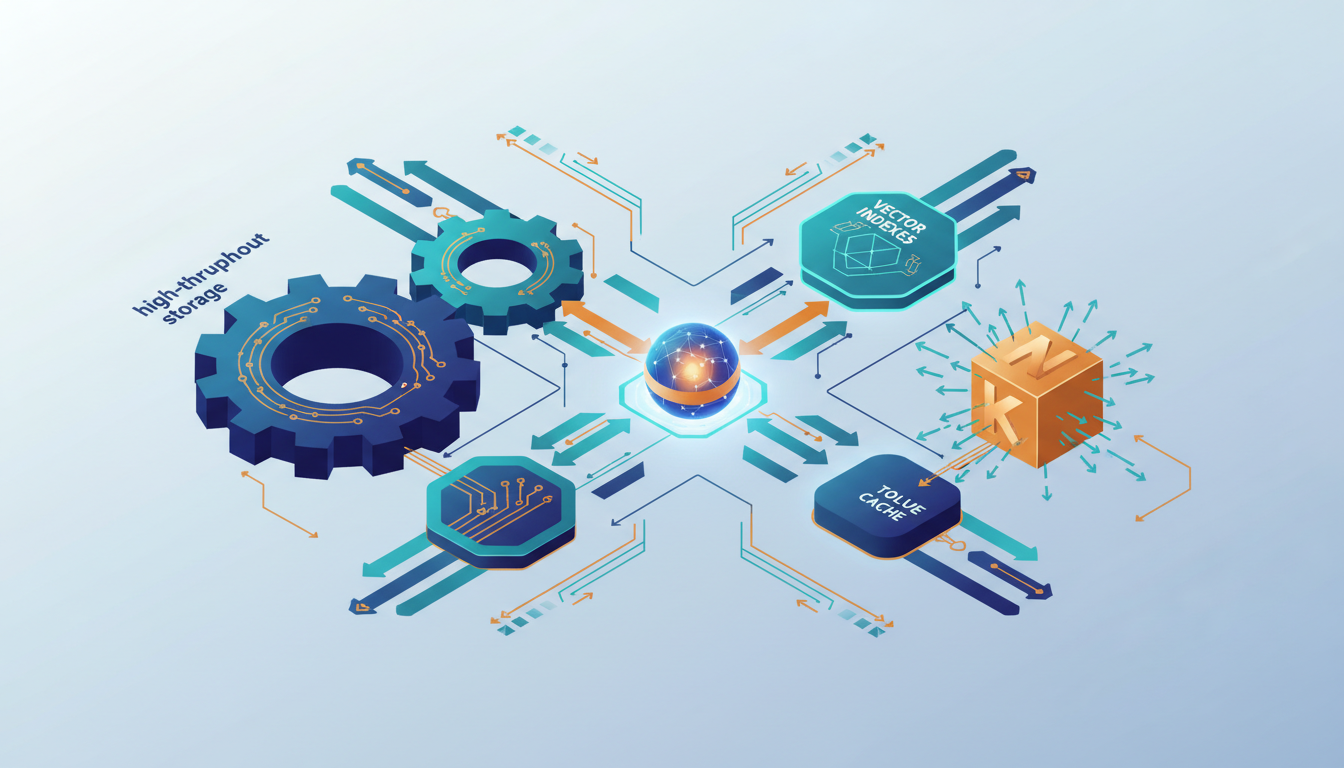
Cut total cost of ownership by 90% by moving vector search directly into S3. We analyze the architectural shift removing external databases.
Stop guessing at capacity. Learn how lifecycle policies cut storage bills by 23x using Glacier Deep Archive vs Standard tiers.
CDOs using secure sharing prove 1.7x more ROI. Stop copying files and eliminate the $4.44M average breach cost with zero-copy architecture.
Scality's connector delivers 10x faster performance than standard S3 interfaces. Learn how hybrid tiering cuts infrastructure costs by 20% without speed loss.
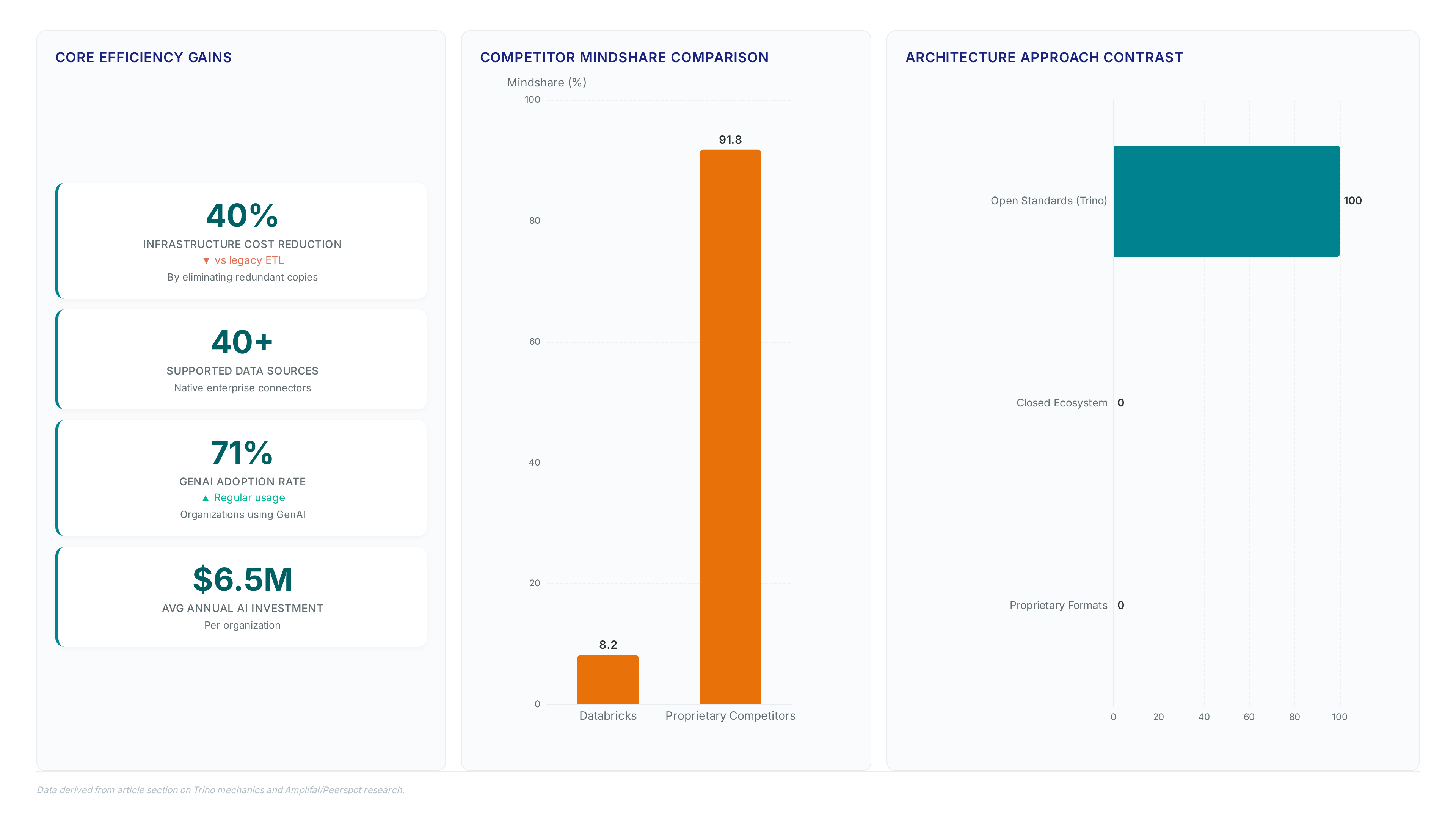
Stop wasting millions moving data. Our new architecture cuts storage costs 40% by querying tables where they live without complex pipelines.
Fewer than 10 percent of enterprises scale AI due to fragmented storage. Learn how unifying vector and graph data fixes the bottleneck.
Hidden egress fees consumed 48% of total cloud spend last year. Learn how to audit dark data and stop the financial bleed before scaling AI.
Huawei's new allflash system hits 876,256 IOPS with 32 μs latency, proving converged storage can slash TCO by 64% for AI clusters.
Stop replicating petabytes. Our guide shows how MinIO AIStor cuts storage costs by 40% while enabling direct Databricks access to on-prem data.
Stop paying $0.20/GB vector fees. Our MinIO + QBO setup delivers 325 GiB/s throughput for real AI training.
Ailanto's 1 PB launch proves local control works. See how data pulverization blocks foreign warrants in under 15 minutes.
Suite Studios enabled zero migration on Feb 17, 2026. Stop reingesting petabytes and edit S3 objects directly with byte-range streaming.
Stop GPU starvation with Scality tiering. Testing shows 10x faster performance than standard S3 interfaces on similar hardware for AI workloads.
Avoid building proprietary backends. Save 70% on storage costs while getting 1Tbps throughput for your AI training workloads today.
See how FastAPI type hints cut debugging time by 40% while enforcing strict data contracts without extra code.
Neoclouds managing five exabytes can bypass years of engineering. See how integrated object storage feeds GPU clusters without scalability ceilings.
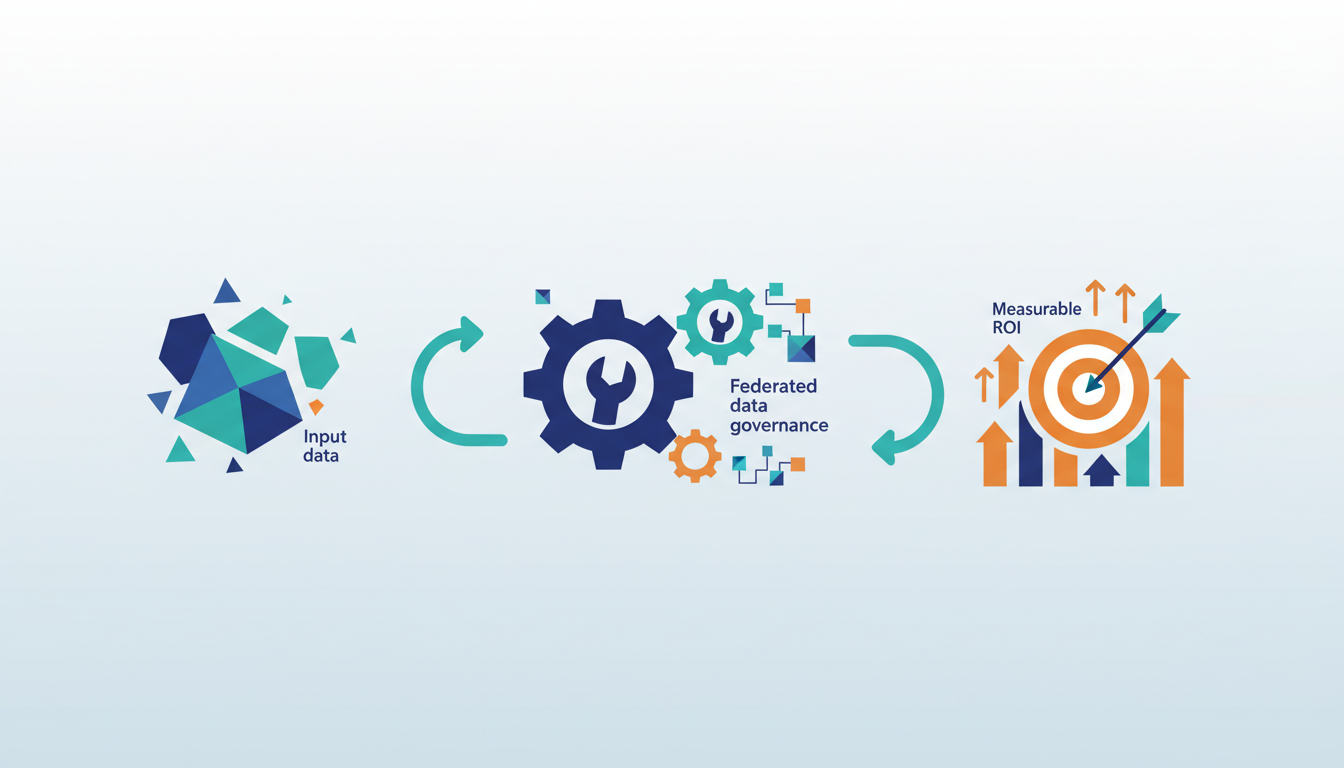
Deploy a federated data mesh using 7 integrated services. Secure cross-account access without modifying a single line of legacy app code.
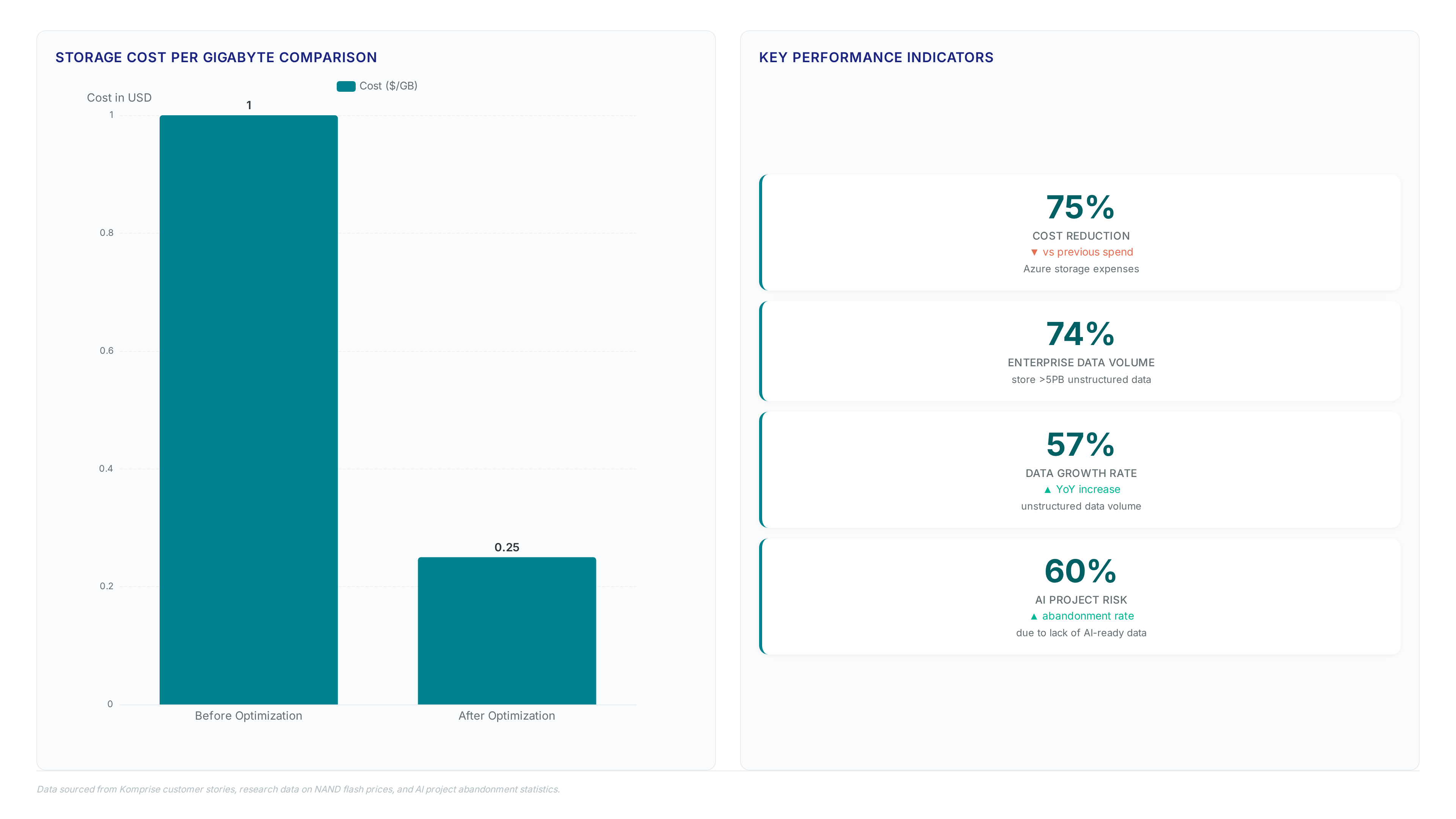
Komprise Kappa automates tagging across silos so agents can query the 90% of unstructured data blocking your AI training today.
Enterprise AI hits $37B by 2027, but legacy storage creates hidden taxes. Learn why data readiness now dictates production success more than GPU power.
Server DRAM prices surged 95% last quarter. Learn why data readiness, not model size, is the real constraint killing enterprise AI production.
One automotive firm saved $4.1M by fixing storage. Learn why data readiness, not compute, defines your AI success rate.
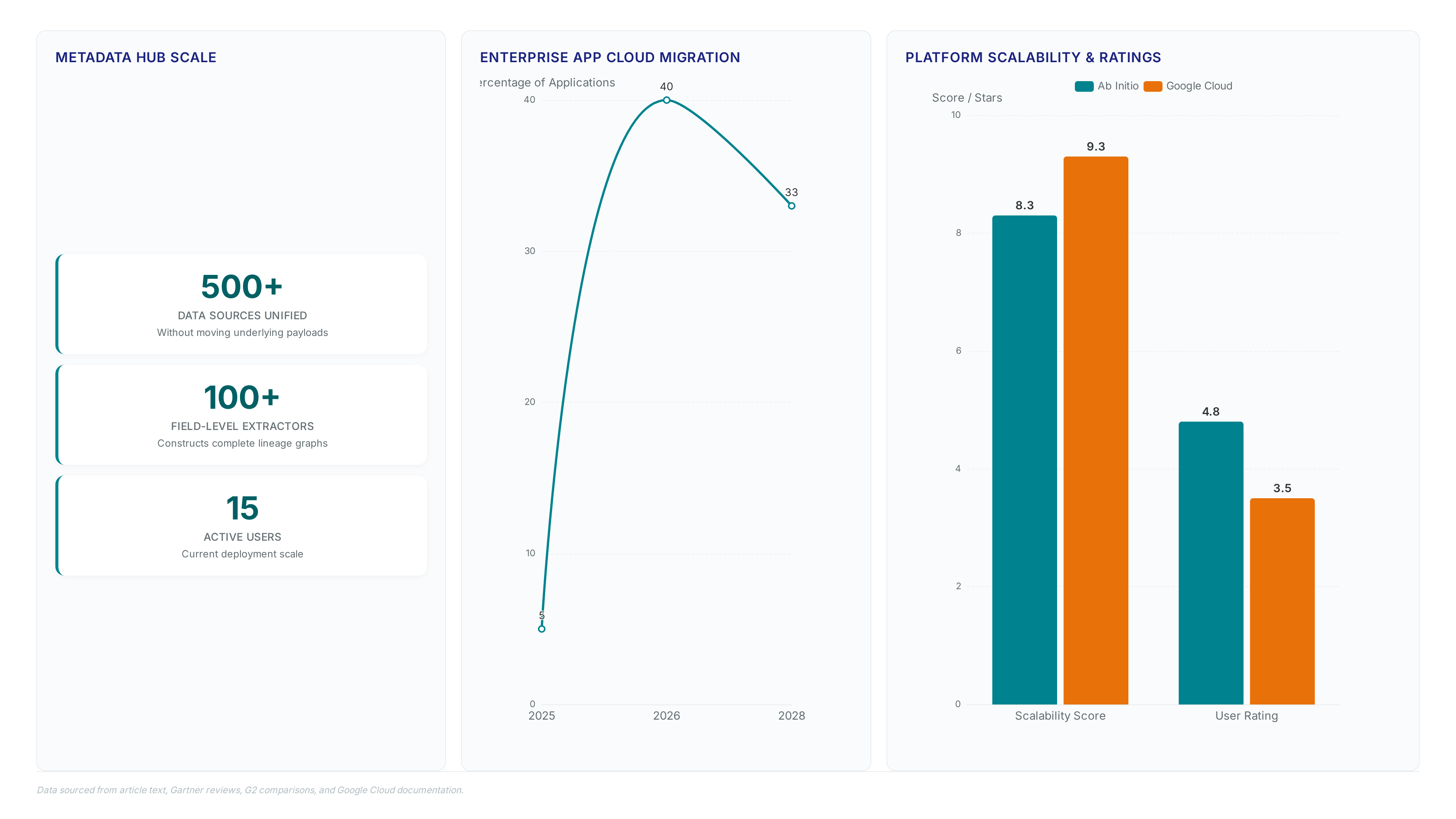
Without field-level lineage across 500+ sources, agentic AI collapses. See why active metadata is the only barrier preventing autonomous chaos in 2026.
Ailanto deployed 1 PB of storage within Swiss borders to nullify US CLOUD Act reach. See how cantonal geofencing protects sensitive records.
With 82% of orgs running hybrid, myQNAPcloud One pools NAS and S3 into a single 1TB capacity to kill siloed billing.
Learn why delete markers need pairs to avoid clutter. I show how to save 70% on storage while keeping XML configs intact.
Stop silent data loss in your pipeline. Learn to spot threshold breaches before they trigger Deadletter queues and inflate your 2026 cloud bill.
See how local uploads slash Time to Last Byte from 2s to 500ms for global AI workflows without complex pricing layers.
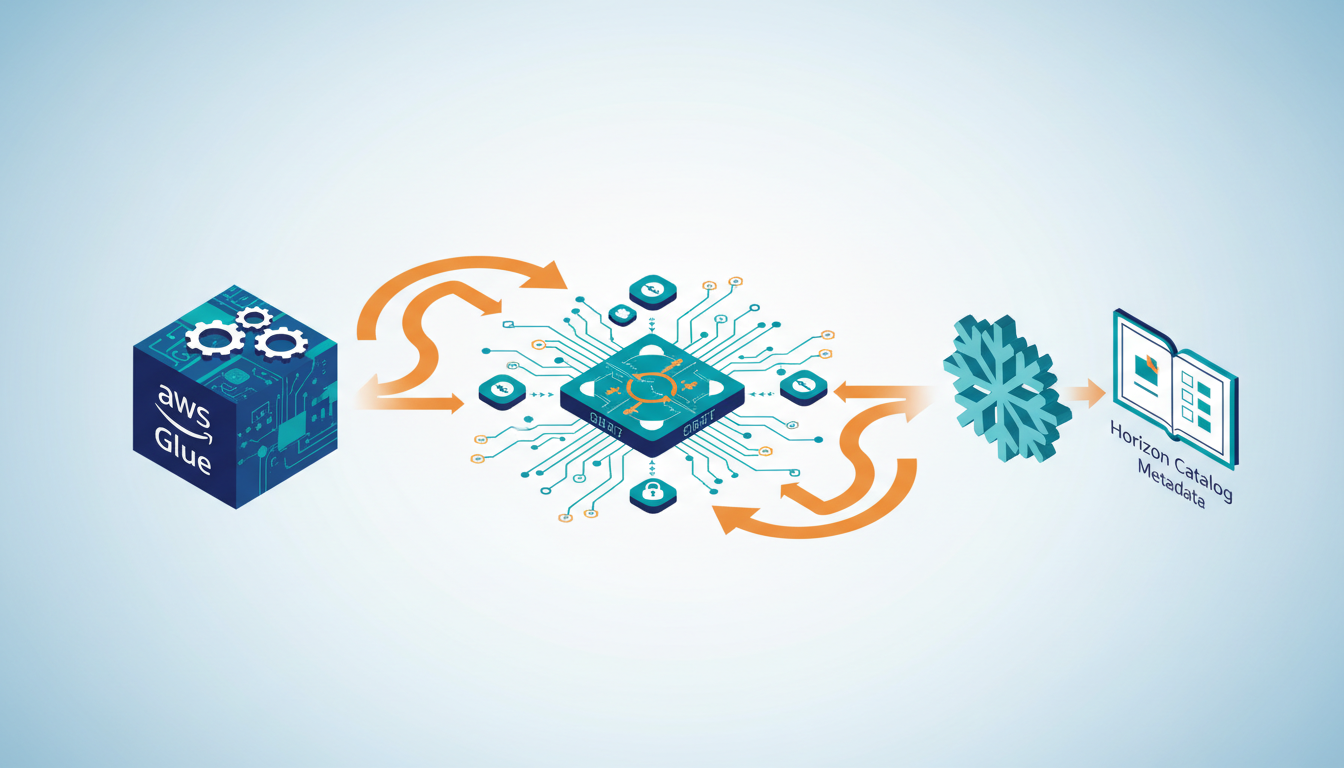
Skip ETL pipelines like 20,488 companies do. Federate Snowflake Horizon with AWS Glue to cut storage costs and unify governance today.
Unpredictable charges inflate cloud costs by 26%. Learn why 62% of IT leaders blow budgets and how to bypass these hidden tolls today.
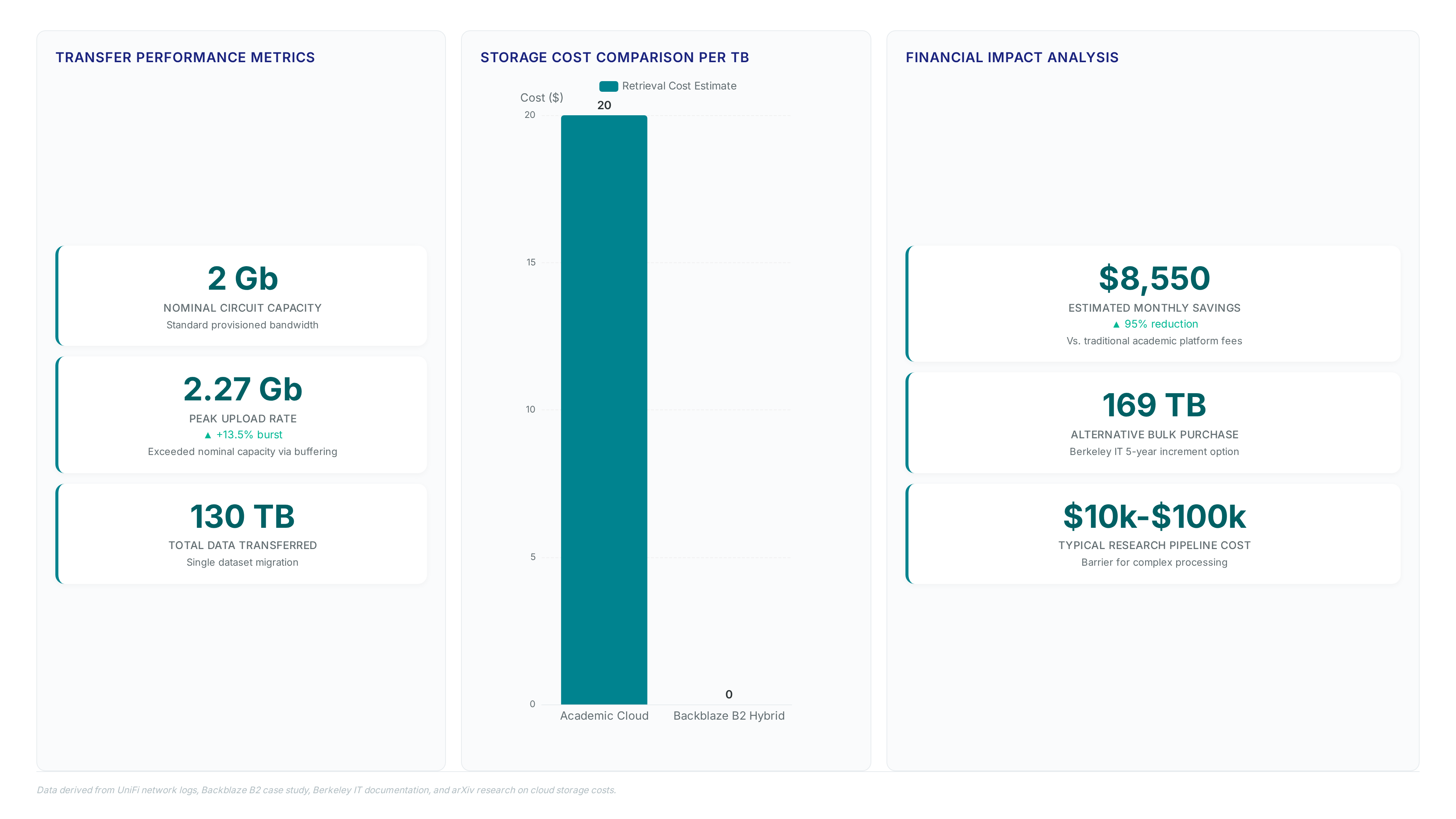
Moving 130 TB of Pi digits took two weeks at 2 Gbps. See why object storage beats local RAID for preserving massive computational artifacts.
Stop manual checks. Use S3 Access Points to query regional data directly and cut storage costs to 2 cents per GB today.