Spanner graph algorithms cut hidden storage costs
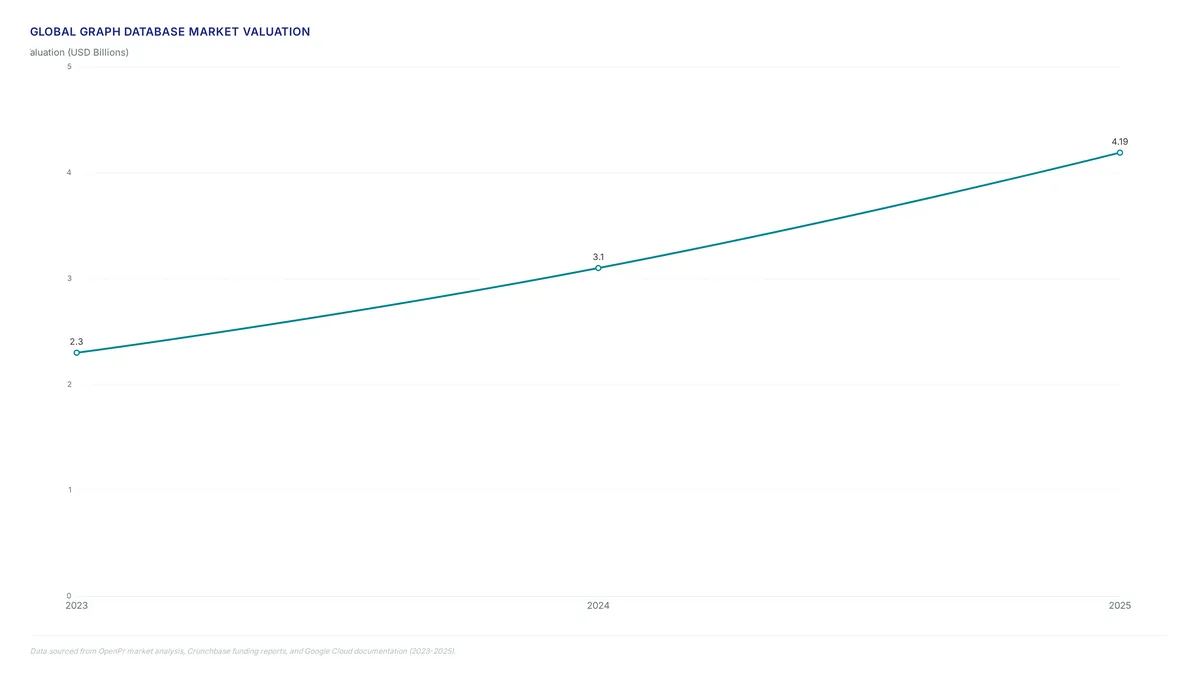
Spanner Graph processes billion-edge graphs to execute GQL algorithms without complex ETL pipelines. The thesis is clear: native graph processing within a distributed system eliminates the hidden storage costs and latency penalties of traditional extract-change-load workflows. As the graph database sector expands, with valuations reaching billions of dollars, organizations can no longer afford the inefficiency of moving connected data into separate analytics silos for basic community detection or node centrality analysis.
Readers will learn how Spanner Graph algorithms integrate directly with SQL databases to run PageRank algorithm queries for entity resolution and fraud ring identification in real-time. We examine the architectural shift required to support billion-edge graph processing where modularity clustering executes alongside transactional workloads. This approach allows teams to analyze connected data without the data duplication that inflates cloud bills and delays insights.
The discussion details why scaling graph mining operations demands a distributed edge network mindset rather than relying on legacy vertical scaling. By embedding graph algorithms directly into the storage layer, enterprises avoid the performance cliffs associated with shipping large datasets across network boundaries. This strategy ensures that fraud detection logic runs where the data lives, using the same infrastructure that supports core financial transactions.
The Role of Native Graph Algorithms in Modern Connected Data Analysis
Spanner Graph Unifies Relational Tables with ISO GQL
Spanner Graph merges relational tables with the ISO GQL standard to query connected data natively. This design removes the operational burden of running separate graph infrastructure next to transactional databases. Developers define graph elements directly on existing relational schemas, enabling graph analysis without complex ETL pipelines. Recent shifts favor integrated analytics inside cloud environments. Adherence to ISO GQL keeps graph queries portable and standard-compliant across different setups. Teams detect fraud rings or analyze supply chain dependencies using a single source of truth. Removing data duplication cuts consistency errors often seen in federated systems.
Migrating legacy logic demands careful mapping of node centrality metrics to business outcomes. Organizations must verify that algorithmic outputs match results from previous standalone engines before full deployment. Balancing immediate analytical depth against the learning curve of new query syntax creates tension. Teams should prioritize use cases where real-time connectivity insights drive direct revenue protection.
Storage performance costs matter when scaling these unified models for billion-edge graphs. The mix of relational stability and graph flexibility shows enterprise data platforms maturing. Future architectures will likely treat graph traversal as a fundamental database primitive rather than an add-on service. This evolution simplifies the path from raw transaction logs to actionable network intelligence.
Deploying Centrality and Community Detection for Fraud Analysis
Community detection groups highly connected entities to reveal hidden fraud rings without manual tagging. Operators apply centrality algorithms like PageRank to pinpoint influential nodes acting as transaction hubs or money mules within these clusters. The toolkit includes betweenness and closeness centrality to measure node influence across the entire network topology. Grouping mechanisms such as label propagation and modularity clustering automatically segregate dense subgraphs where fraudulent activity typically concentrates. This method turns raw transactional logs into actionable intelligence by highlighting anomalous connection patterns that traditional SQL joins miss.
| Algorithm Category | Specific Methods | Primary Fraud Use Case |
|---|---|---|
| Centrality | PageRank, Betweenness | Identifying ring leaders |
| Clustering | Label Propagation, Modularity | Detecting collusion rings |
| Connectivity | Weakly Connected Components | Isolating disjoint fraud islands |
High-frequency scoring on massive graphs consumes significant compute resources if not isolated from transactional workloads. The technology helps enterprises derive insights for entity resolution and healthcare research alongside financial security. Native execution maintains data consistency while reducing the attack surface, unlike external graph tools requiring data duplication. Security teams must balance detection depth against processing costs to avoid budget overruns during peak analysis cycles.
Avoiding ETL Complexity and Transactional Performance Risks
Historical graph analysis forced a choice between complex ETL pipelines and degraded transactional throughput. Traditional architectures required extracting data from relational stores, transforming it for a dedicated graph engine, and loading it into a separate system. This complex ETL pipeline introduced latency that made real-time fraud detection impossible during active trading windows. Many enterprises still struggle with these integration costs despite the expanding maturity of graph technologies.
Spanner Graph resolves this by executing graph algorithms natively within the transactional layer. Operators no longer face the transactional performance penalty typical of legacy graph database vs relational debates. Maximizing analytical depth often requires data duplication, which increases storage costs and consistency risks.
This unified approach offers one value for organizations managing high-velocity financial ledgers. Stale data in detached graph systems creates blind spots during active fraud rings. Direct computation ensures that entity resolution reflects the current network state. The architecture removes the delay between a fraudulent transaction and its detection.
Inside the Distributed Architecture of Google-Grade Graph Processing
Data Boost Execution Model for Graph Algorithms
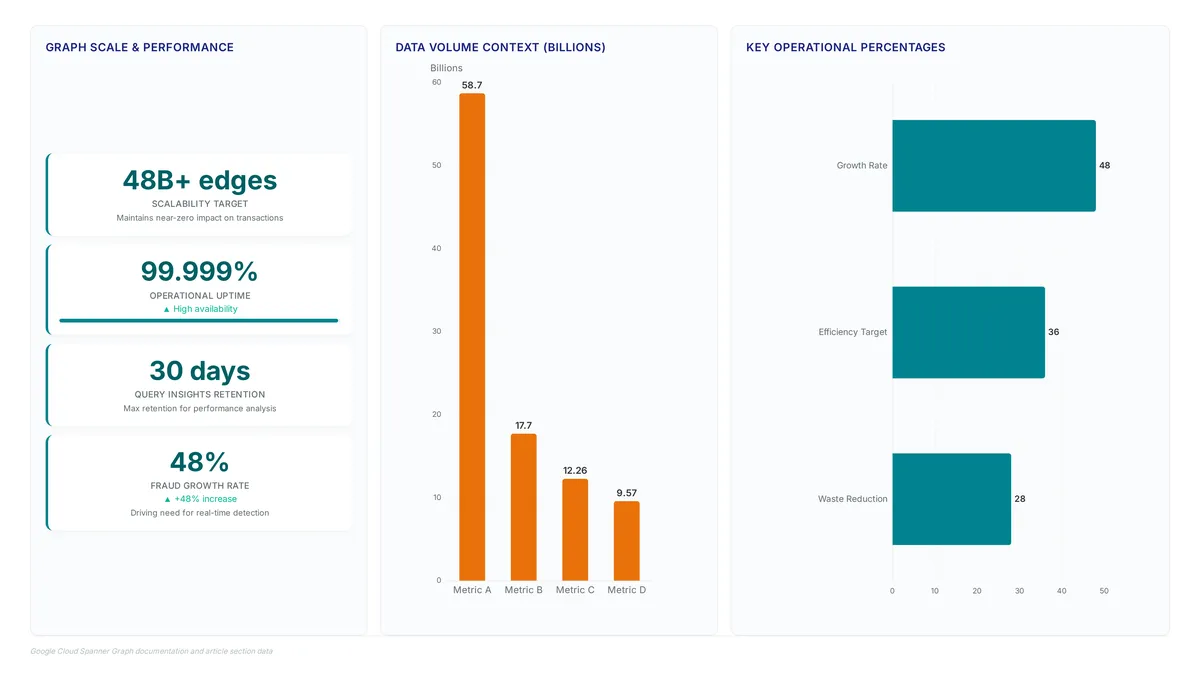
The Data Boost execution model isolates heavy analytics by provisioning dedicated compute resources separate from the transactional cluster. This architecture ensures that running iterative algorithms like PageRank creates near-zero transactional impact on production workloads. Instead of competing for CPU cycles with live queries, the system automatically routes data to ephemeral compute nodes scaled specifically for the graph operation.
Operators avoid complex ETL pipelines because the engine handles data movement internally. The process follows a distinct sequence:
- The database snapshots the current graph state.
- Dedicated resources provision dynamically to execute the algorithm.
- Results return to the session without locking transactional tables.
This approach resolves the classic tension between real-time consistency and analytical depth. While traditional systems throttle query throughput during heavy computation, this separation allows full-depth traversal on billion-edge graphs without degrading write latency. The limitation remains the temporal consistency window; results reflect the snapshot time rather than millisecond-accurate live changes.
| Feature | Standard Execution | Data Boost Model |
|---|---|---|
| Compute Source | Shared Transactional Nodes | Dedicated Ephemeral Resources |
| Workload Impact | High contention risk | Near-zero impact |
| Data Freshness | Live | Snapshot-based |
| Scaling | Vertical limited | Horizontal auto-scale |
Rabata.io emphasizes this isolation pattern for enterprises where SLA violations during fraud sweeps are unacceptable. By decoupling compute from storage for analytics, organizations achieve scale without sacrificing the responsiveness required for high-frequency trading or payment processing. The trade-off is acceptable latency for analytical results in exchange for guaranteed transactional performance.
Running Modularity Clustering on Dense Topology Encodings
Executing modularity clustering on tens of billions of edges requires encoding topologies in a dense format optimized for random access. This approach resolves data movement bottlenecks by allowing the engine to scan compressed adjacency lists directly from distributed database optimization layers rather than shuffling raw rows across the network.
Operators initiate this process through a specific sequence that isolates analytical load from transactional latency:
- Snapshot the current graph state to ensure consistency.
- Encode the subgraph topology into dense memory structures.
- Execute the iterative clustering algorithm on dedicated compute resources.
- Return community labels to the client session without persisting intermediate states.
| Feature | Sparse Representation | Dense Encoding |
|---|---|---|
| Access Pattern | Random seeks | Sequential scan |
| Memory Overhead | High pointer cost | Minimal metadata |
| Suitability | Small graphs | Billion-edge scale |
The ability to index massive edge sets allows these operations to complete within minutes instead of hours. However, the trade-off is increased memory pressure during the initial encoding phase, which can stall queries if the provisioned compute does not match the graph density. While PageRank identifies central nodes, modularity clustering reveals the fraud rings themselves by grouping tightly connected entities that share suspicious behavioral patterns.
A critical tension exists between update frequency and cluster stability; running this analysis on highly volatile subgraphs yields diminishing returns if the underlying topology shifts quicker than the algorithm converges.
Sequential GQL Integration for Minimizing Data Movement.
Sequential GQL integration minimizes data movement by executing ISO Graph Query Language statements directly against stored topologies without intermediate extraction layers. This mechanism allows operators to weave standard queries and complex algorithms into a single execution plan, effectively eliminating the latency penalties associated with traditional ETL pipelines. The tight integration ensures that graph traversal occurs in place, using the underlying storage engine rather than exporting datasets to external compute clusters.
| Feature | Traditional ETL Approach | Sequential GQL Integration |
|---|---|---|
| Data Location | Moved to separate analytics cluster | Remains in transactional database |
| Latency Source | Network transfer and serialization | Local memory access only |
| Consistency Model | Stale snapshot required | Fresh, consistent view available |
Troubleshooting performance bottlenecks requires verifying that the query planner uses localized execution paths instead of triggering broad table scans. Operators should resolve data movement issues by ensuring graph schemas map directly to physical storage layouts, a principle detailed in database migration concepts. A critical tension exists here: while sequential processing reduces network overhead, it demands precise schema definitions to prevent accidental full-table scans during traversal. Unlike batch-oriented systems that tolerate stale data, real-time fraud detection relies on immediate consistency. The limitation is that poorly set graph views can force the engine to materialize large intermediate results, negating the benefits of local execution.rabata.io recommends validating query plans against actual storage distributions before deploying high-frequency detection logic.
Executing GQL Algorithms for Real-Time Fraud Detection and Network Analysis
GQL Syntax for Set-to-Set Shortest Paths and Correlation Clustering
Operators invoke set-to-set shortest paths by defining source and target node sets within a single GQL statement to measure connectivity without full graph traversal. This mechanism calculates optimal routes between specific entities, such as known bad actors and new transaction initiators, enabling precise path analysis across the network. Query performance depends heavily on the cardinality of these set sets. Large source pools combined with broad target ranges trigger excessive memory allocation. Narrowing the scope to suspected nodes reduces latency dramatically.
- Apply the `SHORTEST_PATH` function with a maximum hop limit.
This architecture allows teams to run aggressive correlation clustering during off-peak hours while maintaining low-latency pathfinding for live transactions.
Executing Modularity Clustering to Isolate Fraud Communities in Spanner
Step one applies a modularity clustering algorithm to partition accounts into distinct communities and write the resulting `community_id` directly back to the Account table in Spanner Graph. This in-place update eliminates separate ETL pipelines while preserving the transactional integrity required for financial ledgers. Fresh edges integrate immediately into existing structures.
- Filter the graph to isolate this suspicious cluster for deep-dive analysis of internal connectivity patterns.
The operational tension lies between cluster resolution and query latency; finer granularity reveals smaller rings but increases compute cycles during peak transaction windows. Unlike static batch processing, this approach allows operators to re-evaluate community structures as new edges form in real-time. Analysts must validate results against known behavioral signatures rather than relying solely on algorithmic output. The next phase involves correlating these isolated communities with external identity data to pinpoint ringleaders. This strategy ensures that historical fraud data remains accessible for audit trails while keeping hot storage dedicated to active threat detection.
Checklist for Chaining Algorithm Outputs to Cloud Storage Buckets
Validate GQL invocation scopes to confirm algorithms execute on specific subgraphs rather than entire datasets.
- Confirm the output schema matches the input requirements for subsequent fraud detection operations.
- Test pipeline continuity where one operation's output serves as the next operation's input.
| Storage Target | Latency Profile | Best Use Case |
|---|---|---|
| Spanner Graph | Low | Immediate iterative analysis |
| Cloud Storage | Variable | Archival and batch processing |
Operators must configure write paths carefully because idle compute and overprovisioned storage can consume significant portions of cloud budgets without strict governance. This waste often stems from retaining intermediate graph states that are no longer required for active AI/ML workloads. Isolating high-churn intermediate data in cost-optimized buckets preserves performance for primary transactional flows. Deleting stale snapshots weekly prevents unnecessary accumulation.
Strategic Advantages of Spanner Graph Over Legacy Graph Solutions
Unified Data Models for Fraud Detection in Spanner Graph
Fragmented transaction records merge into a single unified view through native graph structures rather than separate databases. This architecture removes complex ETL pipelines that typically delay fraud analysis in legacy systems. Teams apply Spanner Graph for fraud analysis when real-time community detection identifies coordinated rings without moving data. Native algorithm support enables proactive anti-money laundering by calculating node centrality directly on operational datasets. Organizations apply this capability for Patient 360 initiatives to merge complex data silos. The approach allows immediate execution of modularity clustering on financial transactions as they occur.
| Feature | Legacy Graph DB | Spanner Graph |
|---|---|---|
| Data Model | Separate Copy | Unified View |
| Algorithm Execution | External ETL | Native Support |
| Latency Impact | High | Minimal |
Maintaining dual systems for relational and graph workloads often increases infrastructure overhead. Integrating graph logic into the transactional layer introduces tight coupling between schema changes and algorithm performance. Operators weigh the benefit of real-time insights against the risk of query contention during peak loads. Unified models reduce the attack surface by removing data replication endpoints. Industry analysis recommends this pattern for enterprises where data freshness outweighs the need for isolated graph scaling. Elimination of synchronization lag ensures that fraud rings are detected before funds leave the network.
Deploying Community Detection to Uncover Patient Network Insights
Apply community detection when isolating coordinated fraud rings requires analyzing connection density rather than individual transaction limits. This approach identifies clusters of suspicious activity that traditional row-based queries miss entirely. Healthcare providers utilized these native capabilities to accelerate insights within patient networks, enabling quicker innovation in care delivery without managing separate graph infrastructure. Adding algorithms like modularity clustering allows teams to uncover deep structural patterns directly inside the transactional database. Fully managed capabilities remove the operational burden of maintaining complex data pipelines for analytics workloads.
Operators use Spanner Graph for fraud analysis when the cost of moving data to a dedicated graph engine outweighs the benefit of specialized hardware. Native execution simplifies architecture yet demands careful resource governance to prevent analytical queries from impacting latency-sensitive transactions. External graph stores replicate data while this unified model ensures algorithmic freshness but requires strict workload isolation policies.
| Scenario | Recommended Approach |
|---|---|
| Real-time ring detection | Native centrality algorithms |
| Historical trend analysis | Export to data warehouse |
| Mixed OLTP and OLAP | Workload isolation rules |
Organizations prioritize this architecture when their primary bottleneck is data movement rather than raw compute power. Complex traversals on billion-edge graphs still consume significant distributed resources. Teams balance the speed of insight against the potential for resource contention on shared nodes.
Enterprise Readiness Checklist for Spanner Graph Algorithms
Spanner Graph algorithms run exclusively on Enterprise and Enterprise+ editions, making edition verification the primary deployment gate. Teams adopt this architecture for fraud analysis when native community detection must execute directly on transactional data without ETL latency. Legacy solutions often isolate graph workloads, forcing costly data replication that delays threat response.
Operators verify that node centrality analysis aligns with business needs for real-time ringleader identification rather than batch reporting. A common pitfall involves deploying graph tools for simple lookups where standard SQL suffices, adding unnecessary complexity. Deep connected-data insights must be balanced against the overhead of managing disjointed systems. Organizations lacking Enterprise edition access face a hard constraint, as basic tiers do not support these computational primitives. Industry guidance advises validating use cases against modularity clustering requirements before committing to migration. The unified view solves actual fraud ring detection problems rather than creating architectural debt.
About
Alex Kumar is a Senior Platform Engineer and Infrastructure Architect at Rabata.io, where he specializes in Kubernetes storage architecture and cost optimization for cloud-native applications. While his daily work focuses on persistent storage and disaster recovery, this expertise provides a critical foundation for analyzing the infrastructure demands of Spanner Graph algorithms. As enterprises deploy billion-edge graph processing for fraud detection and community analysis, the underlying storage layer becomes the primary bottleneck and cost driver. Kumar's deep experience with S3-compatible object storage allows him to evaluate how massive datasets required for entity resolution and node centrality analysis are managed efficiently. At Rabata.io, a provider dedicated to eliminating vendor lock-in and reducing storage costs for AI/ML workloads, Kumar understands that scaling connected data analysis without expensive ETL processes requires reliable, high-performance storage backends. His insights bridge the gap between complex graph mining operations and the practical realities of infrastructure economics, ensuring that the storage bill does not undermine the value of advanced GQL query language implementations.
Conclusion
Scaling graph workloads reveals that the true bottleneck shifts from query latency to the operational cost of maintaining distributed system consistency during deep traversals. While native algorithms eliminate ETL friction, running heavy modularity clustering on shared nodes can degrade transactional performance for co-located services if isolation policies remain undefined. The architectural advantage of a unified model collapses into contention without strict guardrails separating analytical spikes from OLTP demands.
Teams must mandate Enterprise edition verification before writing a single query, as lower tiers strictly lack the required computational primitives for real-time centrality analysis. Do not attempt to force batch-oriented historical trends onto this real-time engine; reserve it for scenarios where millisecond latency in fraud ring detection directly impacts revenue protection. If your organization cannot support the licensing requirement for native execution, persisting with a legacy siloed approach is currently more stable than a half-measured migration.
Start by auditing your current graph use cases this week to identify queries where standard SQL suffices versus those demanding true connected-data insight. Only migrate workloads that strictly require native community detection on live transactional data to avoid unnecessary complexity. This targeted approach ensures you use the edge network integration capabilities of Spanner Graph without incurring the penalty of unmanaged resource contention.
Frequently Asked Questions
Native processing removes hidden storage costs and latency penalties from traditional workflows. This avoids inflating cloud bills while the graph database sector reaches a valuation of 4.19 billion.
It executes GQL algorithms directly on relational tables to find fraud rings instantly. This prevents data duplication that inflates costs in a market valued at 4.19 billion.
Operators use PageRank and betweenness centrality to pinpoint influential nodes acting as money mules.
Scaling graph mining demands a distributed edge network mindset to avoid performance cliffs.
Merging ISO GQL with SQL removes the need for separate graph infrastructure and cuts consistency errors.
References