Scaleout backup repository: How tiers cut costs
A scale-out backup repository aggregates multiple storage systems into a single logical pool that expands horizontally without data migration. This architecture solves the rigid capacity limits of legacy backup targets by separating logical management from physical storage extents. The following analysis details how multi-tier placement mechanics optimize costs and why specific licensing tiers are mandatory for operation.
The system joins disparate devices, including Windows servers and deduplicating appliances, into a unified performance tier while offloading older data to a capacity tier for long-term retention. According to the Veeam Help Center, downgrading to a Standard license after configuration prevents new jobs from running, though restore operations remain functional. This constraint highlights the critical dependency on proper licensing to maintain write access across the summarized capacity.
Readers will learn how horizontal scaling eliminates the need to move backups when reaching storage limits and how granular policies direct data placement. The discussion also covers the financial implications of instance-based pricing models, where Veeam Backup & Replication costs range from approximately a moderate annual fee per instance for mid-sized environments. Finally, the guide outlines deployment strategies that use object storage for practically unlimited cloud capacity without disrupting active workloads.
The Role of Scale-Out Backup Repositories in Modern Data Protection
Scale-Out Backup Repository Architecture and Logical Tiers
Think of a scale-out backup repository as a unified pool that sums the capacity of joined storage devices to enable horizontal scaling. This architecture combines one or more backup repositories or object storage repositories into what the system defines as the performance tier, facilitating rapid write operations and data access. The individual components making up these tiers are backup extents, which can range from Windows or Linux servers and network shares to deduplicating appliances. Object storage repositories integrate directly as capacity or archive extents, offering enterprises scalable retention options alongside enterprise-grade durability.
| Tier Type | Access Speed | Primary Use Case |
|---|---|---|
| Performance | High | Active backups, quick restores |
| Capacity | Medium | Long-term retention, direct restore |
| Archive | Low (requires recall) | Compliance, cold storage |
License dependency creates a specific architectural constraint for administrators. Downgrading to a standard license allows restores but stops new jobs targeting the scale-out repository. This limitation requires careful planning during initial deployment so continuous protection workflows remain uninterrupted as data volumes grow.
Operational Differences Between Performance Extents and Capacity Extents
Active recovery workflows rely on the performance tier for immediate data access, whereas the capacity tier holds infrequently accessed data within cloud-based or on-premises object storage repositories called capacity extent. Data sitting in the performance tier stays instantly available for restores, supporting rapid operational recovery without latency penalties. The capacity tier maintains data requiring less frequent access yet still permits direct restoration, balancing cost efficiency with accessibility needs.
Restoring from an archive tier introduces a distinct operational constraint because data must undergo a preparation process before availability. This preparation delay contrasts sharply with the immediate availability found in both performance and capacity tiers, requiring planners to account for retrieval time during disaster recovery scenarios. Organizations evaluating whether to use a scale-out backup repository must weigh these access patterns against their recovery time objectives.
Optimizing this architecture often involves using S3-compatible object storage that functions as a high-performance capacity tier, helping to balance cost and access speed. Traditional cloud archives impose retrieval delays on cold data, but the capacity tier enables direct restores from object storage, effectively collapsing the operational gap between tiers for frequently accessed backups. This approach allows enterprises to maintain aggressive recovery SLAs while reducing total storage expenditure through intelligent data placement policies.
Standard Backup Repositories Versus Scale-Out Backup Repository Systems
Fixed hardware boundaries trap administrators using standard repositories, while a scale-out backup repository aggregates multiple extents into a single logical pool. This architectural shift transforms static storage limits into a flexible resource where capacities are summarized across the system.
| Feature | Standard Repository | Scale-Out Repository |
|---|---|---|
| Capacity Model | Fixed per device | Summarized across extents |
| Expansion | Manual migration required | Horizontal addition |
| Tiering | Single level only | Multi-tier support |
Logical separation of the performance tier from object-based capacity enables cost-effective retention strategies that single targets cannot match. Flexibility introduces a dependency on license tiers; downgrading permissions can halt job execution while still permitting restores. Diverse backends including Linux servers and deduplicating appliances serve as unified backup extents within this system, unlike rigid legacy targets. Multi-tier logic supports S3-compatible storage that scales horizontally with expanding data volumes. Balancing immediate local performance against the latency of retrieving data from deep archive tiers remains the primary challenge.
Inside the Multi-Tier Architecture and Data Placement Mechanics
Data Flow Logic Between Performance and Capacity Extents
Backup streams target performance extents first to capture rapid write operations before shifting to slower layers. This performance tier serves as the primary landing zone where jobs hit high-speed disks or local object storage for immediate access. A secondary layer uses cloud-based or on-premises object storage repositories to hold less frequently accessed data while keeping direct restore paths open. Data in the capacity tier stays immediately available without the recall preparation process that the archive tier requires. Administrators tune this flow to balance local storage expenses against the need for quick recovery point access. Adding a capacity tier lets the repository grow horizontally without disrupting active jobs or forcing data migration. The architecture combines multiple physical repositories into one logical entity to simplify management as data volumes increase.
| Feature | Performance Tier | Capacity Tier |
|---|---|---|
| Primary Role | Fast write/read access | Long-term retention |
| Media Type | Disk or fast object store | Cloud or slow object store |
| Restore Speed | Immediate | Immediate |
| Cost Profile | Higher per GB | Lower per GB |
These platforms deliver the latency traits needed for efficient data offloading while offering the economic benefits of cloud-scale durability. Companies running AI/ML training datasets or media archives gain from this smooth extension of local backup infrastructure.
Configuring Object Storage Repositories as Scale-Out Capacity Extents
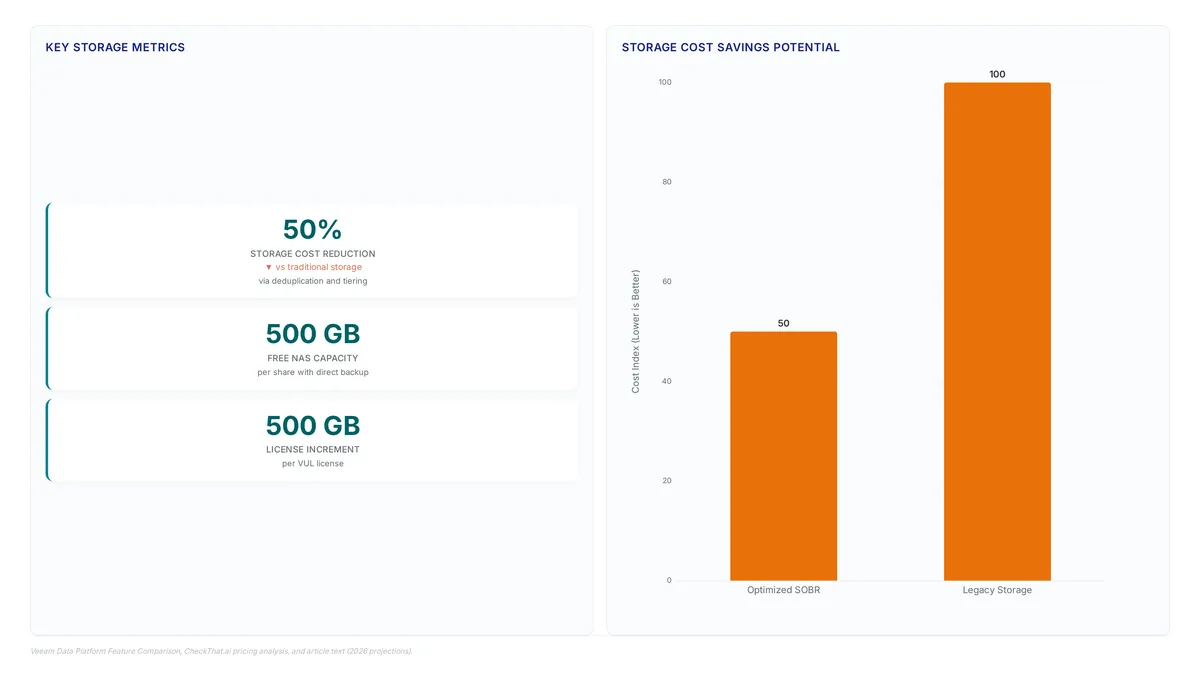
Administrators expand storage pools by attaching new object repositories as capacity extents without moving existing backup chains. This horizontal scaling approach lets the free space on a newly added system merge instantly with the total scale-out backup repository volume. Teams avoid complex data migration when local disks hit their limit because the architecture simply sums the capacities of all joined devices. The system accepts diverse targets, including Windows servers, Linux repositories, and deduplicating appliances, preserving all native features during integration. Notably, the first 500GB of NAS file share data in each share is free when backing up directly to Veeam repositories, with additional capacity licensed at 500GB per VUL.
Adding a new extent follows a logical expansion rather than a physical move of data blocks.
- Provision a new object storage repository or server target.
- Add the new system to the existing repository group as an extent.
- Verify that the summarized capacity reflects the added free space.
This method supports practically unlimited cloud-based growth by offloading data from local extents to the cloud for long-term retention. Traditional scale-up models demand deterministic latency for every operation, yet this design prioritizes flexibility for large file repositories and AI data pipelines. Licensing tiers impose a hard constraint; downgrading to a Standard license stops new job execution targeting the scale-out repository, though restores remain functional. S3-compatible object storage serves as an ideal, high-performance capacity tier for these expansive backup architectures. By using compatible object storage, enterprises achieve linear growth without the disruption of migrating legacy backup files to larger hardware.
Restore Latency Risks When Retrieving Data From Archive Tier
Direct restoration fails for data residing in the archive tier because the system mandates a preparation phase before access. Unlike the capacity tier, which permits immediate file recovery, the archive layer stores infrequently accessed data in a state requiring recall to a performance extent. This mechanical difference introduces unavoidable latency during disaster recovery scenarios. Operators must account for this delay when defining recovery time objectives for deep storage policies.
Operational risk emerges when teams treat all object storage tiers as functionally identical during an emergency. Data offloaded from the performance tier to the archive becomes inaccessible until the system completes its staging process. Ignoring this distinction can stall production environments waiting for data to become available.
Configuring strict retention policies that align with business continuity requirements helps mitigate these risks. Enterprises should verify that critical datasets remain in the capacity tier if rapid recovery is necessary. The preparation process acts as a necessary gatekeeper for cost efficiency but serves as a potential single point of failure for unplanned restores.
Deploying and Expanding Scale-Out Repositories for Enterprise Growth
Defining Scale-Out Backup Repository Extent Types
Setting up a scale-out backup repository demands specific backup repositories or object storage units acting as extents. Administrators start by provisioning the physical storage that forms the logical pool foundation. Microsoft Windows and Linux backup repositories supply local or direct-attached storage speed. Network shares via SMB (CIFS) and NFS folders allow integration with current file servers. Deduplicating storage appliances maximize efficiency using hardware compression. Object storage repositories enable cloud integration for tiered data placement.
| Extent Type | Primary Use Case | Protocol Support |
|---|---|---|
| Windows Repository | Local NTFS/ReFS volumes | Native Windows |
| Linux Repository | High-performance XFS/ext4 | Native Linux |
| SMB Shared Folder | Legacy file server integration | SMB/CIFS |
| NFS Shared Folder | Unix/Linux NAS integration | NFS v3/v4 |
| Dedup Appliance | Storage optimization | Vendor Specific |
| Object Storage | Cloud tiering and archiving | S3-Compatible |
The setup sequence maintains logical consistency.
- Create individual backup repositories on the target servers.
- Navigate to the storage infrastructure menu in Veeam Backup & Replication.
- Select "Add Scale-out Backup Repository" to launch the wizard.
- Assign the previously created repositories as performance extents.
Mixing extent types within one pool complicates failure domain isolation. Horizontal scaling adds capacity without downtime, yet heterogeneous disks cause uneven data distribution if placement policies lack tuning.
Configuring Scale-Out Repositories for Restore and Replication Jobs
Adding new extents to existing scale-out backup repository pools expands capacity without stopping active data protection workflows. This horizontal scaling matches enterprise growth in AI data pipelines where file repositories need linear expansion instead of vertical upgrades storage designs.
- Navigate to the backup infrastructure view and select the target scale-out repository.
- Add new backup repositories or object storage units as additional extents to the performance tier.
- Verify that the new storage allocation aligns with the configured data placement policy.
- Assign the unified repository to restore, replication, or backup copy jobs within Veeam Backup & Replication.
Files restored from tape media use the repository as a staging area, placing data across extents per the active placement algorithm. Disk-based repositories offer faster access for modern recovery workflows than tape solutions, and the staging process ensures smooth integration with SureBackup verification tasks disk-based Scale-Out. License tiers create an operational constraint; downgrading licenses stops new jobs from targeting the scale-out pool, although existing restores stay functional.rabata.io recommends validating license compatibility before expanding extents to prevent job execution failures during critical recovery windows.
Validating Backup File Usability Across Restore and Copy Operations
Confirming backup files support all restore types precedes production reliance. Verifying data integrity across the scale-out backup repository requires systematic validation of every extent type.
- Configure SureBackup jobs to automatically verify recoverability of stored backups.
- Test restoration from both performance and capacity tiers to ensure tiered access functions.
- Validate replication jobs can read source files from the distributed storage pool.
- Confirm backup copy jobs successfully retrieve data from all configured extents.
Storage optimization through deduplication and compression drives efficiency, with some implementations citing a significant reduction in storage costs. Adding new extents for horizontal scaling does not automatically re-balance existing data blocks. Older backups remain on original extents until a new backup cycle uses the expanded capacity. Operators expanding for AI training datasets must account for this uneven distribution when planning restore throughput. Rabata.io ensures your object storage backend delivers consistent S3 performance regardless of how many extents your repository spans. Proper validation prevents scenarios where backup jobs complete but restore operations fail due to corrupted or inaccessible file chains.
Operational Risks and Licensing Constraints in Backup Architectures
License Downgrade Impact on Scale-Out Backup Repository Execution
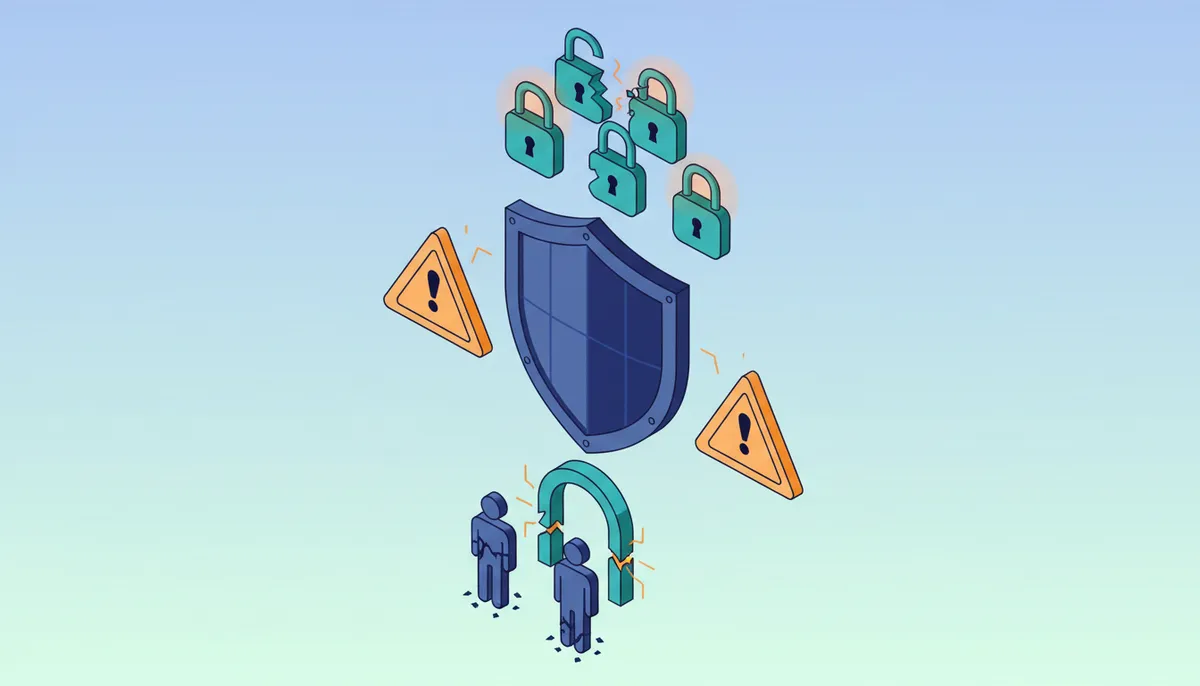
Downgrading to a Standard license stops new backup jobs from targeting existing scale-out backup repositories. Write operations to the multi-tier storage pool cease immediately, freezing data protection workflows that depend on horizontal expansion. Read access remains open for restore operations from configured extents even when the system blocks new job execution. Data recovery stays possible despite the revocation of advanced licensing features.
- New backup jobs targeting the repository will fail to start.
- Restore capabilities from all tiers remain fully functional.
Storage optimization strategies like deduplication and compression drive significant reductions in storage costs yet demand specific repository configurations to function. Maintaining cost-effective standard licensing often conflicts with preserving the flexible capacity management of scale-out architectures. Enterprises requiring uninterrupted scale-out functionality should verify entitlement before configuration changes.
Failure Domain Risks in Performance Placement Policy Chains
Selecting the Performance placement policy splits active backup chains across multiple physical extents to create a distributed storage environment. This architectural choice uses the summarized capacity of joined storage devices, allowing backup data to grow across multiple systems without manual migration. Free space from added storage systems aggregates into the total capacity of the scale-out backup repository rather than sitting isolated on linear storage.
- Extent Expansion: If extents run out of space, a new extent can be added to the existing repository.
- Job Execution: Backup files stored in the scale-out repository support all types of restores, replication from backup, and backup copy jobs.
- Recovery Scope: Data can be restored directly from the capacity tier, while archive tier data requires a preparation process before restoration.
- Hardware Diversity: The system supports Windows or Linux servers, network shares, deduplicating appliances, and object storage repositories.
Maximizing write throughput sometimes compromises chain integrity under duress. Horizontal scaling offers speed yet introduces complex dependency graphs where local disk failures cascade into logical data loss. Parallel writes provide benefits that architects must weigh against hardware fault risks. Integrating object storage serves as a strong capacity tier for organizations requiring absolute data durability by storing copies independent of primary performance tier fragmentation risks. This approach isolates the backup chain from spinning disk extent volatility while preserving performance tier speed benefits for recent restores.
Balancing Performance Tier Speed Against Archive Tier Immutability
Prioritizing performance tier speed requires careful consideration of cyber-durability benefits found in immutable capacity and archive tiers. Rapid access requirements must balance against security provided by object storage features. The performance tier delivers low-latency writes for active jobs while the archive tier provides an additional level for archive storage of infrequently accessed data. Applicable data transports from the performance or capacity tier for long-term retention based on this architectural distinction.
- Tiered Access: The performance tier is used for fast access to data, while the capacity tier stores data accessed less frequently.
- Archive Preparation: For restore from the archive tier, data must undergo a preparation process.
- Recovery Complexity: Restoring from fragmented chains across tiers increases operational overhead during incidents.
- Job Compatibility: Scale-out backup repositories work with almost all job types except specific unsupported scenarios.
- Staging Utility: These repositories function as staging areas for restore from tape media operations.
S3-compatible storage integration provides immutable object storage capabilities that enhance protection at the performance layer. Traditional setups rely on tape or cloud archives as the sole air-gapped defense whereas modern platforms ensure every write receives immediate protection. Maintaining separate fast and safe tiers often costs more than the benefit for AI training datasets requiring both speed and security. Data loss risks emerge for enterprises relying on disjointed tiers if an attack strikes during the lag between backup completion and archive offload. Unified immutable storage removes this dependency on time-based tiering for security. Administrators planning for 2026 compliance mandates should evaluate these latency windows carefully.
About
Marcus Chen is a Cloud Solutions Architect and Developer Advocate at Rabata.io, where he specializes in designing scalable S3-compatible storage infrastructures. His daily work involves architecting cost-effective data layers for enterprise clients, making him uniquely qualified to explain the complexities of scale-out backup repositories. By using Rabata.io's high-performance object storage as a capacity tier, Marcus helps organizations extend their primary backup systems without the prohibitive costs often associated with traditional vendors. His expertise bridges the gap between theoretical architecture and practical implementation, ensuring that backup strategies remain both resilient and economically viable. At Rabata.io, the focus remains on providing transparent, vendor-lock-in-free storage solutions that integrate smoothly with existing backup software. This article reflects his hands-on experience in optimizing storage tiers for maximum efficiency, demonstrating how modern object storage serves as the ideal foundation for expanding backup repositories in today's data-intensive environments.
Conclusion
Scaling backup infrastructure reveals that tiered architectures introduce hidden latency windows where data remains vulnerable between completion and archive offload. While separating performance and capacity tiers claims to optimize cost, this fragmentation creates operational debt during recovery scenarios where speed is critical. The reliance on time-based movement to secure data means enterprises face genuine risk if an incident occurs before the archive tier engages. This gap renders traditional tiering insufficient for modern AI workloads demanding simultaneous speed and immutability.
Organizations must abandon rigid tiering models that prioritize storage economics over immediate data integrity. Instead of accepting delayed protection, deploy a unified immutable storage strategy that secures every write at the performance layer without waiting for archive migration. This shift eliminates the dangerous lag inherent in disjointed systems and ensures compliance with upcoming 2026 mandates. Waiting for legacy cycles to complete before securing data is a gamble no enterprise can afford as attack surfaces expand.
Start by mapping your current latency window this week to identify exactly how long your most critical backups remain mutable before reaching the archive tier. Measure the time delta between job completion and final immutability enforcement across your environment. Use this data to justify migrating to a solution like Rabata.io that enforces immediate, unified protection rather than relying on delayed archival processes.
Frequently Asked Questions
New backup jobs targeting the repository will stop running immediately. Downgrading to a Standard license blocks write access while keeping restore functions active for existing data.
This instance-based model means costs scale directly with the number of protected workloads in your environment.
You can add new extents to expand capacity without moving current backups. The system summarizes free space across all devices, allowing seamless horizontal growth as data volumes increase.
Capacity tier data allows direct restoration without delay for faster recovery times. Archive tier data requires a preparation process before it becomes available for any restore operations.
The listed price covers the software instance, not the underlying cloud storage consumption. Object storage provides practically unlimited capacity, but cloud providers charge separately for that physical storage space.
References