AI storage infrastructure: Stop 70% GPU idle time
Idle GPUs waste 70% of compute capacity when storage cannot feed data fast enough. The failure point in modern deployments isn't a shortage of silicon; it is a bottlenecked data pipeline starving your accelerators. While market projections promise massive expansion, the immediate technical debt sits squarely in legacy architectures incapable of sustaining the throughput deep learning model training demands.
This analysis dissects the mechanical breakdown where AI storage infrastructure fails to match GPU velocity. You will see how unified data access patterns differ fundamentally from traditional file serving and why standard object protocols introduce unacceptable latency. The cost of inaction extends far beyond hardware utilization rates. As organizations attempt to scale from pilot projects to production, the inability to orchestrate data efficiently becomes the primary constraint on innovation. The following sections provide a brand-neutral assessment of how to align your storage fabric with the relentless demands of accelerated computing.
The Critical Role of Unified Data Access in Modern AI Infrastructure
Defining AI Storage Backbone for Unstructured Data
An AI storage grid is not merely a larger file server; it is a high-throughput architecture engineered to deliver massive unstructured datasets directly to GPUs, bypassing the latency bottlenecks that stall computation. Traditional file systems prioritize capacity, whereas machine learning storage emphasizes parallel read performance to stop GPU idle time caused by data pipeline starvation. These platforms act as reservoirs for raw logs, images, and sensor streams, frequently employing object storage protocols to reach exabyte-scale cost efficiency.
Modern designs merge NVMe-over-Fabrics for hot training data with automated tiering policies that shift cold logs to cheaper media tiers. This hybrid method maintains low-latency access while preserving a single namespace across all pipeline stages. Vendors specializing in this sector deliver solutions optimized specifically for artificial intelligence and machine learning workloads. Their specialized architectures apply object storage alongside parallel file systems to distribute data effectively, supporting the parallel processing demands of AI applications. Effective implementations provide S3-compatible performance that avoids proprietary lock-in while sustaining the bandwidth modern deep learning frameworks require. Ignoring this architectural shift leads to severe underutilization of expensive compute resources.
Preventing GPU Idle Time with Low-Latency Data Feeds
Expensive GPU compute cycles should never wait on data. Unified data access removes the storage bottlenecks that force these delays. Training modern machine learning models demands continuous ingestion of vast datasets containing images, video, text, or sensor data. When the storage layer fails to feed data quickly enough, high-cost compute resources sit idle, directly inflating project timelines and operational expenses.
This inefficiency manifests as significant underutilization where acceleration hardware waits on slow I/O paths instead of processing tensors. Optimized pipeline management can slash data science administrative costs and processing times by addressing specific flow constraints. If your storage cannot keep the pipe full, your investment in accelerated computing is leaking value every second.
Scalability Risks in Distributed Inference Environments
Data durability fractures when inference workloads expand across distributed edge locations lacking centralized governance. Storage systems must support data durability, versioning, and lineage tracking for reproducibility, yet decentralized nodes often lack the synchronization required to maintain these guarantees during scale-out events. As organizations pursue unified architectures to solve GPU underutilization, the complexity of tracking model versions across hundreds of edge sites introduces significant operational risk.
Market movement signals a strong shift toward integrated solutions that address these specific fragmentation challenges. Operators face a binary choice without such unified platforms: accept the high latency of centralized retrieval or risk data inconsistency at the edge. Speed often compromises integrity within this modern deployment constraint. Successful scaling requires storage systems capable of enforcing global consistency policies even when network partitions occur. Corrupted training sets and unreliable inference results represent the cost of ignoring this architectural requirement.
Architectural Mechanics Driving High-Throughput GPU Performance
NVMe and RDMA Mechanics for Parallel I/O
Sub-millisecond latency moves data from flash to GPU memory using NVMe-over-Fabrics and RDMA networking. This architecture resolves GPU underutilization by eliminating storage bottlenecks that cause idle compute cycles. Modern pipelines rely on parallel read and write operations to sustain high throughput during model training. The mechanism functions by bypassing the CPU for data transfers, allowing direct memory access between storage and graphics processors.
Today's AI storage uses hardware and software, like NVMe drives, RDMA networking, and parallel file systems, which maximize IOPS and data bandwidth. Teams often combine storage types, using object storage for exabyte-scale raw data while keeping active datasets on high-speed media. Automated policies migrate cold logs to lower-cost tiers without breaking file paths or interrupting workflows.
| Component | Function | Benefit |
|---|---|---|
| NVMe Drives | High-speed flash storage | Maximizes IOPS for small files |
| RDMA Network | Direct memory access | Reduces CPU overhead and latency |
| Parallel File System | Concurrent data access | Prevents I/O wait states |
Deploying these systems demands precision; infrastructure complexity is the price of admission. Unified architectures integrating these components are necessary for scalable machine learning. Without this integration, storage cannot feed GPUs fast enough, leaving significant processing power unused. The limitation lies in the coordination layer, where software must perfectly align with hardware capabilities to achieve theoretical speeds.
GPUDirect Integration with S3 and Parallel File Systems
AI-native storage infrastructure is designed specifically for training and inference workloads. This approach integrates accelerated computing and networking into the storage fabric to change enterprise data into accessible intelligence. Traditional architectures force data through system RAM, creating a bandwidth bottleneck that can starve parallel processors during intensive training runs. By enabling direct memory access, the storage subsystem feeds high-throughput data streams with reduced CPU intervention.
However, implementing this architecture introduces a coordination trade-off between raw speed and file system complexity. While S3 provides scalable capacity, concurrent file systems often manage the metadata locking required for consistent multi-node reads.
- Configure the storage backend to support RDMA networks for low-latency transport.
- Use specialized architectures that distribute data to support parallel processing by AI applications.
- Align buffer sizes in frameworks to match storage block boundaries for optimal efficiency.
Operators must verify that their chosen implementation supports the necessary semantics for direct reads, as not all gateways handle this traffic pattern efficiently. The cost of misconfiguration is measurable: without proper alignment, throughput drops sharply despite expensive hardware. Validating end-to-end paths before scaling to full cluster size is a critical best practice.
| Feature | Standard Path | GPUDirect Path |
|---|---|---|
| Data Copy | CPU Memory | Direct to GPU |
| CPU Load | High | Minimal |
| Latency | Variable | Deterministic |
The limiting factor often shifts from network bandwidth to the storage system's ability to serve millions of small files simultaneously.
Validating Automated Tiering and Data Orchestration
Unstructured datasets grow rapidly, demanding storage systems that scale capacity and performance simultaneously. AI storage manages data lifecycle through tiering and compression, ensuring AI models train quicker and organizations use AI's full potential. This mechanism prevents active training queues from stalling due to capacity exhaustion on premium flash. The cost is added complexity in policy definition, where misconfigured rules can inadvertently throttle hot data access. Operators must verify that data orchestration layers maintain consistent performance as the dataset scales across hybrid boundaries.
| Feature | Manual Tiering | Automated Orchestration |
|---|---|---|
| Latency Impact | High during migration | Transparent to workload |
| Scalability | Limited by admin time | Linear with capacity |
| Error Risk | Human configuration drift | Policy-set bounds |
- Define access frequency thresholds for hot, warm, and cold classifications.
- Map storage classes to specific performance tiers in the hybrid environment.
- Monitor throughput metrics to ensure GPU integration remains uninterrupted during shifts.
Unified data access across hybrid and edge environments often fails if metadata synchronization lags behind file movement. A delay here creates a window where GPUs request data that the orchestration layer has not yet recalled, causing idle cycles. Testing recall latency under load before committing production datasets to aggressive tiering schedules is recommended. This validation ensures the storage architecture supports the rapid retrieval required for modern machine learning workflows.
Market Comparison of Top AI Storage Providers and Deployment Models
HyperScale AI Data Platform Architecture
The provider HyperScale AI Data Platform transforms massive volumes of unstructured enterprise data into AI-ready intelligence through exabyte-scale object storage. This architecture handles massive volumes with high concurrency and linear scalability, directly addressing the bottleneck where GPUs sit idle waiting for data. By implementing S3 API compatibility, the system ensures smooth interoperability with existing data lakes while supporting integration with accelerated computing and networking into the storage fabric for hyperscale efficiency. This direct path eliminates unnecessary data copies and reduces CPU overhead during model training.
Operators must weigh the trade-off between raw throughput and protocol overhead; while object storage scales efficiently, latency-sensitive workloads may require additional caching layers. The platform mitigates this through intelligent data orchestration that prioritizes active datasets. Validating end-to-end throughput under load before committing to large-scale training runs is necessary. Without this validation, organizations risk underutilizing expensive compute resources despite possessing scalable storage. The true differentiator lies in how efficiently the storage layer feeds data to the GPU, not how much data it can hold.
Profiling AI Workloads for Metadata-Intensive Training
Training loops and model selection often involve thousands of small file reads and writes that stall parallel processing. Metadata-intensive tasks frequently become the primary bottleneck in AI workflows using frameworks like TensorFlow and PyTorch. Operators must profile actual I/O behavior, file sizes, and read/write ratios before selecting hardware. Storage systems optimized for large sequential reads often falter when facing the chaotic access patterns of iterative model development.
| Dimension | Metadata-Heavy Workloads | Large Sequential Training |
|---|---|---|
| I/O Pattern | Random, small block operations | Sustained, large block throughput |
| Bottleneck | Metadata server concurrency | Network bandwidth saturation |
| Optimal Media | High IOPS NVMe arrays | High-capacity object storage |
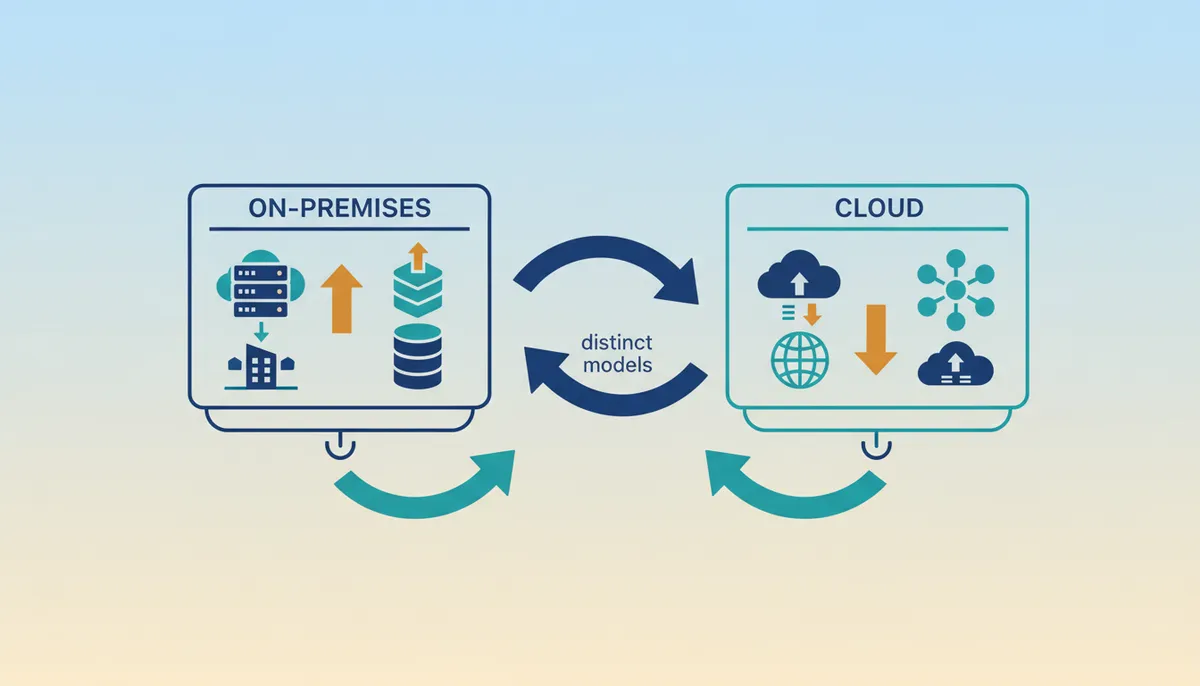
The on-prem vs cloud AI storage decision hinges on whether the workload demands consistent low-latency metadata access or elastic capacity. Cloud environments offer scalability but can introduce variable latency during intensive checkpointing phases. On-premises deployments provide deterministic performance for small file operations but require significant upfront capital expenditure. A critical tension exists between scaling capacity linearly and maintaining sub-millisecond metadata response times as dataset complexity grows.
Deploying a unified namespace that tiers hot metadata to local NVMe while archiving cold blobs to S3-compatible object storage is a recommended hybrid approach. This strategy prevents GPU underutilization by ensuring data availability matches compute velocity without forcing a choice between performance and cost. The architectural consequence of ignoring these profiles is a storage layer that appears full yet cannot feed the accelerator fast enough.
Pure Storage Revenue Growth vs the provider S3 Integration
Pure Storage's market position reflects strong demand for flash-based arrays, signaling a preference for turnkey, high-performance hardware among organizations prioritizing predictable latency over raw capacity. This growth highlights the premium placed on solutions that deliver consistent performance for enterprise needs, evidenced by the company's operating profit for Q3 FY 2026 reaching a record amount. To support this expansion, the company's total employee count grew to 6,400 in fiscal year 2026, up from 6,000 in 2025.
The provider takes a divergent path by emphasizing S3 ecosystem compatibility and deep integration with NVIDIA workflows. Their architecture targets the specific I/O patterns of AI training, allowing direct data movement to GPUs without intermediate copying. This approach reduces CPU overhead and simplifies hybrid cloud strategies where data portability matters more than single-node speed.
| Feature | Pure Storage Approach | the provider Approach |
|---|---|---|
| Primary Focus | Flash performance and simplicity | Object scale and S3 compatibility |
| GPU Integration | Proprietary acceleration layers | Native NVIDIA GPUDirect support |
| Best Fit | Latency-sensitive inference | Massive unstructured datasets |
Object storage scales linearly but requires careful tuning to avoid latency spikes during small-file metadata operations. Teams building AI data pipelines must choose between the immediate responsiveness of block storage and the economic efficiency of object systems. Market trends validate the current preference for performance, yet the object storage model addresses the looming crisis of data volume outpacing budget. Operators should deploy flash for active training sets while tiering cold data to S3-compatible backends. This hybrid topology helps balance cost against the relentless demand for GPU utilization.
Strategic Implementation Steps for Exabyte-Scale Deep Learning Environments
Defining Metadata Performance for AI Training Loops
Thousands of small file reads and writes occur before compute begins, stalling GPU utilization during training loops and model selection. Raw throughput moves terabytes of training data, yet metadata operations govern the I/O concurrency needed to feed bytes to waiting accelerators. Bulk transfer optimization fails when a namespace cannot resolve paths quickly enough for parallel job startup. AI workflows demand high metadata concurrency alongside bulk data access, a mechanism differing from standard object retrieval.
Managed Lustre architectures separate namespace operations from data planes so checkpointing and weight propagation proceed without locking. This separation prevents single-threaded bottlenecks common in flat object stores during epoch transitions. Prioritizing metadata speed introduces complexity in consistency models across distributed nodes. Systems tuned for extreme metadata rates may sacrifice strict POSIX compliance required by legacy preprocessing tools. Operators must verify that their chosen data pipeline supports the specific atomicity guarantees of their framework. Teams risk deploying capacity that looks sufficient on paper but idles expensive hardware in production without testing thousands of simultaneous small-file requests. Storage selection requires balancing namespace throughput against data volume handling.
Profiling AI Workloads for I/O Behavior Analysis
Actual I/O behavior requires measurement before selecting a storage platform to prevent GPU starvation. General specifications often mask the specific read/write ratios and file size distributions that dictate training efficiency. Teams must instrument pipelines to capture concurrency levels during data preparation and model inference phases. Infrastructure choices rely on assumptions rather than operational reality without this empirical baseline.
Training loops frequently stall when storage systems cannot handle thousands of small file operations simultaneously. Modern architectures apply NVMe-over-Fabrics to move data from flash media to GPU memory with sub-millisecond latency. This approach keeps hot datasets accessible while migrating cold logs to lower-cost object storage without breaking file paths. The StarWind Software blog notes that automated policies are necessary for maintaining this balance across exabyte-scale environments. High throughput alone cannot compensate for poor metadata performance during job initialization. A system optimized for bulk transfers may fail when the namespace cannot resolve paths fast enough for parallel job startup. This methodology ensures the selected platform handles the specific texture of your workload rather than just its volume.
Checklist for Separating Model and Training Data Storage
Architects must isolate model weights from active training datasets to prevent metadata contention during deep learning scaling. General specifications often obscure the reality that training loops involve thousands of small file operations which stall GPU utilization before compute begins. This separation addresses the tension where high-volume data ingestion can starve critical model update operations. A unified path frequently becomes a bottleneck when namespace resolution lags behind parallel job startup requirements.rabata.io recommends this architecture to maintain sustained data throughput for exabyte-scale environments.
The operational cost is increased configuration complexity, yet the alternative is measurable compute waste. Organizations ignoring this design often face idle accelerators despite adequate raw storage capacity. Proper segmentation ensures the storage layer supports rather than hinders massive parallelism.
About
Marcus Chen is a Cloud Solutions Architect and Developer Advocate at Rabata.io, where he specializes in S3-compatible object storage and AI/ML data infrastructure. His daily work involves designing high-performance storage architectures that directly address the critical bottleneck of idle GPUs during machine learning training. As an expert in performance benchmarking and cloud cost optimization, Chen understands that inefficient data pipelines often leave expensive compute resources underutilized. At Rabata.io, a provider of high-throughput, S3-compatible storage, he helps enterprises and AI startups eliminate these bottlenecks by implementing low-latency solutions that integrate smoothly with frameworks like TensorFlow and PyTorch. His insights on AI storage platform are grounded in real-world production experience, helping organizations select scalable AI data storage that maximizes GPU utilization while minimizing costs. Through his role, Chen bridges the gap between complex storage theory and practical deployment, ensuring data engineers can build reliable, exabyte-scale systems without vendor lock-in.
Conclusion
Scaling AI workloads reveals that raw throughput often masks critical metadata bottlenecks, causing expensive GPU utilization to stall during job initialization. While record profits like the reported millions quarter signal market expansion, they also highlight the operational debt of architectures that treat storage as a monolith rather than a differentiated fabric. The real cost emerges not in capacity purchases but in the idle time of accelerators waiting for namespace resolution. Organizations must stop evaluating storage solely on bulk transfer speeds and start demanding sub-millisecond latency for small file activities.
Architects should mandate a strict separation of model weights from active training datasets within the next planning cycle to eliminate contention. This structural change prevents the metadata starvation that plagues parallel job startups in exabyte-scale environments. Relying on NVIDIA AI Storage System for Data Centers concepts helps align the storage fabric with accelerated computing needs without inventing new mechanics. The immediate priority is validating whether your current setup can sustain thousands of concurrent small file requests without degrading performance. Start by running a focused benchmark on your metadata resolution speed this week before approving any further capacity expansions.
This bottleneck forces organizations to pay for unused silicon while delaying model training outcomes significantly.
Q: How does unified data access prevent GPU starvation?
A: Unified data access removes storage bottlenecks that force expensive GPU compute cycles to wait unnecessarily for data. This approach ensures continuous ingestion of vast datasets required for modern machine learning models.
Q: What architectural feature stops legacy systems from stalling accelerators?
A: Legacy architectures often introduce unacceptable latency that starves accelerators during deep learning model training. Replacing these with high-throughput pipelines prevents the 70% waste rate seen in idle GPU scenarios.
Q: Why do standard object protocols fail in high-performance training?
A: Standard object protocols often introduce unacceptable latency that stalls computation during critical training phases.
Q: What breaks when inference workloads lack centralized governance?
Without synchronization, decentralized nodes fail to maintain versioning and lineage tracking guarantees during scale-out events.
Frequently Asked Questions
Idle GPUs waste 70% of compute capacity when storage cannot feed data fast enough. This bottleneck forces organizations to pay for unused silicon while delaying model training outcomes significantly.
Unified data access removes storage bottlenecks that force expensive GPU compute cycles to wait unnecessarily for data. This approach ensures continuous ingestion of vast datasets required for modern machine learning models.
Legacy architectures often introduce unacceptable latency that starves accelerators during deep learning model training. Replacing these with high-throughput pipelines prevents the 70% waste rate seen in idle GPU scenarios.
Standard object protocols often introduce unacceptable latency that stalls computation during critical training phases. This inefficiency appears as significant underutilization where acceleration hardware waits on slow I/O paths instead of processing.
Data durability fractures when inference workloads expand across distributed edge locations lacking centralized governance. Without synchronization, decentralized nodes fail to maintain versioning and lineage tracking guarantees during scale-out events.
References