Vendor lockin risks: Stop proprietary data traps now
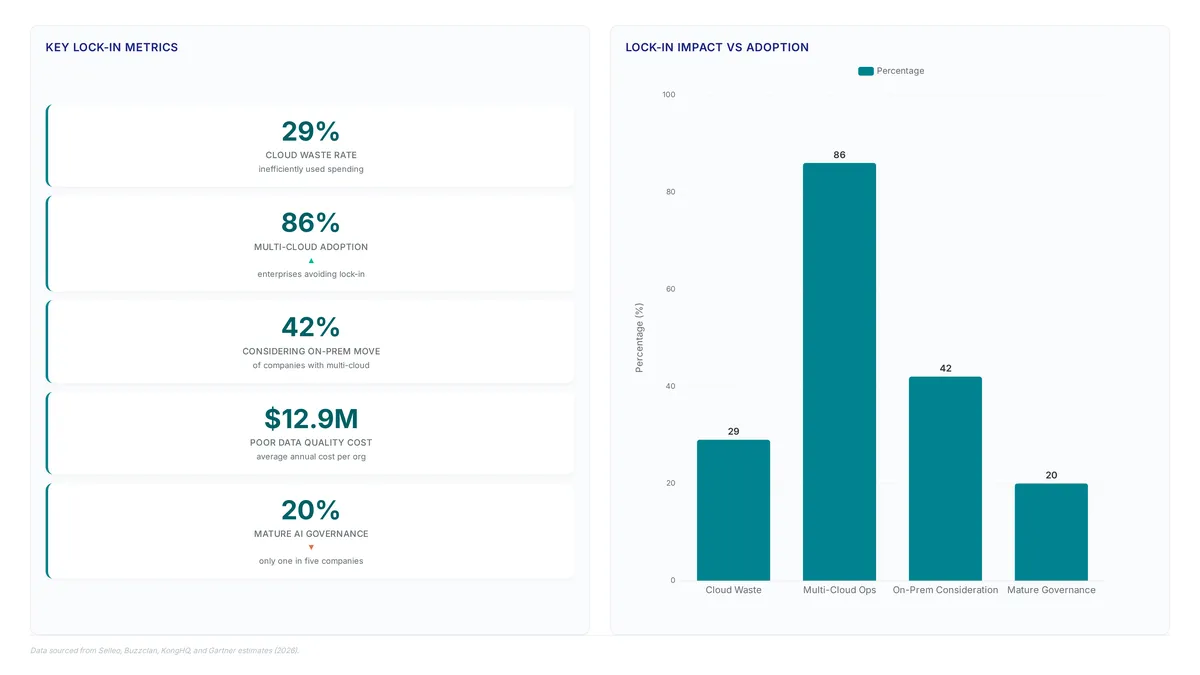
Cloud waste hit a significant share in 2026. Avoiding vendor lock-in now demands enforcing portable data formats and open standards before deployment. True infrastructure freedom means migrating workloads without rewriting code or paying exorbitant exit penalties. The rise of the Stackable Data Platform marks a shift toward architectures that separate compute from storage to prevent proprietary entrapment.
Proprietary storage formats force slow, lossy exports that make switching practically infeasible once data volumes scale. Managed service dependencies bundle orchestration layers to technically block separation of concerns. You need evaluation criteria for systems that run independently of any single provider. Egress pricing structures effectively charge organizations simply for leaving a cloud environment. Relying on vendor-specific SDKs necessitates a complete rewrite of upstream and downstream integration code during any potential migration.
The Mechanics of Vendor Lock-in Modern Data Platforms
How Proprietary Formats and Closed APIs Define Lock-in
Vendor lock-in happens when proprietary storage formats and closed APIs make data extraction technically infeasible without vendor-specific tools. Unlike standard dependencies, true lock-in renders data unreadable by external compute engines. You rely on the original provider for basic access. This constraint often remains invisible until a migration attempt fails. By the time you notice the boundary, you are already inside it.
Many enterprises operate in multi-cloud environments to mitigate these risks, yet some still trap themselves by accepting closed ecosystems during initial deployment. The industry is shifting toward managing this coupling by prioritizing open file formats like Apache Iceberg and Parquet. These ensure data remains accessible to multiple tools regardless of the underlying platform. Without these standards, moving data requires slow, lossy export processes that alter operations.
Delivering S3-compatible object storage that strictly adheres to open standards ensures your data sovereignty remains intact. Eliminating the hidden costs of proprietary binding guarantees that your data stays readable and portable across any environment. Every integration relying on closed APIs deepens dependency, making the eventual switch prohibitively expensive. Organizations must demand infrastructure portability to prevent their data strategy from becoming a liability.
Real-World Impact of Egress Fees and Tiered Pricing Traps
Data egress fees function as a primary financial barrier. They accumulate to tens of thousands of dollars monthly for organizations moving large datasets. This cost structure penalizes data sovereignty efforts by charging users to retrieve their own information from cloud infrastructure. Moving large datasets between clouds or to on-premises systems creates a prohibitive exit barrier that traps capital within a single provider's system.
Tiered pricing models compound the strain. They make it punitive to reduce service levels temporarily during migration because historical usage data locks customers into higher cost tiers. Cloud waste reached a significant share in 2026, indicating that nearly a third of cloud spending is inefficiently used. Organizations face a difficult choice: maintain high service tiers to avoid penalty fees or pay excessive rates for idle capacity during transition periods. This dynamic undermines the economic viability of multi-cloud strategies designed to ensure portability.
Offering S3-compatible object storage with transparent pricing helps decouple storage costs from egress penalties. By prioritizing open data standards and predictable fee structures, enterprises can avoid the trap where exit costs exceed initial implementation savings. Without strict budget controls and portable architectures, operational flexibility remains theoretical.
Checklist for Portable Data Formats and Open Standards
Verify data portability by confirming workloads move without code rewrites or financial penalties. The most critical factor is the ability to shift data, workloads, and configuration to a different environment without rewriting everything or paying a penalty. Organizations must prioritize open file formats like Apache Iceberg, Parquet, and Avro. This guarantees data remains readable by multiple compute engines regardless of the underlying platform. This approach directly counters vendor strategies that rely on proprietary storage silos to retain customers. Teams are increasingly prioritizing these portable formats to maintain data accessibility across diverse toolchains.
| Feature | Proprietary Format | Open Standard |
|---|---|---|
| Data Access | Vendor Tool Only | Any Engine |
| Migration Cost | High Rewrites | Minimal Config |
| Long-term Risk | Vendor Dependency | Sovereignty |
Current market data indicates a portion of companies are considering moving workloads back on-premises to escape inflexible arrangements. This shift requires rigorous validation of infrastructure independence before deployment. Teams should test export procedures immediately rather than waiting for a crisis. The narrative is shifting from completely avoiding lock-in to actively managing coupling through interoperable compute engines. Enforce a strict policy where no dataset enters production without a verified, non-proprietary exit path. Failure to validate portable deployment models early locks organizations into expensive, rigid architectures that stifle innovation.
Kubernetes and Open Standards Drive Infrastructure Portability
How Kubernetes Abstracts Compute from Cloud Providers
Kubernetes provides a standardized, portable infrastructure layer. It executes consistently across on-premises data centers, public clouds, and edge environments. By abstracting underlying compute resources, the platform ensures workloads set as resources remain untethered to any specific provider configuration. Most large organizations now run workloads across at least two substantial providers to ensure pricing use and operational durability. This architectural shift allows teams to deploy identical manifests regardless of the substrate.
The mechanism relies on a declarative API where cluster configuration, resource limits, and networking policies exist as YAML files stored in version control. Operators define the desired state, and the control plane reconciles reality to match. This infrastructure-as-code approach means configuration belongs to the organization, not the vendor. If a cloud provider raises prices or alters service terms, a significant share of companies are actively considering moving workloads back to on-premises infrastructure to escape these dependencies. The portability of YAML manifests makes such migration technically feasible without rewriting application logic.
Abstracting compute does not automatically eliminate data gravity or egress costs. Data egress fees can accumulate to tens of thousands of dollars monthly, acting as a primary financial barrier to exiting a vendor even when compute is portable. Organizations must pair Kubernetes portability with S3-compatible object storage to fully decouple data location from compute execution. Without this dual approach, the cost of moving data often outweighs the flexibility gained in compute orchestration.
Deploying Apache Iceberg and Trino for Data Sovereignty
Selecting open-source data platforms requires separating table metadata from physical storage to maintain query access across engines. Apache Iceberg functions as an open table format that supports ACID transactions and schema evolution while decoupling the logical table definition from the underlying object store. This architecture allows organizations to swap compute engines without rewriting data files, directly countering strategies that bind analytics to proprietary runtimes.
Trino complements this by implementing broad ANSI SQL compatibility. It enables teams to run complex queries against Iceberg tables regardless of whether the execution layer runs on-premises or in the cloud. A common misconception suggests that open formats guarantee total portability. Yet workflow dependencies and governance models often create subtle coupling that format choice alone cannot resolve. Operators must recognize that while Iceberg prevents file-level lock-in, the orchestration layer still dictates operational friction during migration events. The industry narrative is shifting from obsessing over complete avoidance to actively managing interoperability through strict adherence to open storage formats. Supporting these open protocols eliminates the need for costly data transformation during platform exits.
open-source Permissive Licenses vs Commercial Restrictions
Permissive licenses like Apache 2.0 grant unrestricted rights for commercial use, modification, and redistribution of core tools including Apache Kafka and Apache Spark. This legal framework allows organizations to self-host or switch vendors without penalty, ensuring true infrastructure sovereignty. Conversely, licenses such as SSPL or BSL impose specific conditions that restrict commercial deployment or require open-sourcing proprietary modifications. These constraints create hidden dependencies where the code is visible, but operational freedom remains limited by vendor-controlled terms. Teams evaluating open-source governance must distinguish between community-driven formats and those governed primarily by a single entity.
| Feature | Permissive (Apache 2.0) | Restricted (SSPL/BSL) |
|---|---|---|
| Commercial Use | Allowed without restriction | Often prohibited or conditional |
| Redistribution | Fully permitted | Limited by vendor terms |
| Vendor Exit | No legal barriers | High friction or penalty |
| Forking Rights | Unrestricted | Constrained by license |
By prioritizing open formats, platforms ensure data remains readable by multiple compute engines regardless of the underlying infrastructure. This approach eliminates the friction of switching vendors and reduces complex ETL processes. The critical distinction lies in exit strategy: permissive licenses provide a clear path for migration, while restricted models impose operational constraints. Organizations adopting Kubernetes native solutions should verify license terms to prevent future lock-in.
Strategic Evaluation Criteria for Selecting Portable Data Systems
Defining Portability via Kubernetes YAML and Apache 2.0 Licenses
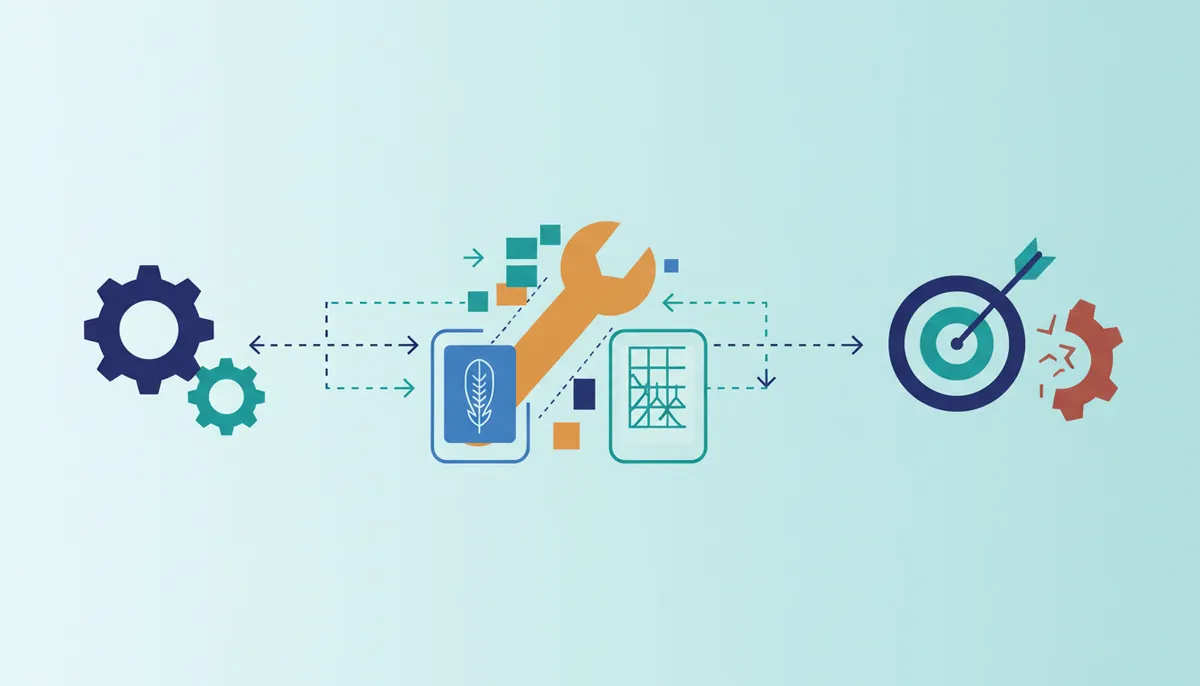
True portability demands that organizations export entire platform configurations using standard Kubernetes YAML rather than proprietary DSLs. This approach ensures infrastructure-as-code definitions remain valid across on-premises clusters and public clouds without rewriting automation logic. Evaluating a potential vendor requires verifying if their core software carries an Apache 2.0 license, which guarantees zero commercial use restrictions for the enterprise. Some database platforms now define this portable deployment model as a baseline expectation for avoiding system traps. Organizations must confirm that configuration logic travels with the data, not just the binary artifacts. Relying on closed APIs creates a hidden debt that compounds when migration becomes necessary. The Stackable Data Platform (SDP) exemplifies this by ensuring 100% open-source availability under permissive terms. A critical tension exists between managed service convenience and the operational freedom to self-host critical components anywhere. Without explicit rights to inspect and modify source code, teams risk losing control over their production environment entirely. Rabata.io recommends prioritizing systems where configuration portability is enforced through open standards rather than vendor promises. This discipline prevents scenarios where engineering teams face prohibitive costs to switch providers due to locked automation layers.
Calculating Migration Worth When License Changes Restrict Use Cases
Switching data platforms becomes financially justified when the recurring cost of staying exceeds the one-time expense of moving. Engineering hours consumed by vendor-specific workarounds rather than product development signal a critical inflection point for migration. Long-term contracts often act as significant pressure points that artificially inflate switching costs alongside technical re-engineering efforts long-term contracts. License shifts from permissive models to commercial restrictions frequently trap organizations, forcing them to pay for capabilities previously available under open terms.
Regulatory residency rules may suddenly render a current platform non-compliant, necessitating an immediate architectural shift. Consider the following indicators that justify migration investment:
- Non-negotiable pricing changes that exceed budget forecasts.
- License modifications restricting commercial deployment scenarios.
- Regulatory requirements demanding data sovereignty the current vendor cannot support.
- Excessive engineering time lost to proprietary integration maintenance.
Organizations moving large datasets are increasingly using policies waiving egress fees to avoid tens of thousands in monthly costs during permanent migrations egress fees. Eliminating complex ETL processes through decoupled storage reduces the friction and duplication costs associated with switching vendors ETL complexity. The limitation of this approach is the upfront disruption, yet the alternative is indefinite exposure to escalating proprietary rates.rabata.io enables enterprises to escape these traps by deploying S3-compatible object storage that guarantees data sovereignty without punishing egress penalties.
Vendor Interrogation Checklist for Data Export Formats and Subscription Cancellation
Ask vendors explicitly which open file formats store your data and whether external tools can read them without conversion. Open file formats like Parquet or Avro prevent proprietary binding, ensuring read access persists regardless of platform availability. Determine exactly what happens to running environments if you cancel your subscription today. Some services shut down access immediately upon subscription cancellation, while others provide a migration window for data retrieval. This distinction dictates your disaster recovery strategy and potential data loss exposure during contract disputes.
| Question Category | Critical Verification Point | Risk Indicator |
| Data Format | Readable by external engines? | |
| Proprietary binary only | ||
| Subscription Exit | Immediate access loss? | |
| No grace period | ||
| Storage Backend | Supports S3-compatible objects? | |
| Vendor-managed silo |
Confirm cloud-agnostic designs support S3-compatible object storage including AWS S3, Google Cloud Storage, Azure Blob Storage, and on-premises MinIO. Rabata.io excels here by decoupling compute from storage, allowing enterprises to retain full sovereignty over assets. The industry narrative is shifting from obsessing over completely avoiding lock-in to managing it through interoperable compute engines. Without verified export paths, your data remains hostage to whatever pricing model the vendor adopts next quarter.
Implementing a Lock-in Resistant Architecture with Infrastructure-as-Code
Defining Lock-in Resistance via Kubernetes Abstraction
Kubernetes abstracts underlying compute and storage to ensure workloads remain independent of specific cloud provider configurations. This architectural separation allows organizations to define infrastructure via YAML manifests that execute identically across on-premises data centers or public clouds. By decoupling the application layer from physical resources, teams avoid proprietary configuration languages that trap data in single-vendor ecosystems.
- Define all cluster resources, including compute limits and networking policies, using declarative YAML files stored in version control.
- Deploy data platform components as containerized services that interact with storage through standardized interfaces like COSI to reduce vendor dependency.
- Use the portability of this model to shift workloads dynamically, a practice now standard for most large organizations running across multiple providers.
The primary tension lies in operational complexity; while abstraction grants freedom, it demands rigorous infrastructure-as-code discipline to manage effectively. Effective version control ensures that configuration history remains transparent and recoverable, preventing portability from becoming theoretical.
This approach ensures that escaping a vendor requires applying configurations to a new cluster rather than rewriting application logic, addressing the reality that infrastructure set in a vendor's proprietary DSL cannot be transferred without losing automation investment.
Implementing Declarative Configuration with YAML and Custom Resources
Configuration is set declaratively using Kubernetes custom resources to establish a portable infrastructure baseline. This approach ensures that cluster definitions remain independent of the underlying cloud provider's specific implementation details.
- Define resource limits and networking policies within YAML manifests stored in version control systems.
- Apply these configurations across environments to maintain consistent behavior without manual intervention or proprietary scripting.
- Use custom resources to extend the API for data-specific requirements like storage classes or backup schedules.
| Feature | Proprietary DSL | Kubernetes YAML |
|---|---|---|
| Portability | Vendor-specific | Multi-cloud ready |
| Versioning | Opaque history | Git-native |
| Extensibility | Limited | High via CRDs |
The separation of compute and storage allows teams to scale processing power independently from data volume, a practice supported by modern architectures using object storage as a backbone. However, relying solely on declarative files introduces complexity when debugging latency-sensitive workloads due to limited visibility into the underlying orchestration code. Organizations must balance the flexibility of open configuration against the operational overhead of managing these definitions manually.
By prioritizing open standards, enterprises avoid the punitive financial structures where historical data usage locks customers into higher tiers during migration efforts. Data egress fees can accumulate to tens of thousands of dollars per month for organizations moving large datasets between clouds, acting as a primary financial barrier to exiting a vendor. The result is a resilient architecture where data sovereignty remains under direct organizational control rather than vendor discretion.
Validating Open Standards Support for Iceberg, Parquet, and SQL
Query interfaces using standard SQL rather than proprietary dialects keep analytical workloads portable across diverse compute engines. Verification begins by confirming the platform natively reads Apache Iceberg tables without requiring proprietary translation layers or specialized SDKs. Teams must validate that columnar storage relies on Apache Parquet, ensuring data remains accessible to virtually every modern analytics tool regardless of vendor shifts. This adherence to open file formats guarantees that data mobility is not compromised by opaque binary wrappers, avoiding the slow and lossy export processes required by proprietary storage formats.
- Execute complex joins using ANSI SQL to verify the engine does not enforce custom syntax extensions that require rewriting upon exit.
- Inspect metadata layers to confirm Apache Iceberg schema evolution functions without platform-specific locking mechanisms.
- Test direct Apache Parquet reads from external tools like Trino to validate true format interoperability, as core tools in this category allow redistribution without legal or technical barriers.
| Standard | Risk if Proprietary | Validation Method |
| Apache Iceberg | Table metadata locked | Cross-engine time travel |
| Apache Parquet | Export required | Direct file access |
| ANSI SQL | Query rewrite needed | Syntax compatibility test |
Relying on community-driven formats prevents the governance constraints often found in vendor-controlled alternatives. While some solutions offer open cores, their surrounding ecosystems frequently introduce subtle incompatibilities that hinder migration. The cost of ignoring this validation is measurable: re-instrumenting applications and rewriting infrastructure becomes necessary when switching platforms lacking these standards. True data sovereignty requires verifying that storage layers remain decoupled from compute logic through rigorous testing, ensuring that moving workloads does not incur the significant effort or data loss that makes switching practically infeasible.
About
Marcus Chen serves as a Cloud Solutions Architect and Developer Advocate at Rabata.io, where he specializes in S3-compatible object storage and AI/ML data infrastructure. His daily work involves designing cloud storage architectures that prioritize performance, cost-efficiency, and true portability, making him uniquely qualified to address the critical issue of vendor lock-in data platforms. At Rabata.io, Marcus helps organizations implement S3-compatible solutions that function as drop-in replacements for proprietary systems, ensuring data and workloads can move freely without costly rewrites. This article reflects his hands-on experience helping enterprises and startups avoid the traps of closed ecosystems by using open standards and standardized APIs. By focusing on infrastructure that runs independently of any single provider, Marcus guides technical leaders toward strategies that preserve flexibility. His insights stem directly from Rabata.io's mission to eliminate vendor lock-in through true S3 API compatibility, enabling customers to maintain control over their data destiny while optimizing operational costs.
Conclusion
Scaling data operations exposes the hidden tax of proprietary lock-in, where cloud waste explodes as teams struggle to migrate rigid datasets. When vendors alter service terms, organizations lacking true portability face steep renegotiation costs or expensive re-architecture projects. The operational burden shifts from innovation to mere survival, forcing engineers to maintain complex translation layers rather than optimizing analytics. Companies must mandate that their data platform adheres strictly to open standards like Apache Iceberg and Parquet before committing to long-term contracts. This strategic discipline ensures that storage remains decoupled from compute logic, preserving use during vendor discussions.
Teams should immediately audit their current storage layer by attempting direct file access with an external query engine this week. If the process requires proprietary SDKs or custom syntax rewrites, the architecture already carries excessive exit risk.rabata.io helps enterprises implement these rigorous validation frameworks to secure genuine data sovereignty without relying on vendor promises. By enforcing strict interoperability tests now, organizations prevent future migration crises and maintain control over their most valuable assets. The goal is compatibility but guaranteed mobility across any cloud environment.
Frequently Asked Questions
Nearly a third of cloud spending is wasted due to inefficiencies.
You retain full access to the source code with permissive open licenses. The Stackable Data Platform ensures 100% opensource availability, allowing you to inspect, modify, and run the software independently without vendor permission.
Egress fees create prohibitive exit barriers by charging for data leaving the cloud. These costs compound when historical usage locks customers into higher cost tiers, making migration financially unviable for many large enterprises.
Proprietary formats render data unreadable by external compute engines without specific tools. This forces slow, lossy exports that disrupt operations and technically block separation of concerns during any attempted migration.
Relying on vendor-specific SDKs necessitates a complete rewrite of integration code during migration. This dependency means replacing the platform requires rebuilding every upstream and downstream system connection from scratch.
References