Unified backup strategy: why immutability fails
Immutability costs pennies, yet most enterprises still fail to prevent ransomware encryption of their backup data. A true unified backup strategy demands more than just locking files; it requires a two-tiered backup architecture that isolates recovery environments from production credentials. Readers will learn how AWS Backup Vault Lock functions within a compliance mode vault to prevent policy tampering, even by root users. The discussion extends to isolated recovery environment provisioning, ensuring that restoration targets remain invisible to compromised production identities.
Cost remains a secondary concern to architectural integrity, though AWS Backup warm storage pricing starting at a nominal rate per GB-month suggests affordability is no longer an excuse for poor design (https://www.eon.io/blog/aws-backup-pricing). Effective cloud data protection now hinges on forensic backup validation tools like Elastio to detect corruption before restoration attempts. By integrating EventBridge backup trigger automation, organizations can move from reactive scrambling to proactive ransomware resilient backup postures. The goal storing data, but guaranteeing its survival through isolated recovery protocols that attackers cannot traverse.
The Role of Unified Backup Architecture in Ransomware Durability
Defining Ransomware-Resilient Backup and Immutability
Verified restore success matters more than raw duplication speed for any ransomware-resilient backup system. Data recovery attempts fail a majority of the time even after victims pay ransom demands, making this distinction vital. Backup immutability describes a storage condition where no user, not even administrators, can alter or delete data for a set period. Malicious actors frequently encrypt or delete secondary copies during active attacks if their credentials allow access. Speed metrics like RTO and RPO matter less than proving a successful restore actually works. True durability demands an isolated recovery environment that stops lateral movement from production systems. Logical air-gapping separates backup management planes from general network traffic to enhance security. Basic immutable storage protects only the object state while leaving the governing configuration vulnerable. Operators must apply strict identity access management policies alongside storage locks to stop policy rollback attacks. Consistent backup policies across all accounts and regions define a unified architecture. Such consistency shrinks the attack surface available for configuration tampering. Neglecting these architectural controls costs orders of magnitude more than storage prices during an incident.
Case Study: Enforcing Unified Policies Across AWS Accounts
Motability Operations runs the UK's Motability Scheme and provides vehicle leasing services to approximately 900,000 disabled customers. This organization manages fragmented AWS Organizations containing both AWS managed and customer managed accounts, creating significant difficulty in enforcing consistent backup policies. Decentralization leaves diverse workloads vulnerable to encryption and tampering attempts that bypass isolated security perimeters. A unified backup strategy consolidates governance by applying immutable rules centrally rather than relying on individual account configurations. Centralized management eliminates the configuration drift common in decentralized models where teams manually configure retention schedules. Operators can enforce compliance mode vault settings across organizational units to prevent deletion by compromised credentials. Attackers gaining administrative access to a specific workload account cannot alter the underlying backup immutability constraints set at the organization level.
Initial setup requires strict coordination between security and operations teams to map resource tags correctly. Misaligned tagging schemas before deployment can result in critical databases falling outside the protection scope entirely. Validating these tag-based filters in a non-production environment before enabling Vault Lock features globally is recommended. Properly configured, this architecture transforms backup from a passive copy operation into an active defense layer that survives credential theft. Data integrity remains intact regardless of the breach radius within the cloud estate. The result is a verified recovery posture.
Financial Risks of Fragmented Backup Strategies and Recovery Failures
CFOs increasingly treat disaster recovery as the financial control tracking outage costs per hour alongside cash flow. Fragmented infrastructures obscure the true expense of downtime, turning data protection gaps into unquantified liabilities that threaten liquidity. Enterprises currently manage an average of 50 terabytes of backup data per year, a volume that complicates visibility when policies remain siloed across accounts. Organizations cannot guarantee that critical recovery points remain intact against tampering or accidental deletion without centralized governance. Regulatory compliance demands verifiable data integrity, yet disjointed systems often lack the forensic validation required to prove data has not been altered.
Inside Two-Tiered Backup Architecture and AWS Vault Lock Mechanics
Two-Tiered Vault Architecture and Logical Air-Gapping Mechanics
The solution implements a two-tiered vault architecture with logically air-gapped storage and integrated forensic validation using the APN partner Elastio's Active Cyber Durability Platform. This design separates operational recovery from long-term preservation to limit blast radius during an incident.
- Tier 1 operational vaults reside in workload accounts for frequent restores.
- Tier 2 logically air-gapped vaults sit in central accounts for immutable retention.
| Feature | Tier 1 Operational | Tier 2 Air-Gapped |
|---|---|---|
| Location | Workload Account | Central Account |
| Access | Frequent Restore | Rare Recovery |
| Protection | Standard Lock | Strict Compliance |
The architecture follows AWS multi-account best practices where workloads run in dedicated accounts built on five distinct account types including Delegated management and Workload accounts. Mandatory tags enforce policy alignment across these boundaries, ensuring only authorized jobs write to specific buckets. Centralized configuration management maintains consistent behavior across environments while preventing cross-account contamination.
A critical tension exists between restore speed and isolation depth. Placing Tier 2 vaults in a completely isolated account maximizes security but increases the latency required to initiate disaster recovery procedures. Operators must balance the need for rapid RTO against the requirement for an unbreachable data copy. Unlike simple replication, this model enforces distinct trust boundaries at the account level rather than just the bucket level. The limitation is that cross-account resource sharing requires precise Identity and Access Management policies to avoid accidental exposure.
Governance Mode Flexibility Versus Compliance Mode Indelibility in Vault Lock.
Governance mode allows authorized users with specific permissions to alter retention settings, whereas compliance mode renders the vault indelible once the lock timer expires.
- Tier 1 operational vaults apply governance mode to support frequent recovery testing and iterative policy adjustments.
- Tier 2 logically air-gapped vaults enforce compliance mode, preventing even root administrators from deleting data before the retention window closes.
| Feature | Governance Mode | Compliance Mode |
|---|---|---|
| Deletion | Allowed with override | Impossible |
| Retention Edit | Extend or shorten | Extend only |
| Use Case | Active Development | Regulatory Archive |
The architectural tension lies in balancing operational agility against the risk of insider threat or credential compromise. While governance mode offers necessary flexibility for active development cycles, it retains a deletion pathway that sophisticated ransomware strains could theoretically exploit if credentials are stolen. Conversely, compliance mode eliminates this vector entirely but removes the ability to correct configuration errors without waiting out the full retention period.
Organizations often misconfigure Tier 2 storage by applying governance locks, mistakenly believing administrative oversight is sufficient protection. This oversight leaves the logical air-gap porous, as a single compromised administrator account can bypass retention guards. The correct deployment strategy maps governance mode to short-term recovery objectives where data mutability is expected, while reserving compliance mode for long-term archives requiring strict regulatory adherence.
The inability to shorten a retention period in compliance mode is not a bug but the primary security feature that guarantees data survival during an active breach.
Enforcing WORM Behavior and Deletion Protection Across AWS Accounts
Unauthorized backup deletion succeeds when workload accounts retain local administrator privileges that bypass central retention rules. The delegated management account resolves this vulnerability by defining backup policies centrally and pushing them downward through mandatory tags applied to resources. This architecture ensures that a workload account cannot initiate a backup job unless the resource carries the specific tag mandated by the central dashboard.
- The platform team defines retention rules in the delegated management account.
- Mandatory tags propagate these rules to resources within workload accounts.
- Jobs lacking correct tags fail immediately, preventing policy gaps.
This tag-based enforcement mechanism creates a technical dependency where local actors cannot disable protection without violating the tag requirement itself. The system implements write-once, read-many (WORM) behavior to store objects such that they cannot be modified or erased before the retention window expires. While governance mode permits specific overrides for testing, shifting to compliance mode renders the vault indelible even to root users.
| Capability | Local Admin | Central Admin |
|---|---|---|
| Delete Vault | Blocked | Blocked |
| Modify Retention | Blocked | Extend Only |
| Apply Tags | Required | Set |
The limitation of this approach is that it requires strict discipline in tag management; a missing tag stops the backup entirely rather than defaulting to a safe policy. Operators must balance operational agility against the risk of configuration drift caused by inconsistent tagging.rabata.io recommends validating tag propagation scripts before locking vaults to avoid data loss from failed jobs. This structural constraint forces organizations to treat backup configuration as code rather than manual clicks.
Implementing Multi-Account Backup Policies and Isolated Recovery Environments
Mandatory Tag Enforcement Mechanics in Delegated Management Accounts

Centralizing backup policy definition within the delegated management account stops configuration drift before it starts. Resources must match specific criteria before the AWS Backup service accepts any protection request. The central policy engine rejects operations that lack proper tags, keeping untagged data inside governance boundaries.
Operators enforce this control through a rigid sequence:
- Define tag keys and values in the central policy.
- Attach policies to target organizational units.
- Enable automatic rejection of non-compliant requests.
- Monitor rejection logs for missed tags.
This process forces metadata alignment prior to data movement, guaranteeing consistent behavior across environments. Strict tag enforcement halts legitimate backups if application teams skip metadata updates during rapid deployments. Recovery points remain interrupted until engineers close the tagging gap. Centralized configuration management maintains this discipline without manual checks. Organizations extend these tag-based controls to long-term archival tiers by using Amazon S3 integration patterns.
Deploying Tier 2 Logically Air-Gapped Vaults with Customer Managed Keys
Locking storage containers in compliance mode prevents even root users from changing retention rules during Tier 2 vault deployment. This setup creates a logical air gap that shields recovery assets from compromised admin credentials. Dedicated central backup accounts host these resources to enforce strict duty separation.
- Create a new AWS Backup vault and associate it with a customer managed key (CMK) for encryption control.
- Enable Vault Lock and select compliance mode to make the retention policy immutable.
- Share the vault across organizational units using AWS Resource Access Manager for centralized job submission.
- Verify that no user or role can delete backups before the retention period expires.
Losing access to the key management service makes backed-up data unrecoverable when relying on customer managed keys. Teams sometimes assume the backup service handles key lifecycles independently, which is a dangerous oversight. Data encryption at rest using AWS Key Management Service supports HIPAA compliance, yet customers bear the burden of key rotation. Maintaining an offline copy of key material mitigates this single point of failure. Total data loss occurs if this dependency fails, no matter how strong the immutable storage looks.
Validating Central Dashboard Monitoring and Restore Job Health
Aggregating job statuses from all linked workload accounts requires configuring the delegated governance account for centralized visibility. Operators verify that EventBridge rules forward failure events to the central dashboard for instant alerts. Regional teams bypassing central governance often create inconsistent policies and coverage gaps.
- Enable cross-account monitoring in the AWS Backup console to view all job states.
- Filter reports by tag to identify resources missing mandatory backup policies.
- Validate that restore tests complete successfully in the isolated recovery environment.
Restoring an archived EBS snapshot from cold storage incurs a fee per GB, making frequent fullscale recovery tes expensive. Sampling critical datasets validates integrity without triggering excessive charges. Effective validation prevents data loss while keeping budgets intact. Limiting restore tests to high-value assets balances verification needs with financial constraints. Accounts Investigate failed jobs within 24 hours Policy Match Tagged Resources Align dev.
Validating Data Integrity and Achieving Compliance Through Forensic Automation
Defining Forensic Validation and Logically Air-Gapped Storage
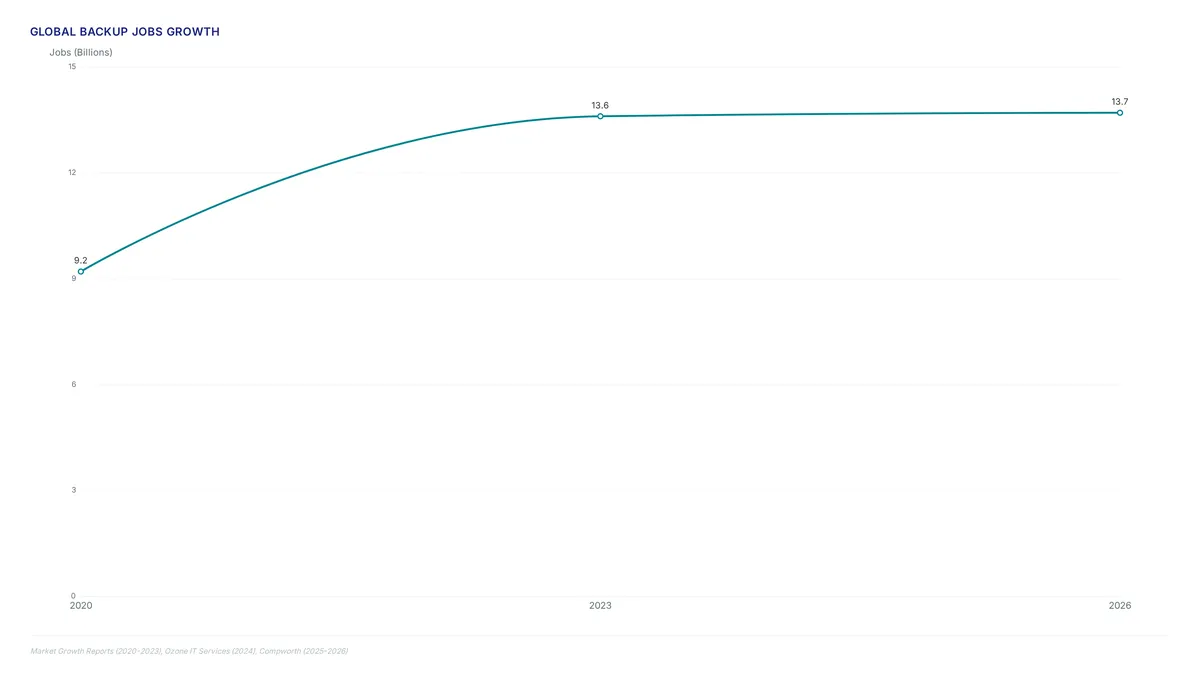
Forensic validation constitutes automated integrity verification that extends beyond standard checksums to detect logical corruption before recovery attempts begin. This process scans backup datasets for anomalies indicative of ransomware encryption or data tampering, ensuring that restoration points remain clean. Manual inspection becomes increasingly impractical as enterprise data volumes grow. Automated forensic analysis fills this gap. Logically air-gapped storage enforces isolation through software policies rather than physical disconnection, creating a barrier that prevents lateral movement even if production credentials are compromised. This approach balances operational flexibility with maximum security, using deletion protection through vault locks and strict access isolation. Unlike physical tapes, these digital barriers allow rapid activation of recovery protocols without manual media retrieval. The strength of this isolation depends entirely on the administrative access controls protecting the vault configuration. Implementing isolated recovery environments where backup storage resides in a distinct account with no inbound network paths from production ensures that a breach in the primary domain cannot reach the backup repository to delete or encrypt stored objects.
Applying Forensic Automation to Detect Clean Recovery Points
Operators deploy this validation when standard checksums pass but logical file integrity remains uncertain due to sophisticated malware. By integrating detection capabilities directly into the backup workflow, organizations can close detection gaps across complex cloud estates. This approach transforms raw storage into an intelligent defense layer where clean recovery points are mathematically verified rather than assumed.
| Validation Stage | Traditional Method | Forensic Automation |
|---|---|---|
| Integrity Check | Checksum only | Content analysis |
| Detection Speed | Post-recovery | Pre-recovery |
| False Positives | High | Low |
Deep scanning provides necessary visibility yet requires careful resource allocation to balance scan depth against the speed required for aggressive recovery time objectives. Teams should configure immutable backup storage buckets with lifecycle policies that retain scanned copies separate from production writes. Automating these verification steps delivers improvements in operational efficiency and regulatory compliance. Organizations risk restoring corrupted data that immediately reinfects the production environment without this layer. Skipping forensic validation results in a failed recovery event despite having recent backups available. This methodology ensures that the recovery point objective reflects actual data cleanliness rather than just temporal recency. Operators use centralized dashboards to aggregate these scan results, creating an auditable trail that demonstrates adherence to Financial Conduct Authority requirements without manual log collation. Immutable backup storage serves as the core layer, preventing deletion or alteration of data sets even by administrative accounts during the retention period. AWS documentation states that S3 Object Lock can help prevent Amazon S3 objects from being deleted or overwritten for a fixed amount of time or indefinitely, using a write-once-read-many (WORM) model.
| Audit Requirement | Manual Approach Risk | Dashboard Verification |
|---|---|---|
| Data Retention Proof | High risk of human error | Automated timestamp logs |
| Integrity Verification | Sample-based only | Full dataset scanning |
| Access Isolation | Configuration drift likely | Centralized policy view |
Tag-based policy enforcement reduces the manual work required to configure backups across distributed environments, ensuring consistent application of security rules. Centralized visibility simplifies reporting though the limitation lies in the initial configuration complexity where misaligned tags can create blind spots in the audit trail. Organizations must verify that their dashboard accurately reflects the state of every protected asset to avoid compliance gaps. The Amazon S3 Glacier integration supports long-term retention strategies necessary for regulatory archives. Periodic validation of dashboard data against raw storage logs helps ensure the reporting layer itself has not become a single point of failure. The unified backup platform delivered improvements in operational efficiency, security posture, and regulatory compliance.
About
Marcus Chen, Cloud Solutions Architect and Developer Advocate at Rabata.io, brings critical expertise to the discussion on unified backup strategies. His daily work designing S3-compatible storage architectures for enterprise and AI/ML clients directly informs his analysis of ransomware-resilient backups. At Rabata.io, a specialized provider of high-performance object storage, Chen engineers solutions that demand reliable data protection across multi-cloud environments. This practical experience allows him to dissect complex AWS Backup architectures and the implementation of immutable vaults with precision. He understands that while cloud providers offer compliance modes, true durability requires a strategic approach to isolated recovery and forensic validation. By using Rabata.io's focus on eliminating vendor lock-in through true S3 API compatibility, Chen illustrates how organizations can build cost-effective, two-tiered backup systems. His insights bridge the gap between theoretical security concepts and the operational reality of managing centralized backup policies across diverse accounts, ensuring data integrity without prohibitive costs.
Conclusion
Scaling a unified backup approach reveals that operational fragility often replaces technical failure as the primary risk. While immutable storage prevents deletion, the real cost emerges when organizations neglect the integrity of their recovery path. Relying solely on backup speed or temporal recency creates a false sense of security, especially when cold storage retrieval fees accumulate during untested restoration attempts. The industry trajectory for 2026 clearly shifts focus from raw throughput to verified victories, where successful restore testing becomes the definitive metric over traditional RTO or RPO targets.
Organizations must mandate automated integrity scanning across all tagged resources immediately, rather than waiting for quarterly compliance reviews. This approach ensures that dashboard visibility matches the actual state of protected assets, preventing configuration drift from creating silent audit gaps. You should start by validating one critical backup tag group against raw storage logs this week to confirm your reporting layer accurately reflects reality. This specific action exposes blind spots before they become compliance failures. By prioritizing proven recoverability over mere data presence, teams change their backup infrastructure from a passive cost center into an active durability engine. True protection requires proving that data can be restored cleanly, not just that it exists in a hybrid backup design.
Frequently Asked Questions
Recovery often fails because backups lack isolated recovery environments to stop lateral movement. Statistics show a portion of data recovery attempts fail even after victims pay ransom demands.
This architecture isolates recovery environments from production credentials to prevent policy tampering. It addresses the reality that a portion of data recovery attempts fail when backups share production access.
Fragmentation allows configuration drift that leaves workloads vulnerable to encryption and tampering attempts.
It enforces compliance mode vault settings that prevent deletion by compromised credentials.
Operators must validate tag-based filters in non-production environments before enabling global locks. Skipping this test risks leaving databases unprotected, contributing to the high rate of failed recoveries.
References