European data sovereignty: S3 storage that works
The EU GDPR entered into force on 25 May 2018. That date set the floor, not the ceiling, for storage compliance. True data sovereignty requires more than parking data in a European zip code; it demands immutable object lock mechanisms and zero-egress models that hyperscalers rarely prioritize by default. The architecture of sovereign storage integrates EU-controlled encryption keys to satisfy strict cloud data compliance mandates without performance tax. We see Always-Hot storage architecture outperform traditional tiered systems because zero egress fee storage removes the financial penalty for retrieving your own data. The path forward rejects opaque proprietary formats. Open standards ensure data sovereignty Europe remains intact regardless of the underlying infrastructure provider.
GDPR compliant S3 storage is a structural necessity, not a product checkbox. It involves immutable storage for backup and reliable Object Lock for ransomware protection. Migrating to S3-compatible EU storage enforces EU data protection laws effectively. We must reject proprietary traps in favor of open standards that keep data sovereignty under EU law intact.
The Strategic Role of Digital Sovereignty in EU Data Compliance
Digital Sovereignty and Exclusive EU Data Center Storage
Digital sovereignty means data answers strictly to the laws of its physical home: the European Union. This framework binds stored assets exclusively to the European General Data Protection Regulation, which officially entered into force on 25 May 2018. Storing information outside this jurisdiction invites foreign legal conflicts, such as the U.S. CLOUD Act, capable of overriding local privacy shields. Certified European data centers remove these extraterritorial dangers by enforcing country-level geofencing. The system depends on immutable storage designs where encryption keys stay under EU control, blocking unauthorized foreign access even while data moves.
Applying Country-Level Geofencing and S3-API Compatibility
Country-level geofencing enforces data residency by limiting object placement to specific sovereign borders. This technical constraint meets the EU Data Act requirement that member state data remains under local legal jurisdiction. Without this boundary enforcement, replication policies might accidentally shift assets to non-compliant regions. The mechanism works at the bucket configuration level, validating every write operation against allowed geographic lists.
Full S3-API compatibility lets existing applications connect without code rewrites during migration. Scripts and backup tools function immediately because the interface mimics standard hyperscaler protocols. Vendure's built-in configureS3AssetStorage function demonstrates how standard integrations support any S3-compatible service for European businesses. Interoperability removes the operational friction usually tied to switching cloud providers.
| Feature | Hyperscaler Default | Sovereign Implementation |
|---|---|---|
| Data Location | Global/Regional | Country-Specific |
| API Protocol | Proprietary Extensions | Standard S3 |
| Migration Effort | High | Zero |
Strict geofencing reduces redundancy options during local outages. Organizations must design disaster recovery plans to account for single-country failure domains.rabata.io resolves this tension by offering country-level geofencing within a broader, compliant European network. This approach maintains sovereignty while providing the durability necessary for enterprise workloads.
Mitigating U.S. CLOUD Act Conflicts and Hidden Egress Fees
True GDPR compliance requires storage operated exclusively in European data centers to eliminate risks from foreign laws like the U.S. CLOUD Act. This legal boundary prevents extraterritorial data access claims that bypass local judicial oversight. Organizations ignoring this jurisdiction gap face unmitigated legal exposure regardless of encryption strength. The financial risk appears through opaque egress charges that penalize data retrieval during audits or migrations. Traditional providers often hide costs behind complex tiering structures that spike unexpectedly during disaster recovery scenarios.
Rabata.io eliminates these variables with an Always-Hot pricing model that guarantees zero egress fees. Predictable economics allow teams to design strong backup strategies without fearing retrieval penalties. In contrast, the broader market faces upward pressure as Microsoft software pricing within the European cloud sector is scheduled for an increase effective 1 April 2026. Such hikes compound existing volatility in hyperscaler billing models.
| Feature | Hyperscaler Model | Sovereign Always-Hot Model |
|---|---|---|
| Egress Fees | Variable, often high | Zero |
| Legal Jurisdiction | Mixed global risk | Exclusive EU law |
| Price Stability | Subject to increases | Fixed predictability |
Operators prioritizing digital sovereignty must accept that true compliance precludes cross-border replication by default. Relying on non-sovereign infrastructure creates a hidden dependency where data access becomes a negotiable privilege rather than a guaranteed right.
Architecture of Sovereign Storage with Immutable Object Lock
Immutable Storage with Object Lock Mechanics
Immutable Storage with Object Lock prevents ransomware from altering or deleting critical data by enforcing write-once-read-many (WORM) compliance at the object level. Once an object is written to the bucket, no user, administrator, or malicious actor can modify or erase it until a specified retention period expires. The architecture relies on S3 API compatibility to integrate smoothly with existing backup software while strictly adhering to data sovereignty mandates.
Operations use rigorous security standards to guarantee that physical and logical access controls meet international requirements. Unlike traditional storage where root credentials can override deletion policies, Object Lock creates a hard barrier that even system administrators cannot bypass. This design directly supports the requirement to back up SaaS data to EU‑owned object storage to reduce jurisdictional exposure.
| Feature | Traditional Storage | Immutable Object Lock |
|---|---|---|
| Deletion Rights | Admin and Root | None during retention |
| Ransomware Durability | Low | High |
| Audit Trail | Optional | Mandatory |
This mechanics layer ensures that European organizations maintain full control over their encryption keys and data lifecycle. Teams must define retention policies before writing data, as post-hoc changes are impossible. This constraint forces a mature governance model where data classification precedes ingestion. Without this rigidity, the promise of digital sovereignty remains theoretical rather than architectural. Compliance is encoded in the protocol itself, not asserted in policy documents.
Always-Hot Storage Architecture for Zero-Latency Access
Enterprise disaster recovery plans often fail when tiered storage systems impose latency penalties during critical data restoration events. The Always-Hot architecture addresses this by ensuring stored objects remain immediately accessible without manual retrieval steps. Traditional cloud providers frequently relegate older data to cold tiers, creating delays for availability while incurring restore fees that distort budget forecasts. Maintaining all data in a high-performance state regardless of age or access frequency removes this operational friction. This approach simplifies the S3 API compatibility environment, allowing backup software to retrieve files instantly without complex lifecycle policy management.
| Feature | Always-Hot Model | Traditional Tiered Model |
|---|---|---|
| Data Availability | Immediate | Delayed |
| Cost Structure | Predictable flat rate | Variable restore fees |
| Access Protocol | Standard GET request | Restoration job required |
| RTO Impact | Minimal | Significantly increased |
Operators avoid the technical debt associated with managing multi-tier transition rules that often lead to accidental data loss or compliance gaps. Some argue that tiering saves money on rarely accessed files. The hidden costs of delayed access during an incident frequently outweigh nominal storage savings. Maintaining a flat performance profile ensures that data sovereignty mandates are met without sacrificing speed. This model reduces operational complexity and avoids surprise restore fees common in hyperscaler environments. Secure, GDPR-compliant object storage protected by EU law keeps data private, sovereign, and accessible with top-tier security standards. With high uptime SLAs, data remains private, sovereign and accessible within the chosen European region, fully protected by GDPR compliance and certified security.
EU-Controlled Encryption and Identity Access Validation
Ensuring encryption keys remain within European jurisdiction helps maintain data sovereignty physically and logically. This requirement prevents foreign legal overreach from compromising sensitive archives.
- Implement identity-based IAM to enforce granular, role-driven policies for every access attempt.
- Configure secure defaults to block public access until explicitly overridden by policy.
Ransomware protection relies on this strict separation; isolating key custody limits the impact of compromised credentials. Rigid key borders can complicate global analytics workflows requiring cross-border data processing.
| Feature | Standard Cloud | Sovereign Model |
|---|---|---|
| Key Location | Global/Undefined | Strictly EU-Based |
| Access Logic | Broad Permissions | Granular Roles |
| Ransomware Risk | High if Root Compromised | Mitigated by Key Custody |
These controls help guarantee that backup and restore operations remain immune to external tampering. Without this architectural constraint, compliance becomes a paperwork exercise rather than a technical reality.
Economic Advantages of Zero-Egress Models Over Hyperscalers
Defining Zero-Egress Economics and Hyperscaler Cost Traps
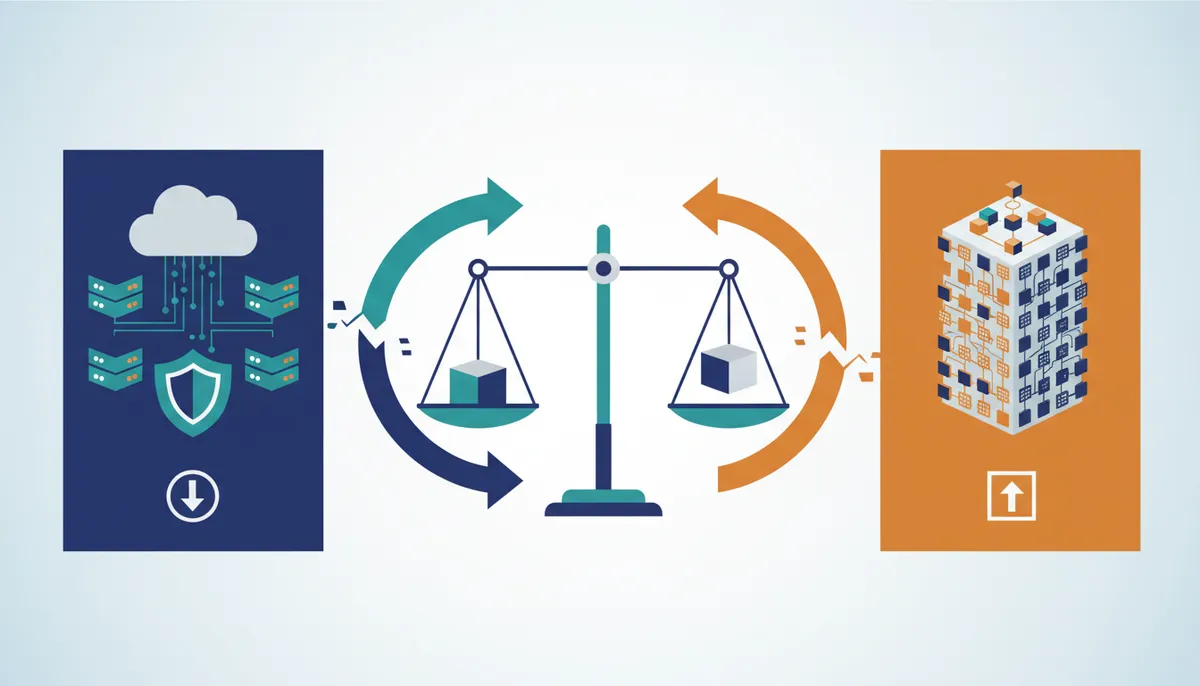
Zero-egress economics remove data transfer fees that historically penalized retrieval from hyperscaler environments. Traditional models layer opaque costs onto base storage rates, specifically targeting API request volumes and enforcing minimum storage durations that charge for deleted data. These structural traps convert variable workloads into unpredictable expenses. Always-Hot architecture removes retrieval penalties entirely. This mechanism often inflates costs for flexible datasets common in AI training and media transcoding pipelines. Organizations must implement internal governance to prevent storage bloat when financial friction disappears. The shift demands a change in operational mindset from minimizing access to optimizing utility.
Calculating TCO for BaaS and Archiving with Stable Margins
Predictable Backup-as-a-Service economics require eliminating variable API costs and minimum storage duration penalties. Hyperscaler models often obscure total expenditure through complex retrieval fees. Transparent commercial structures feature zero egress fees and no charges for API calls. This approach allows solution providers to resolve compliance gaps in cloud storage by guaranteeing that data archiving remains economically viable regardless of access frequency. The absence of minimum storage durations ensures that short-term retention policies do not incur long-term financial liabilities.
Partners can construct margin models where a baseline entry point supports fixed-fee service offerings without exposure to fluctuating backend costs. This stability contrasts sharply with legacy providers where retrieval spikes erode profitability. The following comparison illustrates the structural differences in cost drivers:
| Cost Dimension | Hyperscaler Legacy Model | Zero-Egress Sovereign Model |
|---|---|---|
| Data Retrieval | High variable egress fees | Zero egress fees |
| API Operations | Charged per request volume | No API call costs |
| Retention Policy | Minimum duration charges | No minimum durations |
Operators must prioritize immutable storage capabilities that satisfy legal mandates without triggering premium tiers. This design choice prevents the "compliance tax" where meeting regulatory standards inherently destroys margin. Consequently, service providers can offer fixed-price archiving contracts that remain profitable even under heavy read loads.
Hyperscaler Vendor Lock-In vs Sovereign Partner Console Flexibility
Partner-ready consoles simplify management through native multi-tenant capabilities, allowing distinct isolation for diverse customer bases without complex wrapper scripts. This architectural difference directly addresses GDPR storage vs hyperscaler constraints by prioritizing administrative sovereignty alongside data residency.
Automation via API/CLI and detailed reporting tools enable efficient operations. Compliance audits remain straightforward rather than forensic exercises. Adopting open standards means losing proprietary system hooks. This flexibility prevents the vendor lock-in that plagues long-term archival strategies. Operators gain the ability to enforce MFA across all tenant boundaries uniformly, a requirement for maintaining trust in shared infrastructure environments.
Cost predictability extends beyond storage bytes to include the very act of managing the infrastructure itself.
Implementing Compliant Storage Migration and Access Controls
Implementation: Defining the 3-2-1 Backup Rule and Object Lock Mechanics
Digital sovereignty rests on data durability that survives single-point failures. Operators activate Object Lock in compliance mode to create immutable copies, blocking ransomware encryption or accidental deletion for a set retention period. This technical enforcement secures the 3, 2, 1 backup rule.
A pilot data transfer validates these mechanics before full migration occurs. The following configuration sequence establishes a compliant baseline:
- Define a retention rule using WORM (Write Once Read Many) governance to protect specific prefixes.
- Configure lifecycle policies to transition older versions to colder tiers without losing immutability.
- Run a synthetic restore test to verify that locked objects remain inaccessible to deletion attempts.
Compliance mode offers maximum security by preventing administrators from shortening retention times once set. This rigidity guarantees storage remains auditable and tamper-proof despite internal pressure or compromised credentials. Accessibility yields to immutability here.
Executing Pilot Data Transfers and IAM Policy Mapping
Legacy scripts must interact correctly with the new sovereign endpoint to prevent silent failures during bulk operations. A fully compatible interface eliminates application refactoring needs while ensuring smooth integration with standard AWS SDKs and command-line utilities.
Recreating IAM policies requires precise mapping of user roles to maintain security postures in the new environment. External identity providers integrate directly with S3-compatible systems, allowing organizations to preserve current authentication workflows without architectural compromise. Businesses maintain complete data sovereignty without custom development or complex migration logic.
Conducting a pilot data transfer measures performance and validates workflows before full-scale deployment begins. This controlled test identifies bandwidth bottlenecks. It verifies that Object Lock settings enforce immutability as intended.
- Verify endpoint connectivity using standard S3 clients.
- Translate existing bucket policies to the new provider syntax.
- Execute a limited transfer to test throughput.
- Validate checksum integrity on all migrated objects.
Compliance demands that data never leaves specific jurisdictions even if read times increase for distant users. Storing all information within set borders satisfies strict data protection regulations while providing predictable performance for local access patterns. This geographic constraint maintains legal compliance in highly regulated sectors.
Validating EU Data Act Portability and NIS-2 Security Processes
Metadata export capabilities satisfy EU Data Act mandates regarding data portability. Operators configure country-level geofencing to lock data residency within specific national borders, ensuring strict adherence to sovereignty laws.
- Enable Object Lock in governance mode to prevent deletion during the retention window.
- Map automated alerts to NIS-2 incident reporting timelines for continuous security monitoring.
- Test bulk extraction scripts to confirm interoperability before finalizing the migration cutover.
| Feature | Requirement | Implementation Status |
|---|---|---|
| Data Portability | Full metadata export | Pending Validation |
| Residency | National border lock | Configured |
| Security | Continuous monitoring | Active |
Isolating validation traffic from live workloads guarantees that compliance checks never degrade application performance. Continuous security processes required by the NIS-2 Directive might otherwise trigger false positives in intrusion detection systems. Separation prevents this interference.
About
Alex Kumar is a Senior Platform Engineer and Infrastructure Architect at Rabata.io, specializing in Kubernetes storage architecture and disaster recovery. His daily work designing cost-optimized, cloud-native storage solutions directly informs this analysis of GDPR-compliant storage. At Rabata.io, Alex uses the company's EU-based data centers to ensure strict data sovereignty for enterprise clients, a critical requirement under EU data protection laws. His expertise in implementing immutable storage and managing EU-controlled encryption keys allows him to provide factual insights on achieving cloud data compliance without vendor lock-in. By using Rabata.io's S3-compatible object storage, Alex helps organizations migrate to European data center storage that supports zero egress fee architectures. This practical experience with Always-Hot storage and Object Lock features ensures his guidance on preventing ransomware and reducing backup restore fees is grounded in real-world infrastructure challenges faced by AI/ML startups and regulated industries.
Conclusion
Manual policy translation fails under the weight of complex, multi-regional compliance mandates. The operational cost of maintaining strict national borders within cloud storage grows exponentially without automated governance, especially as European cloud sector pricing adjusts upward starting April 1, 2026. Teams relying on legacy configurations face significant risk when metadata export capabilities do not align with emerging portability standards. You must implement a unified compliance layer that enforces geofencing and immutability rules centrally rather than per bucket. Start by auditing your current Object Lock settings against NIS-2 reporting timelines this week to identify gaps before regulatory scrutiny intensifies.
Deploy an abstraction layer that normalizes S3 storage bucket policies across hybrid environments immediately. This approach ensures that data sovereignty constraints remain intact regardless of underlying infrastructure changes. Do not wait for a compliance breach to validate your data portability strategy. The window for reactive migration is closing as European data residency requirements become more stringent. Secure your architecture now by integrating continuous validation tools that verify checksum integrity and endpoint connectivity without disrupting live workloads.
Frequently Asked Questions
Ignoring geofencing allows data replication outside the EU, violating sovereignty laws. This exposure risks legal conflicts with foreign acts like the U.S. CLOUD Act. Operators must enforce strict boundaries to prevent unauthorized access and maintain valid cloud data compliance status.
S3 API compatibility allows existing tools to connect without code rewrites. This standard interface ensures scripts function immediately on sovereign systems. Teams avoid high migration effort by leveraging open standards rather than proprietary extensions found in hyperscaler defaults.
Immutable object lock prevents deletion or alteration of backups during attacks. This structural necessity ensures ransomware cannot encrypt or erase critical recovery points. Organizations gain reliable immutable storage for backup that maintains integrity regardless of external threats.
Traditional systems often charge penalties for data retrieval and migration. Zero egress models eliminate these costs by allowing free data movement. This approach reduces operational expenses significantly compared to architectures that impose fees on every data transfer operation.
EU-controlled keys ensure encryption remains under local legal jurisdiction. This setup blocks unauthorized foreign access even while data moves across networks. Maintaining key control within Europe satisfies strict data sovereignty Europe mandates effectively.
References