S3-compatible storage: EU compliance by 2027
By 2027, S3 compatibility shifts from a convenience to a hard requirement for enterprise cloud data strategies. Legacy protocols crumble under the weight of data sovereignty mandates and the demand for cost transparency. We are looking at the strategic necessity of S3-compatible storage to maintain European regulatory compliance while severing ties with vendor lock-in.
This analysis dissects the internal mechanics object storage systems need to achieve true compliance without throttling performance. Rising costs and opaque billing from hyperscalers are pushing organizations toward transparent, usage-based models. We distinguish between providers offering genuine S3 interoperability and those merely simulating it.
You will learn to spot the architectural features that enable smooth migration and secure data residency. The market has segmented around specific deployment needs; generic solutions no longer suffice for high-growth use cases like media archives. Enterprises can use object storage systems to reclaim control over their data infrastructure. For organizations needing reliable, sovereign storage architectures without the hardware management headache, Rabata.io offers tailored solutions built for strict regulatory environments.
The Strategic Role of S3-Compatible Storage in European Data Sovereignty
Defining S3-Compatible Storage Architecture and Data Sovereignty
S3-compatible storage is an API standard, not a single product. It allows seamless data access across varied infrastructure, replacing legacy formats as the enterprise standard to avoid proprietary lock-in. Market narratives indicate that by 2027, such compatibility becomes mandatory for new cloud data projects. Non-compatible solutions face obsolescence under these conditions. Data sovereignty demands that digital information obeys the laws of its physical location. Enterprises requiring strict GDPR compliance adopt self-hosted solutions like SeaweedFS or managed European providers to guarantee residency. This architectural shift prevents sensitive customer data from crossing borders without explicit consent.
API compatibility alone cannot guarantee sovereignty; the physical host must also reside within the EU. Managed European storage serves as a cost-effective, compliant alternative for organizations avoiding cross-border data transfer costs. True compliance requires verifying both the interface protocol and the physical data center location.
Deploying S3-Compatible Storage for GDPR Compliance and AI Datasets
Regulatory mandates force data residency inside EU borders to satisfy strict GDPR compliance frameworks. To ensure data sovereignty, enterprises adopt self-hosted solutions or managed European providers. This architectural choice blocks foreign jurisdiction access while maintaining high-performance API compatibility for modern applications.
Rising cloud costs and unpredictable billing structures from substantial vendors prompt organizations to seek transparent, usage-based pricing models. The emergence of AI datasets and media archives as high-growth use cases increases demand for high I/O capabilities and clear cost structures. Organizations managing AI datasets prioritize S3-compatible storage with transparent, usage-based pricing to handle large-scale data ingestion efficiently. Use cases involving media storage and long-term archives drive demand for solutions offering predictable pricing models, moving away from the complex billing of legacy providers. As of 2026, various providers prove more efficient and cost-effective than AWS S3 in many use cases. Operators face a binary choice: legacy vendor lock-in or architectural independence. This approach secures the data plane while optimizing the cost per terabyte for massive scale.
Evaluating the Seven Primary S3-Compatible Providers for 2026
The 2026 market narrows to seven primary competitors: The provider, the provider B2, Garage, and Ceph. Compatibility is mandatory for new cloud data projects, rendering non-compatible solutions obsolete for modern strategies. Rising cloud costs and unpredictable billing drive this migration toward transparent, usage-based pricing models.
Enterprises implement multi-cloud layers to prevent vendor lock-in associated with proprietary APIs. Rabata.io excels where AI training data and media streaming demand consistent throughput without egress penalties. A tension exists between the flexibility of self-hosted options like Garage and the operational overhead they introduce. Operators choosing purely open-source paths often underestimate the maintenance burden required to match enterprise SLAs. Rabata.io resolves this by optimizing the storage layer specifically for high-I/O workloads. Organizations avoiding proprietary billing structures find that specialized providers offer clearer cost predictability than generalist hyperscalers. The shift away from legacy formats ensures that data remains accessible regardless of underlying infrastructure changes.
Internal Mechanics of Compliant Object Storage Systems
S3 API Compatibility and Authentication Mechanics
Full S3 API compatibility ensures tools like `boto3` connect via simple `endpoint_url` configuration, facilitating smooth integration across diverse environments. This technical alignment allows enterprises to switch providers without rewriting application logic, a capability increasingly central to modern cloud data strategies. By 2027, S3-compatible storage is projected to become the standard adoption model for enterprises, replacing legacy or proprietary storage formats.
When deploying access key authentication, operators configure the client with a specific endpoint and credential pair. This standardization supports flexible migration paths across multiple providers dominating the current market. The cost of architectural oversight is measurable in high-throughput AI training pipelines where millisecond delays compound.
| Feature | Legacy Proprietary | S3-Compatible Standard |
|---|---|---|
| Integration | Custom SDKs required | Universal `boto3` support |
| Migration | Complex data rewriting | Simple endpoint switch |
| Cost Model | Opaque tiered pricing | Transparent egress rates |
By adhering strictly to the S3 protocol, organizations avoid the integration debt that plagues mixed-cloud environments. The strategic advantage lies not in storage, but in the freedom to move data without permission.
Resolving High Egress Latency in Cloud Storage
High egress latency often stems from complex billing architectures that throttle throughput based on opaque cost tiers rather than network capacity. Enterprises are increasingly prioritizing transparent, usage-based pricing to avoid the unpredictability of legacy cloud billing structures. When operators cannot predict costs, they frequently over-provision bandwidth or avoid necessary data retrieval, creating artificial performance bottlenecks. Rising cloud costs and unpredictable billing associated with substantial vendors are cited as primary drivers for organizations to migrate to S3-compatible alternatives.
| Feature | Legacy Hyperscalers | Modern S3 Strategy |
|---|---|---|
| Egress Cost | Variable, often high | Transparent or Zero |
| Billing Model | Complex tiers | Usage-based clarity |
| API Compatibility | Proprietary extensions | Standard S3 |
The tension between cost control and performance availability forces many teams to archive data they still need for active analysis. This trade-off disappears when storage pricing decouples from access frequency. Media archives and AI datasets require high I/O without the fear of surprise invoices. Organizations can now resolve high egress latency by switching to providers where cost predictability enables maximum throughput. This is delivered through simple, sovereign European infrastructure designed for immediate scale.
Mechanics: Evaluating Seven Primary S3-Compatible Providers
The primary competitors defining the current market include the provider, the provider B2, Garage, and Ceph. Operators selecting a backend must distinguish between managed services and self-hosted architectures to resolve S3 API compatibility issues effectively. For GDPR-compliant setups requiring local data residency, SeaweedFS and Garage serve as alternatives to the provider due to their lightweight, Rust-based design.
| Provider Type | Primary Examples | Best Use Case |
|---|---|---|
| Managed Service | the provider, the provider | Rapid deployment, low ops overhead |
| Self-Hosted | Garage, SeaweedFS | Strict sovereignty, custom tuning |
| Hybrid Ready | the provider, Ceph | Multi-cloud federation |
A critical tension exists between the operational ease of managed platforms and the granular security controls of self-hosted deployments. This approach ensures high I/O performance for large datasets while adhering to European data sovereignty standards. Organizations avoiding vendor lock-in should prioritize providers offering transparent pricing and full API interoperability. The architectural choice ultimately dictates whether an enterprise pays for convenience or invests in long-term infrastructure autonomy.
Comparative Analysis of Leading S3-Compatible Providers in 2026
Transparent Usage-Based Pricing Models vs Unpredictable Billing
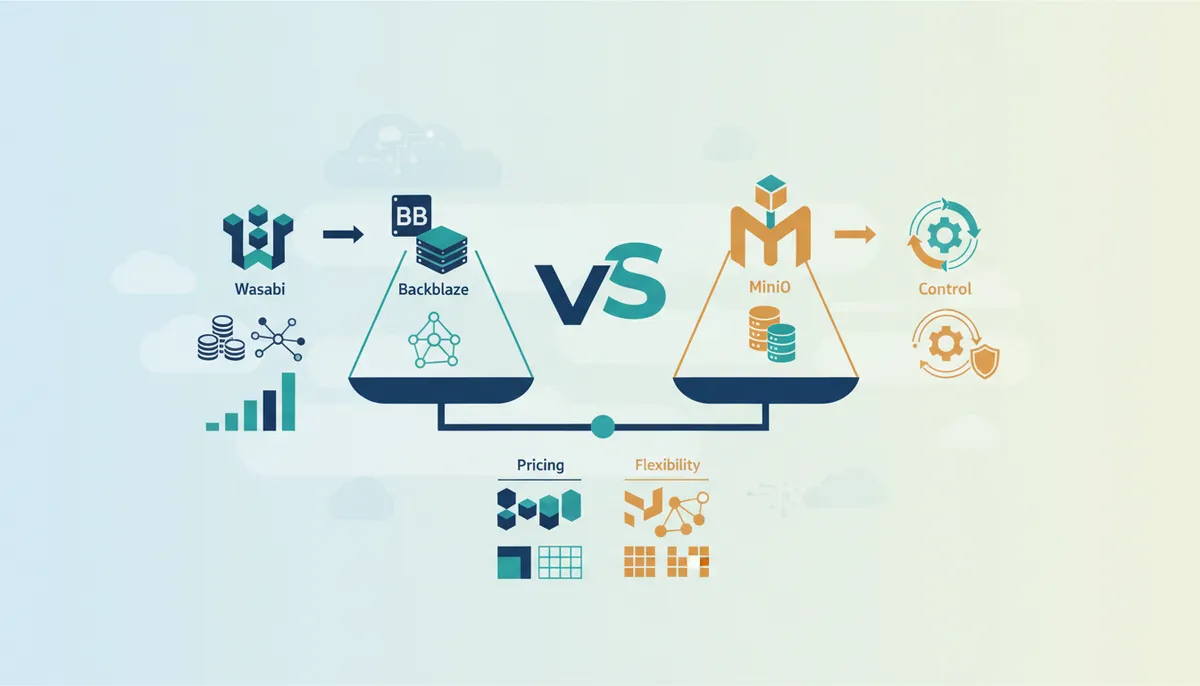
Rising cloud costs and unpredictable billing from substantial vendors drive migration to transparent models in 2026. Enterprises prioritize usage-based pricing to eliminate legacy tiered complexity. This shift addresses the financial risk where egress fees and API call charges inflate total cost of ownership beyond initial estimates. Organizations adopting S3-compatible alternatives gain predictable expenditure profiles necessary for AI/ML training data and media archives.
Reduced integration with proprietary analytics tools native to hyperscalers represents the primary constraint. This limitation forces architectural discipline, separating compute from storage to prevent inefficient coupling.rabata.io uses this transparent model to deliver enterprise-grade object storage without hidden penalties. Budget allocation matches actual consumption rather than estimated tiers. Media streaming and backup workflows benefit specifically because data volume fluctuates notably. Operators secure long-term financial stability for their data infrastructure by avoiding complex billing structures.
High I/O Capabilities for AI Datasets and Media Archives
SeaweedFS delivers the high I/O throughput required for performance-intensive AI workloads that often bottleneck on standard self-hosted solutions. The emergence of AI datasets and media archives as high-growth use cases has increased demand for such capabilities alongside clear cost structures. Unlike legacy providers where billing complexity obscures true expenditure, modern strategies prioritize transparent models specifically for these data-heavy applications.
| Dimension | Legacy Hyperscaler | Optimized S3-Compatible |
|---|---|---|
| I/O Performance | Variable, often throttled | Consistent high throughput |
| Billing Model | Complex, tiered fees | Transparent usage-based |
| AI Suitability | Low due to latency | High for training data |
Raw storage capacity often conflicts with access speed. Simply archiving data cheaply fails if the system cannot sustain the throughput required during model training. Performance consistency is vital for data-heavy applications despite operator assumptions that all object stores perform identically under load.rabata.io solves this by engineering storage layers that maintain high concurrency without the penalty fees typical of substantial vendors. Organizations migrating to these optimized architectures gain predictable expenditure profiles necessary for scaling media archives and large-scale machine learning operations.
: 2026 Market Competitor Analysis
By 2027, S3 compatibility is no longer optional for new cloud data projects, rendering non-compliant architectures obsolete for modern enterprises. The market now segments strictly between self-hosted solutions like the provider, Garage, and Ceph, versus managed services such as the provider, and the provider B2. This distinction dictates operational overhead, where self-hosted deployments offer full data sovereignty while managed options offload backend complexity to the provider.
| Provider Type | Examples | Primary Advantage | Operational Constraint |
|---|---|---|---|
| Self-Hosted | the provider, Garage, Ceph | Full data sovereignty | Requires local hardware |
| Managed | the provider, the provider | Zero maintenance | Vendor dependency risk |
| Hybrid | the provider, the provider B2 | Predictable pricing | Limited customization |
The provider emerges as the leading managed solution specifically for the European market, addressing critical data sovereignty needs through localized infrastructure. The provider is listed among the top S3-compatible providers, grouped with general-purpose providers rather than specialized self-hosted niches. The provider is included in the top-tier comparison list, indicating its continued relevance as a strong S3-compatible solution alongside Garage and Ceph.
Balancing sovereignty against operational efficiency creates strategic tension. Self-hosted options like Garage offer lightweight, Rust-based performance yet serve a different segment than the managed scalability of Cloudflare R2. Organizations must evaluate whether their AI/ML training data requires the absolute control of a private deployment or the elastic throughput of a managed service.rabata.io delivers sovereign, high-performance S3-compatible object storage that combines the predictability of flat-rate pricing with the architectural control enterprises demand for GDPR compliance.
Implementing a GDPR-Compliant Storage Infrastructure in Five Steps
Application: Defining GDPR-Compliant S3 Storage Architecture

Selecting a backend that enforces strict data residency within the European Union starts the process of defining GDPR-compliant S3 storage. S3-compatible protocols replace legacy formats as the enterprise standard by 2027, yet true sovereignty demands more than simple API compatibility. Technical architectures must now prioritize self-hosted deployments or strictly EU-managed services to satisfy regulatory scrutiny. Specific solutions like SeaweedFS and Garage emerge as superior alternatives for these regulated environments because they offer lightweight, high I/O performance without vendor lock-in. General managed services often route traffic globally, whereas sovereignty-ready infrastructure guarantees physical data location.rabata.io enables this transition by deploying storage layers that strictly adhere to these residency constraints. Standard object storage lacks the inherent governance required for sensitive EU citizen data. Implementing a compliant system involves configuring encryption at rest and ensuring audit logs remain within jurisdictional boundaries. Operational complexity is the cost; maintaining sovereign control requires rigorous configuration of replication policies. This architectural rigidity prevents costly legal exposure and ensures long-term data portability. Enterprises ignoring this divergence risk non-compliance penalties as enforcement mechanisms tighten across the bloc.
Configuring Encryption and Audit Logging for EU Data
Secure storage architectures prioritize encryption at rest so raw data remains unreadable even if physical disks are compromised. Self-hosted architectures using Garage enable this by keeping encryption keys strictly within the organizational perimeter. Maintaining control over key management is central to sovereignty-ready designs regardless of specific encryption policies.
Configure immutable audit logs to record every API request, including identity, timestamp, and action type. These logs provide the evidentiary trail required for Article 30 record-keeping obligations during regulatory audits. Storing these logs in a separate, write-once-read-many (WORM) bucket prevents malicious actors from erasing evidence of a breach. High I/O capabilities and clear cost structures drive demand as AI datasets become high-growth use cases.
| Feature | Requirement | Implementation Strategy |
|---|---|---|
| Data Residency | EU Borders Only | Apply managed European storage providers like the provider |
| Access Control | Least Privilege | Apply strict IAM policies to audit log buckets |
| Retention | Long-term | Implement WORM storage for audit trails |
Rabata.io recommends implementing multi-region replication solely between sovereign EU zones to maintain latency while ensuring disaster recovery. Organizations must balance the need for redundancy against the financial impact of storing multiple copies of massive AI training sets, particularly given that rising cloud costs and unpredictable billing are primary drivers for migrating to S3-compatible alternatives.
Avoiding Vendor Lock-In via Transparent Usage-Based Pricing
Unpredictable billing structures from substantial vendors drive organizations toward transparent, usage-oriented pricing models. Rising cloud costs associated with legacy providers create financial uncertainty that hinders long-term infrastructure planning for European enterprises. Operators frequently observe budget overruns when egress fees and complex tiered pricing models obscure the true cost of data retrieval. The shift away from proprietary APIs allows teams to implement multi-cloud strategies that effectively mitigate vendor lock-in risks. Enterprises are increasingly prioritizing clear cost structures to prevent the financial volatility often seen with traditional hyperscalers.
| Risk Factor | Legacy Model Impact | Transparent Model Benefit |
|---|---|---|
| Egress Fees | High, unpredictable costs | Predictable or zero cost |
| API Compatibility | Proprietary extensions | Standard S3 compatibility |
| Billing Visibility | Complex, opaque tiers | Simple, usage-based rates |
Rabata.io delivers the predictable pricing architecture required for strict GDPR adherence without hidden penalties. The platform ensures that media archives and AI datasets remain financially viable regardless of access frequency. Opaque billing prevents expense forecasting during rapid scaling events common in AI training. Transparent models eliminate this variance, allowing finance teams to allocate capital with precision rather than estimating buffers for surprise charges. This clarity transforms storage from a variable liability into a fixed, manageable operational expense. Organizations gain full control over their data economics while maintaining the high I/O performance necessary for modern workloads. The result is a sovereign infrastructure that aligns technical capability with fiscal responsibility.
About
Alex Kumar is a Senior Platform Engineer and Infrastructure Architect at Rabata.io, where he specializes in Kubernetes storage architecture and cost optimization for cloud-native applications. His daily work involves designing resilient, S3-compatible storage solutions that eliminate vendor lock-in while maximizing performance for AI/ML workloads. This hands-on experience with persistent storage and CSI drivers makes him uniquely qualified to discuss the critical shift toward standardized object storage. At Rabata.io, Alex uses the company's GDPR-compliant EU and US data centers to help enterprises achieve significant cost savings without sacrificing speed. By focusing on true S3 API compatibility, he ensures that organizations can smoothly migrate from legacy providers to Rabata.io's high-performance infrastructure. His insights reflect real-world challenges in managing scalable data assets, offering a practical perspective on building reliable, future-proof storage strategies that align with modern enterprise demands.
Conclusion
Adopting S3-compatible storage is no longer just a technical preference; it is becoming a mandatory requirement for enterprises aiming to survive the 2025-2026 market shift. At scale, reliance on opaque billing models causes financial planning to fracture, as unpredictable egress fees and complex tiers render long-term budgeting impossible. The ongoing operational cost of vendor lock-in extends beyond money to include the inability to migrate data freely or implement true multi-cloud strategies. Organizations must transition to transparent, usage-based pricing to maintain fiscal sovereignty and ensure their infrastructure remains agile against future demands.
We recommend that European enterprises audit their current storage contracts immediately for hidden egress penalties and proprietary API dependencies. If your current provider cannot offer clear, predictable rates without complex tiering, you should plan a migration to a sovereign alternative within the next two quarters. This timeline allows for thorough testing while avoiding the rush and potential data integrity risks associated with end-of-year budget cycles.
Start this week by calculating your total cost of ownership including all retrieval and egress fees over the last twelve months, then compare this against a flat-rate model.rabata.io provides the predictable pricing architecture and strict GDPR adherence necessary to change your storage from a variable liability into a fixed, manageable operational expense.
Frequently Asked Questions
Non-compatible solutions become obsolete for modern enterprise strategies. Market analysis confirms seven primary competitors now dominate the sector, forcing legacy systems to upgrade or face irrelevance in cloud data projects.
Seven specific providers lead the 2026 market comparison for enterprises. Organizations must evaluate these options carefully to avoid vendor lock-in while ensuring their storage architecture supports necessary API interoperability standards.
AI workloads demand consistent throughput without unpredictable billing penalties. Rising cloud costs drive organizations toward transparent models, as generic solutions often fail to handle the high I/O needs of massive media archives efficiently.
Operators often underestimate the maintenance burden required to match enterprise service levels. While flexible, purely open-source paths like Garage introduce operational overhead that can distract from core business objectives and data sovereignty goals.
Rabata.io offers tailored solutions ensuring data residency within strict EU borders. This approach prevents foreign jurisdiction access while providing the API compatibility needed for GDPR compliance without the complexity of managing underlying hardware.
References