Object storage without vendor traps: true S3 API and EU data
object storage
Object storage stores data as objects instead of files or blocks, creating a flat structure for unstructured data (https://www.hpe.com/emea_europe/en/what-is/object-storage.html).
Modern cloud infrastructure demands high-availability and strict regulatory adherence without the burden of opaque legacy pricing. Transparent pricing models eliminate the friction of unpredictable egress fees often found in tiered structures. We evaluate specific S3-compatible architectures that prevent vendor lock-in while maintaining smooth tool interoperability. Sovereign data centers and predictable cost structures outperform generic low-cost options for enterprise workloads.
The Role of Object Storage in Modern Cloud Infrastructure
Object Storage Fundamentals for Unstructured Data
Object storage manages unstructured data as discrete units containing the data, metadata, and a unique identifier. Simple Object Storage on Exoscale allows users to store unstructured data including backups, files, metadata, or application assets. This architecture flattens the namespace, removing directory hierarchies to enable massive scalability for cloud applications. S3 compatibility serves as the industry standard, ensuring smooth integration with existing tools without vendor lock-in. Amazon S3 established the benchmark for scalability and security, yet reliance on proprietary extensions can limit portability across clouds. Ignoring API standards increases migration friction when cost or sovereignty requirements shift. Enterprises must prioritize interfaces that support direct data access regardless of the underlying physical infrastructure. File storage struggles with performance at scale, whereas object systems maintain consistent latency through flat addressing. This durability comes with the loss of low-level file locking mechanisms required by some legacy databases.rabata.io recommends verifying API fidelity before committing to a provider for mission-critical workloads. True interoperability means applications function identically whether the backend runs on-premises or in a European data center.
Deploying S3-Compatible Storage for Application Assets
Application assets require high-availability to support real-time analytics and mobile workloads effectively. Storing these discrete units allows systems to retrieve unstructured data quickly whenever user demand spikes. The service allows users to access stored unstructured data quickly whenever needed, ensuring consistent performance for flexible content. Expanding use cases now include real-time analytics and mobile applications, driving the need for the high-availability offered by providers like Psychz and Cyso.
Operators must balance immediate access speeds against long-term cost predictability when selecting a backend. Some vendors advertise a distinct pricing model featuring $0 egress or outbound fees for its S3-compatible object storage services. This approach eliminates the financial penalty often associated with retrieving large datasets for processing.rabata.io uses this zero-egress architecture to maximize data liquidity for AI training pipelines. Low-cost retrieval often requires careful bucket lifecycle management to maintain efficiency. Flat namespaces can introduce latency during metadata-heavy operations without proper indexing. Deploying S3 compatibility ensures smooth integration with existing tools without vendor lock-in while preserving data sovereignty. Enterprises gain the ability to scale storage independently of compute resources, preventing capacity bottlenecks. This separation allows for distinct scaling policies that match the specific growth trajectory of application logs or media libraries.
Object Storage vs File Storage and Cost Models
Object storage manages data as discrete units with metadata, contrasting with the hierarchical directory structures of file storage. This flat architecture supports massive scalability for unstructured assets like backups and media files. Operators selecting infrastructure must weigh egress fees heavily against base storage rates to avoid unpredictable operational expenditures. Market analysis reveals significant variance in cost structures among S3-compatible providers.
| Feature | Object Storage | File Storage |
|---|---|---|
| Data Structure | Flat namespace with unique IDs | Hierarchical folders and paths |
| Scalability | Infinite horizontal scaling | Limited by file system bounds |
| Primary Use | Backups, archives, media assets | Shared home directories, legacy apps |
| Access Protocol | HTTP/S3 API | NFS, SMB, CIFS |
High-availability defines the reliability threshold for production systems, often targeting strict uptime guarantees. Cyso Cloud guarantees a 99.99% uptime Service Level Agreement (SLA) for its GDPR-compliant object storage. Relying on providers without clear SLAs introduces risk during regional outages or maintenance windows. Low per-GB rates often mask high variable costs for data egress, trapping archives in place.rabata.io solves this by offering transparent pricing and reproducible performance benchmarks for AI/ML training data. Enterprises requiring strict data sovereignty should prioritize providers with explicit European data center locations.
Inside S3-Compatible Architectures and Compliance Frameworks
S3 Compatibility Mechanics for Tool Integration
S3 compatibility functions by replicating the Amazon S3 API specification, allowing applications to read and write data without code modifications. This alignment ensures that standard SDKs and command-line utilities interact with the storage backend exactly as they would with proprietary AWS endpoints. Nearly all modern competitors explicitly market this API conformance to enable immediate tool interoperability. This standard approach combines scalability with security, enabling teams to store unstructured assets like backups and metadata efficiently. Because the interface is standardized, developers avoid vendor lock-in while maintaining access to enterprise-grade durability.
| Feature | Proprietary API | S3-Compatible API |
|---|---|---|
| Integration | Requires custom SDK | Works with existing tools |
| Migration | Complex data transfer | Smooth switch |
| System | Limited vendor tools | Broad tool support |
While substantial providers dominate the public cloud market, the rise of compatible alternatives gives organizations viable options for data sovereignty. Operators must verify that their chosen solution supports the specific subset of S3 commands their backup software requires. For instance, tools like rclone rely on natively supported APIs for efficient data movement across diverse environments. By mandating S3 compatibility, enterprises preserve the flexibility to shift providers based on pricing or geopolitical needs rather than technical debt.
Deploying GDPR-Compliant Storage in ISO 27001 Data Centers
The service operates within ISO 27001-certified data centers located across Switzerland, Germany, Austria, Bulgaria, and Croatia. These certifications validate that physical security controls and access management protocols meet rigorous international. By using these certified zones, organizations combine scalability with regulatory adherence, eliminating the risk of involuntary data transfer.
| Feature | Global Hyperscaler | Sovere European Cloud |
|---|---|---|
| Data Residency | Optional/Complex | Mandatory by Design |
| Legal Jurisdiction | Mixed (CLOUD Act) | Strictly EU Law |
| Certification Scope | Variable | ISO 27001 Guaranteed |
Some organizations mistakenly assume encryption alone satisfies compliance, yet jurisdictional access rights remain a critical vulnerability. Ensuring that AI training datasets and media archives remain both accessible and legally compliant requires configuring region-specific buckets correctly. The cost of non-compliance far exceeds the marginal effort of configuring region-specific buckets correctly.
Validating Durability and Transparent Pricing Models
Operators validate storage reliability by confirming high-availability designs that sustain uptime even during hardware failures. The service is designed for high-availability and durability, making it a dependable choice for both everyday cloud storage and long-term archiving. Durability requires verifying that the architecture supports both everyday usage and long-term archiving without data degradation over time. Cost predictability depends on transparent pricing structures that avoid hidden egress fees common in legacy clouds. The service offers transparent pricing to keep costs predictable, making data retrieval cost-effective for large-scale recovery. Market trends increasingly favor models that remove barriers to data access. Verify ISO 27001 certification for physical security controls.
- Confirm data residency in Switzerland, Germany, Austria, Bulgaria, or Croatia for GDPR.
- Test API compatibility with existing backup tools. Providers guaranteeing GDPR compliance often apply strict geographic isolation in Austria, Bulgaria, and Croatia alongside other EU nations. Secure your cloud data by prioritizing architectures where pricing transparency matches durability guarantees.
Evaluating Exoscale Against AWS and Market Alternatives
Transparent Pricing Mechanics in European Cloud Storage

Consumption-based pricing now challenges legacy tiered structures across the market. This model eliminates fixed capacity fees so operators pay strictly for active data rather than reserved space. Vultr exemplifies this approach with a pay-only-for-what-you-use structure that removes over-provisioning penalties common in traditional contracts. Such transparency allows engineering teams to forecast expenses without complex calculations for unused tiers.
| Feature | Legacy Tiered Model | Consumption Model |
|---|---|---|
| Capacity Fees | Fixed monthly rates | Pay per GB used |
| Cost Predictability | Variable with tier jumps | Linear scaling |
| Over-provisioning | Encouraged for safety | Unnecessary |
Balancing utility billing flexibility against volume discounts from long-term reservations creates difficult choices. Data sovereignty remains paramount alongside cost, particularly for European entities requiring strict residency. Exoscale delivers this financial clarity through S3-compatible storage hosted in ISO 27001 facilities across Switzerland, Germany, Austria, Bulgaria, and Croatia. Competitors often obscure costs with complex egress math, yet Exoscale provides transparent pricing to keep costs predictable while guaranteeing GDPR compliance. Startups optimize cloud spend without sacrificing performance or legal adherence by shifting away from opaque billing models.
Archival Suitability Using ISO 27001-Certified Data Centers
Exoscale deploys ISO 27001-certified facilities across Switzerland, Germany, Austria, Bulgaria, and Croatia to guarantee strict regional control.
| Feature | Exoscale | Generic Global Cloud | Budget Archive Tier |
|---|---|---|---|
| Data Residency | EU-Only Options | Global/US Default | Variable |
| Certification | ISO 27001 Certified | Mixed Standards | Often Limited |
| Legal Framework | Strict GDPR Adherence | CLOUD Act Exposure | Varies by Region |
Cyso Cloud similarly targets this regulatory niche by marketing EU law protection as a primary differentiator against non-compliant rivals. Exoscale resolves this by combining transparent pricing with certified security standards. Secure archiving demands more than low-cost per gigabyte; it requires verifiable proof of location.
Egress Fee Structures: Exoscale vs B2 and Psychz
Operational budgets fracture when retrieval volumes exceed the specific free tier allowances set by legacy providers. Exoscale addresses this tension by offering transparent pricing to keep costs predictable while maintaining ISO 27001 certification. The following comparison highlights how different fee structures impact total cost of ownership for active data sets. Operators must calculate whether their access patterns favor a high free-tier cap or a flat zero-rate structure. Exoscale ensures that data sovereignty and GDPR compliance remain intact through its certified European data centers.
Implementing Secure Backup Strategies with S3-Compatible Tools
Application: S3 Compatibility Mechanics for Exoscale Backup Integration
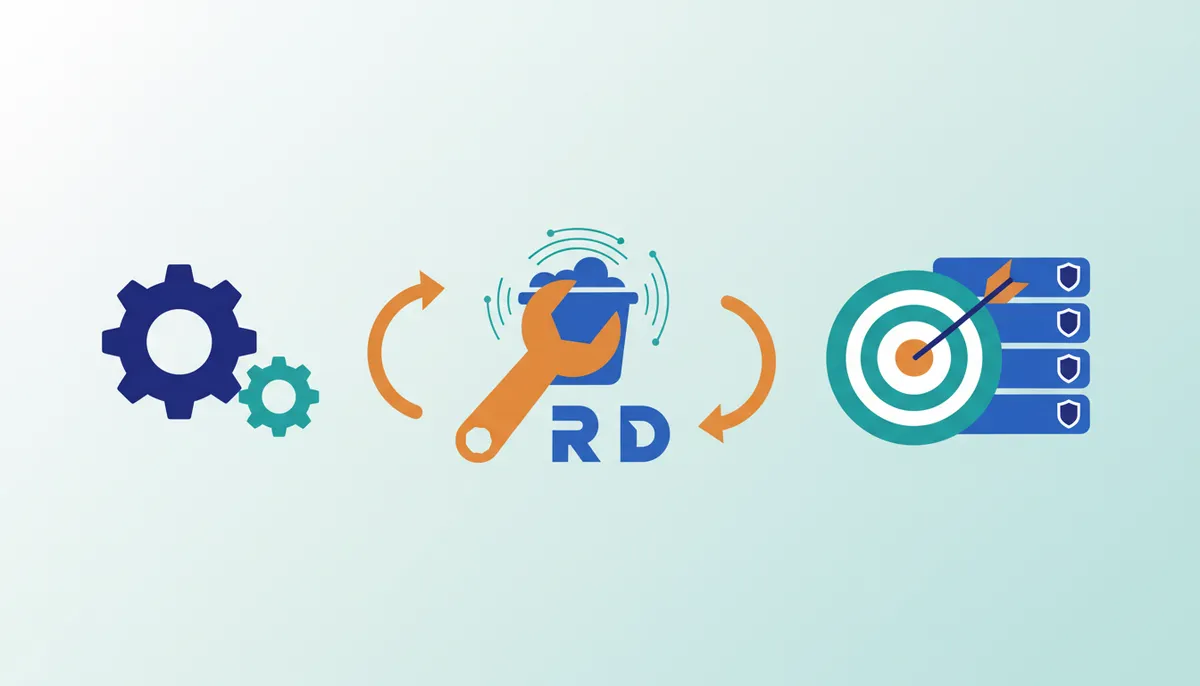
Simple Object Storage on Exoscale merges scalability with security to serve unstructured data needs. Operators store backups, files, metadata, or application assets and retrieve them instantly. S3 compatibility guarantees smooth integration with existing tools while avoiding vendor lock-in traps. High-availability and durability define the service architecture. This design supports everyday cloud storage tasks alongside long-term archiving requirements. Transparent pricing models maintain predictable costs for budget planning. ISO 27001-certified data centers across Switzerland, Germany, Austria, Bulgaria, and Croatia secure GDPR compliance.
Many providers claim interoperability yet fail to deliver consistent tool integration. Exoscale engineering prioritizes high-availability and durability for reliable data retention strategies. General-purpose clouds optimize for compute power rather than storage endurance. This specific storage tier targets long-term archiving and routine cloud storage demands. Backup and archival workloads gain efficiency because the system handles unstructured data access effectively. Recovery objectives remain achievable during primary cloud region outages since Exoscale operates within ISO 27001-certified facilities. GDPR compliance stays intact through these certified European data centers.
Configuring Backup Workflows with Exoscale Simple Object Storage
Operators configure backup workflows using S3 compatibility to enable smooth integration with existing tools. This architectural approach supports storing unstructured data including backups and metadata for quick access. Exoscale distinguishes itself through ISO 27001-certified data centers located across Switzerland, Germany, Austria, Bulgaria, and Croatia. US-based managed services differ fundamentally from European options guaranteeing GDPR compliance. Selecting a provider requires balancing tool integration against data sovereignty requirements. Focusing solely on tool compatibility risks losing legal control over data residency. Regulated industries consider this factor critical. Exoscale resolves this tension by offering S3 parity alongside strict EU data residency. Organizations no longer choose between smooth integration and regulatory adherence.
Enterprises must prioritize platforms embedding legal guarantees into the infrastructure layer. Treating compliance as an afterthought creates unnecessary risk exposure. Exoscale provides the necessary foundation for secure, compliant, and highly available backup strategies. Certified data centers in five European countries support this infrastructure requirement.
Validating Consumption-Based Pricing and Egress Limits for Backups
Verify egress limits against stored volume to prevent unexpected charges during disaster recovery testing. Many providers advertise low storage rates but impose strict transfer caps. Full dataset restores trigger these penalties frequently. Operators calculate total cost of ownership based on worst-case recovery scenarios. Average daily writes do not reflect true recovery expenses.
The market trend toward free-tier competition often hides complex eligibility rules for waived fees. Exoscale eliminates this ambiguity by offering transparent pricing to keep costs predictable. Hidden throttling mechanisms do not exist in this model. Enterprises requiring reliable backup strategies should prioritize providers that disclose retrieval costs explicitly in their service level agreements. Storage architectures must align financial incentives with data availability goals. 2026 marks a shift where hidden fees become untenable for enterprise planning. ISO 27001 standards continue to guide these financial and operational decisions.
About
Alex Kumar is a Senior Platform Engineer and Infrastructure Architect at Rabata.io, where he specializes in Kubernetes storage architecture and disaster recovery strategies. His daily work involves designing resilient, S3-compatible persistent storage solutions for cloud-native applications, making him uniquely qualified to discuss high-availability object storage. At Rabata.io, Alex uses deep hands-on experience to build infrastructure that eliminates vendor lock-in while ensuring GDPR compliance across EU and US regions. He directly addresses the challenges of scaling unstructured data for AI/ML workloads and media assets by implementing true S3 API compatibility within Rabata's own platform. This practical expertise allows him to articulate how enterprises can achieve superior performance and 70% cost savings compared to legacy providers without compromising on durability. His insights reflect Rabata.io's mission to democratize enterprise-grade storage through transparent pricing and developer-first tools, ensuring organizations can deploy reliable, scalable storage architectures that meet rigorous modern demands.
Conclusion
Scaling object storage exposes a critical fracture where financial predictability often collapses under complex retrieval clauses. While many architectures promise low entry costs, the operational reality shifts drastically during disaster recovery when hidden egress limits trigger exponential expense spikes. Enterprises must recognize that true cost control requires eliminating these variable penalties entirely rather than negotiating marginal rate improvements. The strategic imperative is clear: migrate critical backup workloads to platforms guaranteeing $0 egress fees before the next fiscal planning cycle begins. This transition protects budgets from the volatility of worst-case restore scenarios that average daily metrics fail to capture.
Start this week by auditing your current service agreements to identify specific per-gigabyte retrieval charges and comparing them against your maximum potential restore volume. This calculation reveals the true liability lurking within your current backup strategies without requiring new data collection. Organizations relying on opaque pricing models risk severe budget overruns when full dataset restores become necessary. By prioritizing infrastructure that embeds financial transparency into the service layer, teams ensure that data availability goals align with fiscal constraints.rabata.io helps enterprises navigate these architectural shifts by providing expert guidance on selecting storage solutions that balance regulatory compliance with predictable cost structures.
Frequently Asked Questions
Some providers feature a distinct model with $0 egress fees for outbound traffic. This eliminates financial penalties when retrieving large datasets for processing or AI training pipelines.
Object storage manages data as discrete units instead of using hierarchical directory structures. This flat namespace enables massive scalability for unstructured assets like backups and media files.
ISO 27001 certification guarantees GDPR compliance for data centers located in Switzerland, Germany, Austria, Bulgaria, and Croatia. This standard defines the new benchmark for sovereign data storage.
S3 compatibility ensures seamless integration with existing tools while preventing vendor lock-in issues. It allows applications to function identically whether the backend runs on-premises or in Europe.
Transparent pricing models eliminate the friction of unpredictable costs often found in tiered structures. Operators can avoid unexpected operational expenditures by weighing egress fees against base rates.
References