S3 Files Architecture: Bridging Object and File
Launched April 7, 2026, in 34 regions, Amazon S3 Files finally merges object storage economics with file system interactivity. This service eliminates the historic architectural compromise between S3 durability and NFS performance, enabling agentic AI systems to access enterprise data without session state loss. With 96% of companies now relying on public cloud infrastructure, this integration represents a critical evolution for workloads demanding both scale and low-latency modification.
Readers will examine how S3 Files changes modern cloud architecture by presenting S3 objects as editable directories via NFS v4.1+ operations. We dissect the underlying mechanics where intelligent pre-fetching and byte-range reads optimize data flow between high-performance caches and the core bucket. Finally, the analysis provides a strategic framework for selecting S3 Files over Amazon FSx or EFS, specifically for ML training clusters that require shared access without data duplication. By allowing EC2 instances, ECS containers, and Lambda functions to mount buckets directly, AWS ensures that data changes reflect instantly across the organization. This shift transforms S3 from a passive archive into an active, central hub for production applications, rendering previous storage silos obsolete.
The Role of Amazon S3 Files in Modern Cloud Storage Architecture
Amazon S3 Files as NFS v4.2 Native File System Bridge
Static buckets are now mutable directories. Amazon Web Services announced general availability on 7 Apr 2026 across 34 AWS Regions, presenting S3 objects as a native NFS v4.2 file system. This architecture bridges object durability with interactive access, supporting standard create, read, update, and delete operations without data duplication. The service functions as a high-performance cache layer where active metadata resides on low-latency storage while large sequential reads stream directly from the origin. Large reads exceeding a substantial size bypass the cache to maximize throughput and minimize cost.
Engineering teams adopt this model to eliminate session state loss for agentic AI systems requiring direct file interaction. But there is a catch. Unlike Amazon EFS, the system lacks strong consistency for parallel writes across multiple Availability Zones. Operators must enable S3 Versioning to synchronize file system mutations with underlying object states. This prerequisite prevents data corruption during concurrent access but adds configuration overhead. The limitation favors read-heavy analytics and AI training over strict POSIX compliance for database workloads. Validate write patterns before migration to ensure alignment with close-to-open semantics.
Mounting S3 Buckets on EC2, ECS, EKS, and AWS Lambda
AWS Lambda gained native S3 Files mounting support on April 21, 2026, removing download overhead for serverless file operations. This capability extends the Amazon EFS architecture to connect compute resources directly to Amazon S3 data without duplication. Users mount general purpose buckets as native file systems on Amazon EC2 instances or containers within Amazon ECS and Amazon EKS. The underlying technology delivers shared access while keeping data resident in object storage. Standard file operations function across clusters, enabling stateful collaboration for agentic AI systems.
Strict POSIX semantics remain a constraint for specific workloads. Unlike Amazon EFS, the system lacks strong consistency for parallel writes across multiple Availability Zones. The drawback favors read-heavy analytics over transactional database journals. Serverless functions now execute standard file I/O against persistent buckets via the April 2026 update. This shift eliminates temporary scratch space requirements for short-lived processes. Data persistence becomes inherent to the compute event rather than an external dependency. Validate write patterns before replacing dedicated file servers with this hybrid model.
S3 Files Latency and Throughput vs EFS Standard and FSx Lustre
Amazon S3 Files targets 1ms latency for active data, positioning itself between general-purpose shared storage and extreme-performance parallel file systems. The service delivers roughly 1ms latency and up to 3 GiB/s read throughput per client, sufficient for analytics but distinct from the sub-millisecond requirements of high-performance computing. Unlike FSx for Lustre, the economic model shifts from paying for reserved throughput to a variable storage pricing structure centered on the $0.023/GB standard rate. Traditional managed file services often incur costs near $0.30/GBmonth, creating a substantial margin for optimization in read-heavy workloads.
Operators sacrificing the extreme IOPS of Lustre gain significant economic efficiency for non-real-time processing. This forces a choice: raw speed for model training or scalable affordability for data preparation pipelines. Evaluate workload burstiness before migrating latency-sensitive applications.
Inside S3 Files: Architecture and Data Flow Mechanics
POSIX Permission Enforcement via S3 Object Metadata
S3 Files enforces POSIX permissions by validating UID and GID checks against metadata stored directly on S3 objects, eliminating the need for a separate metadata server. This mechanism maps standard file system ownership attributes to object tags during write operations. When a client accesses a file, the gateway retrieves these attributes to verify access rights before serving data. The architecture relies on Amazon EFS technology to manage this mapping layer without duplicating the underlying object data.
Operators must note that POSIX permissions metadata for any exported file or directory cannot exceed a minimal size in size. Exceeding this small size limit prevents the object from being exported to the file system namespace entirely.
| Constraint | Impact on Operation |
|---|---|
| Small metadata cap | Blocks export of objects with extended ACLs |
| No separate server | Reduces latency but limits custom attribute scope |
| Object-level mapping | Prevents directory-level inheritance overrides |
The process follows a strict sequence during data ingestion. 1. The gateway uploads file data as a standard S3 object. 2. Ownership and timestamp attributes update the object metadata immediately after. 3. Subsequent access requests trigger a validation check against these stored values. Documentation confirms that metadata handling occurs sequentially after the data upload completes. Complex permission structures common in legacy on-premise environments often surpass the modest size threshold, forcing operators to flatten security models before migration. The limitation restricts granular delegation strategies that rely on extensive extended attributes.
High-Performance Storage Caching for NFS v4.2 Operations
Active file contents and associated metadata reside on low-latency storage during specific NFS v4.2 operations to eliminate synchronization delays. The architecture intercepts create, read, update, and delete requests, placing working sets onto the high-performance cache while streaming large sequential data directly from the origin. This split-path design prevents mounting errors caused by latency spikes when clients request byte-range reads smaller than the streaming threshold. Operators gain fine-grained control over caching policies, deciding whether to load full file data or metadata only for optimal resource usage.
Intelligent pre-fetching anticipates access patterns, yet the system serves files exceeding the modest size threshold directly from Amazon S3 to maximize throughput without cache pollution. Close-to-open consistency replaces strict POSIX semantics for parallel writes across multiple Availability Zones. Network engineers must configure mount targets carefully, as the underlying EFS technology imposes a small limit on exported permission metadata. Exceeding this size prevents export entirely, causing silent mount failures for deeply nested directory structures with complex access control lists.
| Operation Type | Data Path | Latency Target |
|---|---|---|
| Metadata Lookup | High-Performance Cache | ~1ms |
| Random Read (large file) | Direct from S3 | Variable |
| Write Commit | Cache then S3 Sync | Minutes |
Validate permission metadata sizes before production deployment to avoid export rejection.
TLS 1.3 Encryption and AWS KMS Key Management Constraints
Data in transit requires TLS 1.3 enforcement, while at-rest protection defaults to SSE-S3 unless operators explicitly configure AWS KMS keys. New buckets automatically disable Server-Side Encryption with Customer-Provided Keys to prevent data loss from misplaced key material. This constraint forces reliance on managed policies rather than external key rotation schedules. Operators must apply identity and resource policies to grant file-system-level access, as object-level permissions alone fail during mount operations. The limitation creates a dependency gap where lost KMS keys render the entire file system unreadable without recovery options.
| Key Type | Management Overhead | Recovery Risk |
|---|---|---|
| SSE-S3 | None | Low |
| AWS KMS | High | Critical |
Audit IAM trust relationships before enabling customer-managed keys. The architectural trade-off sacrifices key sovereignty for operational safety, eliminating the risk of permanent encryption lockout.
S3 Files vs FSx and EFS: Strategic Selection for Workloads
S3 Files Cost Architecture vs EFS and FSx Lustre Pricing Models
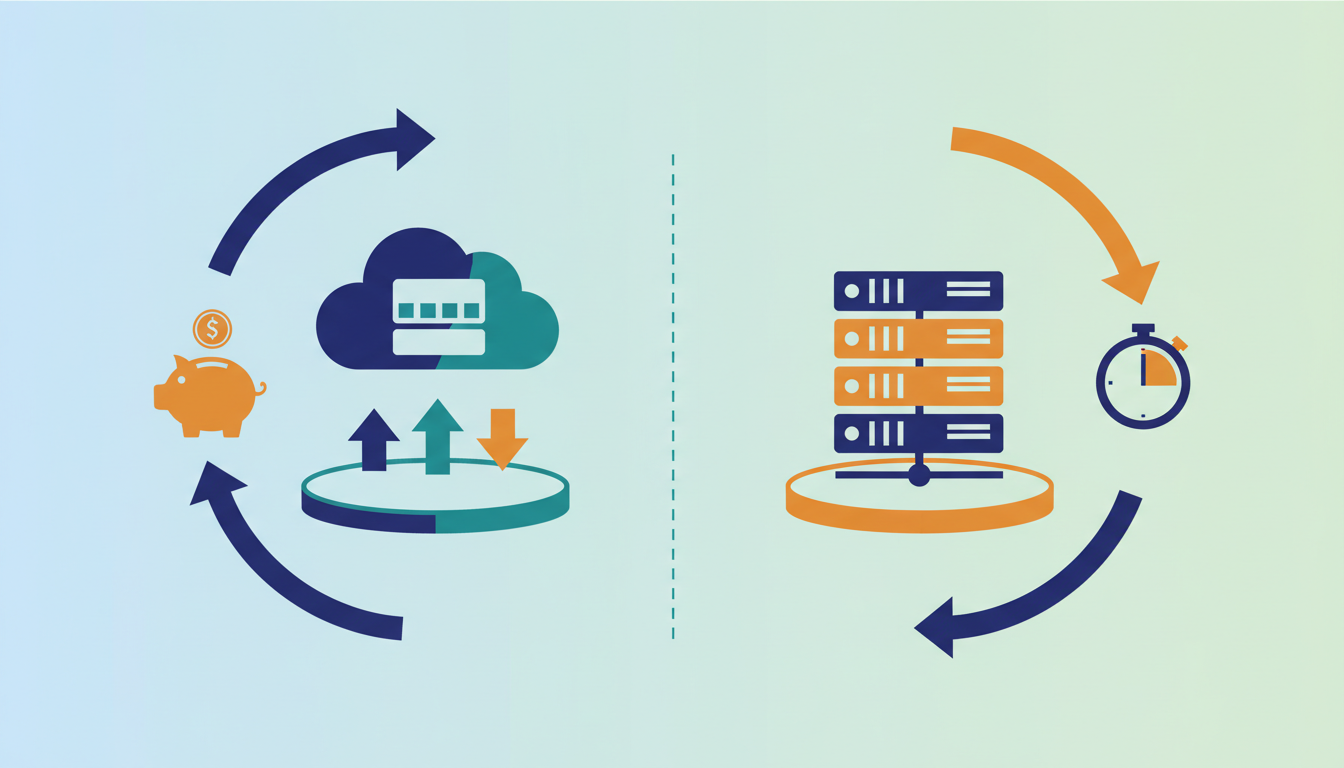
Variable pricing models based on S3 storage and request rates replace fixed throughput fees, altering cost predictability for bursty workloads. S3 Files uses underlying Amazon S3 pricing where standard storage costs notably less, while a million GET requests incur only a minimal fee. This structure eliminates the penalty for idle capacity found in provisioned systems. FSx for Lustre offers cheaper tiered storage yet mandates upfront capacity planning that S3 Files avoids entirely. The no additional cost model for intelligent tiering removes the financial risk of misclassified data.
Flexibility introduces variance since a sudden spike in read operations can exceed the flat-rate predictability of EFS. Use S3 Files for workloads with unpredictable access patterns where paying for unused provisioned throughput represents waste.
Deploying S3 Files for Collaborative ML Training Clusters Without Data Duplication
ML training clusters targeting 1ms latency often fail strict submillisecon requirements needed for extreme HPC workloads. Select S3 Files when collaborative data mutation outweighs the need for sub-millisecond latencies. The architecture eliminates dataset copying by mounting a single Amazon S3 bucket across hundreds of EC2 instances simultaneously. This approach uses Amazon EFS technology to present object storage as a native file system without moving data. Agentic AI workflows benefit specifically from this design as agents avoid session state loss during native file system access.
Cost models shift dramatically compared to traditional shared storage options. The limitation involves accepting close-to-open consistency to gain massive scalability without provisioning throughput capacity. ML teams save notably on storage fees while avoiding the complexity of managing separate high-performance scratch volumes. Workloads demanding deterministic performance below one millisecond must still deploy FSx for Lustre. Validate application tolerance for synchronization delays before migrating production training jobs.
Hidden Cost Traps in S3 Files: Small File Reads and Cross-Region Egress Fees
Workloads reading millions of tiny files from Glacier Instant Retrieval face a 25x request cost penalty compared to S3 Standard tiers. Operators often overlook that small file reads trigger per-object billing events rather than aggregate throughput charges. The pricing model bills for synchronization requests between the file system and the bucket, creating invisible overhead for chatty applications. Fixed throughput fee cross-region Egress $0.09/GB to internet VPC endpoint waivers Tier M applies here. Tier Migration No transition fees $0.01–$0.03/GB penalty Data egress to the pub remains a factor. Ata egress to the public internet costs a modest fee for the first 9.9 TB, eroding savings when serving external clients.
Unlike EFS which charges flat rates, S3 Files exposes request rates as a primary variable cost component. Transitioning data between access tiers incurs no additional fees, avoiding the hidden charges found in competing managed file services. Architects must model GET request frequency before migrating high-churn workloads. The architectural win for storage density becomes an operational loss if application logic performs unoptimized sequential stat calls. Audit file access patterns to prevent billing shocks from granular object operations.
Deploying S3 Files Across EC2, Containers, and Lambda
S3 Versioning and SSE-S3 Prerequisites for File System Creation
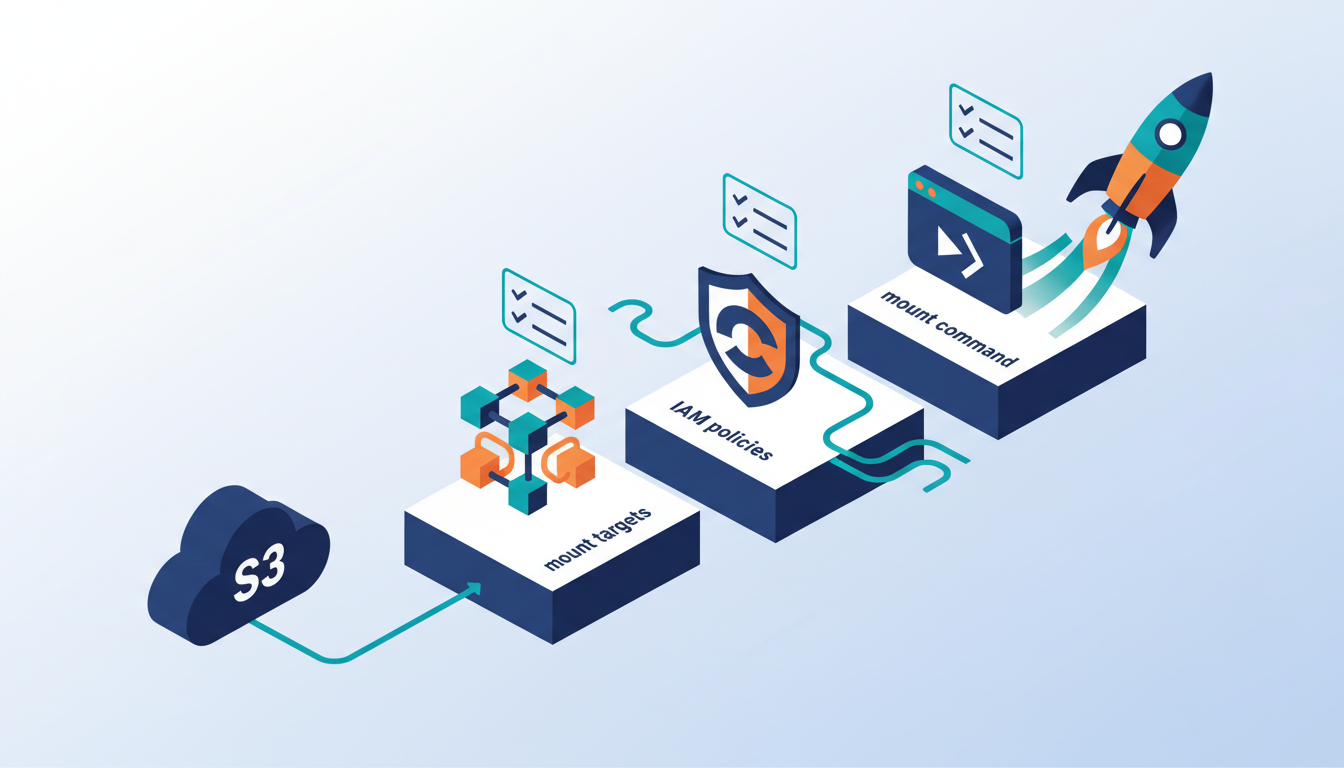
S3 Versioning acts as the mandatory synchronization engine for any bucket exposed as a file system. Without this setting enabled, the service cannot track object mutations required to maintain NFS consistency across multiple compute nodes. Operators must activate S3 Versioning before attempting to mount the resource, as the underlying protocol relies on version IDs to reconcile concurrent writes. The configuration ensures that every file update generates a distinct object version rather than overwriting existing data silently.
Encryption standards impose a second hard constraint on deployment architectures. New buckets strictly require Server-side encryption with Amazon S3 managed keys or AWS KMS keys to function. AWS disabled Server-Side Encryption with Customer-Provided Keys by default in April 2026 to eliminate risks associated with lost key material. This policy shift forces reliance on managed infrastructure rather than external key rotation schedules.
- Enable versioning on the target general purpose bucket.
- Verify encryption settings match SSE-S3 or KMS requirements.
- Attach the specific IAM trust policy for the EFS service principal.
Failure to meet these prerequisites results in immediate mount rejection. The file system cannot initialize without the ability to track state changes or guarantee data-at-rest security via approved methods.
Mounting S3 Buckets via AWS CLI and EFS Driver on EC2 Instances
Manual CLI execution remains mandatory because IaC support was absent at launch, forcing operators to script mount target creation explicitly. Administrators must first verify S3 Versioning and confirm encryption uses SSE-S3 or AWS KMS keys, as customer-provided keys are disabled by default. The amazon-efs-utils package provides the necessary driver binaries to translate NFS v4.2 calls into object storage operations on the instance. Deployment requires two distinct API calls: `create-file-system` establishes the logical link, while `create-mount-target` provisions the network endpoint inside the VPC. This separation introduces a failure mode where the file system exists without a reachable IP address if the second command is omitted.
Correct identity mapping requires strict alignment between IAM policies and POSIX UID attributes stored as object metadata. Operators must first enable S3 Versioning to synchronize file system mutations with the underlying bucket state. The second step validates that server-side encryption uses SSE-S3 or AWS KMS keys, since SSE-C remains disabled by default for new deployments. Administrators then define resource policies granting `s3files:Mount` permissions only to specific compute roles within the trusted VPC.
- Attach an inline policy restricting file system access to authorized EC2 instance profiles.
- Verify that UID and GID values in the mount request match the metadata tags on target objects.
- Confirm the amazon-efs-utils package version supports the required NFS v4.2 protocol extensions.
Misaligned UID mappings cause silent access denials even when IAM statements explicitly allow actions. This friction arises because the service enforces POSIX semantics at the kernel level before evaluating cloud identity credentials. Audit object metadata tags prior to mounting to prevent permission drift across distributed clusters.
About
Alex Kumar, Senior Platform Engineer and Infrastructure Architect at Rabata. Io, brings deep expertise in Kubernetes storage architecture and cost optimization to this analysis of Amazon S3 Files. His daily work designing disaster recovery strategies and managing persistent storage for cloud-native applications directly aligns with the challenges of integrating object storage as file systems. Having previously served as an SRE for high-traffic platforms, Alex understands the critical need for smooth data synchronization and performance that this new AWS capability addresses. At Rabata. Io, a specialized S3-compatible object storage provider, he actively engineers solutions that eliminate vendor lock-in while maximizing throughput for AI/ML startups. This practical experience allows him to objectively evaluate how Amazon S3 Files evolves the environment of cloud storage, offering valuable insights for enterprises seeking scalable, high-performance alternatives without compromising on data accessibility or architectural flexibility.
Conclusion
Scaling this architecture reveals that metadata contention becomes the primary bottleneck long before storage capacity limits are reached. While the per-gigabyte economics favor S3, the operational overhead of managing UID/GID alignment across thousands of nodes creates a hidden tax on engineering time that traditional file systems do not impose. Teams ignoring this friction will find their deployment velocity stagnating as manual policy adjustments consume sprint capacity. Organizations should adopt this solution only for read-heavy workloads where data exceeds a substantial volume and access patterns are predominantly sequential; interactive development environments remain improved suited to provisioned throughput models until tooling matures. Do not migrate stateful databases or high-churn build artifacts to this service before Q4 2027, as the current lack of automated fleet management tools introduces unacceptable risk for mutable data. Start by running a metadata tag audit on your existing buckets this week to identify objects with missing or inconsistent POSIX attributes before attempting any mount operations. This proactive scan prevents the silent permission failures that currently plague early adopters attempting to overlay identity governance on object storage.
Frequently Asked Questions
Reads exceeding 1 MB bypass the cache to maximize throughput. This mechanism ensures large sequential data flows directly from the origin without consuming high-performance storage resources for temporary buffering.
The system targets 1ms latency for active data using high-performance storage. This speed enables agentic AI systems to access enterprise data without suffering from session state loss during operations.
EC2 instances, ECS containers, EKS clusters, and Lambda functions mount buckets directly. This integration allows serverless functions to execute standard file I/O against persistent buckets without download overhead.
The file system supports NFS close-to-open consistency for concurrent access. Users must enable S3 Versioning to synchronize mutations, as strong consistency for parallel writes across Availability Zones is not provided.
Byte-range reads transfer only requested bytes to minimize data movement costs. Large reads exceeding 1 MB bypass the cache entirely, ensuring efficient throughput while reducing unnecessary usage of high-performance tiers.