Egress fees ate 48% of our AI budget last year
Nearly half of global firms exceeded cloud storage budgets last year as hidden egress fees consumed 48 percent of total spend, according to Wasabi data.
Enterprises are hemorrhaging capital on egress fees and data silos rather than generating value from their AI investments. While McKinsey forecasts a staggering $5 to $7 trillion infrastructure requirement over the next five years, current spending patterns reveal a critical inefficiency where operational overhead dwarfs actual utility. Gartner notes that data center spending will hit $788 billion in 2026, yet Wasabi research indicates that 82 percent of organizations anticipate rising costs as they scale, proving that raw capacity is not the bottleneck.
This analysis dissects the specific mechanics draining AI budgets, starting with the hidden cost drivers embedded in modern cloud architectures. Finally, the article outlines a strategic migration path toward no-egress storage models, offering a concrete solution to stop the financial bleed before it cripples future GenAI development.
The Hidden Cost Drivers in Modern AI Infrastructure
Defining Dark Data and Cloud Egress Fee Structures
Dark data constitutes inaccessible storage assets that prevent AI model training, while egress fees charge operators for retrieving that same data. These hidden costs now consume half of total cloud storage spend, distorting financial forecasts for AI infrastructure. The proportion of spend attributed to fees reached 47 percent in 2024, up from 48 percent in 2023, indicating a persistent structural drain on budgets. Complex tiered structures employed by substantial providers levy additional charges for API calls and data retrieval, creating unpredictable expense spikes during model ingestion phases. Wasabi uses a simple pricing model charging only for storage at roughly one-fifth the cost of AWS S3 to eliminate these variables. This approach contrasts sharply with standard industry practices where 91 percent of users cite fees as a primary budget issue. The hidden fee impact forces operators to choose between data accessibility and cost containment, often resulting in stranded datasets.
Operators ignoring these fee structures face a 50 percent budget overrun rate. Audit storage policies to isolate dark data before it triggers compounding egress penalties during AI scaling events.
How API Operations Fees Exhausted Uber's 2026 Budget
API operations fees for reads, writes, and lists drained Uber's full-year 2026 AI budget within four months of deployment. The engineering team rolled out an agentic coding assistant to roughly 5,000 engineers in late 2025, triggering massive consumption spikes. Heavy users generated between $500 Token usage failed to track against measurable product output, leaving leadership with exhausted funds and no residual value. Cloud providers monetize every metadata operation, turning simple directory lists into recurring line items that scale linearly with agent activity. This structure creates a budget overrun rate where half of respondents exceed limits due to untracked retrieval costs. The financial impact extends beyond storage capacity, as data operations fees now rival base usage in total spend composition.
Leadership acknowledged that token consumption did not align with delivery milestones, highlighting a fundamental disconnect between agentic workflows and traditional procurement cycles. The cost of unmonitored API calls forces operators to choose between restricting agent autonomy or accepting unpredictable fiscal exposure. Implement strict rate limits on metadata queries before deploying autonomous coding tools at scale.
The Risk of Massive Budget Overruns from Lesser-Known Fees
Lesser-known fees for object lock and replication requests drive 49 percent of respondents to exceed budgets, with 15 percent failing massively. These operational line items function as silent budget killers because they trigger on specific state changes rather than raw capacity growth. Unlike standard egress charges, replication requests accumulate during routine disaster recovery syncs, often catching finance teams off guard during quarterly reviews. This structural opacity means that 91 percent of users cite fees. The statistical probability of financial failure remains high when storage architectures rely on complex tiering logic. Data indicates that 50 percent of respondents exceeded budgets specifically due to API/retrieval fees. Organizations attempting to mitigate this risk often face a tension between data immutability compliance and cost predictability, as enabling object lock guarantees retention but incurs per-operation penalties that scale non-linearly. Audit storage logs for replication frequency before signing multi-year contracts. The cost of ignoring these micro-transactions is measurable: customers migrating to simplified models report storage cost reductions of 35 percent to 40 percent by eliminating lifecycle complexity.
How Egress Fees and Data Silos Drain AI Budgets
The Mechanics of API-Based Data Operations Fees
Millions of read, write, and list requests drive API-based data operations fees within AI training pipelines, accumulating costs independent of stored volume. Standard cloud providers apply complex tiered structures where every retrieval request incurs a charge, creating a direct correlation between model iteration speed and cost escalation. Wasabi charges roughly one-fifth. High-frequency access patterns common in deep learning workflows avoid the exponential cost curves seen in traditional public cloud environments because of this structural difference.
Customers migrating to alternative providers have reported storage cost reductions of around 35 percent to 40 percent through the elimination of lifecycle tiering complexities. Simplified pricing models may not match the raw write throughput of hyperscale giants during massive initial data ingestion phases. Finance teams often miss this nuance because budget forecasts focus on capacity rather than transaction velocity. Audit API call logs before selecting a storage backend to prevent unexpected line items.
How Data Silos Block AI ROI in Real Pipelines
Just 3 percent of organizations claim full access to logs, call recordings, and archives required for model training. Dark data creates immediate pipeline failures because AI systems cannot ingest inaccessible video or document stores. This inaccessibility directly correlates with financial underperformance, as just under a third of respondents currently see a positive return on their AI investments. Fragmented storage across multiple public clouds serves as the root cause, with 81 percent of companies maintaining object capacity without unified visibility.
Legacy retrieval mechanisms trigger expensive API charges before data usability is confirmed. Organizations attempting to bridge these silos often face complex tiered structures. Gartner projects that data center systems spending will surpass $788 billion in 2026, yet much of this capital funds inaccessible repositories rather than trainable datasets. Eliminating retrieval fees that discourage data exploration fixes unexpected cloud storage charges. A simplified pricing model charging only for storage removes the financial barrier to unlocking dark assets. Potential throughput variance exists compared to high-performance tiers optimized for frequent small-object writes. Audit access patterns before migrating cold storage to no-egress architectures.
The Hidden Cost Traps of Object Lock and Replication
Object lock configurations and cross-region replication requests generate silent budget drains independent of stored volume. These mechanisms trigger charges on state changes rather than capacity growth, creating unpredictable cost spikes during disaster recovery syncs. AWS S3 supports native immutable data configurations, yet specific implementation details for immutable data differ across providers, often requiring complex manual tuning to avoid unintended billable events. Finance teams frequently miss these line items because they appear as operational overhead rather than storage fees.
Migrating to simplified pricing models allows organizations to achieve storage cost reductions of around 35 percent to 40 percent by eliminating lifecycle tiering complexities. Sacrificing some write throughput enables predictable billing structures that prevent the 50 percent of budgets lost to API and retrieval fees. Operators must audit replication policies quarterly so multi-cloud strategies do not inadvertently double charges for identical data sets. Isolate cold storage tiers to prevent replication loops from consuming active project funds.
Strategic Migration to No-Egress Storage Models
No-Egress Storage Models and AWS S3 API Compatibility
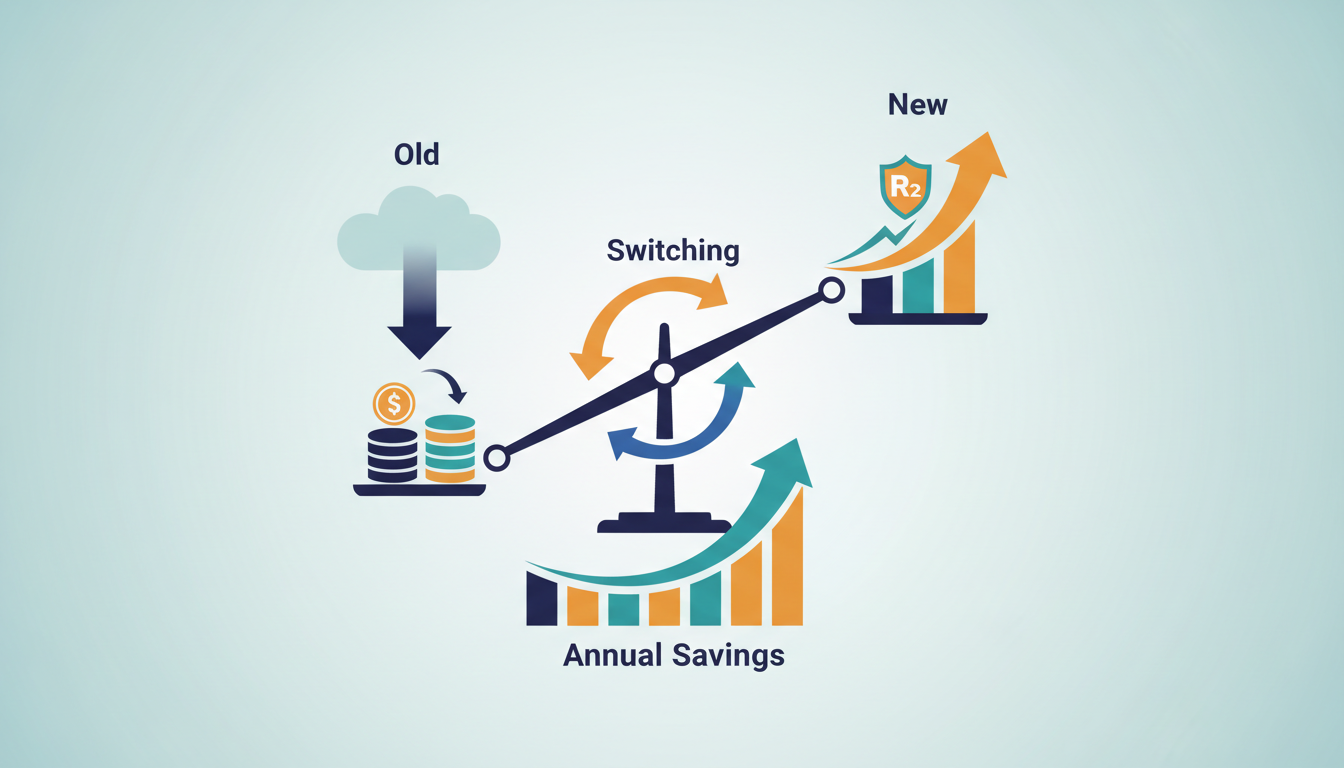
No-egress storage models eliminate data retrieval charges by charging only for capacity, contrasting sharply with tiered structures that bill for API calls. Wasabi implements this through a purpose-built file system designed to use disk drive technology for performance gains absent in standard object stores. The architecture maintains 100 percent. This compatibility removes the friction of migration while avoiding the complex fee schedules of legacy providers. A distinct operational safeguard involves checking all files for corruption every 90 days to guarantee recoverability, a practice not universally mandated by competitors.
| Feature | No-Egress Model | Traditional Tiered Model |
|---|---|---|
| Retrieval Cost | None | Variable per GB |
| API Call Fees | None | Charged per request |
| Architecture | Purpose-built file system | Generic object store |
| Integrity Check | Every 90 days | On-demand or never |
Reduced granularity in storage classes is the trade-off, as hot storage only models lack cold tiers for archival data. Operators must evaluate data access patterns before committing, since infrequently accessed logs may incur higher base rates compared to deep archive options. Switching to simplified pricing can yield a 35-40% reduction in total storage costs for high-churn AI workloads. This financial efficiency directly addresses the budget overruns plaguing current infrastructure projects. Align storage selection with access frequency to maximize.
Real-World Cost Savings for Media and Education Sectors
Bunim-Murray Productions eliminated retrieval charges by moving reality show archives to a no-egress model for 'The Challenge'. Media workflows demand high-frequency access to video assets, making standard tiered pricing prohibitive for iterative editing. The production firm used Signiant and Wasabi to centralize collaboration across geo-diverse locations without incurring data operation fees. This shift converts variable operational expenses into fixed capacity costs, stabilizing budgets for long-running series. Educational institutions face similar pressure when scaling AI training datasets across hybrid environments. Charles Darwin University uses Wasabi for agile IT infrastructure to support Microsoft 365 backups and research data lakes. The decision prioritizes predictable expenditure over the complex fee structures of legacy providers. The trade-off involves accepting a single-vendor dependency rather than multi-cloud redundancy for hot data. Hybrid storage for AI remains viable if cold archives reside in the no-egress tier while compute stays near GPU clusters. Audit retrieval patterns before committing to a single provider. Dark data becomes accessible only when egress penalties no longer discourage analysis.
Wasabi Valuation Growth Versus Traditional Hyperscaler Spend
Wasabi closed a $70 million E round in January, signaling market rejection of complex hyperscaler billing for AI workloads. This capital injection values the firm at $1.8 billion against a backdrop where 50 percent of operators exceeded budgets due to hidden API charges. Traditional models rely on tiered structures that penalize data movement, whereas no-egress providers charge strictly for capacity. The financial momentum reflects a broader shift where AI drives infrastructure spending, yet organizations struggle to predict costs under complex tiered structures. Total investment now reaches $600 million, validating the demand for predictable expenditure in multi-cloud environments.
| Cost Dimension | Traditional Hyperscalers | No-Egress Models |
|---|---|---|
| Pricing Basis | Capacity + API Calls | Capacity Only |
| Retrieval Fee | Variable per GB | Zero |
| Budget Predictability | Low ( | High (fixed rate) |
Migrating to simplified models reportedly yields a 35 to 40 percent reduction in storage overhead for enterprises adopting flat-rate architectures. AI workloads now dictate cloud spending growth, making variable egress fees a primary risk to ROI. The trade-off involves accepting a single-performance tier rather than granular storage classes, which may not suit cold archive requirements needing deep glaciation. Operators evaluating whether they should switch to no-egress-fee storage must weigh immediate cost certainty against the loss of tiered optimization tools.
Executing a Data Budget Optimization Plan for AI
Application: Defining the Dark Data Spectrum in AI Workflows
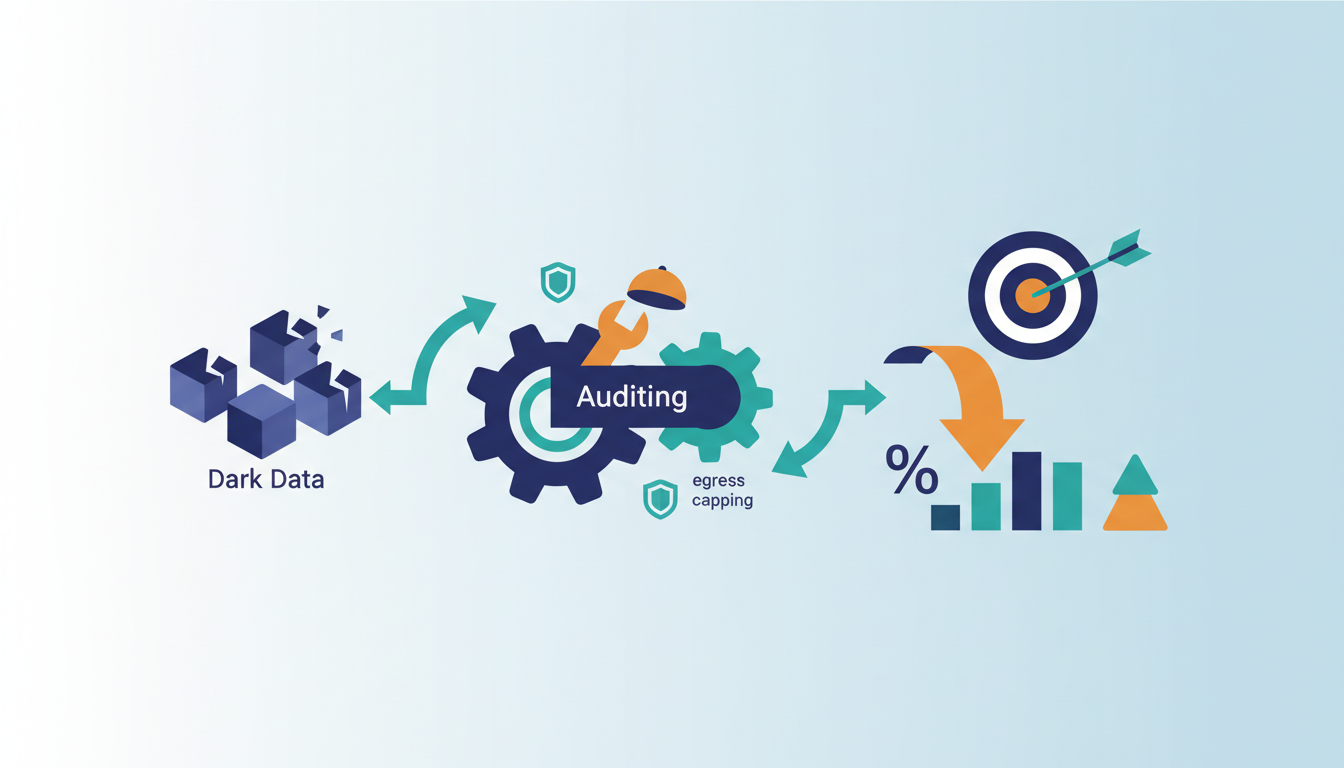
Just 3 percent of operators claim full visibility into logs, call recordings, and video archives blocking model training. This accessibility gap forces engineers to guess at dataset completeness rather than executing precise steps for accessing dark data. A quarter of enterprises report that 75 to 99 percent of their stored information remains unusable for analytics. Such opacity directly correlates with the finding that only 28 percent of infrastructure projects achieve expected returns per Gartner research data Operators frequently overlook that unindexed data still incurs storage fees while generating zero intelligence value. The cost of maintaining these silent assets drains budgets intended for active compute resources. Proven guide to managing ai data budgets requires classifying data by access frequency before ingestion. Blindly hoarding terabytes of unstructured video without metadata tagging guarantees financial leakage. Implement automated lifecycle policies to purge or tier stale inputs immediately. Without strict classification, organizations face compounding costs from both capacity charges and missed analytical opportunities. Most teams fail to quantify the operational drag of scanning petabytes of irrelevant noise. True optimization demands deleting what cannot be indexed, not moving it to cheaper tiers.
Implementing Hybrid Storage to Cut AI Infrastructure Costs
Hybrid storage adoption reaches 81 percent as operators deploy multi-cloud object layers to bypass single-vendor egress traps. Shifting hot datasets to on-premises nodes becomes economically viable once cloud costs exceed 70 percent of total acquisition outlay. This threshold forces an architectural split where cold archives remain in public buckets while active training sets reside locally. The cost tipping point dictates that retaining all data in hyperscaler environments destroys margin as retrieval fees compound. Operators ignoring this boundary face budget erosion when API charges consume half the storage ledger.
Migration to no-egress architectures yields storage cost reductions of roughly 40 percent by eliminating lifecycle complexity. Such savings directly counter the trend where 50 percent of teams exceed budgets due to hidden operation fees. The payback period for these infrastructure shifts typically spans 18 to 24 months assuming steady utilization rates. However, splitting data planes introduces synchronization overhead that can stall model retraining if network bandwidth proves insufficient. Audit data access patterns before committing to a hybrid topology. Blindly moving data without mapping access frequency creates new bottlenecks that negate financial gains. The tension between immediate cost relief and long-term operational friction requires precise workload profiling.
Validation Checklist for Preventing AI Budget Exhaustion
Operators must audit fee structures immediately because API charges. Blindly increasing budgets fails when dark data remains inaccessible and retrieval costs compound. Teams should verify six specific controls before approving additional spend.
Just 3 percent of organizations claim full visibility into their logs and video archives, creating massive blind spots for cost allocation. This opacity forces leaders to guess at dataset completeness rather than optimizing actual usage patterns. Nearly 91 percent of users cite unexpected fees as a primary budget issue, yet few track object lock or replication requests. Infrastructure teams often miss that hybrid storage adoption allows hot datasets to reside on-premises while cold archives stay in public buckets. This split prevents retrieval fees from consuming capacity funds. Treat storage audits as continuous processes rather than annual events. Without strict API limits, token consumption scales independently of measurable product output. Operators ignoring these checks face inevitable exhaustion as hidden fees accumulate quicker than capacity needs grow.
About
Marcus Chen serves as a Cloud Solutions Architect and Developer Advocate at Rabata. Io, where he specializes in optimizing AI/ML data infrastructure. His unique perspective on the challenges of managing data budgets stems directly from his daily work designing scalable, S3-compatible storage solutions for enterprise clients. Having previously worked as a Solutions Engineer at Wasabi Technologies, Chen possesses firsthand experience with the exact cost containment and data accessibility issues highlighted in recent industry research. At Rabata. Io, he helps organizations navigate the complex environment of cloud storage investment, ensuring they can support heavy compute demands without succumbing to vendor lock-in or hidden egress fees. By using Rabata's high-performance, cost-effective architecture, Chen enables businesses to maximize their AI ROI while maintaining the flexibility required for rapid scaling. His expertise bridges the gap between theoretical infrastructure needs and practical, budget-conscious implementation strategies.
Conclusion
Scaling AI infrastructure reveals a critical breaking point: synchronization overhead from split data planes often stalls model retraining long before capital runs dry. The projected $5 to $7 trillion global investment requirement over the next five years confirms that raw spending cannot solve architectural inefficiencies. Organizations relying on static annual reviews will find their operational friction outpacing any initial savings from simplified pricing models. You must shift from reactive budget patches to proactive workload profiling immediately.
Adopt a strict hybrid storage topology within the next six months, but only after mapping access frequency for every dataset. Do not migrate cold archives to public buckets until you verify that retrieval fees will not exceed on-premises maintenance costs. This approach prevents dark data from silently consuming your liquidity while ensuring hot datasets remain available for rapid iteration. Waiting for the next funding round to cover inefficiencies is a failed strategy; sustainable growth demands that API limits align directly with measurable product output.
Start by auditing your object lock and replication requests this week to identify hidden fee drivers. Configure alerts for any API call volume that deviates significantly from your baseline usage pattern. This single action exposes the invisible overhead currently distorting your unit economics before it triggers a budget crisis.
Frequently Asked Questions
Heavy users generate between $500 and $2,000 per engineer monthly in pure API charges. These costs drained Uber's full-year budget within just four months of deploying their agentic coding assistant to thousands of engineers.
Fees for object lock and replication requests drive 49 percent of respondents to exceed their allocated budgets. These operational line items function as silent budget killers alongside standard egress and API data operation charges.
Wasabi charges roughly one-fifth the price of AWS S3 for storage while eliminating fees for API calls. This simplified model helps customers achieve storage cost reductions by removing complex lifecycle tiering and hidden retrieval charges.
Nearly half of global firms exceeded their cloud storage budgets last year as hidden egress fees consumed 48 percent of total spend. This structural drain prevents companies from generating actual value from their AI investments.
Total investment in Wasabi now reaches $600 million, validating the market demand for predictable storage pricing. This capital injection values the firm at $1.8 billion against a backdrop where fifty percent of firms face budget overruns.