Google Data Cloud: Agentic Workflows Explained
With Google Cloud revenue hitting a substantial amount in Q4 2027, the Agentic Data Cloud is no longer theoretical but a financial imperative. Legacy query models are obsolete. Architectures now demand conversational AI and graph analytics directly orchestrate NoSQL databases like Bigtable and Firestore. We moved past simple visualization. Gemini Enterprise Business Edition is now the primary interface for unlocking the 90% of "dark data" previously trapped in unstructured contracts and emails.
This analysis dissects the mechanics of agentic data workflows. We examine how the new Google-built ODBC Driver and BigQuery Graph enable low-latency access for autonomous agents. We evaluate strategic criteria for selecting BI platforms that support conversational analytics within Looker Embedded environments, moving past static dashboards to flexible, natural language interaction. The reintroduction of Data Studio as a host for data apps built-in Colab notebooks signals a unified front for application development.
The stakes are quantifiable. Google Cloud reports that products built on their generative AI models grew nearly 800% year-over-year in Q1 2026, while 330 customers now process over one trillion tokens annually. Ignoring this integration of semantic layers with agent-ready infrastructure risks leaving enterprise software stranded in the pre-AI era. This article details exactly how to bridge that gap using the latest tools from the Google Cloud Data Analytics team.
The Role of Conversational AI and Semantic Layers in Modern Data Clouds
Defining the LookML Semantic Layer and Gemini Context
Code-first governance defines the LookML semantic layer. It binds business logic directly to data schemas. This architecture stops AI agents from hallucinating metrics by enforcing strict definitions before query execution. Looker uses this model to support self-service Explores, letting non-technical users access trusted datasets without bypassing IT controls. Governance addresses the shift toward citizen developers, a group Gartner predicts will comprise 80% of data tool users by 2027. Without this layer, natural language queries often return inconsistent results due to ambiguous column interpretations.
Ambiguous column meanings kill natural language queries. The Knowledge Catalog grounds AI agents in trusted business context across the entire data estate. This service guarantees that Conversational Analytics engines operate on verified semantic layers rather than raw, uncurated tables. Agents derive semantics from documentation to embed logic directly into analysis, facilitating quicker reasoning patterns. Organizations must maintain accurate LookML definitions or face stale metadata causing the agent to reject valid queries. Gemini integration transforms this static layer into an interactive partner capable of diagnosing pipeline failures automatically. Operators gain speed but lose the ability to override agent decisions without modifying the underlying semantic model.
Conversational agents in BigQuery Studio function as context-aware partners analyzing execution logs to resolve pipeline failures automatically. This capability shifts the operational burden from manual debugging to automated root-cause identification via the Data Engineering Agent. Operators should deploy these tools when latency requirements demand immediate remediation without human intervention.
Looker Embedded environments now support natural language interfaces, allowing developers to integrate Gemini directly into custom applications. The underlying semantic layer derives business logic from documentation to prevent ambiguous query interpretations. This architecture ensures that citizen developers access governed metrics rather than raw tables.
| Feature | BigQuery Studio Agent | Looker Embedded Agent |
|---|---|---|
| Primary Function | Log analysis | Natural language querying |
| Context Source | Execution metadata | LookML definitions |
| Target User | Data Engineer | Application Developer |
Adoption of such agentic workflows is accelerating, with projections indicating 33% of enterprise software will incorporate agentic AI by 2028. High-quality metadata remains a hard dependency; poorly documented schemas yield inaccurate agent suggestions. Teams must prioritize schema governance before enabling self-service analytics features.
Validate agent outputs against known baselines during initial rollout phases. Blind trust in automated fixes risks propagating errors across dependent downstream systems. The cost of false positives outweighs the efficiency gains if validation gates are absent. Operators must treat these agents as force multipliers for skilled staff, not replacements for fundamental data oversight.
Self-Service Explores Versus Traditional IT-Dependent Analytics
Self-service Explores enable users to bring their own data to the LookML semantic layer for instant, governed insights. This capability directly answers whether teams should use Gemini for analytics by shifting execution from IT tickets to citizen-driven queries. Traditional models require manual schema updates, creating bottlenecks that stall decision-making during critical business windows.
| Feature | Traditional IT Model | Self-Service Explores |
|---|---|---|
| Data Access | Request-based queues | Instant semantic binding |
| User Base | Professional developers | Citizen developers |
| Governance | Pre-deployment audits | Real-time policy enforcement |
| Speed | Days to weeks | Seconds to minutes |
The operational shift targets a demographic surge where outside-IT users will dominate tool consumption. This ratio creates a 4:1 split between citizen and professional developers, demanding interfaces that tolerate minimal training. Conversational Analytics bridges this gap by translating natural language into valid Looker queries without exposing underlying SQL complexity.
Unrestricted access introduces risk if the semantic layer lacks strict type definitions. Unverified inputs can generate plausible but incorrect metrics when business logic remains ambiguous. Operators must ground agents in the Knowledge Catalog Failure to enforce this boundary allows hallucinated metrics to propagate through dashboards unchecked. Deploy these tools only after audit logs confirm consistent query patterns across pilot groups.
Inside the Architecture of Agentic Data Workflows and Graph Analytics
BigQuery Graph Relationship Processing and Serverless Mechanics
BigQuery Graph processes massive-scale relationships using a serverless architecture that eliminates cluster provisioning overhead. The system executes traversals across nodes and edges without manual capacity planning, scaling automatically to handle complex join operations inherent in graph datasets. This pay-per-query model charges strictly for processed bytes rather than idle compute hours, creating cost efficiency for intermittent analytical workloads. Operators gain immediate access to relationship patterns without sustaining always-on infrastructure.
Unified lakehouse structures emerge through native support for open table formats stored in Cloud Storage. BigLake enables direct querying of Apache Iceberg and Delta Lake tables alongside native data, preventing costly migration projects. The architecture treats external files as first-class citizens within the graph engine, maintaining ACID properties across disparate storage locations.
| Component | Function | Constraint |
|---|---|---|
| Graph Engine | Traversal execution | Limited to preview features |
| BigLake | Format unification | Requires GCS backing |
| ODBC Driver | Application connectivity | Currently in preview |
The Google-built ODBC Driver for BigQuery enables high-performance connections for custom visualization tools. Managed Service for Apache Airflow complements this by orchestrating complex data pipelines via declarative YAML definitions. A significant limitation remains the preview status of graph capabilities, restricting production SLA guarantees for mission-critical dependency mapping. Teams must weigh the benefit of serverless simplicity against the risk of using non-GA features for core business logic.
Orchestrating AI Agents with Managed Airflow MCP and YAML Pipelines
Airflow 3.1 introduces a managed Airflow MCP Server to link AI models directly with database tools via declarative YAML pipelines. Operators define agent behaviors using standard configuration files, eliminating custom Python wrappers for routine orchestration tasks. The Model Context Protocol extends interoperability across AlloyDB, Spanner, and Bigtable, allowing agents to plan complex queries without hardcoding connection logic. This architecture supports the 16 billion tokens processed by Google Cloud models, ensuring scale matches inference demand.
Deployment requires shifting from script-heavy DAGs to static YAML definitions that declare intent rather than execution steps.
| Component | Function | Integration Point |
|---|---|---|
| MCP Server | Custom agent integration | Database tools |
| YAML Pipelines | Declarative orchestration | Airflow 3.1 |
| ODBC Driver | High-performance connection | BigQuery |
Google.com/blog/products/data-analytics/ in Preview enables these agents to fetch data using standard connectivity strings. However, relying on declarative syntax limits flexible runtime logic, forcing operators to predefine all failure states. This constraint reduces flexibility for ad-hoc debugging but increases stability for production workloads. Teams must balance the speed of low-code adoption, predicted for 70% of applications by 2027, against the rigidity of static pipeline definitions. Start with read-only agent roles to validate context retrieval before granting write permissions.
Validating High-Performance ODBC Connections and Agentic Troubleshooting
The Google-built ODBC Driver for BigQuery establishes direct, high-performance application links without intermediate translation layers. Operators must verify driver version compatibility before initiating connections to avoid silent handshake failures.
- Configure the connection string to target the specific BigQuery project ID explicitly.
- Enable detailed logging to capture authentication tokens during the initial handshake phase.
- Test throughput against expected baselines using standard benchmark queries.
Integration friction often arises when legacy Airflow DAGs attempt to parse modern agent responses. The Managed Service for Apache Airflow This capability addresses the expanding complexity as agentic AI adoption accelerates across enterprise stacks.
| Connection Mode | Latency Profile | Troubleshooting Method |
|---|---|---|
| Legacy JDBC | High variable | Manual log inspection |
| Google ODBC | Low consistent | Agentic root-cause analysis |
| REST API | Medium bursty | Token trace validation |
Relying solely on automated fixes risks masking underlying schema drift in source tables. The Data Engineering Agent suggests solutions but cannot correct malformed upstream data definitions. Teams should treat agentic outputs as diagnostic hypotheses rather than final patches. Direct driver usage reduces overhead but increases the burden of local configuration management on the client side.
Strategic Selection Criteria for NoSQL Databases and BI Platforms
Firestore Developer Scale Versus Bigtable Trial Capacity Limits
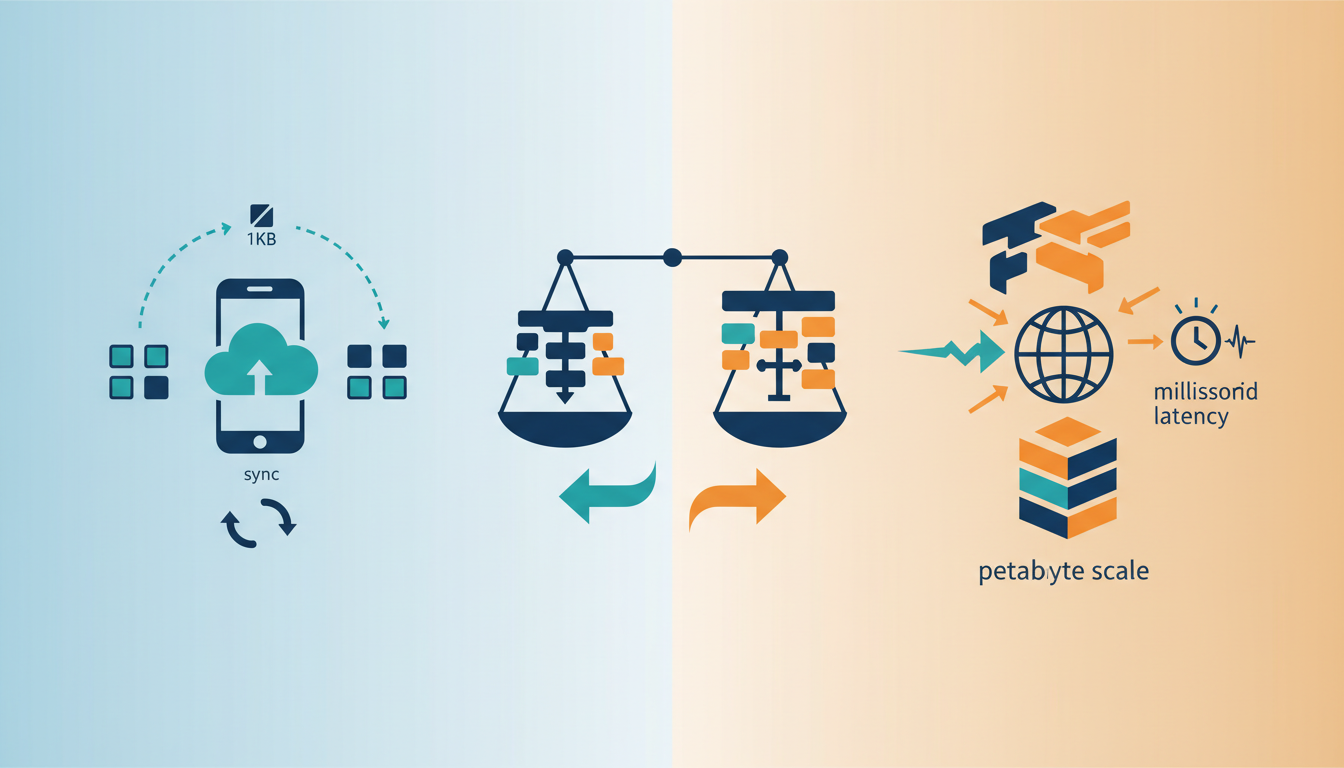
Over 600K developers build on Firestore, creating a vast system compared to the constrained 500GB Bigtable trial limit. This disparity defines distinct operational boundaries for teams selecting NoSQL infrastructure within the Agentic Data Cloud. Rapid iteration and broad citizen developers drive application logic in Firestore, whereas Bigtable targets high-throughput ingestion requiring predictable performance. Organizations frequently adopt zero-copy integration approaches to bridge these scales without moving data, mitigating trapped information challenges.
| Dimension | Firestore | Bigtable Trial |
|---|---|---|
| Primary User Base | Application designers | Infrastructure engineers |
| Storage Ceiling | Elastic scaling | 500GB hard cap |
| Provisioning Model | Serverless automatic | Fixed 1-node SSD cluster |
| Ideal Workload | Mobile sync, real-time updates | Time-series, IoT ingestion |
The 10-day trial window forces operators to validate throughput requirements before committing to production clusters. Relying on the free tier for load testing risks inaccurate capacity planning due to the single-node architecture. Teams must calculate egress costs early, as fees reach $0.12/GB after exceeding internal quotas. Treat the trial strictly as a functional proof-of-concept rather than a performance benchmark. Scaling beyond the initial limit requires immediate architectural shifts to avoid latency spikes during agent interactions. A single node cannot simulate distributed load. Architects should model failure scenarios manually.
Deploying Gemini Enterprise Digital Twins at Walmart and Honeywell
Supply chain migration to enhanced Firestore triggers when event volume exceeds standard throughput limits, as seen at Walmart. Operators connecting store telemetry often face latency spikes that alter real-time inventory visibility. Bigtable handles these high-write workloads improved than document stores during peak seasonal surges. Shifting to Bigtable sacrifices the flexible schema evolution that accelerated initial Gemini Enterprise prototyping. The limitation is increased operational overhead for column family management.
Honeywell generates millions of building management insights by pairing digital twins with this hybrid storage approach. Teams delaying migration risk fragmenting their semantic layers as agent complexity grows. Maintaining developer velocity conflicts with securing deterministic performance for critical path operations. Audit query patterns before selecting the target NoSQL engine. Schema rigidity becomes necessary at scale.
Comparison: Looker Conversational Analytics Versus Traditional IT-Dependent Explores
Conversational Analytics shifts query execution from IT tickets to natural language prompts, enabling immediate self-service for non-technical staff. Organizations like Carousell and Framebridge now use the LookML semantic layer to ground AI agents in trusted business context without manual report building. This approach contrasts sharply with traditional models where data access stalls behind development backlogs. The LookML-based agent Traditional explores require rigid schema definitions, whereas conversational interfaces adapt to user intent dynamically. Reliance on natural language introduces ambiguity risks absent in coded queries. The strongest option for governed, code-first analytics remains Looker, yet operators must validate agent reasoning against source truth. Unchecked conversational freedom can generate plausible but incorrect insights if the underlying semantic model lacks precision. Pair conversational interfaces with strict governance policies to mitigate hallucination risks while scaling access. Precision matters more than speed in financial reporting.
Implementing Scalable Read Pools and Secure Identity Integration
Cloud SQL Autoscaling Read Pools and Single Read Endpoint Mechanics

Provisioning multiple read replicas behind a single read endpoint allows Cloud SQL to dynamically adjust read capability based on real-time application needs.
- Enable autoscaling in the instance configuration to trigger replica creation when CPU utilization exceeds set thresholds.
- Route application traffic to the dedicated read endpoint rather than individual replica IP addresses to ensure automatic load distribution.
- Monitor the Datastore Scaling behavior to understand how result set sizes impact performance differently than total dataset volume.
This architecture prevents query latency spikes during traffic surges by expanding the Agentic Data Cloud Architecture footprint automatically. Regional pricing variance demands careful attention from engineering teams. Rates in locations like Sydney can run 20-40% higher than us-central1. The limitation is that rapid scaling events may briefly exhaust IP allocations in dense subnets if CIDR blocks are too narrow. Teams migrating from legacy stacks often consolidate duplicate systems to avoid the rising costs observed by Verve during their multi-cloud optimization. Unlike static provisioning, this model ties infrastructure spend directly to active query volume rather than peak theoretical capacity. Size the maximum replica count to handle 90% of anticipated dark data access patterns. Such precision prevents wasted resources while maintaining performance headroom for unexpected loads.
Configuring Microsoft Entra ID Integration for Centralized Cloud SQL Identity
Centralized identity enforcement begins by mapping Microsoft Entra ID groups to Cloud SQL database roles before enabling the IAM database authentication flag.
- Register the target Cloud SQL instance within the Google Cloud project to allow external identity provider trust relationships.
- Create specific database users that correspond to Entra ID group object identifiers rather than static passwords.
- Apply the `cloudsql. Iam_authentication` flag to the instance configuration to reject any login attempt lacking a valid OAuth token.
- Direct application connection strings to the single read endpoint provided by autoscaling read pools for consistent traffic distribution.
Deployment in zones outside us-central1 can increase hourly rates notably without performance gains. This pricing disparity forces a choice between low-latency user proximity and budget constraints for global read pools. Identity propagation delays may briefly block access during rapid group membership changes in large directories. Teams relying on Looker for downstream reporting should verify that service accounts possess the necessary impersonation rights to query these secured instances. Validate token expiration policies weekly to prevent unexpected authentication failures during peak analysis windows. Administrators must monitor directory sync times closely.
Operators often overlook that 10TB of monthly egress eliminates price advantages between providers. The total cost difference disappears at this volume, rendering regional storage rate cuts irrelevant for data-heavy architectures. This creates a tension between low-latency access and fiscal efficiency where the optimal choice depends entirely on traffic patterns. High-egress workloads nullify the benefit of cheaper compute zones, forcing architects to prioritize network topology over unit pricing. Cloud SQL autoscaling handles load dynamically, but the financial penalty for non-optimal region selection remains static and compounding. Model traffic flows before enabling multi-region read endpoints to prevent billing shocks. PlanningAhead avoids these fiscal traps through rigorous simulation.
About
Alex Kumar serves as a Senior Platform Engineer and Infrastructure Architect at Rabata. Io, where he specializes in Kubernetes storage architecture and cost optimization for cloud-native applications. His daily work designing high-performance, S3-compatible storage solutions directly informs his analysis of the evolving Google Data Cloud environment. As enterprises increasingly adopt generative AI tools like Gemini Enterprise, the demand for scalable, vendor-neutral object storage becomes critical. Kumar's expertise in eliminating vendor lock-in and managing massive data egress provides a unique perspective on how Google's latest analytics updates integrate with flexible infrastructure strategies. At Rabata. Io, a provider focused on democratizing enterprise-grade storage for AI/ML startups, Kumar ensures that rapid data growth driven by Google's system is met with reliable, GDPR-compliant architecture. This practical experience allows him to evaluate new cloud data trends through the lens of real-world infrastructure efficiency and financial sustainability.
Conclusion
Scaling Google Data Cloud exposes a critical fracture where flexible compute elasticity clashes with static network pricing. As low-code adoption accelerates, the operational burden shifts from provisioning resources to managing unpredictable egress fees that erase regional savings. Teams often assume auto-scaling solves capacity issues, yet this mechanism inadvertently multiplies costs when traffic patterns span high-rate zones like Sydney without strict governance. The real bottleneck is not technical capability but financial visibility into how data movement interacts with identity propagation delays and replica limits.
Organizations must mandate a zero-trust cost model by Q4 2027, treating network topology as a primary architectural constraint rather than an afterthought. Do not enable multi-region read endpoints until you have simulated worst-case dark data access scenarios against your specific budget caps. Relying on default autoscaling configurations without these guardrails guarantees compounding billing shocks that outpace performance gains.
Start by auditing your current egress traffic logs against the $0.12/GB threshold before Friday. Identify any workloads exceeding internal quotas and immediately restrict their replication scope to single regions until a refined traffic model is approved. This immediate containment prevents minor leaks from becoming structural deficits as your data volume grows.
Frequently Asked Questions
The Bigtable free trial provides up to 500GB of storage capacity for testing workloads. This limit allows users to ingest data without requiring a credit card to start the 10-day evaluation period immediately.
New Google Cloud customers automatically receive $300 in free credits upon signing up for an account. These funds help offset initial costs while exploring Data Cloud tools like Bigtable or Looker Embedded.
Gartner predicts that citizen developers will comprise 80% of all data tool users by 2026. This shift necessitates strong semantic layers to ensure non-technical staff access only governed and trusted metrics.
Products built on Google's generative AI models grew nearly 800% year-over-year in the first quarter of 2026. This massive expansion highlights the rapid enterprise adoption of agentic data workflows and conversational interfaces.
Gemini Enterprise Business Edition serves as the primary interface for unlocking 90% of dark data trapped in unstructured files. This capability transforms previously inaccessible contracts and emails into actionable insights for autonomous agents.